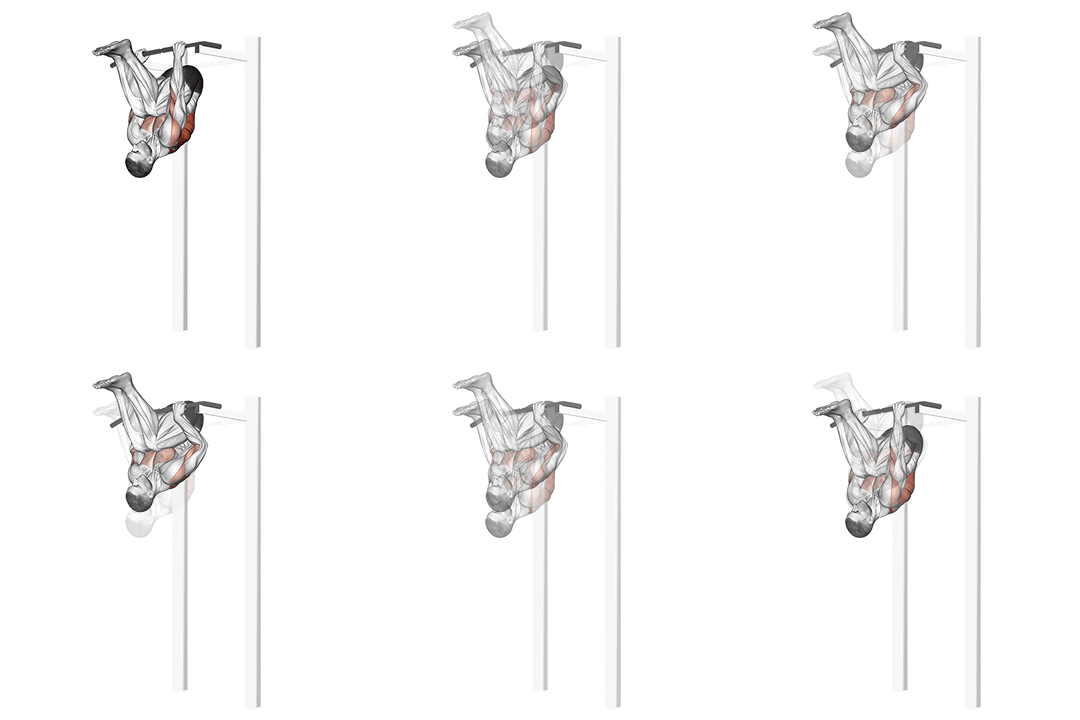
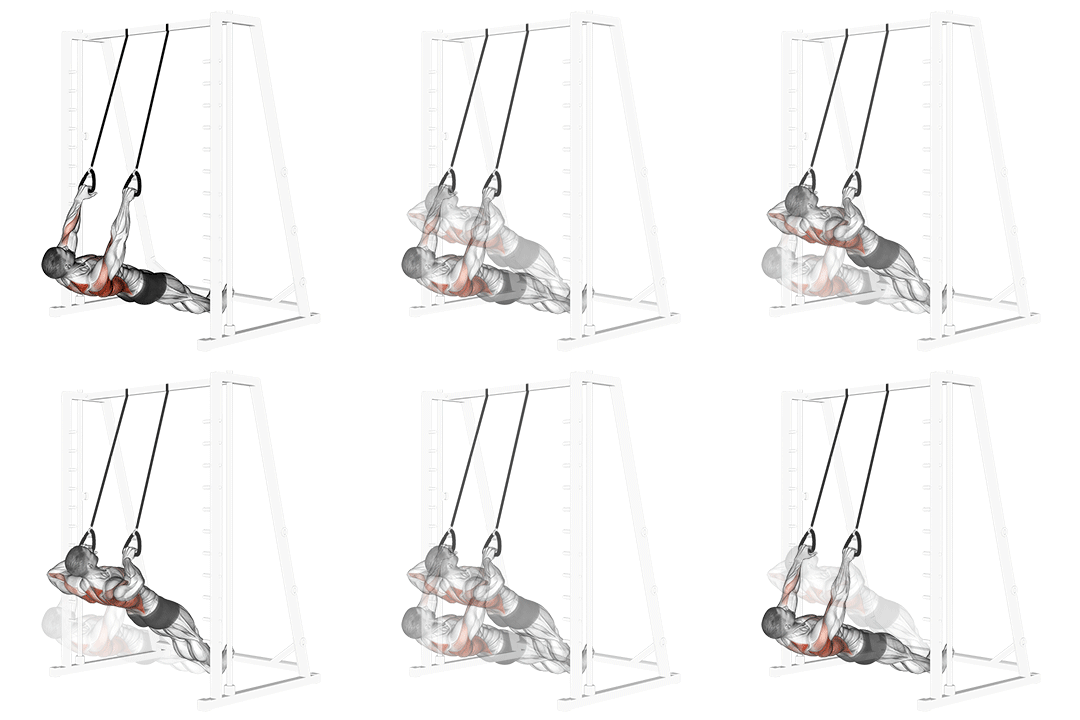
Muscle Up
advanced strength exercise · body weight · targets lats
- Body part
- back
- Primary target
- lats
- Equipment
- body weight
- Difficulty
- advanced
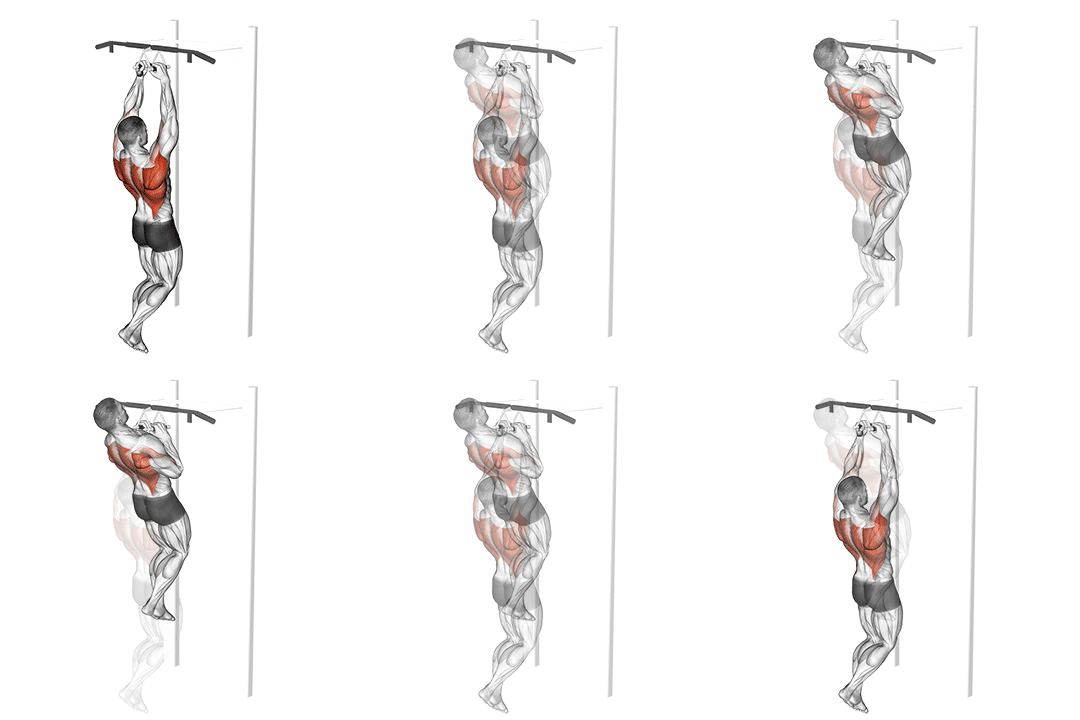
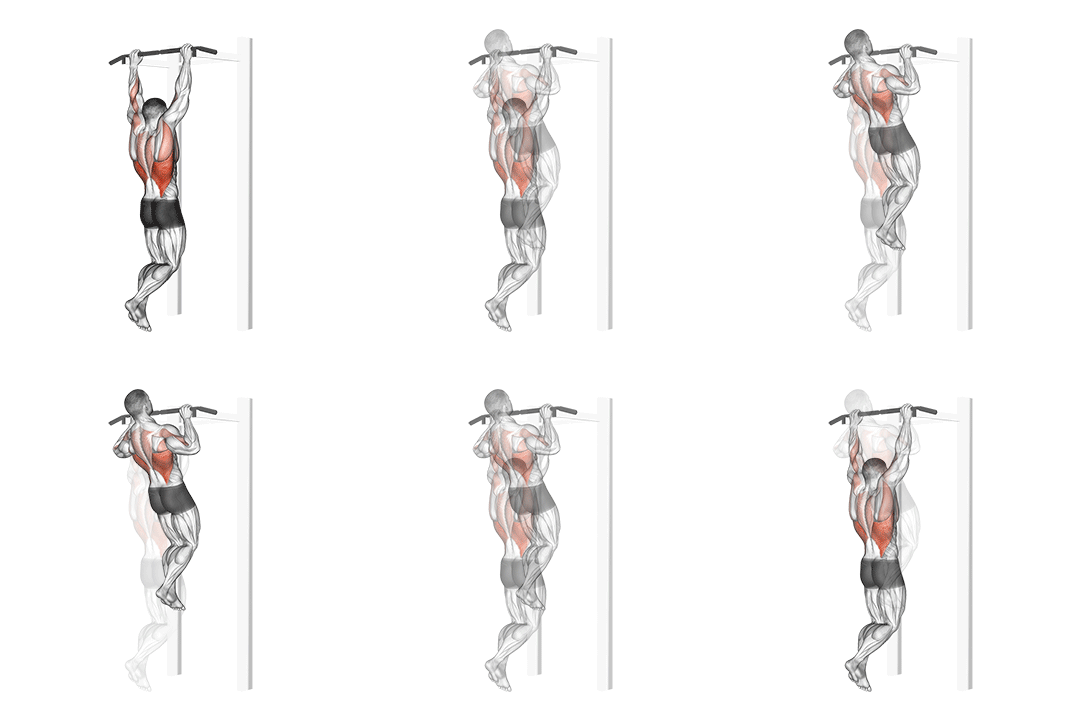
The strict muscle-up is one of the most demanding bodyweight exercises in existence — a movement that combines a high pull-up with a transition above the bar and a dip-press to lockout, all without any momentum or kipping assistance. Starting from a dead hang, you pull the chest up to the bar, transition the grip and body position so you're above the bar, then press up to a fully extended dip lockout. The whole motion happens in a single fluid skill that takes most trainees 1-3 years of dedicated training to develop, often longer. What makes the strict muscle-up so difficult is the extreme demand it places on the upper-body musculature. The pulling phase requires the strength to bring the chest above the bar — significantly higher than a standard pull-up. The transition demands integrated shoulder, lat, and core control to navigate the position change. The dip lockout requires solid pressing strength after the body has just performed a near-maximal pull. Few exercises demand such complete upper-body strength integration. For advanced trainees with adequate prerequisites (typically 12+ strict pull-ups, 12+ strict bar dips, and 6+ months working on transition drills), the strict muscle-up represents one of the most rewarding milestones in bodyweight training. The path runs through high pull-ups (chest-to-bar), explosive pull-ups, transition drills (jumping muscle-ups), and finally to the full strict version. Skipping prerequisites or rushing progression almost always produces injury rather than progress; patience is the main predictor of success in muscle-up training.
Why train the Muscle Up?
- Builds the most complete upper-body strength integration of any bodyweight exercise.
- Develops pulling power, transition strength, and pressing strength in one combined skill.
- Provides clear progression milestone that signals advanced bodyweight strength capability.
- Trains the shoulder stability and joint integrity that protect the joint at extreme positions.
- Carries over to advanced gymnastic skills like front lever, planche, and ring work.
- Develops the core strength and integration that supports all other advanced bodyweight exercises.
How to do the Muscle Up: step by step
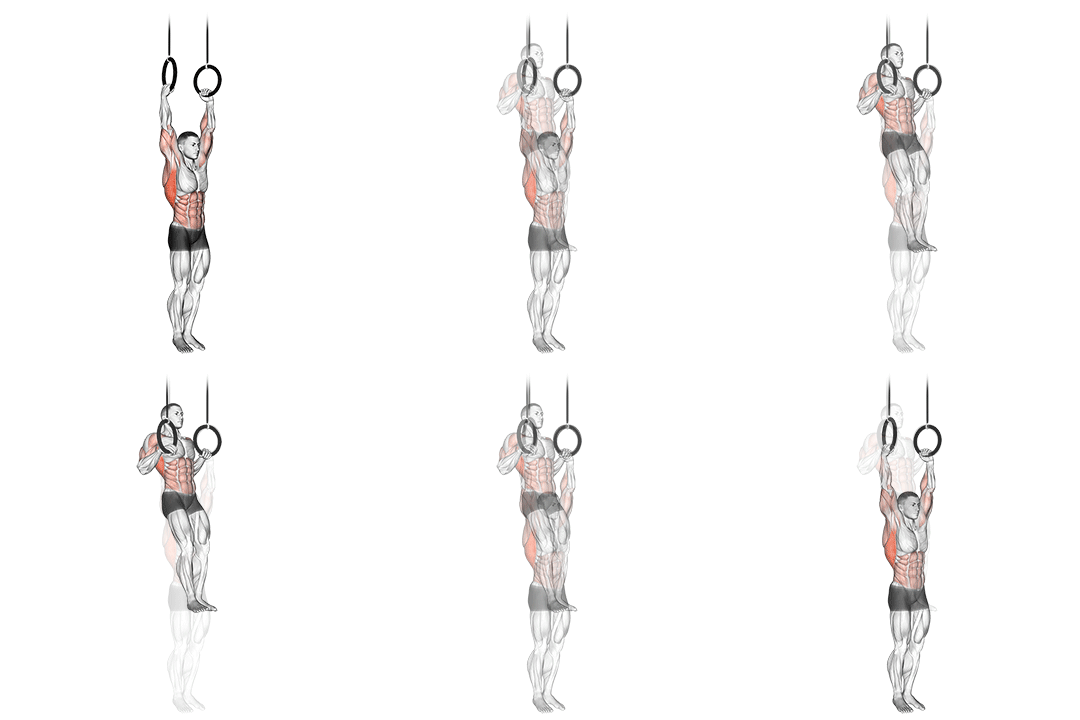
- 1Start by hanging from a pull-up bar with your palms facing away from you and your arms fully extended.
- 2Engage your core and pull your body up towards the bar, leading with your chest.
- 3As you reach the top of the movement, transition your grip so that your palms are facing towards you.
- 4Continue pulling yourself up until your chest is above the bar and your arms are fully flexed.
- 5Reverse the movement by slowly lowering yourself back down to the starting position.
- 6Repeat for the desired number of repetitions.
Muscles worked
Primary
lats
Secondary
biceps, triceps, shoulders, chest
Common mistakes to avoid
Insufficient strict prerequisites
Most failed muscle-up attempts come from trainees with inadequate base strength. Build to 12+ strict chest-to-bar pull-ups and 12+ strict bar dips before attempting muscle-ups. Without that base, the transition isn't possible without kipping, and kipping with weak strict strength produces injury.
Cutting the pull
The pulling phase of a muscle-up needs to bring the chest above the bar — much higher than a standard pull-up. If you're pulling only to chin level, you don't have the strength yet for the transition. Build chest-to-bar pull-ups before introducing muscle-up attempts.
Rushed transition through the bar
The transition phase (where you go from below the bar to above it) requires controlled body position. Rushing through stresses the shoulders and produces sloppy reps. Slow the transition deliberately, even on early attempts; the speed comes after the pattern is grooved.
Crashing into the dip
After the transition above the bar, the dip starts in a deep position. Many trainees crash into the bottom of the dip rather than absorbing it. Land softly with elbows bending immediately to absorb force, then press up to lockout. Hard transitions stress the shoulders and triceps.
Programming too frequently
The advanced load and skill demand benefit from significant recovery. More than 2 sessions per week produces accumulating shoulder stress and stagnation. Twice weekly is the cap for most trainees, paired with adequate prerequisite training.
Easier and harder variations
Easier
Practice components separately. Chest-to-bar pull-ups for the pull, strict bar dips for the press, transition drills (jumping muscle-ups from a box) for the transition. Combine into the full skill only after each component is solid in isolation.
Harder
Progress to consecutive strict muscle-ups (multiple reps without breaks). Or to weighted muscle-ups (vest or weight belt with plate). For maximum challenge, ring muscle-ups (significantly harder due to ring instability) or one-arm muscle-up training.
Alternative exercises
Kipping muscle-up
Easier version using kip momentum. Use to learn the transition pattern before attempting strict variations.
Chest-to-bar pull-up
The pulling component of muscle-up training. Build to 12+ strict reps before introducing muscle-up work.
Bar dip
The pressing component. Build to 12+ strict reps as preparation. Both pull and press strength are required for muscle-up training.
How to program the Muscle Up into your training
Strict muscle-up training belongs in advanced bodyweight or gymnastic strength programs. It earns no place in general fitness routines. Prerequisites: 12+ strict chest-to-bar pull-ups in a single set, 12+ strict bar dips, healthy shoulders and elbows, 12-18 months of consistent advanced bodyweight training, clean transition drill execution. Without these, the exercise produces injury rather than progress. Sets and reps: 3-4 sets of 1-3 reps with 2-4 minutes rest. The high skill and strength demand mean low reps drive the stimulus. Total weekly volume of 6-15 reps is appropriate. Frequency: 1-2 times per week is the cap. The shoulders, elbows, and wrists need 72-96 hours between sessions to recover from the integrated demand. In an advanced training session: place muscle-up practice early when freshness matters most. Sample order: warm-up, 4 sets of 2 strict muscle-ups, 4 sets of 6 chest-to-bar pull-ups, 4 sets of 6 strict dips, 3 sets of 30-second hollow holds. For trainees building toward muscle-ups: progress through prerequisite skills over 12-18 months. Don't attempt full muscle-ups until all components are solid in isolation. The patience pays off as the exercise becomes productive rather than injurious. For maintenance once the skill is built: 2 sets of 3 strict muscle-ups, once per week, maintains the skill indefinitely. Don't program muscle-ups when fatigued or in deload weeks. The advanced demand requires fresh shoulders and full neural availability.
Recovery and frequency
Strict muscle-ups have a very steep recovery cost. The shoulders, elbows, wrists, lats, biceps, triceps, and core all absorb significant load. 72-96 hours between sessions is typical. The shoulders are usually the limiting recovery factor — soreness, popping, or persistent fatigue warrants attention. The elbows are second; medial or lateral epicondylitis is common at high volumes. Long-term, regular muscle-up training requires monthly deload weeks where you skip the exercise entirely and revert to strict pull-up and dip work. Pair the work with daily shoulder mobility and rotator cuff prehab. Sleep, hydration, and protein intake all support the high recovery demand. Persistent pain warrants stopping and addressing the underlying issue with a physiotherapist before continuing.
Frequently asked questions
How many sets and reps of strict muscle-ups should I do?
3-4 sets of 1-3 reps with 2-4 minutes rest. The high skill and strength demand mean low reps drive the stimulus. Total weekly volume of 6-15 reps is appropriate.
How often should I do strict muscle-ups?
1-2 times per week maximum. The shoulders need 72-96 hours between sessions to recover from the integrated demand.
How long does it take to learn a strict muscle-up?
Most trainees with prerequisites need 6-12 months of dedicated practice. Without prerequisites, expect 18-36 months including time to build foundational strength. Patience is the main predictor of success.
Strict vs kipping muscle-up: which should I learn first?
Either works as an entry point. Kipping is more accessible because the momentum compensates for some strength gaps; strict is cleaner technique with less joint stress per rep. For pure strength development, strict is the gold standard. Most trainees learn kipping first, then progress to strict.
Can I do this without specialized equipment?
Yes — a sturdy pull-up bar that allows clearance for the transition above is sufficient. Most home pull-up bars work. Outdoor parks often have appropriate bars. The skill itself doesn't require specialized equipment beyond the bar.
Why is this so much harder than a pull-up plus dip?
The transition between the pull and the dip is the hard part. Going from below the bar to above it requires integrated shoulder, lat, and core strength that pure pull-up or dip training doesn't fully develop. The transition is what separates muscle-ups from their component skills.
Useful tools for this exercise
Build a workout with the Muscle Up
Puna gives you guided bodyweight workouts you can do anywhere — no equipment, no gym, just structured progressions that build real strength.