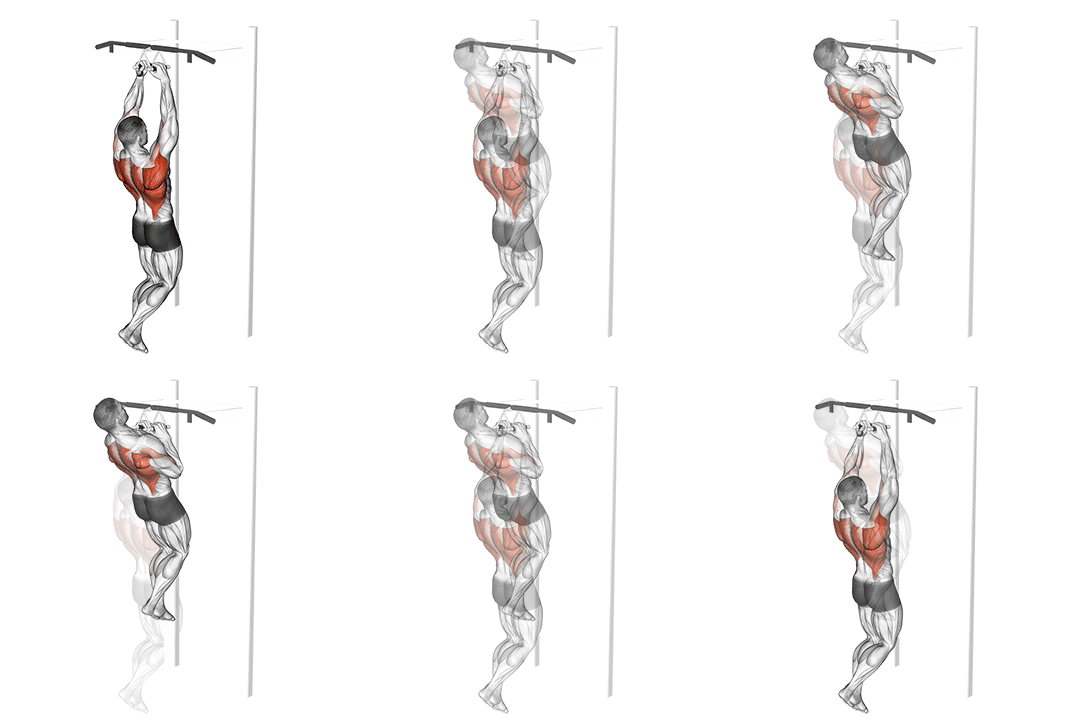
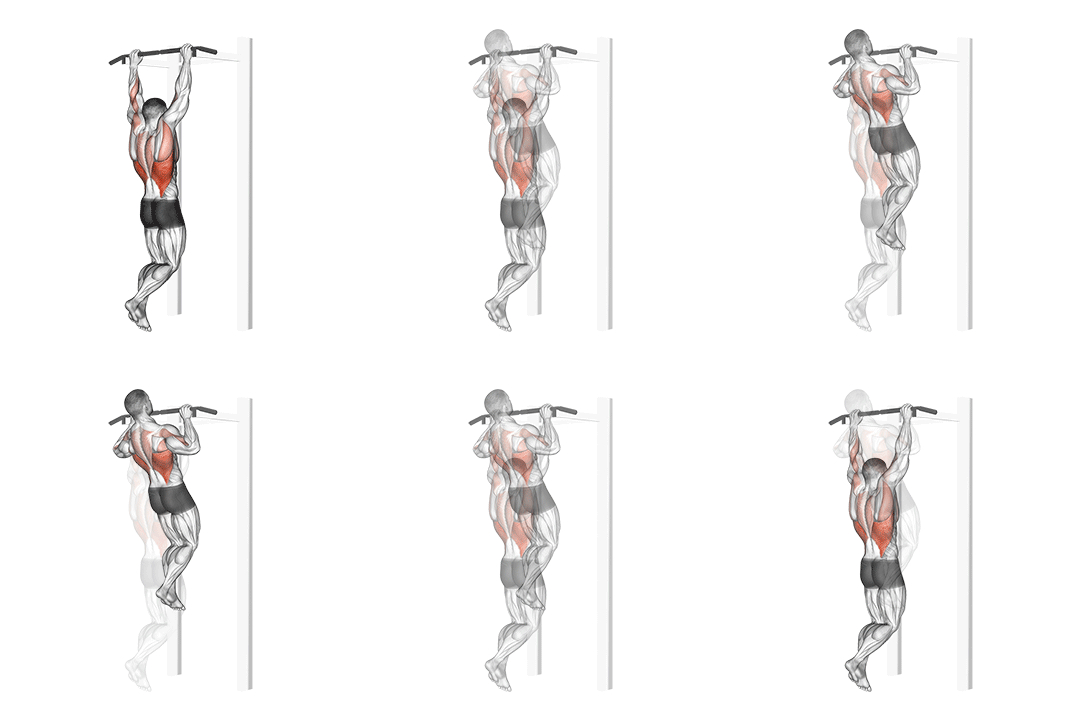
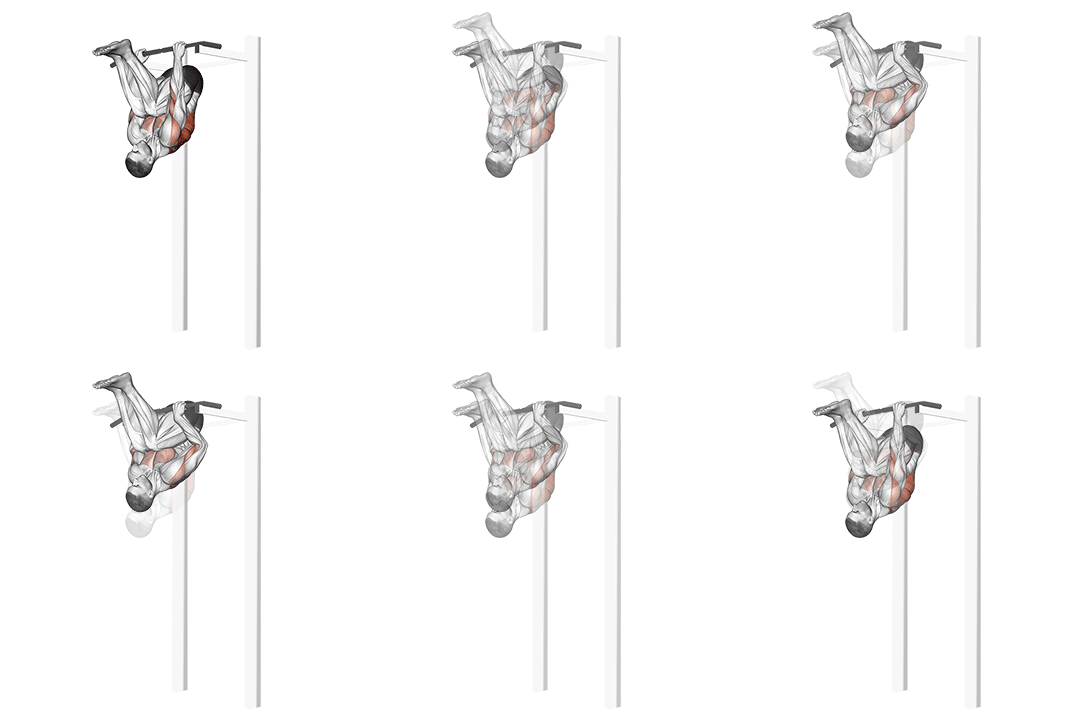
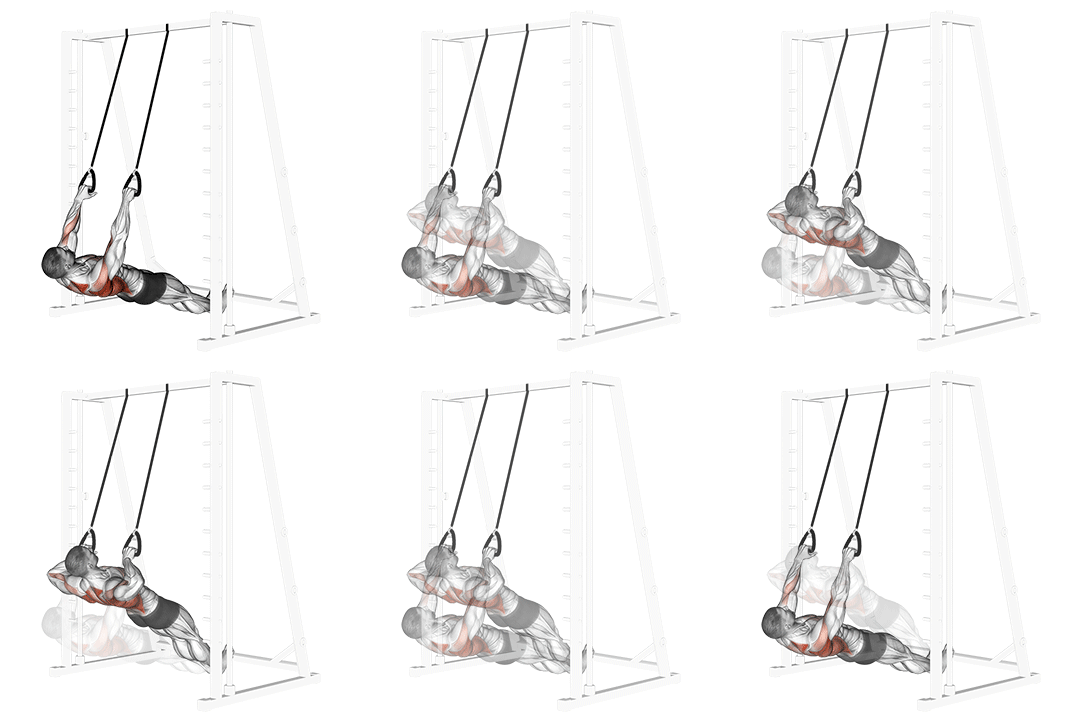
Mixed Grip Chin-up
intermediate strength exercise · body weight · targets lats
- Body part
- back
- Primary target
- lats
- Equipment
- body weight
- Difficulty
- intermediate
The mixed grip chin-up is a chin-up variation where one hand grips the bar overhand (palm facing away) and the other hand grips underhand (palm facing toward you). The asymmetric grip changes how the body loads through the rep — one side emphasizes biceps and brachialis (underhand grip), while the other emphasizes lats and middle back (overhand grip). The exercise builds asymmetric pulling strength and exposes left-right imbalances that bilateral grip variations mask. This is one of the more unusual chin-up variations, primarily used by competitive lifters preparing for deadlifts (where mixed grip is sometimes used at maximum loads) and by athletes seeking to address pulling asymmetries. For general fitness, mixed grip chin-ups offer limited additional benefit over standard pull-ups or chin-ups — the asymmetric loading produces some unique stimulus but isn't required for general back development. Where mixed grip chin-ups earn their place is in addressing pulling imbalances. Most trainees discover after months of training that one side pulls harder than the other; bilateral grip variations let the strong side carry more of the load. Mixed grip exposes this asymmetry and forces each side to handle its share. Programmed thoughtfully — 1-2 sessions per week with periodic side-switching — mixed grip chin-ups can help address strength imbalances and add variety to a comprehensive back-training program. The trade-off is the unusual shoulder loading pattern, which doesn't suit all trainees, particularly those with anterior shoulder issues.
Why train the Mixed Grip Chin-up?
- Exposes and addresses left-right pulling strength imbalances that bilateral grips mask.
- Provides variety in pulling mechanics for trainees with comprehensive back training.
- Builds asymmetric pulling strength relevant to deadlift mixed-grip mechanics.
- Combines lat-emphasis (overhand side) with biceps-emphasis (underhand side) in one rep.
- Useful for competitive lifters preparing for mixed-grip deadlift work.
- Adds variety to long-term pulling programming, preventing plateau from repeated bilateral patterns.
How to do the Mixed Grip Chin-up: step by step
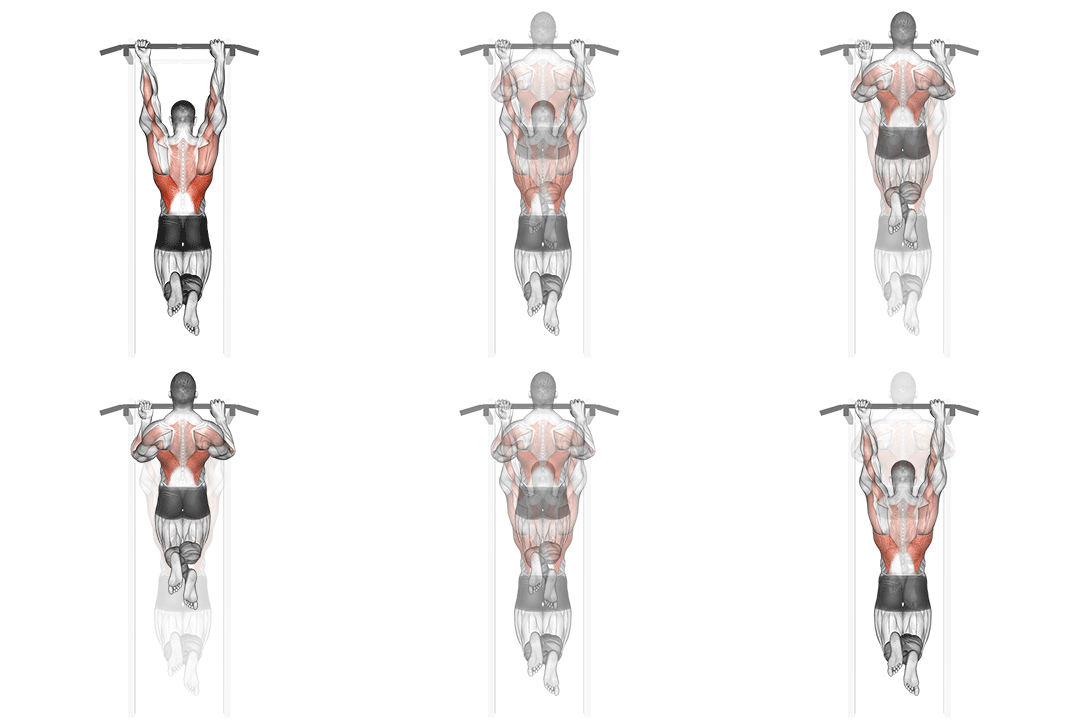
- 1Grab the pull-up bar with an underhand grip (palms facing towards you) and your hands slightly wider than shoulder-width apart.
- 2Hang from the bar with your arms fully extended and your feet off the ground.
- 3Engage your back muscles and pull your body up towards the bar, leading with your chest.
- 4Continue pulling until your chin is above the bar.
- 5Pause for a moment at the top, then slowly lower your body back down to the starting position with control.
- 6Repeat for the desired number of repetitions.
Muscles worked
Primary
lats
Secondary
biceps, forearms
Common mistakes to avoid
Always favoring the same hand placement
Most trainees unconsciously place the dominant hand in the same grip position every set. This reinforces the asymmetry rather than addressing it. Alternate which hand is overhand vs. underhand each set, or each session. The consistency of alternation is what produces balanced development.
Letting the body twist during the pull
The asymmetric grip wants to twist the body during the pull. The torso rotates toward the underhand-gripping side, which shifts loading patterns and stresses the shoulders. Brace the abs and keep the chest square to the bar throughout. The body should rise straight up, not rotate.
Cutting depth at the bottom or top
Full range matters: arms fully extended at the bottom, chin clearing the bar at the top. The asymmetric grip can make full range feel awkward initially, leading some trainees to cut range. Push for full range; the asymmetric pulling pattern is the value, not partial reps.
Skipping the prerequisite work
Most failed mixed-grip chin-up attempts come from trainees without solid bilateral pulling strength. Build to 8-10 strict pull-ups and 8-10 strict chin-ups before introducing the mixed grip. The base strength makes the asymmetric loading manageable.
Programming without addressing imbalances
If mixed grip chin-ups expose a major asymmetry, the answer isn't just 'do more mixed grip.' The answer is targeted unilateral work (single-arm rows, archer chin-ups) on the weaker side until the imbalance closes. Mixed grip exposes the issue; unilateral work addresses it.
Easier and harder variations
Easier
Use band assistance (band looped around the bar with a foot in it) to reduce bodyweight load. Or perform negative mixed-grip chin-ups (jump or step to top, lower slowly for 5-10 seconds). Either approach builds strength toward unassisted reps over weeks.
Harder
Add weight (vest or weight belt with plate). Or progress to one-arm chin-ups, which represent the ultimate asymmetric pulling progression. Or perform mixed grip with closer hand placement for added biceps/forearm demand.
Alternative exercises
Standard pull-up (overhand)
Bilateral pulling at the lat-emphasis grip. Use as primary back work; mixed grip as variety.
Standard chin-up (underhand)
Bilateral pulling at the biceps-emphasis grip. Pair with pull-ups for complete development.
Single-arm row
Unilateral row that addresses pulling asymmetries directly. Often more effective than mixed grip for closing strength imbalances.
How to program the Mixed Grip Chin-up into your training
Mixed grip chin-up training fits as variety work or asymmetry-addressing accessory in any pulling program. It's not a primary back exercise. Sets and reps: 3-4 sets of 4-8 reps with 90-120 seconds rest. Total weekly volume of 30-60 reps is appropriate. Alternate which hand is overhand vs underhand between sets or sessions. Frequency: 1-2 times per week. The asymmetric loading and shoulder demand benefit from longer recovery between sessions than standard pull-ups. In a back-emphasis program: place mixed grip chin-ups as accessory work after primary bilateral pulling. Sample order: 4 sets of 6 standard pull-ups, 3 sets of 6 mixed grip chin-ups (alternating sides), 3 sets of 8 inverted rows, 3 sets of 30-second dead hangs. For competitive lifters: include mixed grip work 1-2 times per week during preparation phases for deadlift competitions. The asymmetric pulling pattern carries over to mixed grip deadlift mechanics. For addressing pulling imbalances: combine mixed grip chin-ups with single-arm rows. The mixed grip exposes the asymmetry; single-arm work addresses it directly. Most imbalances close within 8-12 weeks of dedicated work. For general fitness: mixed grip chin-ups are largely optional. Standard pull-ups and chin-ups cover most back training needs without the unusual loading pattern. Don't program mixed grip chin-ups in isolation from bilateral pulling work. The combination of bilateral strength building and asymmetric variety produces the best results.
Recovery and frequency
Mixed grip chin-ups recover within 48-72 hours due to the asymmetric loading and shoulder stability demand. The longer recovery than bilateral chin-ups reflects the additional joint stress. The main warning signs are anterior shoulder pain on the underhand side (often the biceps tendon attachment), elbow tendinopathy, and asymmetric grip soreness. Anterior shoulder issues warrant reducing volume and adding rotator cuff prehab. Elbow tendinopathy benefits from reduced volume and eccentric forearm work. Standard back and biceps soreness is normal and fades within 48-72 hours. Asymmetric soreness (one side significantly more sore than the other) often indicates strength imbalance — train the weaker side with slightly more volume to address.
Frequently asked questions
How many sets and reps of mixed grip chin-ups should I do?
3-4 sets of 4-8 reps with 90-120 seconds rest. Total weekly volume of 30-60 reps is appropriate. Alternate which hand is overhand vs underhand between sets.
How often should I do mixed grip chin-ups?
1-2 times per week. The asymmetric loading benefits from longer recovery than standard chin-ups.
Mixed grip vs standard chin-up: which is better?
Different goals. Standard variations are better for primary strength building. Mixed grip is better for variety and addressing asymmetries. Most well-rounded programs use standard variations as primary work, mixed grip as occasional variety.
Why use mixed grip if it stresses the shoulders more?
Two main reasons. First, it exposes left-right pulling imbalances that bilateral grips mask. Second, it carries over to mixed-grip deadlift mechanics for competitive lifters. For general fitness without these specific needs, standard variations are sufficient.
Will this build my back?
Yes, with the same general back development as bilateral chin-ups, plus the asymmetric stimulus. The differences in development are subtle; for most trainees, the back appearance won't differ noticeably from bilateral training.
Should I worry about asymmetric strength?
If the asymmetry is mild (within 1-2 reps difference between sides), don't worry. If significant (3+ reps difference or one side dramatically weaker), address with single-arm work. Mixed grip exposes the issue but doesn't directly fix major imbalances.
Useful tools for this exercise
Build a workout with the Mixed Grip Chin-up
Puna gives you guided bodyweight workouts you can do anywhere — no equipment, no gym, just structured progressions that build real strength.