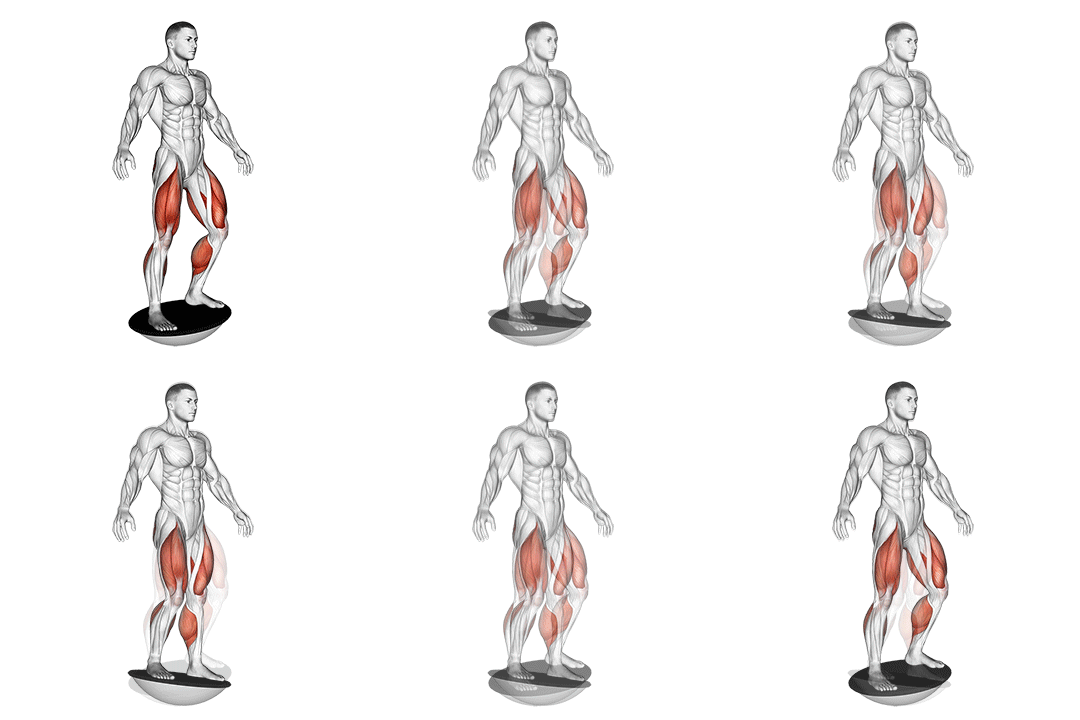
March Sit (wall)
intermediate strength exercise · body weight · targets glutes
- Body part
- upper legs
- Primary target
- glutes
- Equipment
- body weight
- Difficulty
- intermediate
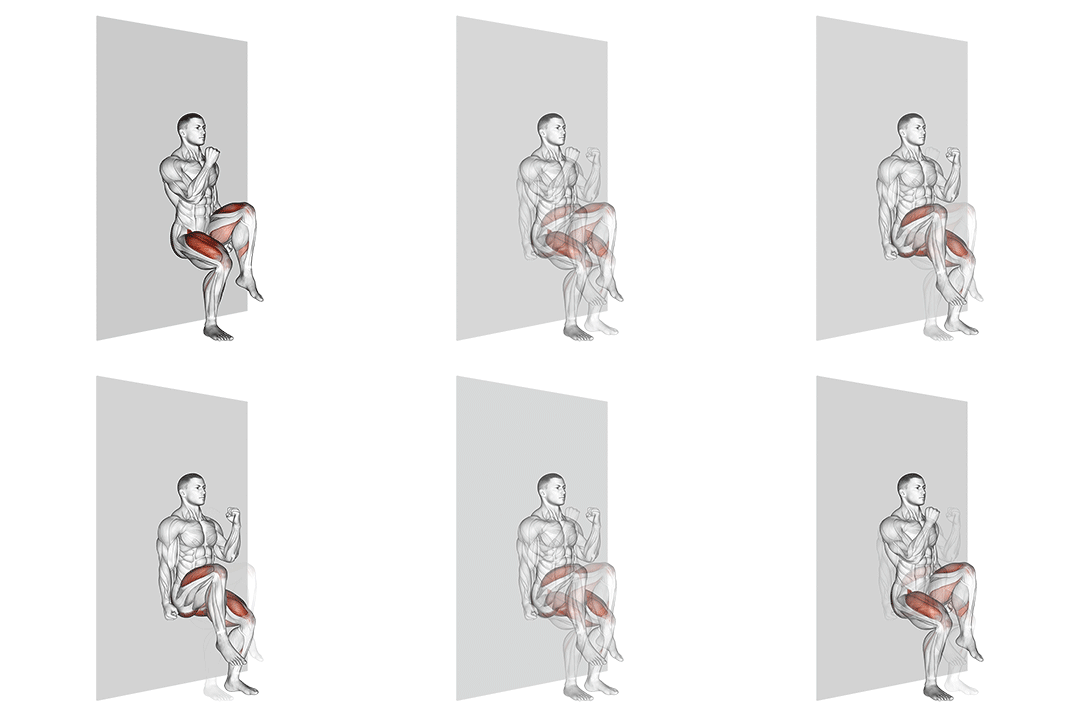
The march sit (wall) is a glute-and-hip-flexor exercise performed sitting against a wall in a partial squat position with knees bent at 90 degrees. From this 'wall sit' base position, you alternately lift one foot off the floor (marching) while maintaining the squat hold. The combination produces sustained quad and glute engagement from the wall sit alongside dynamic hip flexor work from the marching, creating a hybrid isometric-dynamic exercise. Most trainees encounter wall sits as static endurance exercises. Adding the march component multiplies the demand by removing one foot's worth of support every other moment, forcing more weight onto the supporting leg and engaging the hip flexors of the lifting leg. The exercise is significantly more demanding than a pure wall sit at the same depth and produces meaningful glute, quad, and hip flexor work simultaneously. Where this earns its place is as a time-efficient lower-body conditioning exercise. The combined demand on multiple muscle groups makes it suitable as a finisher after main lower-body work, as a single-exercise lower-body workout when time is short, or as accessory work during recovery weeks when full-intensity training isn't appropriate. The trade-off is the modest peak strength load — the exercise builds endurance more than maximum strength.
Why train the March Sit (wall)?
- Combines wall sit endurance with dynamic hip flexor work in one exercise.
- Builds quad, glute, and hip flexor strength simultaneously.
- Time-efficient when limited training windows are available.
- Useful as a finisher after main lower-body work.
- Requires only a wall — accessible in any setting.
- Suitable for general fitness or rehabilitation contexts.
How to do the March Sit (wall): step by step
- 1Stand with your back against a wall and your feet hip-width apart.
- 2Slowly slide your back down the wall until your knees are bent at a 90-degree angle.
- 3Lift your right foot off the ground and bring your knee towards your chest.
- 4Lower your right foot back down and lift your left foot off the ground, bringing your knee towards your chest.
- 5Continue alternating between lifting your right and left foot for the desired number of repetitions.
Muscles worked
Primary
glutes
Secondary
quadriceps, hamstrings, calves
Common mistakes to avoid
Letting the back come off the wall
The lower back must stay pressed against the wall throughout. If it pulls away, the exercise loses its position and becomes harder to control.
Going too deep too soon
Start with knees at 90 degrees (thighs parallel to floor or slightly higher). Going deeper than 90 degrees dramatically increases knee load and shouldn't be attempted until form is solid.
Slamming the foot back down
The lifted foot should return softly to the floor, not slam back. Hard returns spike the knee joint.
Holding the breath
Breathe rhythmically through the marching motion. Holding the breath limits sustained effort.
Lifting the foot too high
A modest lift (3-6 inches) is sufficient. Higher lifts shift weight too aggressively to the supporting leg.
Easier and harder variations
Easier
Start with shallower wall sit (knees at 60 degrees). Or perform without marching, just static wall sit.
Harder
Hold a weight plate against the chest. Or progress to single-leg wall sits without marching. Or increase march pace and duration.
Alternative exercises
Wall sit (static)
Pure isometric version. Use as foundation before adding march component.
Bulgarian split squat
Strength-focused single-leg work. More productive for serious leg development.
Bodyweight squat
Dynamic full-range version. Better for general lower-body strength.
How to program the March Sit (wall) into your training
March sit works as accessory or finisher work in lower-body programs. Sets and reps: 3 sets of 30-60 seconds with 60 seconds rest. Total weekly duration of 4-8 minutes. Frequency: 2-3 times per week. Lower body recovers within 48 hours. In a session: as a finisher after squats and lunges. 2-3 sets of 45 seconds. For general fitness: 2-3 times per week as accessory. Don't program march sits as primary lower-body work — squats and lunges produce more strength stimulus per minute.
Recovery and frequency
Recovery within 24-48 hours. Watch for knee discomfort during sustained holds.
Frequently asked questions
How long should I march sit?
30-60 seconds per set, 3 sets per session.
How often?
2-3 times per week.
Will this build my legs?
Builds endurance more than maximum strength. For serious leg development, squats and lunges are more productive.
Is this safe for knees?
Generally yes at 90-degree knee angle. Going deeper increases knee load significantly.
March sit vs static wall sit?
March sit adds dynamic hip flexor work to static wall sit. More comprehensive but harder.
Can I do this for weight loss?
Provides moderate calorie burn alongside leg conditioning. Combine with cardio and dietary management for fat loss.
Useful tools for this exercise
Build a workout with the March Sit (wall)
Puna gives you guided bodyweight workouts you can do anywhere — no equipment, no gym, just structured progressions that build real strength.