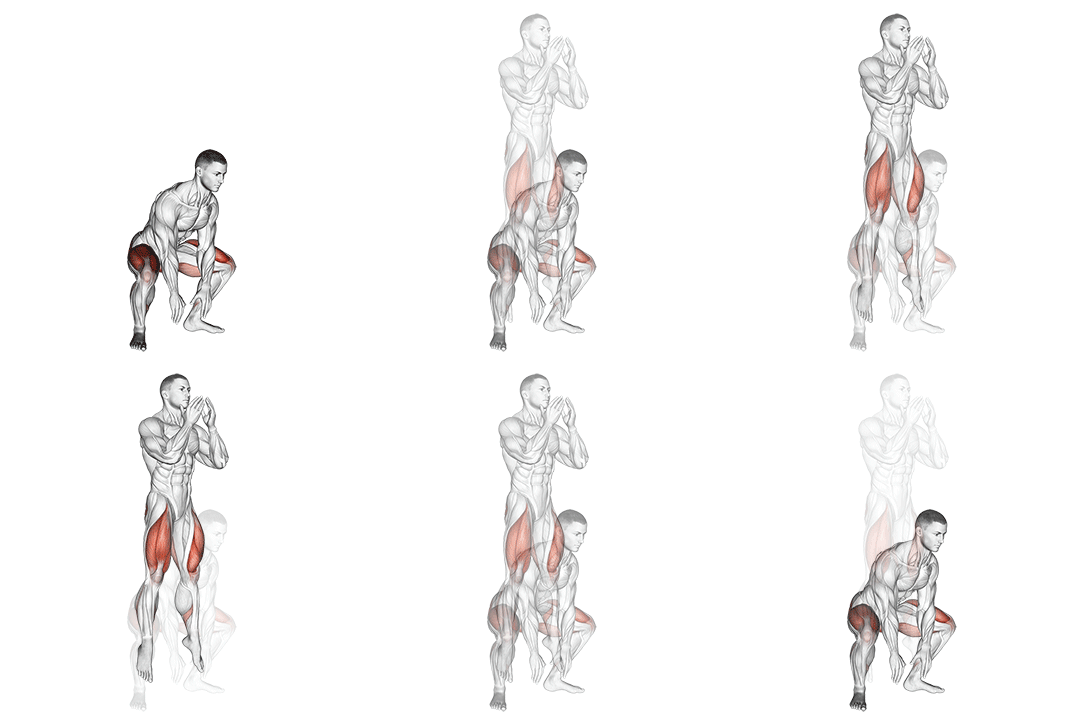
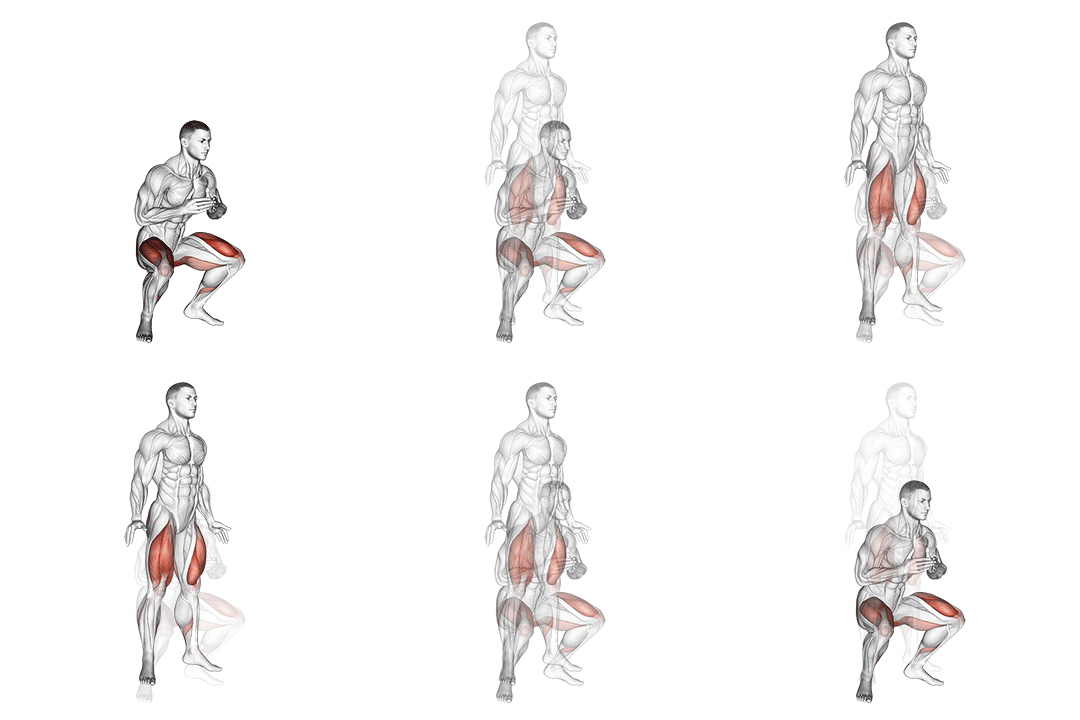
Lunge With Jump
advanced plyometrics exercise · body weight · targets glutes
- Body part
- upper legs
- Primary target
- glutes
- Equipment
- body weight
- Difficulty
- advanced
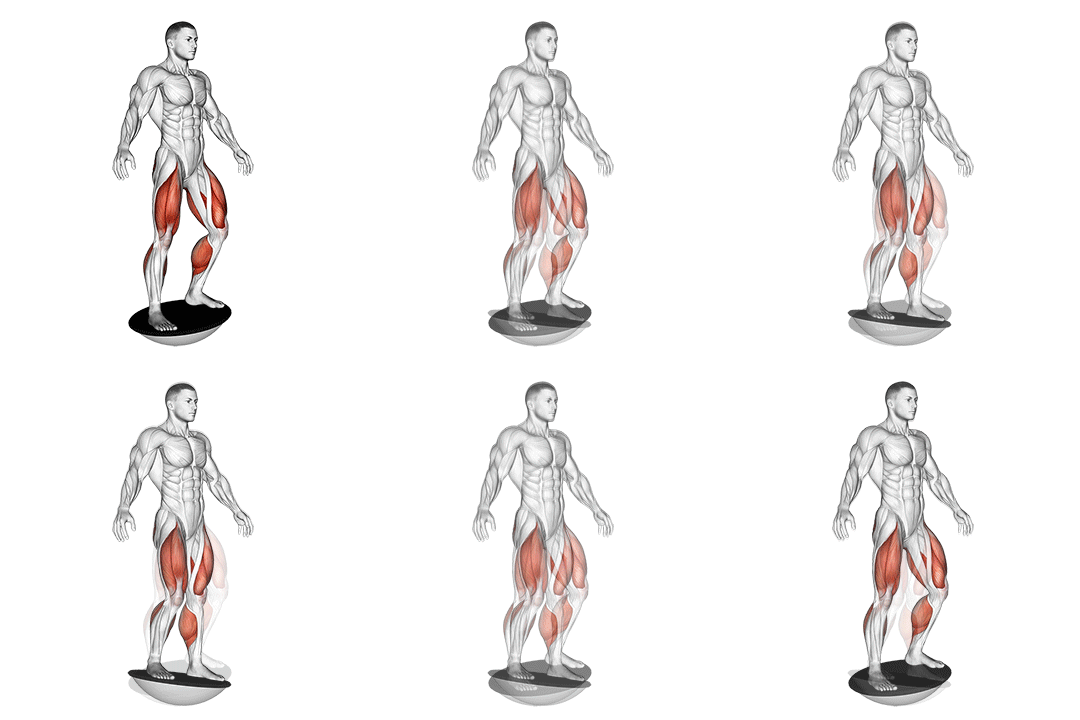
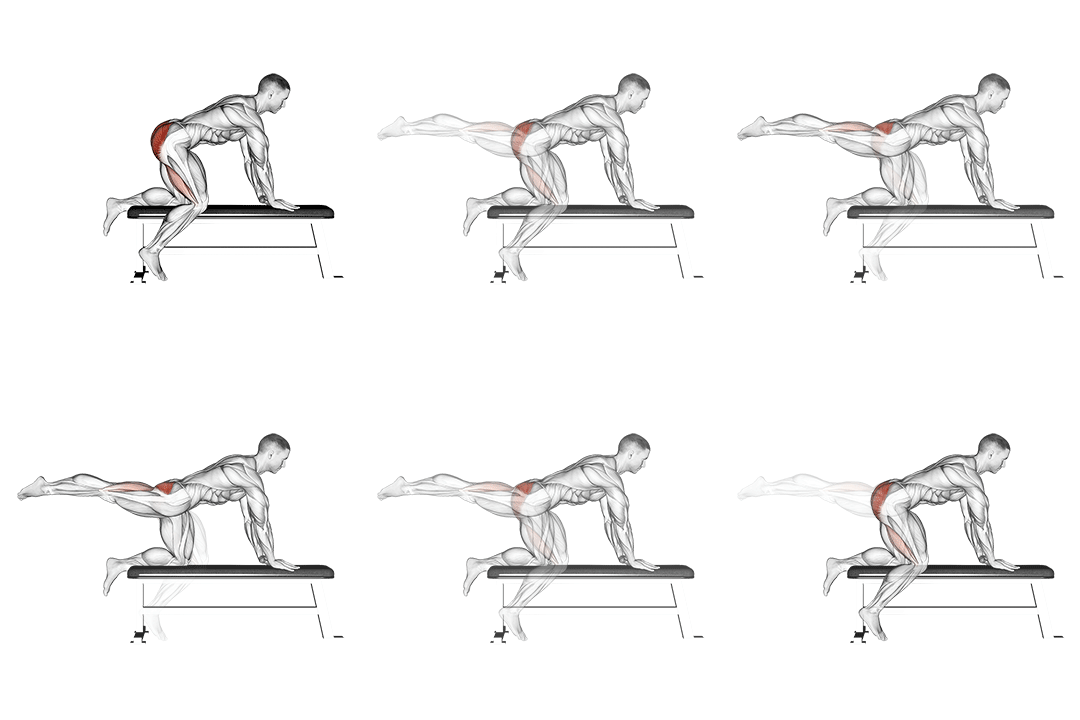
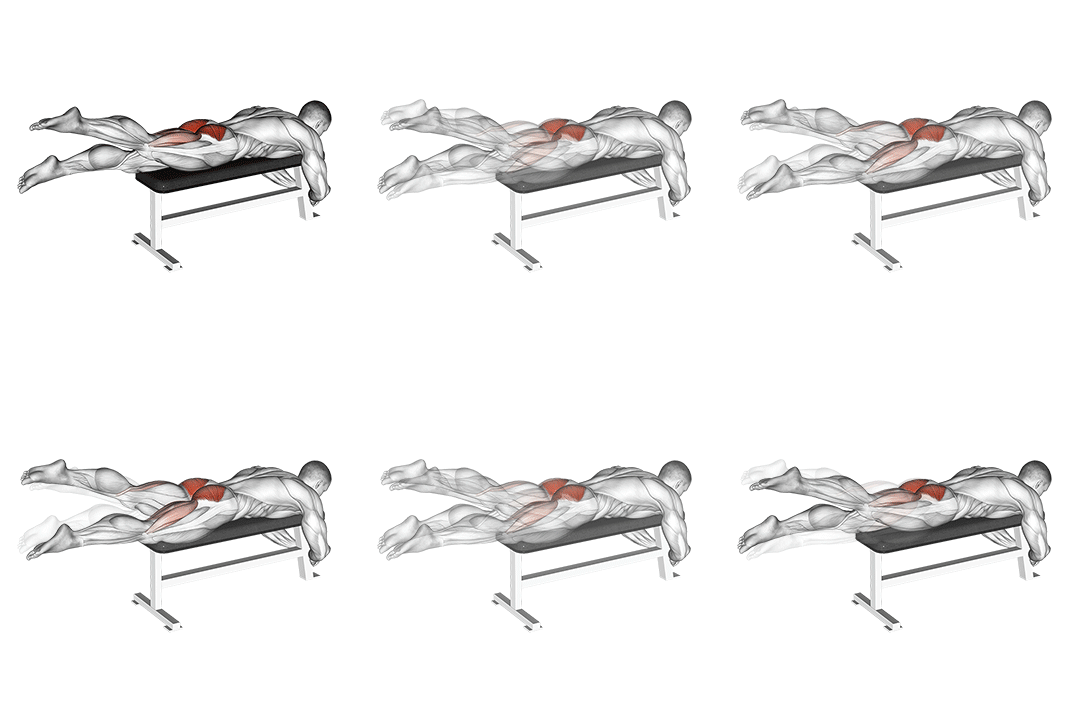
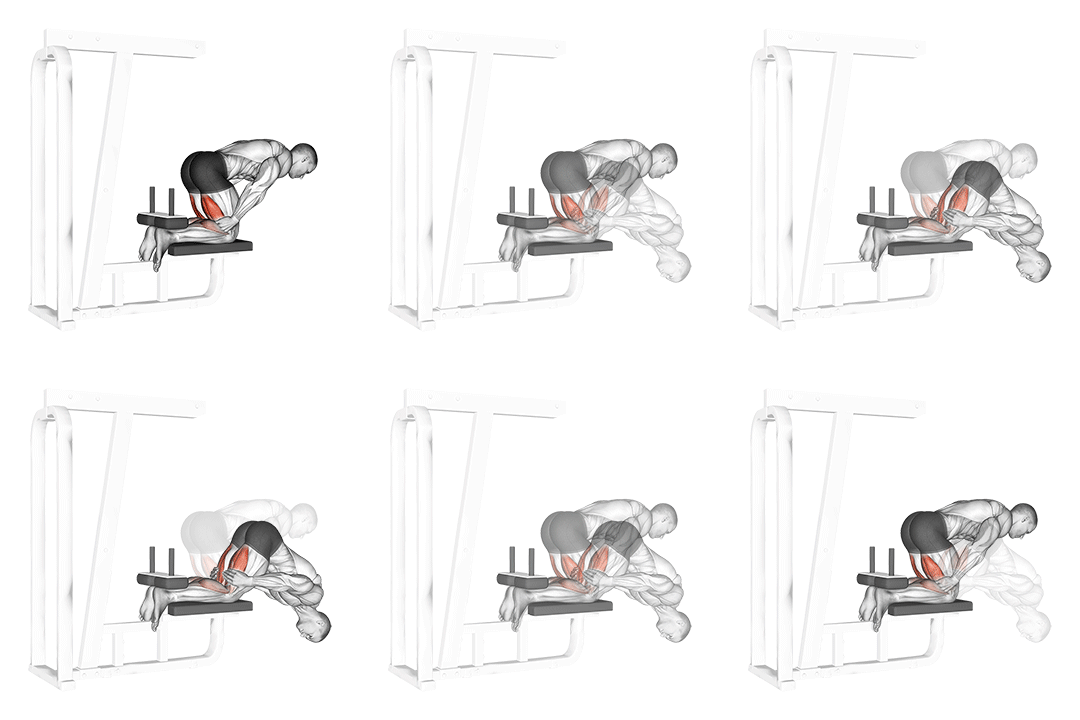
The lunge with jump is a plyometric variation of the lunge that combines unilateral lower-body work with explosive power. From a forward lunge position, you drive up explosively enough to leave the floor, switching the position of the legs in mid-air to land in the opposite lunge stance, then immediately drop into the next jump. The continuous alternating-leg jumping turns a strength exercise into a power-and-conditioning exercise. This is one of the most demanding bodyweight cardio exercises available. The combination of unilateral leg loading, explosive power generation, and the cardio demand of repeated jumping creates a stimulus that few other exercises match. Most trainees who can do 30+ standard lunges per leg can sustain only 30-45 seconds of jumping lunges before exhaustion. It's particularly useful for athletes who need explosive single-leg power — basketball players, soccer players, fighters, and runners. The exercise also burns calories quickly, making it a useful conditioning piece in time-constrained workouts. The trade-off is the joint stress: the repeated landings on each single leg accumulate impact quickly, so volume needs to be respected.
Why train the Lunge With Jump?
- Combines explosive power and cardio in one efficient unilateral exercise.
- Burns calories quickly while building lower-body strength.
- Trains single-leg power expression that transfers to most sports.
- Reveals strength asymmetries between sides under explosive demand.
- Requires no equipment.
- Provides a useful conditioning option when time is limited.
How to do the Lunge With Jump: step by step
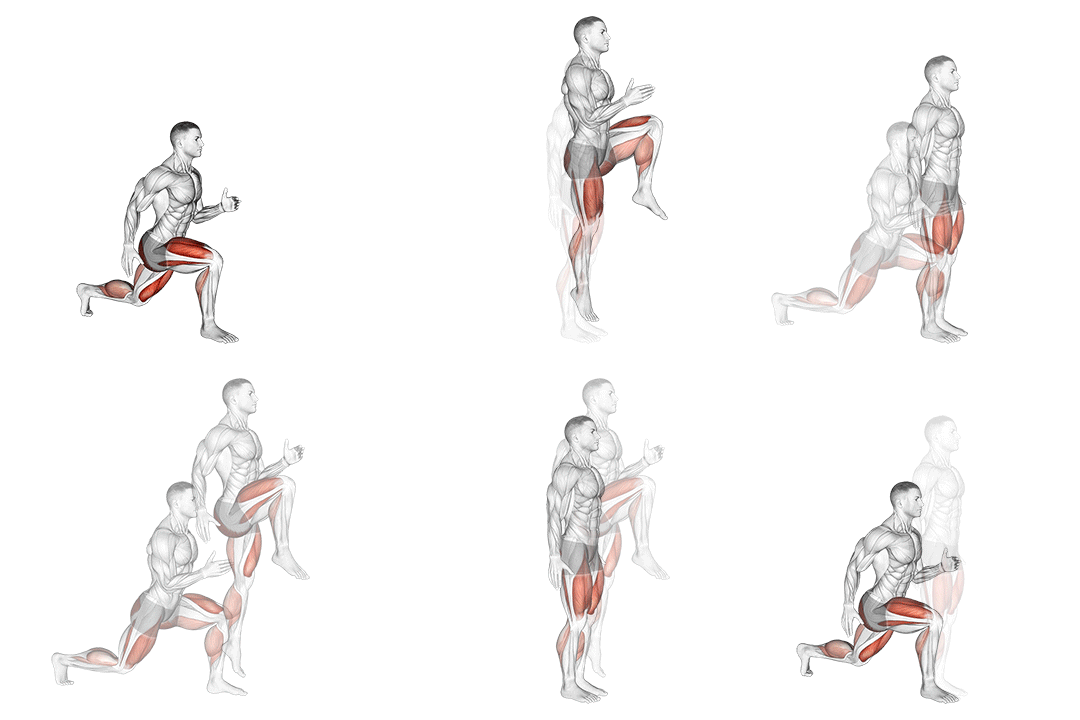
- 1Start by standing with your feet shoulder-width apart.
- 2Take a step forward with your right foot, lowering your body into a lunge position.
- 3Push off with your right foot and jump into the air, switching the position of your feet mid-air.
- 4Land softly with your left foot forward and immediately lower your body into a lunge position.
- 5Continue alternating between lunges and jumps for the desired number of repetitions.
Muscles worked
Primary
glutes
Secondary
quadriceps, hamstrings, calves
Common mistakes to avoid
Landing flat-footed and stiff-legged
Coming down with locked knees on a single leg sends impact straight into the joint. Land on the ball of the foot first, then absorb through the knee and hip into the next jump.
Not switching legs in mid-air
True jumping lunges switch the legs while airborne. Some trainees do mini-jumps and switch legs on the floor, which removes the explosive component. Generate enough air time to clearly switch legs in flight.
Letting the front knee track inward on landing
Knee valgus during single-leg landing is dangerous. Drive the knee out in line with the toes on every landing — even when fatigued.
Going too fast for control
Speed kills form on landings. Take a measured pace — control matters more than maximum speed.
Choosing this before mastering standard lunges
Build to 3 sets of 12 strict lunges per leg before attempting jumping versions. Without that base, the joint stress isn't matched by adequate strength.
Easier and harder variations
Easier
Standard alternating lunges without the jump. Or perform jumping lunges with reduced explosiveness (small jumps with leg switch).
Harder
Add a tuck jump (knees toward chest in mid-air). Add load (light dumbbells or vest). Or progress to deeper lunge depth requiring more explosive power to clear.
Alternative exercises
Standard alternating lunges
Same unilateral pattern without the jump. Easier on the joints and sustainable for higher rep counts.
Box jump
Bilateral jumping with soft landing. Different exercise but trains explosive lower-body power.
Burpee
Full-body cardio alternative when lower body needs a break from jumping lunge stress.
How to program the Lunge With Jump into your training
Jumping lunges work as conditioning or accessory power work, not as primary strength training. For conditioning: 4-6 rounds of 30-45 seconds work with 30-60 seconds rest. Total work time of 4-5 minutes spikes heart rate and builds work capacity. For power development: 3-4 sets of 6-10 reps per side with 90-120 seconds full rest. Focus on quality of jumps over total volume. In a circuit: 30 seconds jumping lunges, 10 push-ups, 30 seconds rest, repeat 4-5 times. Limit to 1-2 sessions per week. The cumulative joint stress builds up faster than people expect. Do not program on consecutive days. Knee and ankle recovery from this kind of impact takes 48-72 hours.
Recovery and frequency
Jumping lunges are demanding on the knees, ankles, and quads. 48-72 hours between sessions is the right cadence. Quad and calf soreness is normal in the first 2 weeks. Sharp knee pain — particularly under or around the kneecap — is a stop signal. Daily calf and ankle mobility help.
Frequently asked questions
How many sets and reps of jumping lunges should I do?
For conditioning: 4-6 rounds of 30-45 seconds work with 30-60 seconds rest. For power: 3-4 sets of 6-10 reps per side with 90-120 seconds rest.
How often should I train jumping lunges?
1-2 times per week with at least 48-72 hours between sessions.
Are jumping lunges safe for the knees?
With proper landing mechanics and reasonable volume, yes. With locked-knee landings or excessive frequency, no — patellar tendinopathy is the most common overuse injury.
Jumping lunges vs jump squats: which is better?
Different tools. Jump squats train bilateral explosive power. Jumping lunges train unilateral explosive power. Both have value; alternate them in programming.
Will jumping lunges improve my running?
Yes — they train single-leg explosive power that supports sprinting and quick changes of direction. Combined with strength work, they're useful for runners and field-sport athletes.
Can I do jumping lunges every day?
Not safely. The cumulative joint load builds up too fast. Stick to 1-2 dedicated sessions per week.
Useful tools for this exercise
Build a workout with the Lunge With Jump
Puna gives you guided bodyweight workouts you can do anywhere — no equipment, no gym, just structured progressions that build real strength.