Lower Back Curl
beginner strength exercise · body weight · targets spine
- Body part
- back
- Primary target
- spine
- Equipment
- body weight
- Difficulty
- beginner
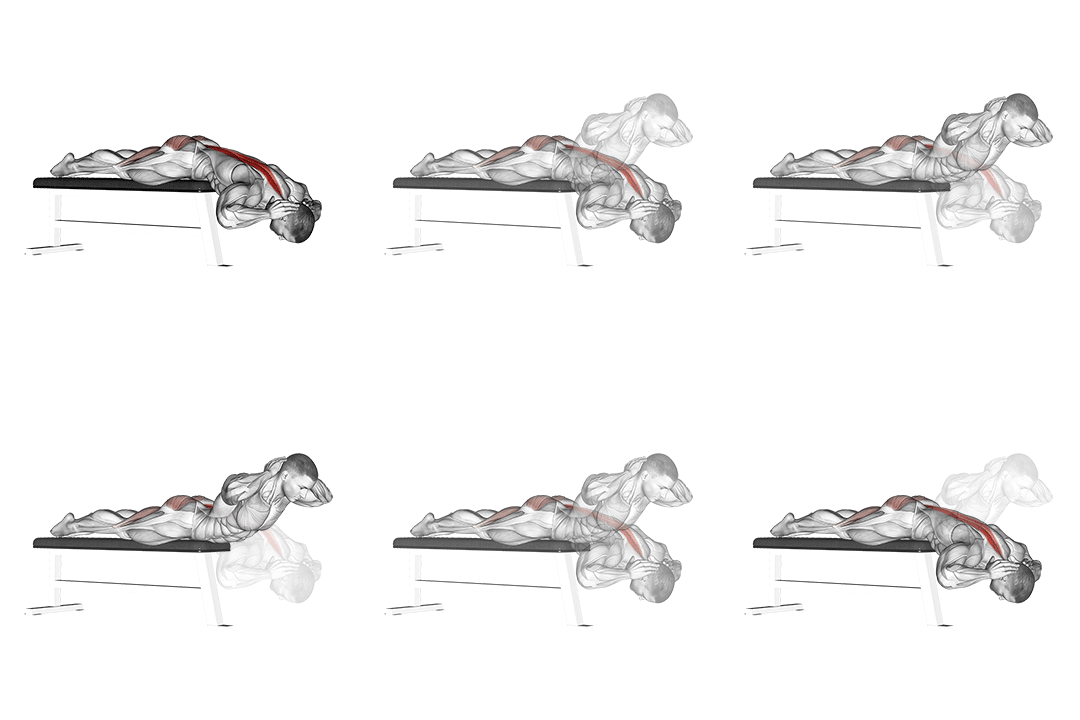
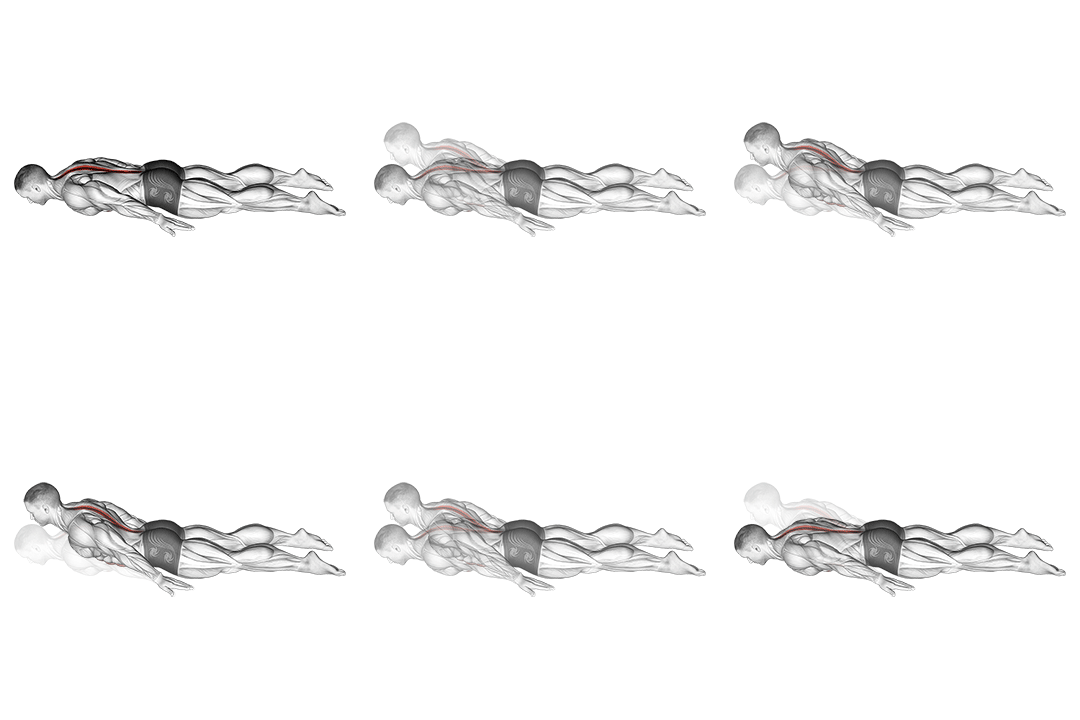
The lower back curl — also known as the prone back extension or floor superman — is a basic floor exercise where you lie face-down with arms by your sides, then lift the upper body off the ground using only the spinal erectors and surrounding back muscles. The motion is small, the load is bodyweight only, and the equipment is nothing more than floor space. Despite the simplicity, the exercise effectively strengthens the lower back, glutes, and posterior chain in ways that most people neglect. This is one of the most accessible lower-back strengthening exercises in any program. Hyperextension benches require equipment most home trainees don't have; deadlifts demand barbell access and significant strength prerequisites. The lower back curl needs neither. For absolute beginners, older adults, or anyone returning from injury, this exercise provides safe, scalable lower-back work that builds resilience without complex setup or significant load. Where it earns its place is in posterior chain training and lower-back rehabilitation. The exercise specifically targets the spinal erectors that maintain upright posture and the small back muscles that support spinal stability. For trainees recovering from lower-back issues, lower back curls are often part of return-to-training protocols. For general fitness, they serve as accessory work alongside compound lower-body lifts. The trade-off is the modest training stimulus — bodyweight curl alone won't build serious back strength for advanced trainees, but for foundational work and rehabilitation, it's hard to beat for accessibility.
Why train the Lower Back Curl?
- Strengthens the lower back, glutes, and hamstrings without equipment.
- Provides safe lower-back rehabilitation work for return-to-training contexts.
- Accessible to absolute beginners, older adults, or those returning from injury.
- Builds the foundational posterior chain strength that supports squats, deadlifts, and walking gait.
- Improves lower-back range of motion through controlled flexion-extension cycles.
- Costs nothing and requires only floor space — usable anywhere.
How to do the Lower Back Curl: step by step
- 1Lie flat on your stomach with your legs extended and your arms by your sides.
- 2Engage your glutes and hamstrings, and slowly lift your upper body off the ground, curling your back upwards.
- 3Pause for a moment at the top, then slowly lower your upper body back down to the starting position.
- 4Repeat for the desired number of repetitions.
Muscles worked
Primary
spine
Secondary
glutes, hamstrings
Common mistakes to avoid
Hyperextending the spine at the top
The lift should be small — head and upper chest just clearing the floor, not arching the back into full extension. Excessive arch stresses the lumbar spine. Stop when the upper body is just off the ground; the small range is enough.
Using arms or legs to assist
The arms and legs should remain relaxed throughout. If you push off the floor with arms or kick the legs to lift the upper body, you're not training the back — you're using momentum. Let only the back muscles drive the lift.
Lifting too high
More range isn't better here. The back muscles work most effectively in the small range; pushing for height shifts loading patterns and stresses the discs. Keep the lift modest.
Holding the breath
Many trainees hold their breath through the lift, which spikes blood pressure unnecessarily. Exhale on the lift, inhale on the descent. Synchronized breathing supports the exercise.
Bouncing through reps
Speed reduces control and increases injury risk. Take 1-2 seconds for the lift, hold the top briefly, then take 2-3 seconds to lower. The deliberate tempo is what makes the exercise productive.
Easier and harder variations
Easier
Reduce range — barely lift the chest off the floor (just the head if needed). The reduced range is appropriate for absolute beginners or those rebuilding from injury. Or perform with arms in front to reduce the upper body lever.
Harder
Place hands behind the head or extend arms overhead during the lift — both increase the lever and load on the back. Or hold a small weight plate against the chest. Eventually progress to hyperextension on a bench or Romanian deadlifts for serious back development.
Alternative exercises
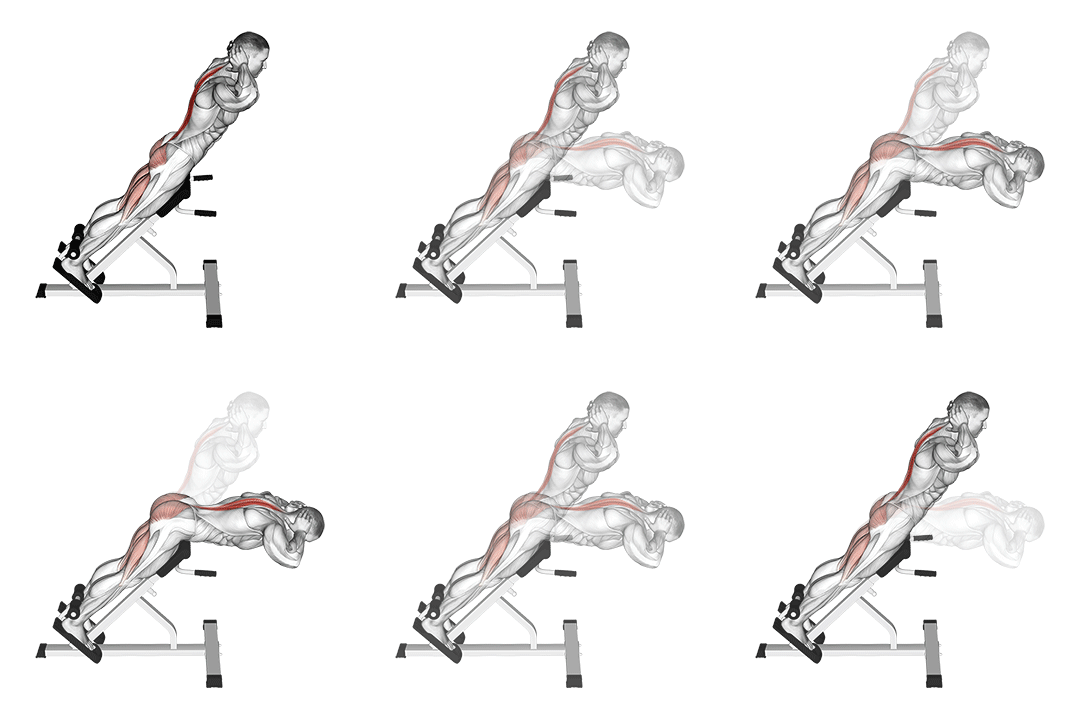
Hyperextension (on bench)
Equipment-based version with greater range of motion. More effective for serious back strengthening when bench is available.
Bird dog
Quadruped version that adds shoulder coordination. Different stimulus; complements the lower back curl.
Romanian deadlift
Standing version with weight loading. More effective for back strength building when ready for progression.
How to program the Lower Back Curl into your training
The lower back curl works as accessory or rehabilitation work in any program. The bodyweight load supports moderate-to-high frequency. Sets and reps: 3 sets of 10-15 reps with 30-60 seconds rest. Total weekly volume of 60-150 reps is appropriate. Once 15 reps feel easy, progress to harder variations rather than chasing higher rep counts. Frequency: 2-3 times per week is appropriate. The lower back recovers within 48 hours from this exercise's moderate load. For lower-back rehabilitation: 2-3 sets of 8-12 reps at bodyweight, 3 times per week. The controlled extension pattern is often part of lower-back rehab programs once acute pain has subsided. For beginners: 2-3 sets of 8-12 reps, 2-3 times per week, alongside basic core work. Build the foundational back strength before progressing to harder variations. For general fitness: 3 sets of 12-15 reps, 2 times per week, as part of comprehensive lower-body training. Don't program lower back curls on the same day as heavy deadlifts — cumulative lower-back load can exceed tolerance.
Recovery and frequency
The lower back curl has minimal recovery cost. The bodyweight load and controlled motion produce little muscle damage or joint stress. 24-48 hours between sessions is plenty. Watch for sharp lower-back pain (rather than gentle muscle soreness), which warrants stopping the exercise until the issue resolves. Standard back muscle soreness fades within 48 hours and indicates appropriate stimulus.
Frequently asked questions
How many sets and reps?
3 sets of 10-15 reps with 30-60 seconds rest, 2-3 times per week. Progress to harder variations once 15 reps feel easy.
How often?
2-3 times per week. The lower back recovers within 48 hours from this exercise's moderate load.
Is this safe for back pain?
Often yes for chronic mild tightness. For acute injury, consult a physiotherapist before introducing new exercises. Mild to moderate stiffness usually responds well to gentle controlled extension work.
Will this build strong lower back?
Foundational strength yes; serious strength no. The bodyweight load is modest. Use this as a starting point; progress to hyperextensions and Romanian deadlifts for serious back strengthening.
When should I progress beyond this exercise?
When 3 sets of 15 strict reps feel easy. Move to hyperextensions on bench or weighted versions for continued progress.
Can I do this with disc issues?
Cautiously, if at all. The extension pattern can aggravate certain disc issues. Consult a physiotherapist for current issues; for general lower-back stiffness, the exercise is usually well tolerated.
Useful tools for this exercise
Build a workout with the Lower Back Curl
Puna gives you guided bodyweight workouts you can do anywhere — no equipment, no gym, just structured progressions that build real strength.