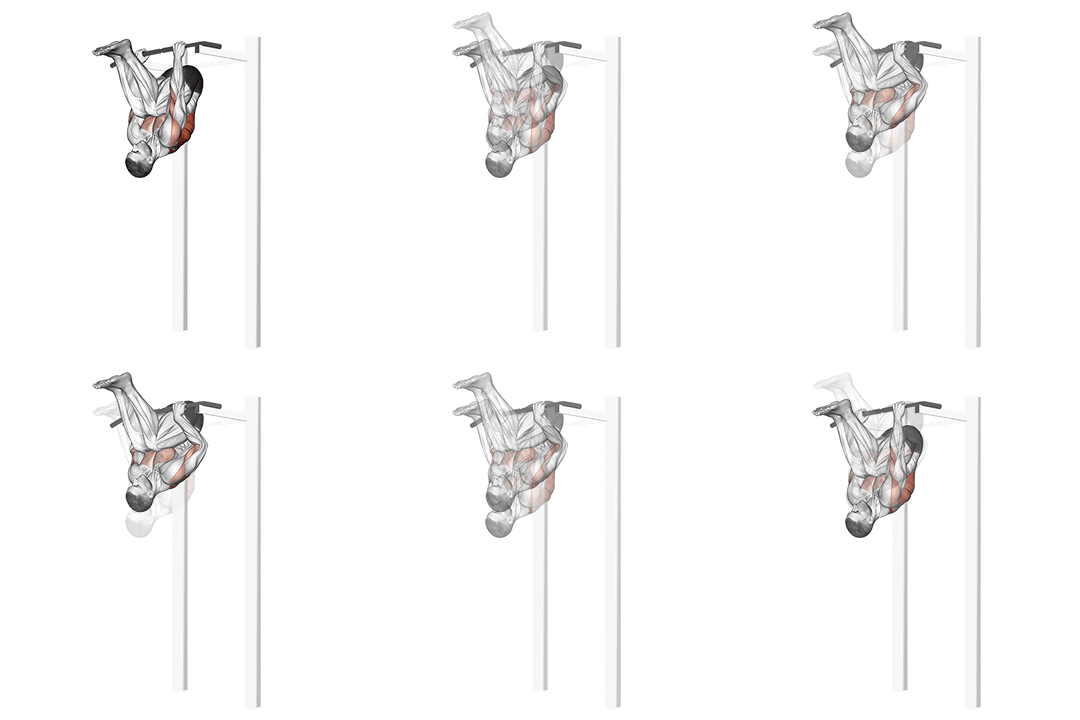
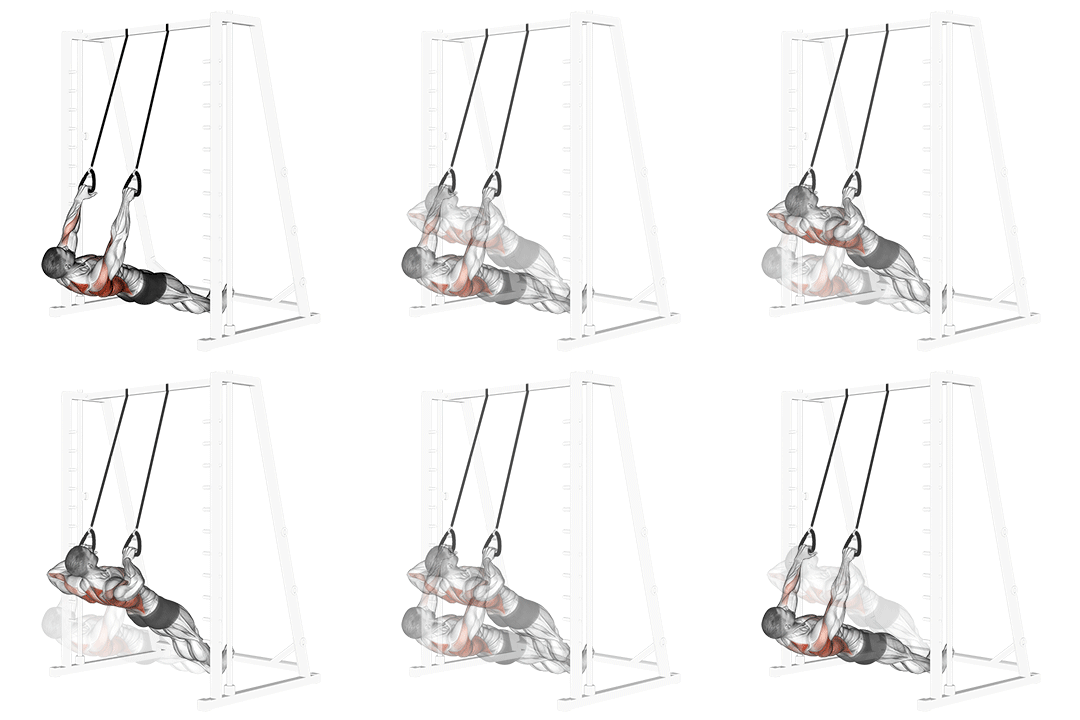
L-pull-up
advanced strength exercise · body weight · targets lats
- Body part
- back
- Primary target
- lats
- Equipment
- body weight
- Difficulty
- advanced
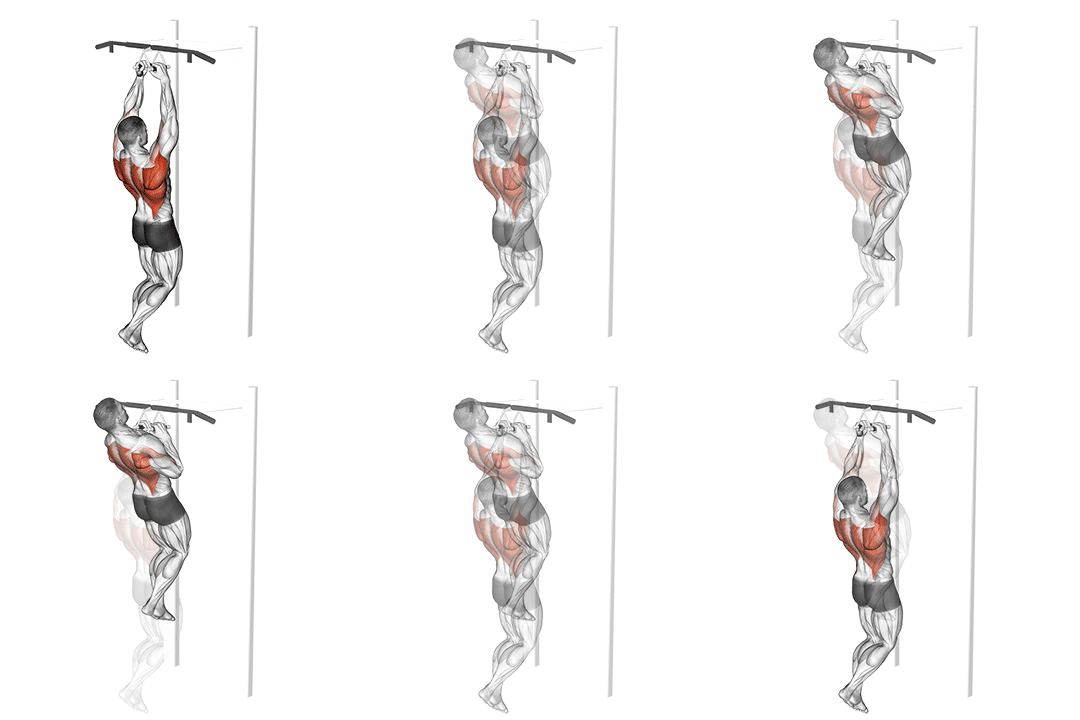
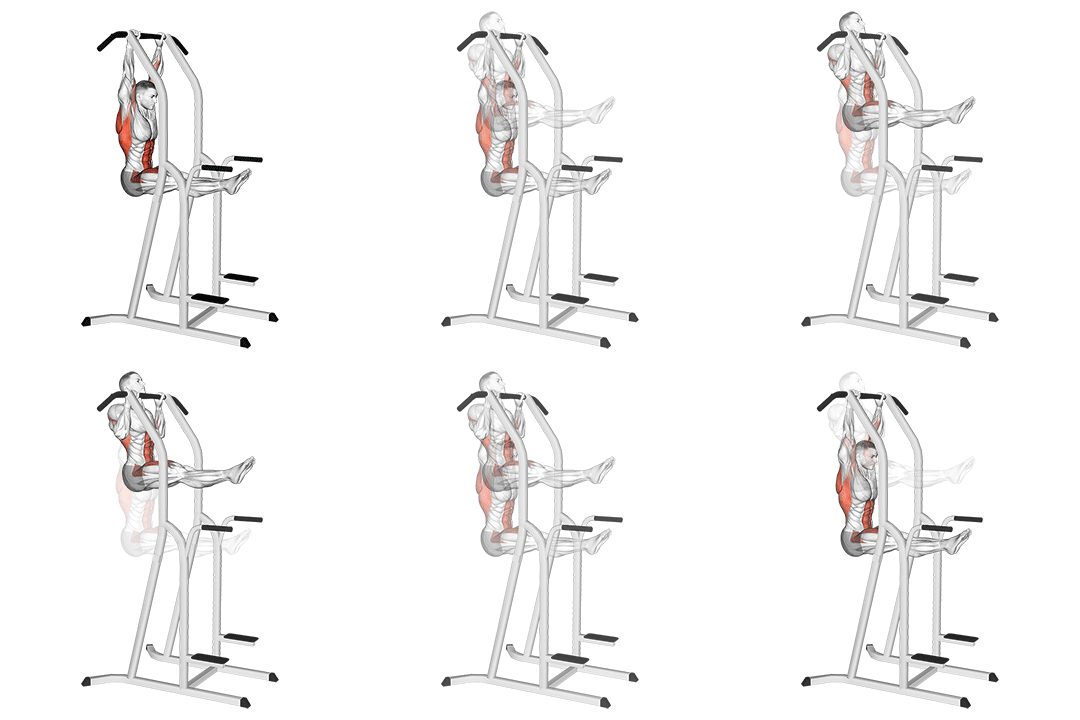
The L-pull-up combines a standard pull-up with an L-sit position — the legs are held straight and parallel to the floor (forming an L-shape with the body) throughout the entire pull-up rep. The combination loads the back through the pull-up while the lower abs and hip flexors hold the L-sit position isometrically. It's an advanced calisthenics exercise that demands strict pull-up strength plus significant lower-ab and hip flexor strength. Most trainees who can do 10+ strict pull-ups can manage only 3-5 L-pull-ups in their first attempts because the maintained L-sit position fatigues the abs faster than expected. Reaching strict L-pull-ups typically takes 4-8 weeks of progression from a base of strict pull-ups plus 30-second L-sit holds. The path involves training pull-ups and L-sits separately first, then combining them once both prerequisites are solid. The exercise is particularly useful for gymnastics-style training, where the L-position appears in many movements.
Why train the L-pull-up?
- Combines pull-up strength with isometric core work.
- Builds the L-sit position alongside vertical pulling.
- Trains the lower abs and hip flexors under sustained tension.
- Carries over to gymnastics movements like front lever and L-sit holds.
- Provides advanced calisthenics goal.
- Requires only a pull-up bar.
How to do the L-pull-up: step by step
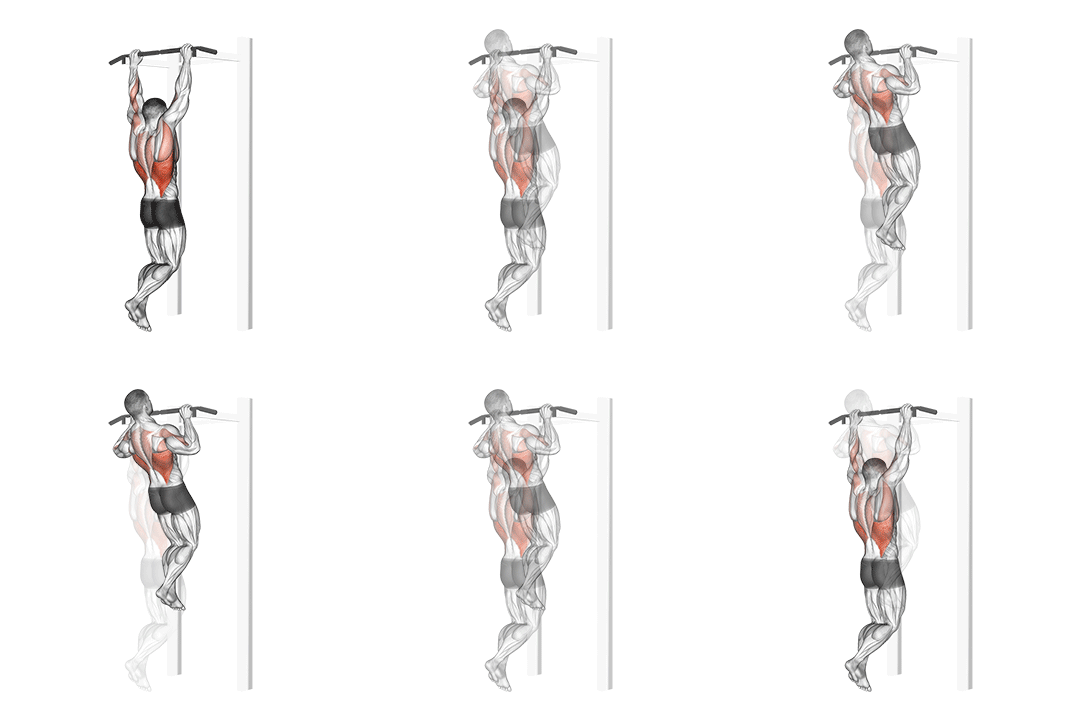
- 1Grab the pull-up bar with an overhand grip, slightly wider than shoulder-width apart.
- 2Hang with your arms fully extended and your body straight.
- 3Engage your lats and biceps to pull your body up towards the bar, keeping your elbows close to your body.
- 4Continue pulling until your chin is above the bar.
- 5Pause for a moment at the top, then slowly lower your body back down to the starting position.
- 6Repeat for the desired number of repetitions.
Muscles worked
Primary
lats
Secondary
biceps, forearms
Common mistakes to avoid
Letting the legs drop during the pull
The legs should stay parallel to the floor throughout the entire rep. If they drop, you've lost the L-sit component and turned it into a standard pull-up. Squeeze the lower abs and hip flexors hard to maintain the position.
Bending the knees mid-rep
The legs should stay straight throughout. Bending the knees reduces the lever arm and core demand. Keep them locked at the knee.
Using momentum to swing the legs up
If the legs swing into position with body momentum, you're not actually holding the L-sit. Set the L-position before starting the pull, and maintain it without using leg movement to lever yourself up.
Cutting depth on the pull-up
Maintain full pull-up range — arms extended at the bottom, chin clearing the bar at the top. The L-sit doesn't excuse partial range.
Skipping prerequisite work
Don't attempt L-pull-ups until you can do 10+ strict pull-ups and hold a 30-second L-sit. The combined demand requires both prerequisites.
Easier and harder variations
Easier
Standard pull-ups with knees tucked toward chest (rather than straight L-position). Tucked-position pull-ups. Or pull-ups with knees bent.
Harder
Add weight (a vest). Slow the tempo. Or progress to L-pull-ups with the legs slightly above horizontal.
Alternative exercises
Standard pull-up
Without the L-sit component. Easier baseline.
L-sit hold (parallel bars or floor)
Static version of the L-position. Builds the prerequisite core strength.
Pull-up with knee tuck
Pull-up with knees pulled toward chest. Easier than full L-position.
How to program the L-pull-up into your training
L-pull-ups are advanced specialty work. Program them with respect for the combined demand. Sets and reps: 3 sets of 3-6 reps with 90-120 seconds rest. In a back-focused session: 4 sets of 6 standard pull-ups (main pulling), 3 sets of 4 L-pull-ups (specialty), 3 sets of L-sit holds (10-30 seconds), 3 sets of 30-second hollow holds. Done twice per week. For athletes building toward front lever or other advanced gymnastics, L-pull-ups are useful preparation work.
Recovery and frequency
L-pull-ups load the back, biceps, lower abs, and hip flexors. 48-72 hours between sessions is the right cadence.
Frequently asked questions
How many sets and reps should I do?
3 sets of 3-6 reps with 90-120 seconds rest.
How often should I train L-pull-ups?
1-2 times per week with 48-72 hours between sessions.
L-pull-up vs standard pull-up: which is better?
Different tools. Standard pull-ups are the foundation. L-pull-ups add core demand. Use standard for primary back work; add L-pull-ups for advanced training once prerequisites are met.
How long does it take to learn L-pull-ups?
From a base of 10+ strict pull-ups and 30-second L-sit holds, expect 4-8 weeks of combined practice.
Are L-pull-ups bad for the back?
Done with proper form, no — they're a useful advanced exercise. Done by attempting before prerequisites, the maintained L-sit can stress the lower back if the abs aren't strong enough to hold the position cleanly.
Should I learn the L-sit hold first?
Yes — L-sit holds (on parallel bars or the floor) are essential prerequisite work. Build to 30-second strict L-sit holds before attempting L-pull-ups.
Useful tools for this exercise
Build a workout with the L-pull-up
Puna gives you guided bodyweight workouts you can do anywhere — no equipment, no gym, just structured progressions that build real strength.