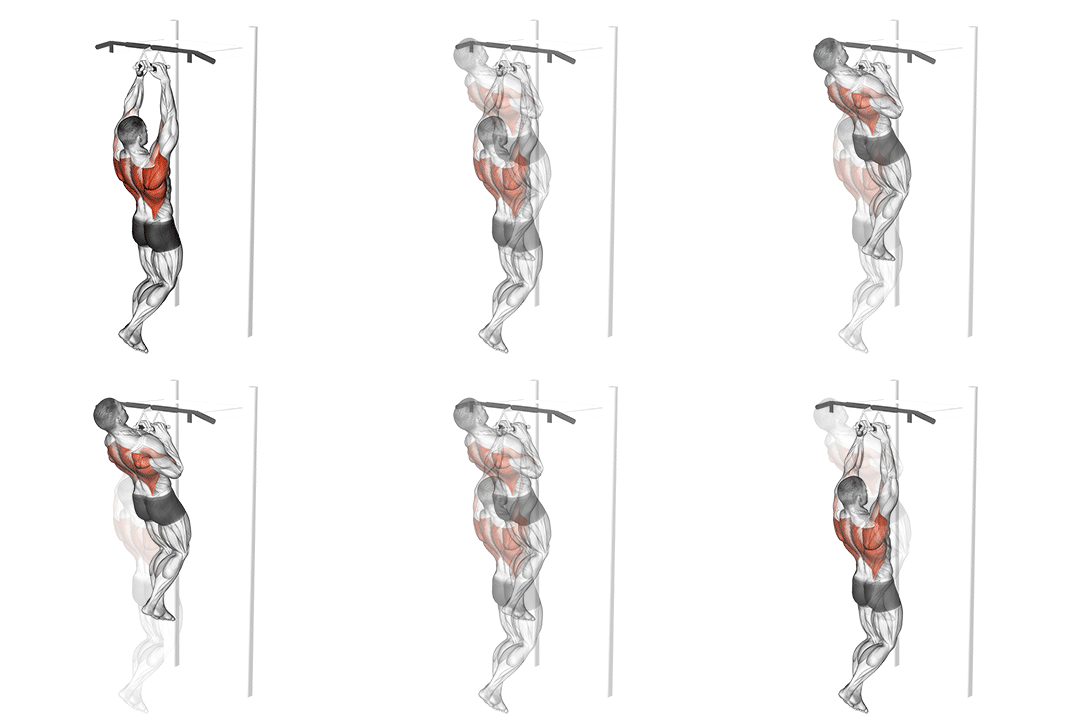
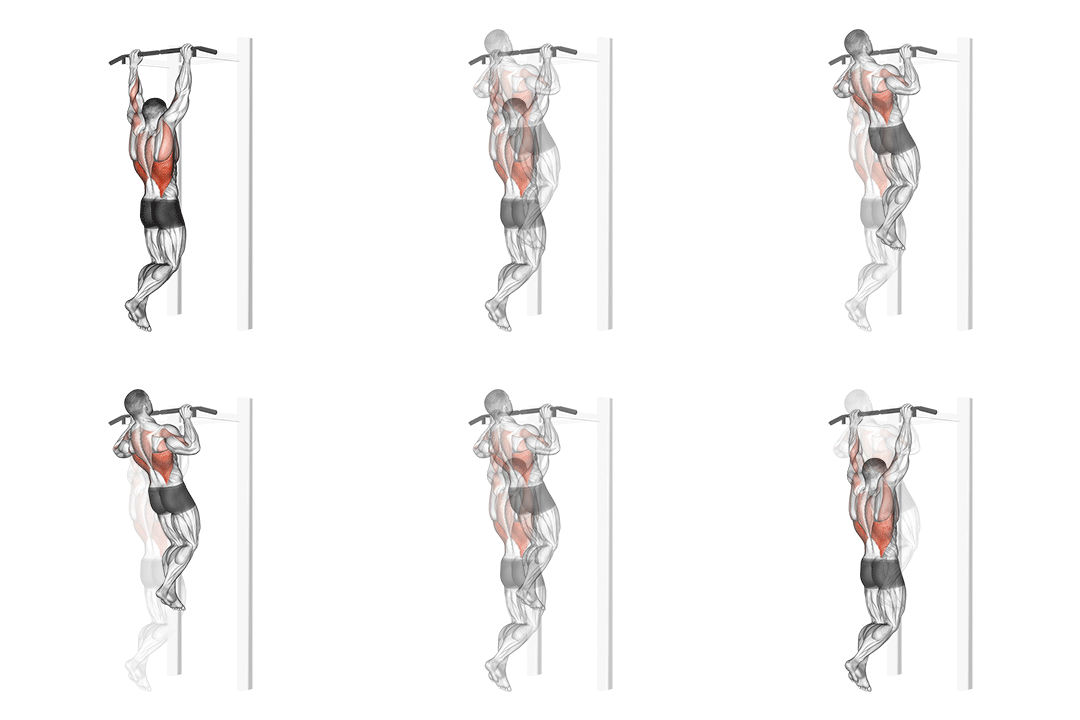
Kipping Muscle Up
advanced strength exercise · body weight · targets lats
- Body part
- back
- Primary target
- lats
- Equipment
- body weight
- Difficulty
- advanced
The kipping muscle-up is the CrossFit-popularized variation of the muscle-up that uses momentum from a deliberate body swing to assist the transition from below the bar to above it. Unlike the strict muscle-up, which requires pure pulling and pressing strength to complete, the kipping version uses a hip drive and torso swing to generate force, transferring some of the load from the upper body to the kinetic chain. This makes muscle-ups achievable for trainees who haven't yet built the strength for strict variations. The kipping muscle-up earns its place — and its controversy — in modern training. CrossFit popularized it as a way to scale gymnastic skills to broader populations, and for that purpose it works: trainees who couldn't dream of strict muscle-ups can develop kipping muscle-ups within months of dedicated practice. The transferable skill matters less than the achievement itself for many trainees, and the dynamic explosive nature builds athletic conditioning that strict gymnastic skills don't replicate. The trade-off is the technique demand and injury risk. Kipping movements stress the shoulders, elbows, and wrists in dynamic patterns that take time to learn safely. Trainees who jump into kipping without the foundational strict pulling strength often develop shoulder impingement, elbow tendinopathy, or wrist issues within weeks. The proper progression — strict pull-ups, strict bar dips, kip swings, transition drills, full kipping muscle-ups — typically takes 6-12 months of consistent training. Skipping steps in pursuit of the impressive end skill almost always produces injury rather than progress.
Why train the Kipping Muscle Up?
- Builds achievable bar-to-above-bar transition for trainees who can't yet do strict muscle-ups.
- Develops dynamic upper-body explosive power useful for combat sports and athletic contexts.
- Trains the kinetic chain coordination that integrates lower body, core, and upper body.
- Provides clear impressive progression milestone for advanced bodyweight trainees.
- Builds shoulder stability under dynamic load through the swing-and-transition pattern.
- Develops the kipping skill foundation that other CrossFit gymnastic moves rest on.
How to do the Kipping Muscle Up: step by step
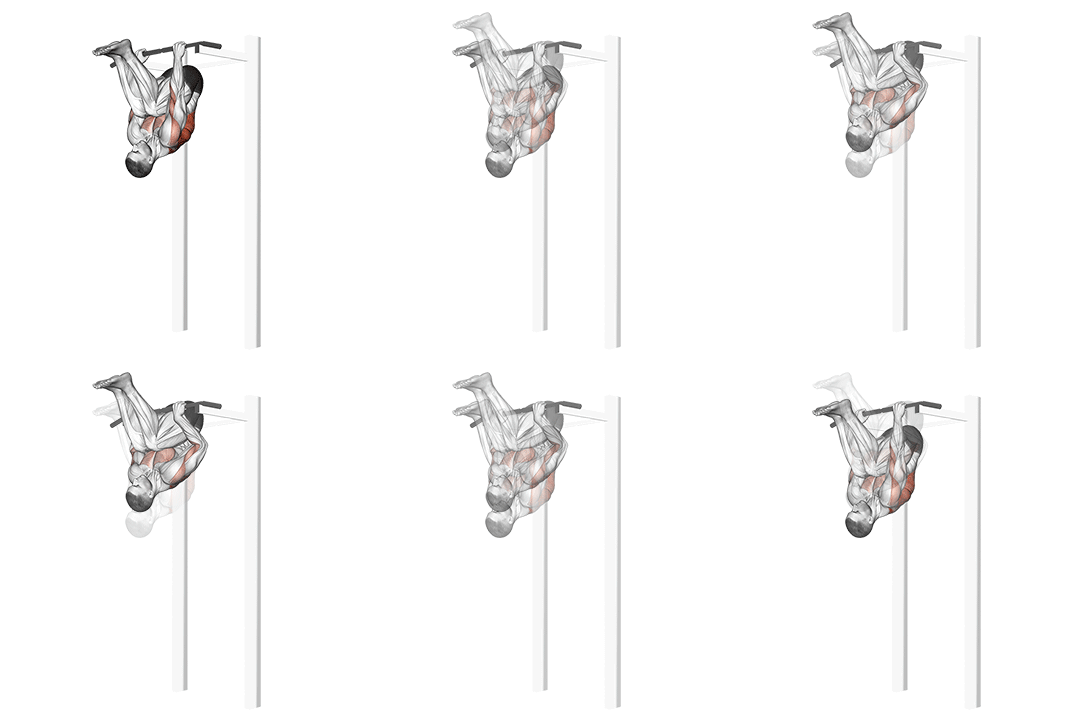
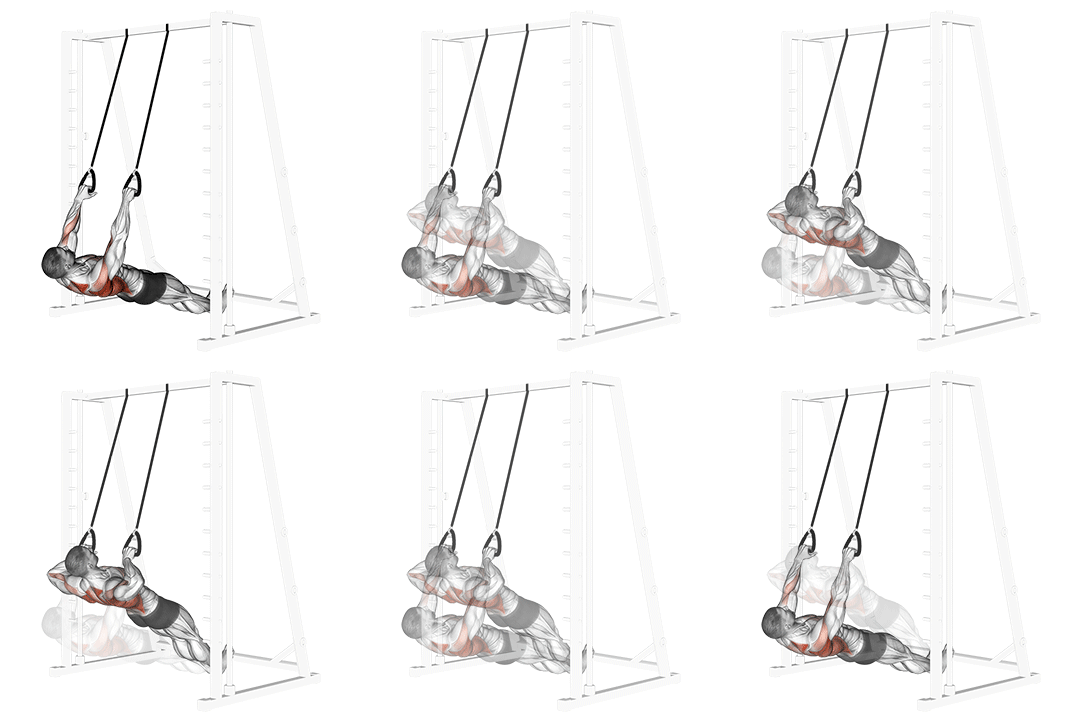
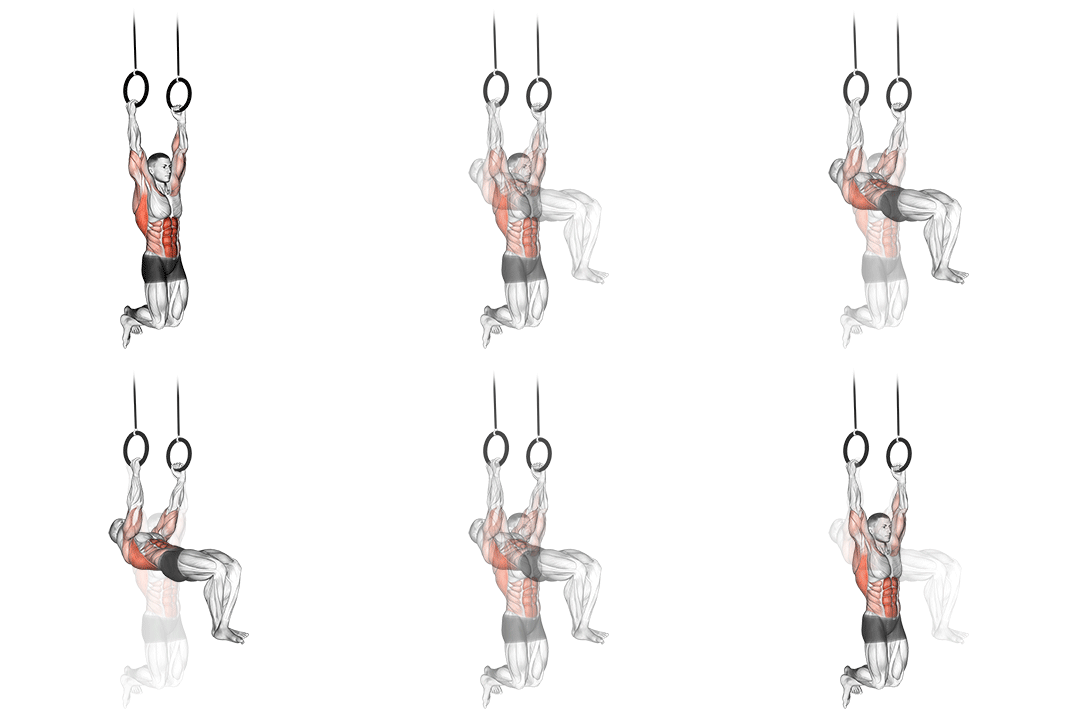
- 1Start by hanging from a pull-up bar with an overhand grip, hands slightly wider than shoulder-width apart.
- 2Engage your core and use a swinging motion to generate momentum.
- 3As you swing forward, pull your chest towards the bar, using your lats and biceps to initiate the movement.
- 4Continue the upward motion until your chest reaches the bar, then transition into a dip position by pushing down on the bar and extending your arms.
- 5Lower yourself back down to the starting position by bending your arms and controlling the descent.
- 6Repeat for the desired number of repetitions.
Muscles worked
Primary
lats
Secondary
biceps, triceps, shoulders, core
Common mistakes to avoid
Insufficient strict prerequisites
Most kipping muscle-up injuries come from trainees who couldn't yet do strict pull-ups, dips, or even kip swings cleanly. Build foundational strength: 10+ strict pull-ups, 10+ strict bar dips, clean 30-second kip swings before attempting muscle-ups. Skipping the foundation produces injury, not progress.
Using the kip to cover up weak strict strength
Trainees with imbalanced strength (strong pull, weak dip or vice versa) often use the kip to compensate. This produces sloppy reps that put load on the weakest link. Address strength imbalances first; the kip should amplify good strength, not paper over bad strength.
Crashing into the dip
After the transition above the bar, the trainee needs to control the descent into the dip position rather than crashing. Hard transitions stress the shoulders and elbows. Practice transition drills (like jumping muscle-ups from a box) to learn the controlled landing into the dip.
Letting the elbows flare during the dip
After the transition, the elbows want to flare wide during the press-up phase. This stresses the shoulder capsule and reduces triceps emphasis. Keep elbows tracking back and slightly inward during the dip portion.
Programming too frequently
Kipping work is high-impact dynamic loading on shoulders and elbows. More than 2 sessions per week produces accumulating joint stress and increases injury risk. Twice weekly is the cap, paired with adequate prerequisite training.
Easier and harder variations
Easier
Practice each component separately before combining. Strict pull-ups for the pull, strict bar dips for the press, kip swings for the dynamic swing, and jumping muscle-ups (from a box) for the transition. Build each separately to 80% mastery before combining into the full kipping muscle-up.
Harder
Progress to strict muscle-ups, which require pure strength rather than kip momentum. Or to consecutive kipping muscle-ups (multiple reps without breaks). For maximum challenge, weighted kipping muscle-ups (vest) or one-arm muscle-up training, though these require exceptional foundation.
Alternative exercises
Strict muscle-up
Pure strength version of the same skill. Significantly harder but cleaner technique with less joint stress per rep.
Jumping muscle-up
Practice the transition with a box assist for the start position. Excellent prerequisite drill for both kipping and strict variations.
Bar dip
The pressing component of muscle-up training. Build to 10+ strict reps before introducing muscle-up work.
How to program the Kipping Muscle Up into your training
Kipping muscle-up training belongs in advanced gymnastic or CrossFit-style programming. It earns no place in general fitness routines. Prerequisites: 10+ strict pull-ups, 10+ strict bar dips, healthy shoulders and elbows, 12+ months of consistent bodyweight strength training, clean 30-second kip swings. Without these, the exercise produces injury rather than progress. Sets and reps: 3-4 sets of 2-5 reps with 2-3 minutes rest. The high skill and joint demand mean low reps drive the stimulus. Total weekly volume of 12-30 reps is appropriate. Frequency: 1-2 times per week is the cap. The shoulders and elbows need 72-96 hours between sessions to recover from the dynamic load. For trainees building toward muscle-ups: progress through the prerequisite skills over 6-12 months. Don't attempt full kipping muscle-ups until each component (pull, swing, transition, dip) is solid in isolation. In an advanced training session: place muscle-up practice early when freshness matters most. Sample order: warm-up, 3 sets of 3 muscle-ups, 4 sets of 6 strict pull-ups, 4 sets of 6 strict dips, 3 sets of 30-second hollow holds. For CrossFit programming: muscle-ups appear in WODs but should be programmed thoughtfully. Avoid repeated high-volume muscle-up sessions; the cumulative joint stress is significant. Don't program kipping muscle-ups when fatigued or in deload weeks. The high skill and joint demand requires fresh shoulders.
Recovery and frequency
Kipping muscle-ups have a steep recovery cost. The shoulders, elbows, and wrists all absorb significant dynamic loading. 72-96 hours between sessions is typical. The shoulders are usually the limiting recovery factor — anterior shoulder pain, popping, or persistent fatigue warrant attention. The elbows are second; medial or lateral epicondylitis is common at high volumes. Long-term, regular kipping muscle-up training requires monthly deload weeks where you skip the exercise entirely and revert to strict strength work. Pair the work with daily shoulder mobility and rotator cuff prehab. Sleep, hydration, and protein intake all support the high recovery demand. Persistent pain warrants stopping and addressing the underlying issue with a physiotherapist before continuing.
Frequently asked questions
How many sets and reps of kipping muscle-ups should I do?
3-4 sets of 2-5 reps with 2-3 minutes rest. The high skill and joint demand mean low reps drive the stimulus. Total weekly volume of 12-30 reps is appropriate.
How often should I do kipping muscle-ups?
1-2 times per week maximum. The shoulders and elbows need 72-96 hours between sessions to recover from the dynamic load.
Is this safe for beginners?
No — this is an advanced skill requiring 10+ strict pull-ups and dips as prerequisites. Beginners should focus on strict strength work first; muscle-up training becomes appropriate after 12+ months of consistent foundational training.
Kipping vs strict muscle-up: which is better?
Different exercises with different goals. Strict muscle-ups train pure pulling and pressing strength. Kipping muscle-ups train dynamic explosive power and kinetic chain coordination. Both have value at advanced levels; choose based on goal.
How long does it take to learn?
Most trainees with the prerequisites need 6-12 months of dedicated training to develop clean kipping muscle-ups. Without prerequisites, expect 18-24 months or longer (including the time to build foundational strength).
Why do my elbows hurt after muscle-ups?
Elbow tendinopathy is common when muscle-up volume builds too fast. Reduce frequency to once per week, lower volume to 2 sets of 2-3 reps, and add eccentric forearm work. If pain persists, stop muscle-up work entirely until elbows settle.
Useful tools for this exercise
Build a workout with the Kipping Muscle Up
Puna gives you guided bodyweight workouts you can do anywhere — no equipment, no gym, just structured progressions that build real strength.