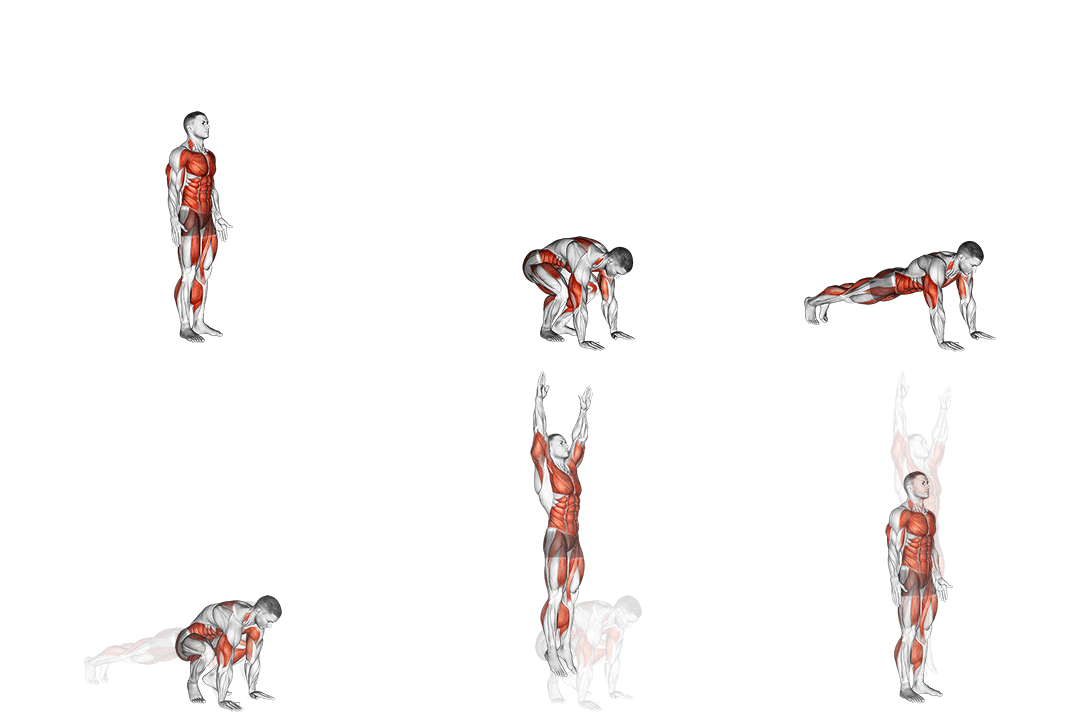
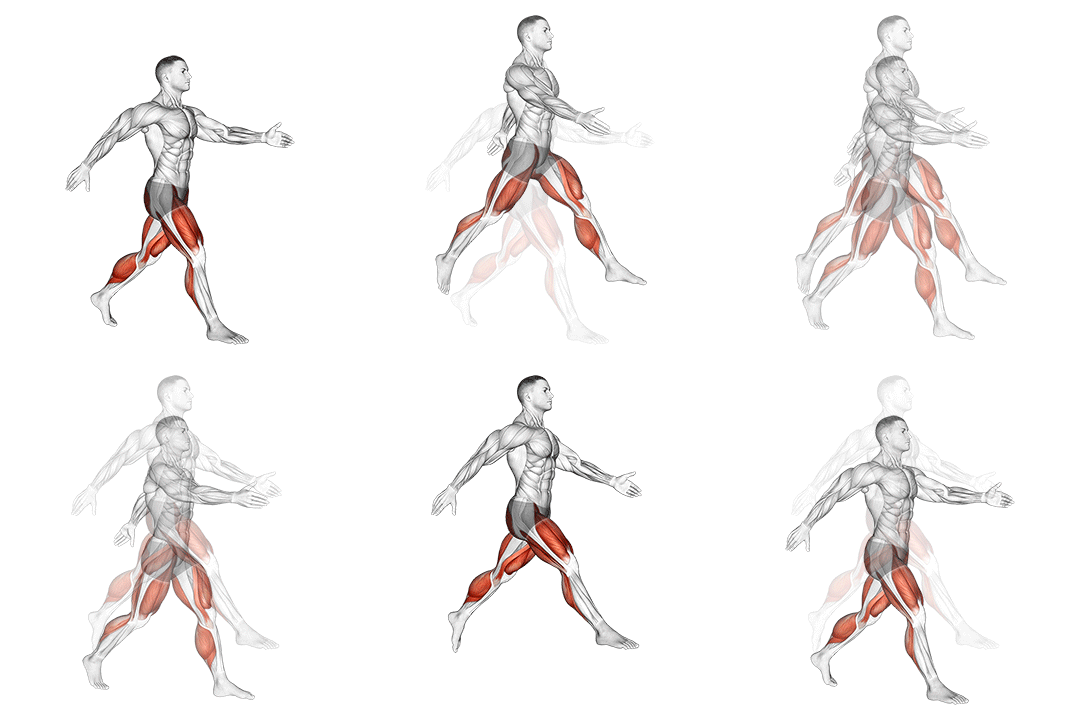
Jack Jump (male)
beginner cardio exercise · body weight · targets cardiovascular system
- Body part
- cardio
- Primary target
- cardiovascular system
- Equipment
- body weight
- Difficulty
- beginner
The jack jump is a vertical-emphasis variant of the jumping jack — same starting position, same arm-and-leg coordination, but with a clear airborne phase that turns the drill into a plyometric cardio exercise rather than just rhythmic motion. From feet-together with arms at sides, you jump explosively upward while spreading the feet wide and raising the arms overhead, then jump again to return to the starting position. The continuous repetition produces sustained heart-rate elevation and full-body coordination demand. This is one of the cleanest 'enhanced jumping jacks' in cardio bodyweight training. Standard jumping jacks emphasize rhythmic motion with relatively little vertical jump; the jack jump adds genuine vertical force production. The result is a higher-intensity drill that produces more cardio stimulus per minute and adds plyometric leg power training to what would otherwise be just a coordination exercise. For trainees who find regular jumping jacks too easy or too low-intensity, the jack jump fills the gap nicely. The trade-off is the joint demand. Genuine vertical jumping every rep loads the knees and ankles more than the lower-impact rhythmic version. This isn't a problem for healthy trainees in moderate volume, but it does mean the drill can't be sustained for the long durations that work for standard jumping jacks. 30-60 second intervals with rest between are appropriate; 5-minute continuous sessions are not. Programmed thoughtfully as part of HIIT or interval cardio, the jack jump produces meaningful cardiovascular and explosive-power adaptations in minimal time.
Why train the Jack Jump (male)?
- Spikes heart rate faster than standard jumping jacks through the added vertical jump component.
- Builds explosive lower-body power alongside cardiovascular conditioning.
- Engages full-body coordination through simultaneous arm and leg movement.
- Burns substantial calories: 12-14 per minute during high-intensity work.
- Trains the calves and ankles through repeated vertical jumping, building reactive strength.
- Requires no equipment and minimal floor space — usable in any home or hotel environment.
How to do the Jack Jump (male): step by step
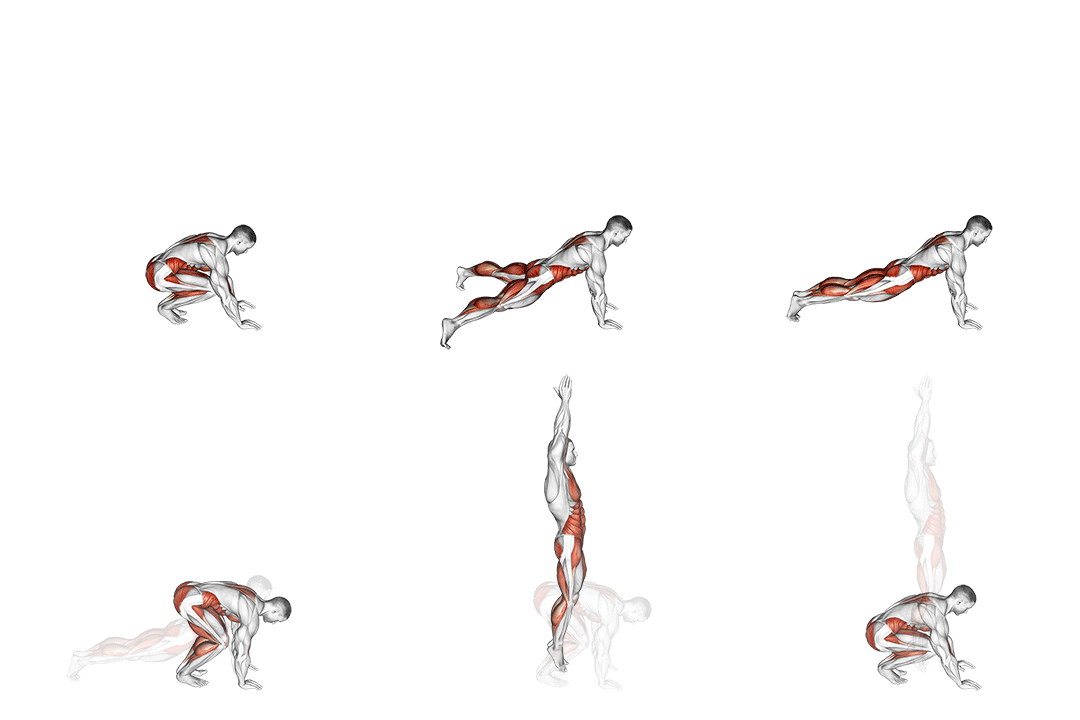
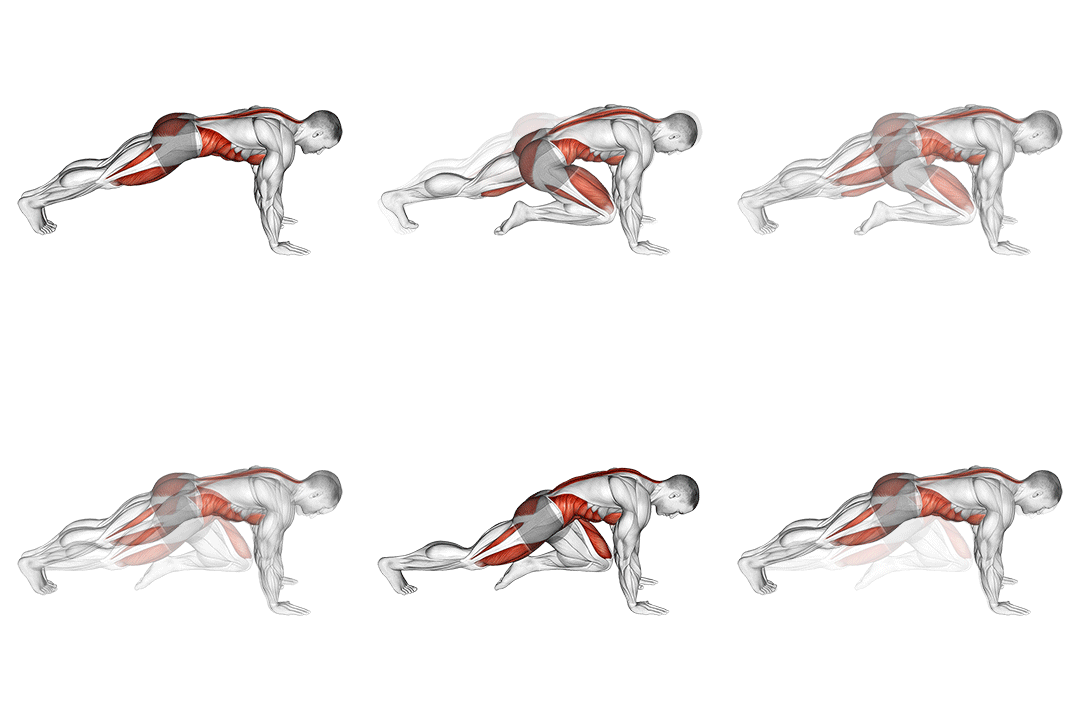
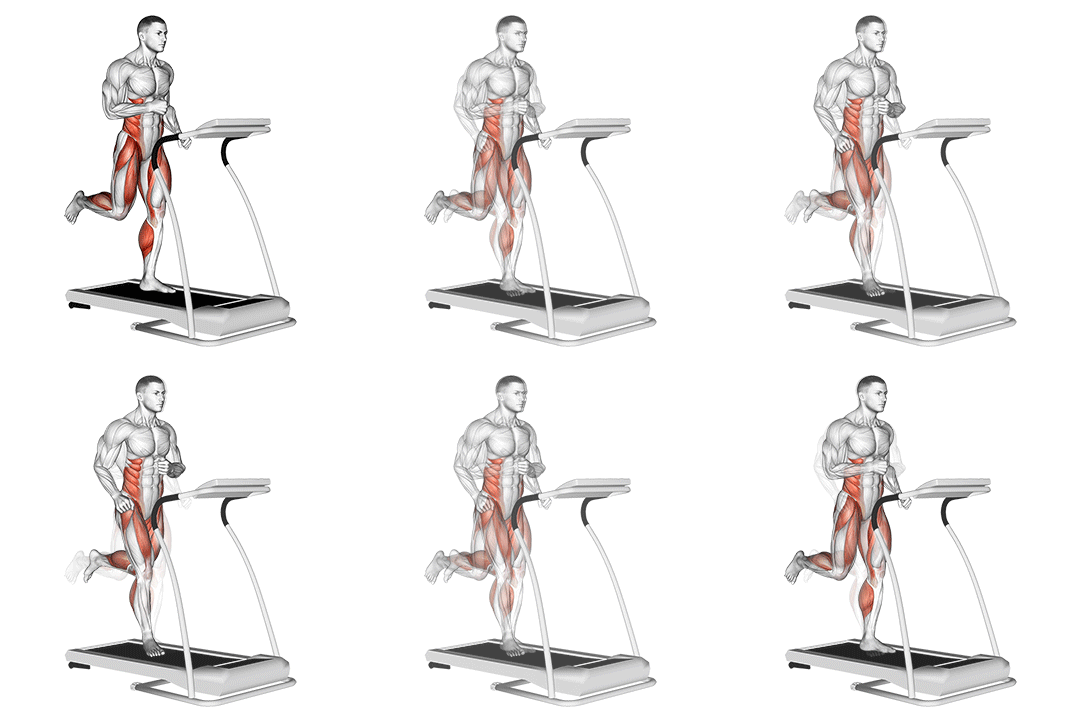
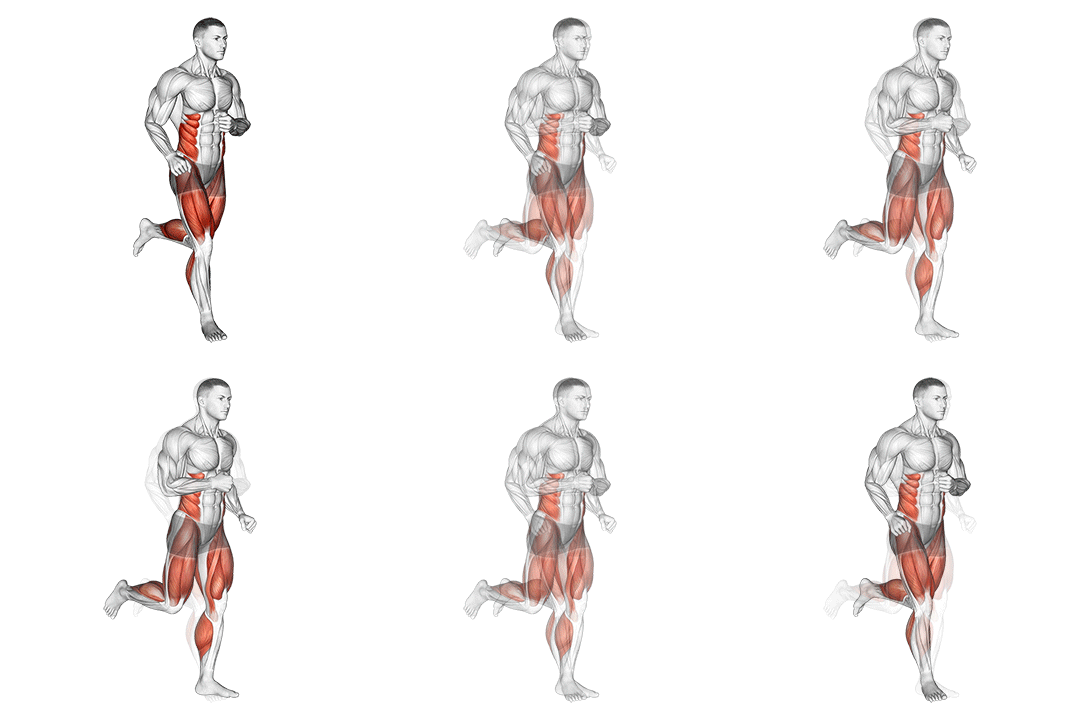
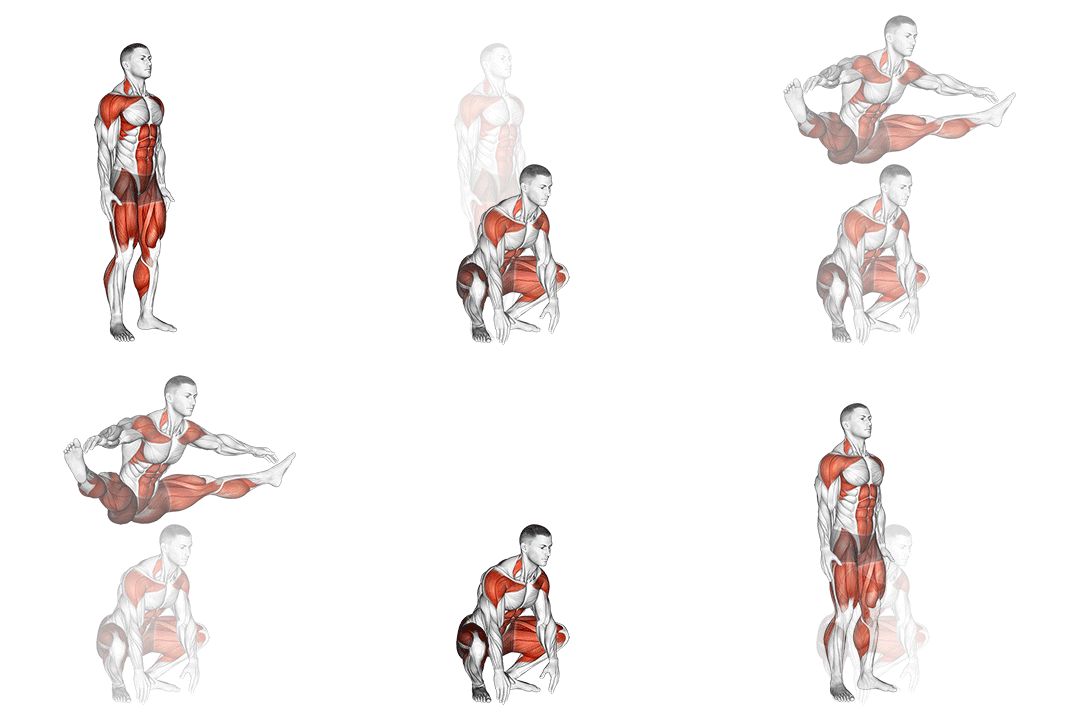
- 1Stand with your feet together and your arms by your sides.
- 2Jump up, spreading your feet apart and raising your arms above your head.
- 3As you land, quickly jump back to the starting position.
- 4Repeat for the desired number of repetitions.
Muscles worked
Primary
cardiovascular system
Secondary
quadriceps, calves
Common mistakes to avoid
Crashing into landings
Each landing should be soft, with knees bending immediately to absorb impact. Hard, stiff landings spike the joints and produce ankle and knee issues quickly. Aim to land lightly on the balls of the feet with significant knee bend on every rep.
Letting the knees cave inward on landing
When landing from a jump with feet spread, the knees can twist toward the midline. This is the loading pattern most associated with knee injuries. Drive the knees out in line with the toes throughout each landing.
Not actually jumping
If your jack jump looks identical to a standard jumping jack, you're not actually jumping. The whole point of the variation is the vertical force production. Push hard through the floor on each rep — heels should clearly leave the ground at the peak of the motion.
Going too long per set
The added intensity over standard jumping jacks means continuous sets break down quickly. Sets longer than 60 seconds usually involve form degradation. Stop at 30-45 seconds for clean sets, rest fully, then start the next set fresh.
Holding the breath during the jump
Many trainees hold their breath through explosive jumps. Breath-holding spikes blood pressure and reduces sustained-effort capacity. Exhale on the upward jump, inhale on the descent. Synchronized breathing supports the cardiovascular benefit.
Easier and harder variations
Easier
Reduce the vertical height to standard jumping jack levels — focus on rhythmic motion rather than maximum jumping. The lower-intensity version is appropriate for beginners building cardio base or for sustained cardio sessions where the high intensity isn't needed.
Harder
Increase pace to maximum sustainable speed for set durations (30-60 seconds of continuous jumps). Or add a tuck (knees toward chest) at the top of each jump for additional core demand. For combined upper-body work, hold light dumbbells in each hand during the motion.
Alternative exercises
Standard jumping jack
Lower-intensity rhythmic version. Use for sustained cardio sessions or as a beginner introduction. Less plyometric load.
Star jump
Full-body plyometric with similar intensity but different motion. Both work well for HIIT cardio; preference often comes down to which feels more natural.
Squat jump
Pure lower-body plyometric without arm component. More focused leg power training; less cardio-coordination demand.
How to program the Jack Jump (male) into your training
Jack jumps work as interval cardio rather than steady-state exercise. The intensity makes long continuous sets impractical. Interval format: 30-45 seconds of jack jumps, 30 seconds of rest, 6-10 rounds. Total session: 8-15 minutes. This produces excellent cardiovascular conditioning with bodyweight only. In a circuit: 30 seconds of jack jumps, 30 seconds of push-ups, 30 seconds of squats, 30 seconds rest. Repeat 4-6 times for a 12-18 minute full-body session. As a warm-up: 60-90 seconds of moderate-pace jack jumps to elevate heart rate before strength training. The dynamic full-body nature warms most muscle groups simultaneously. Frequency: 2-3 times per week is appropriate for high-intensity sessions. The joint demand needs 48-72 hours between hard sessions. For general fitness: 3 sets of 45 seconds with 60 seconds rest, 2 times per week as part of a varied cardio rotation. For weight loss: jack jumps fit well into HIIT protocols. 6-8 rounds of 30 seconds work with 30 seconds rest, 2-3 times per week, alongside strength training and dietary management. For athletes: useful as warm-up activation or as part of high-intensity finisher work. The plyometric component primes the nervous system for explosive movement. Don't program jack jumps daily — joint stress accumulates faster than expected. 2-3 sessions per week with adequate recovery produces better results.
Recovery and frequency
Jack jumps recover within 24-48 hours when programmed at moderate volume. Higher-intensity HIIT sessions need 48-72 hours. The main warning signs are knee discomfort during or after sessions, ankle soreness from repeated impact, and persistent calf tightness. Knee discomfort warrants reviewing landing form (especially knee alignment); ankle soreness suggests too much volume too soon; calf tightness benefits from daily stretching alongside the training. Long-term, regular high-intensity jack jump training requires monthly easier weeks. Pair the work with daily ankle and calf mobility work. Sleep, hydration, and protein intake support the recovery demand.
Frequently asked questions
How long should I do jack jumps for?
30-60 seconds per interval, 6-10 intervals per session. Total session length of 8-15 minutes provides excellent cardiovascular benefit. Longer continuous sets are impractical due to the intensity.
How often should I do jack jumps?
2-3 times per week. The plyometric joint demand needs 48-72 hours between hard sessions. More frequent training tends to produce ankle or knee issues.
Jack jump vs jumping jack: which is better?
Different intensities. Standard jumping jacks are sustainable for longer sessions and produce moderate cardio stimulus. Jack jumps add vertical jumping for higher intensity and added plyometric leg power. For HIIT, jack jumps; for sustained cardio, standard jumping jacks.
Are jack jumps safe for beginners?
Yes with careful progression. Start with standard jumping jacks for 1-2 weeks, then introduce moderate-pace jack jumps, building to high-intensity intervals over 3-4 weeks. Beginners with knee issues should approach more cautiously.
Will this burn fat?
When programmed in HIIT format, yes — jack jumps consume notable calories and elevate metabolism for hours after sessions. But fat loss requires consistent calorie deficit through diet alongside exercise.
Can I do jack jumps every day?
Not at high intensity. The cumulative joint load adds up quickly with daily plyometric work. 2-3 sessions per week with adequate recovery produces better results. Light-pace warm-up sessions are fine more frequently.
Useful tools for this exercise
Build a workout with the Jack Jump (male)
Puna gives you guided bodyweight workouts you can do anywhere — no equipment, no gym, just structured progressions that build real strength.