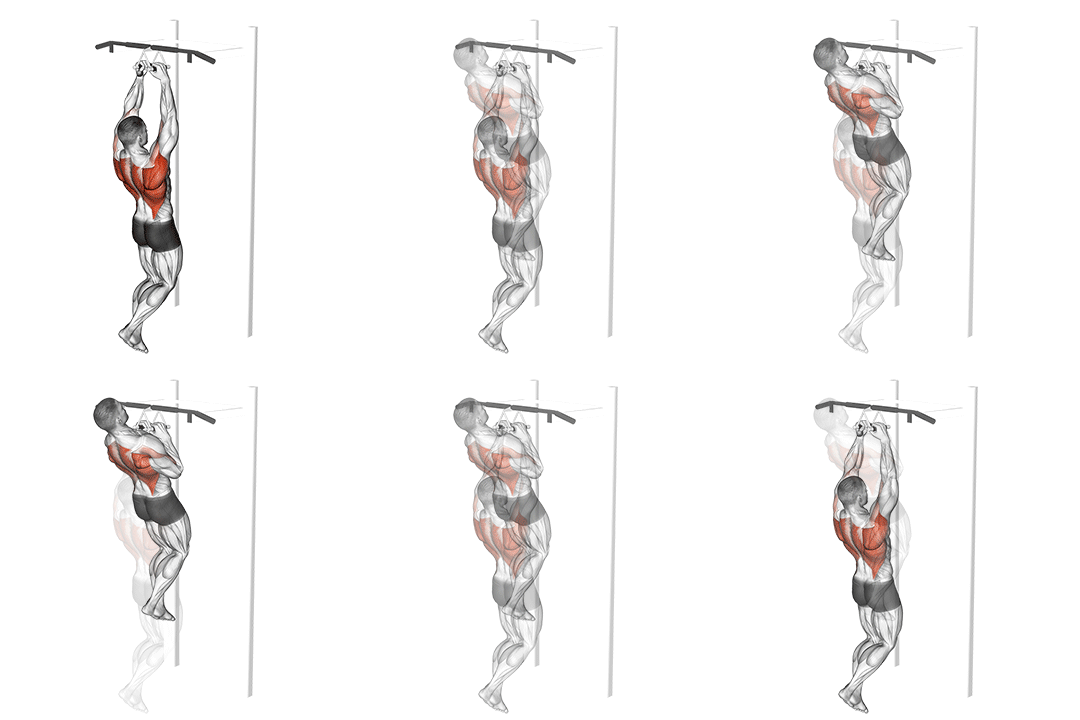
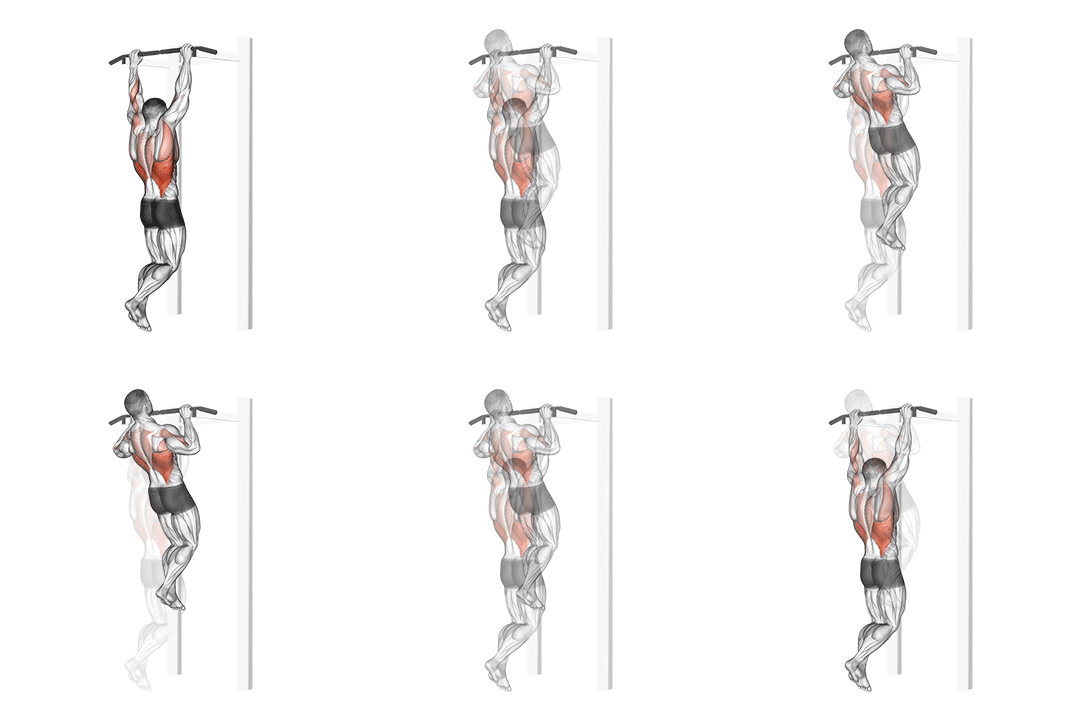
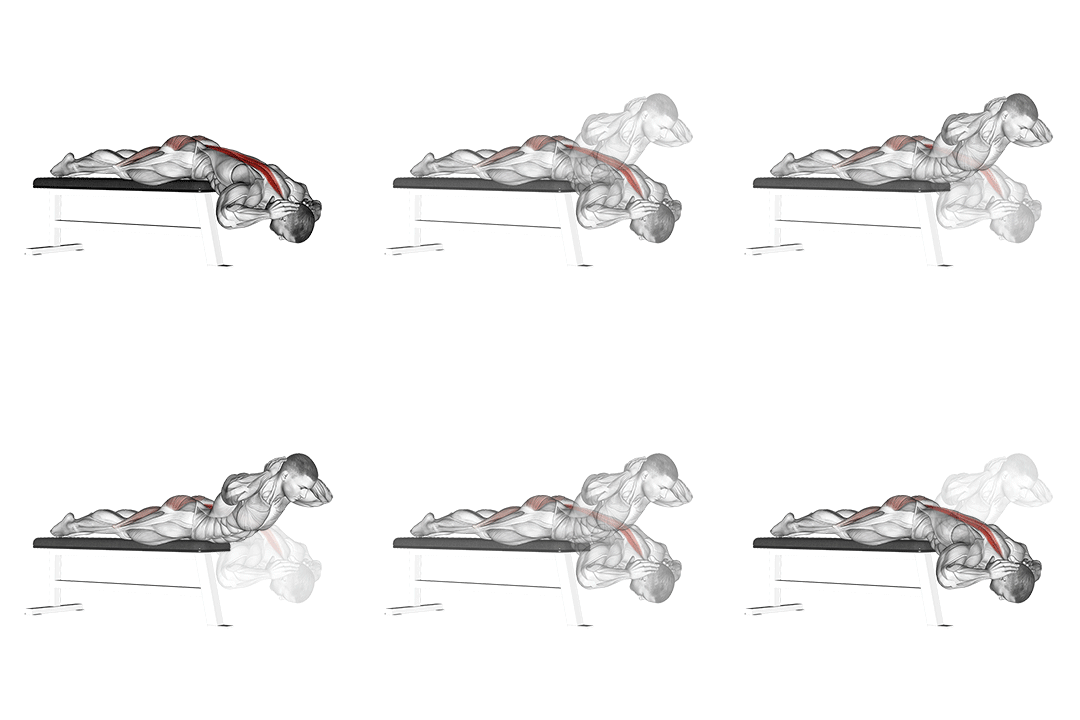
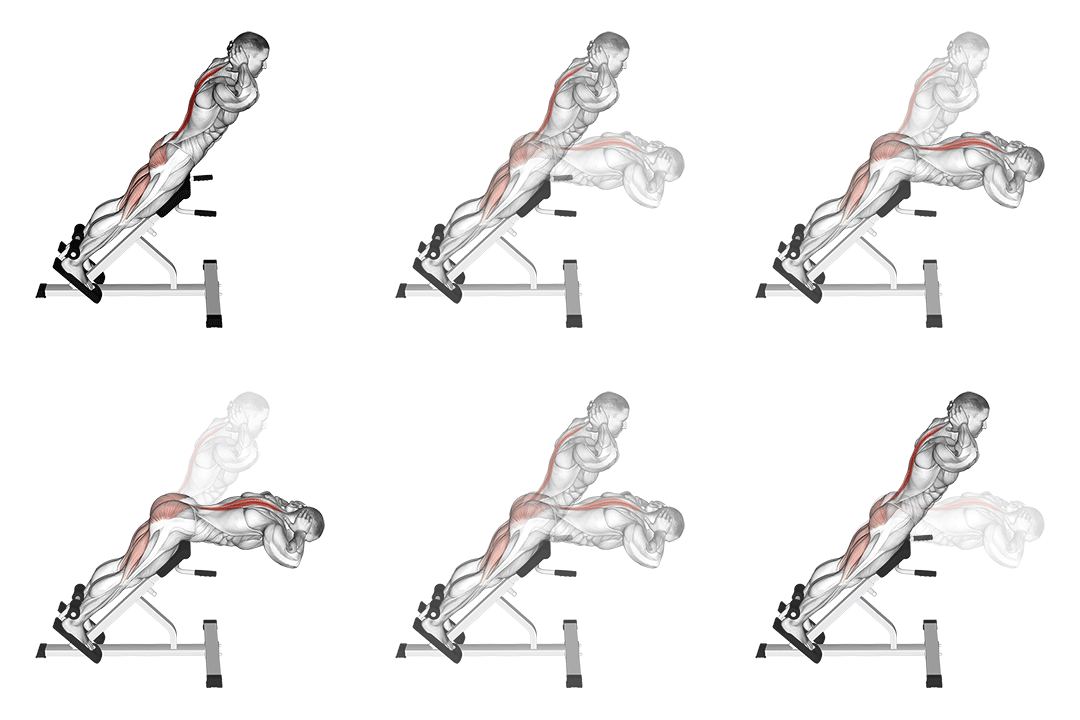
Inverted Row On Bench
beginner strength exercise · body weight · targets upper back
- Body part
- back
- Primary target
- upper back
- Equipment
- body weight
- Difficulty
- beginner
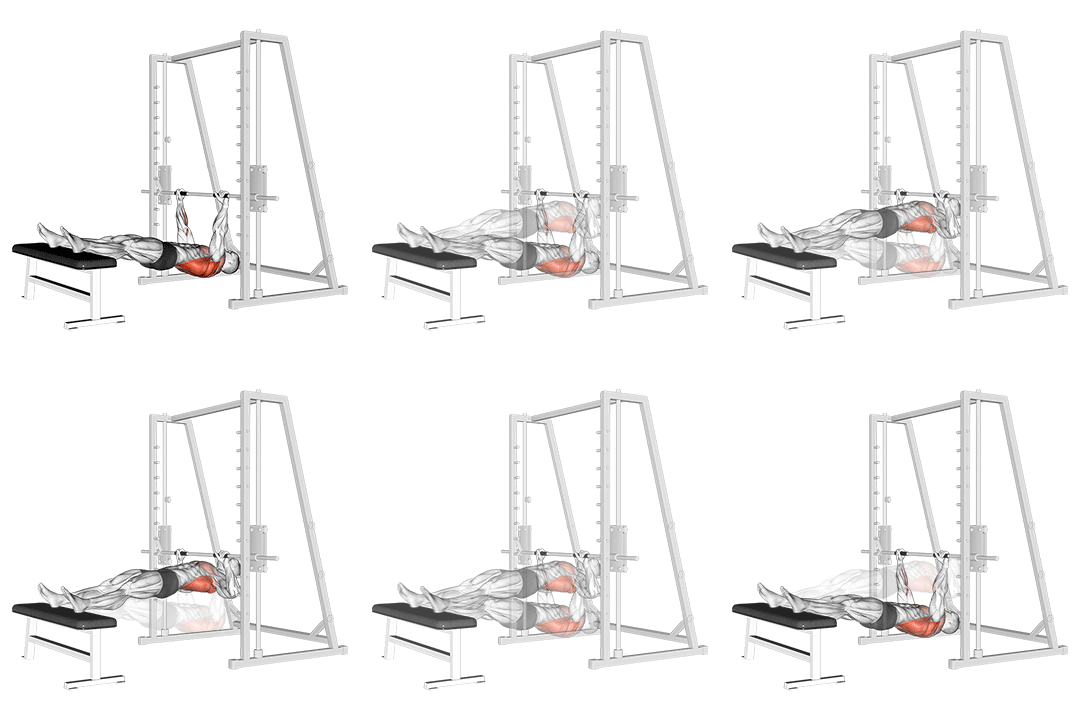
The inverted row on bench is a beginner-friendly horizontal pulling variation where you lie under a sturdy bench, grip the underside or top edge with both hands, and pull your chest up to the bench. The bench acts as the fixed anchor for the inverted row pattern, accessible to home trainees who don't have pull-up bars or suspension trainers. The exercise builds the upper back, lats, and biceps through the same mechanics as standard inverted rows but uses widely available furniture as equipment. For home trainees in apartments, hotels, or settings without specialized pulling equipment, this variation opens up productive bodyweight pulling. A sturdy coffee table, dining table, or workout bench all work as the anchor. The grip width is constrained by the bench width, which slightly limits exercise progression compared to standard inverted rows on a bar, but the basic stimulus is equivalent — full-bodyweight horizontal pulling that builds back development effectively. The trade-off is the somewhat awkward setup. Crawling under a bench, gripping the underside, and performing reps requires a setup that's less natural than standing inverted rows on a fixed bar. The bench must be sturdy enough to support full bodyweight without tipping or sliding. For trainees with appropriate furniture and willingness to deal with the setup, this exercise provides a complete horizontal pulling solution. Programmed 2-3 times per week alongside push-ups for balanced upper-body training, it produces meaningful back and biceps development.
Why train the Inverted Row On Bench?
- Provides accessible horizontal pulling using common furniture (bench, table) as equipment.
- Builds the upper back, lats, and biceps through bodyweight horizontal pulling.
- Useful in equipment-limited contexts where pull-up bars aren't available.
- Improves shoulder blade control through deliberate retraction patterns.
- Scalable through body angle adjustment for any fitness level.
- Pairs naturally with push-ups for balanced bodyweight upper-body training.
How to do the Inverted Row On Bench: step by step
- 1Set up a bench at a height that allows your body to hang freely underneath it.
- 2Lie face up on the ground with your head towards the bench.
- 3Reach up and grab the bench with an overhand grip, slightly wider than shoulder-width apart.
- 4Position your body so that your heels are on the ground and your arms are fully extended.
- 5Engage your core and squeeze your shoulder blades together as you pull your chest up towards the bench.
- 6Pause for a moment at the top of the movement, then slowly lower your body back down to the starting position.
- 7Repeat for the desired number of repetitions.
Muscles worked
Primary
upper back
Secondary
biceps, forearms
Common mistakes to avoid
Using an unstable bench
The bench must support full bodyweight without tipping or sliding. Test stability before applying full load. Lightweight or wheeled benches are unsuitable; sturdy weight-bearing benches and tables work.
Hips sagging during the pull
When pulling under the bench, the hips often drop toward the floor. Brace the abs and glutes throughout — the body should travel as one unit.
Pulling with the arms only
Initiate the pull with the back by retracting the shoulder blades. Let the arms follow. Arm-only pulling reduces back development.
Cutting range
Go all the way down with arms fully extended at the bottom, and pull until the chest touches the bench (or as close as possible). Partial range trains a partial pattern.
Wrong body angle for current strength
Adjust feet position to make the exercise challenging in the 8-15 rep range. More horizontal is harder; more upright is easier. The angle should produce challenging sets without form breakdown.
Easier and harder variations
Easier
Bend the knees and place feet flat on the floor for reduced body lever. Or position the body more upright by walking feet closer to the bench. Both reduce the load through the back.
Harder
Walk feet further away from the bench to make the body more horizontal. Or elevate feet on a second bench for inverted body angle. For maximum challenge, single-arm bench rows provide severe asymmetric loading.
Alternative exercises
Standard inverted row (fixed bar)
More space-efficient and easier to set up than bench-based work. Use whenever a fixed bar is available.
Suspended row
Suspension trainer version with added instability. More versatile but requires equipment.
Bodyweight standing row (towel)
Different anchor approach using a towel. Useful when no bench or bar is available.
How to program the Inverted Row On Bench into your training
The inverted row on bench works as primary horizontal pulling work for home trainees without bar access. Sets and reps: 3-4 sets of 8-15 reps with 60-90 seconds rest. Adjust body angle to keep reps in this range. Frequency: 2-3 times per week. The back recovers within 48 hours. In an upper-body session: 4 sets of 10 inverted rows on bench, 4 sets of 10 push-ups, 3 sets of 6 pull-ups (if bar is available), 3 sets of 30-second hollow holds. For general fitness in apartment contexts: 3 sets of 10-12 reps, 2 times per week, with sturdy coffee table or dining table as anchor. Don't program bench rows daily — the back needs 48 hours between sessions for proper recovery.
Recovery and frequency
Inverted rows on bench recover within 24-48 hours. Watch for biceps tendinopathy, wrist soreness from the gripping position, and shoulder discomfort.
Frequently asked questions
How many sets and reps?
3-4 sets of 8-15 reps with 60-90 seconds rest. Adjust body angle to keep reps challenging.
How often?
2-3 times per week. The back recovers within 48 hours.
What if my bench tips?
Use heavier or more stable furniture. Sturdy weight benches, dining tables, and built-in benches usually work. If nothing stable is available, switch to towel rows on a doorway or suspension trainer alternatives.
Inverted row on bench vs fixed bar: which is better?
Fixed bar is more space-efficient and easier to set up. Bench version is more accessible (any sturdy bench works). For most trainees, the fixed bar wins on convenience; bench rows fill the gap when bars aren't available.
Will this build my back?
Yes — same horizontal pulling pattern as standard inverted rows, with similar back development.
How do I make this harder once 15 reps feel easy?
Walk feet further away from the bench (more horizontal body), elevate feet on a second bench (inverted body angle), or progress to single-arm variations.
Useful tools for this exercise
Build a workout with the Inverted Row On Bench
Puna gives you guided bodyweight workouts you can do anywhere — no equipment, no gym, just structured progressions that build real strength.