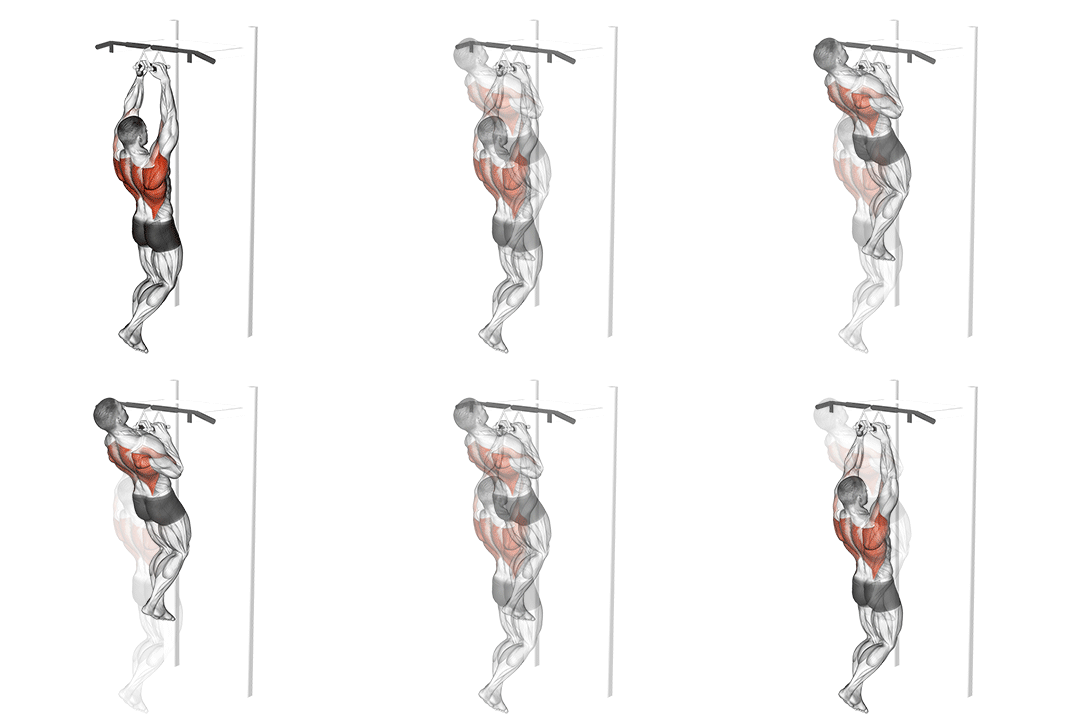
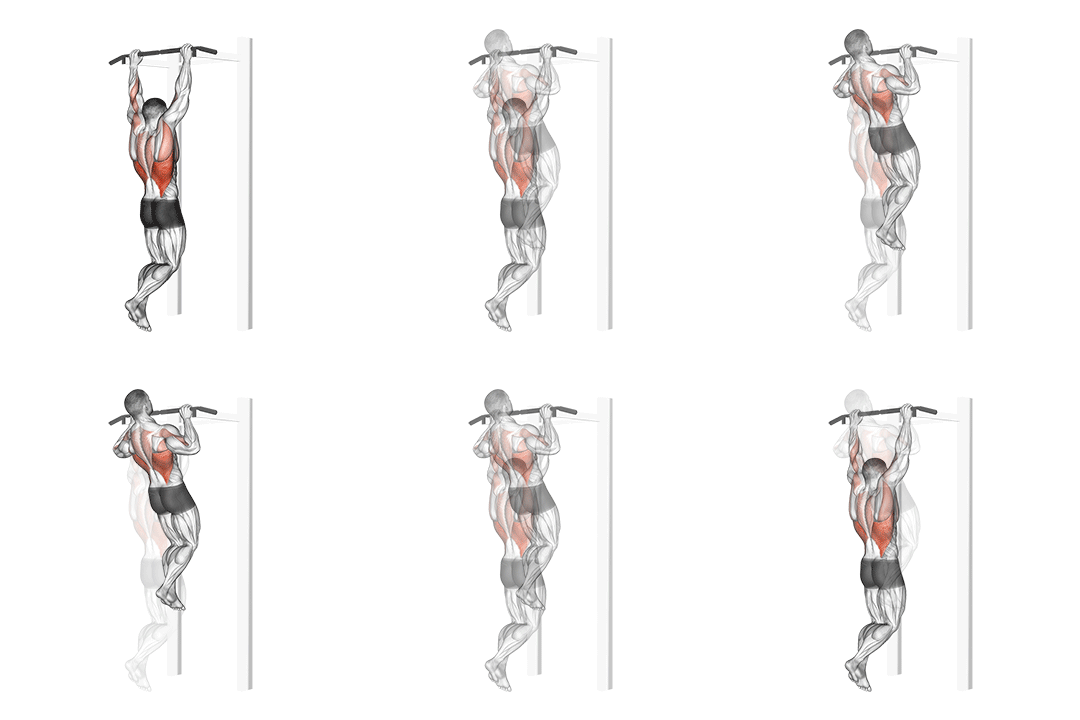
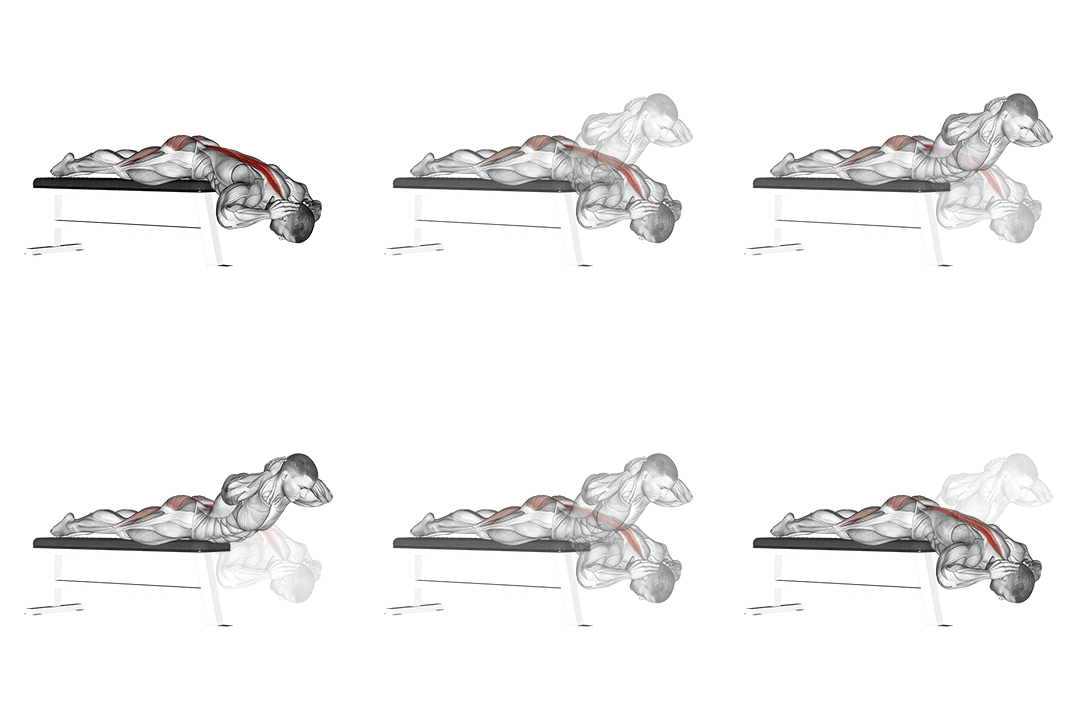
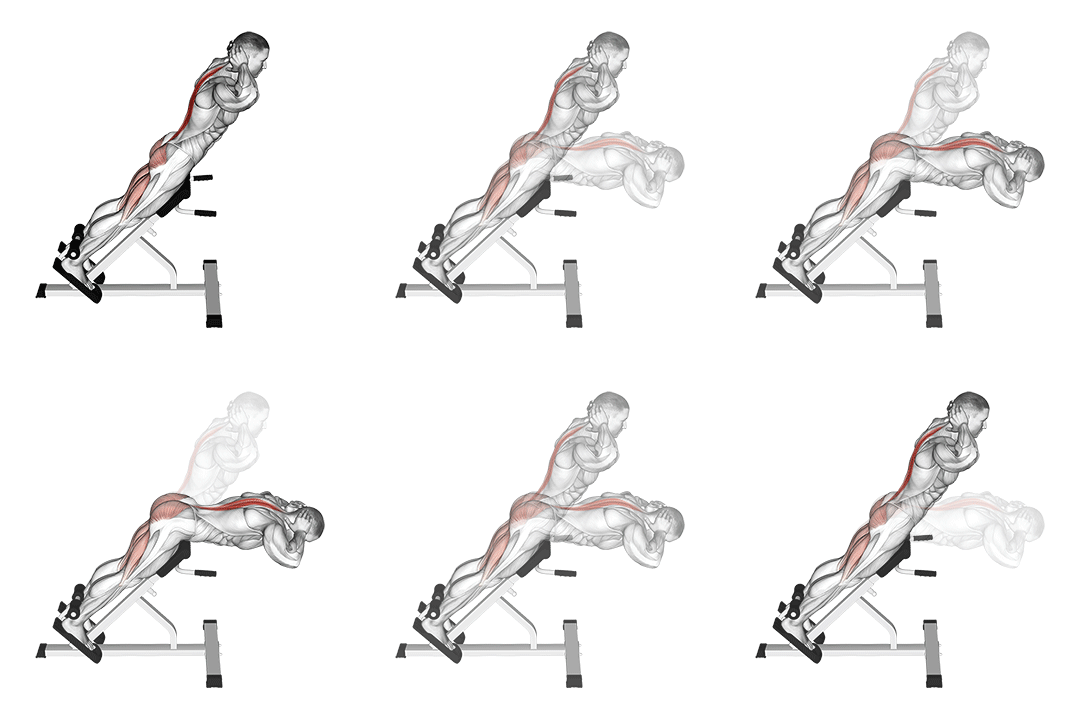
Inverted Row Bent Knees
beginner strength exercise · body weight · targets upper back
- Body part
- back
- Primary target
- upper back
- Equipment
- body weight
- Difficulty
- beginner
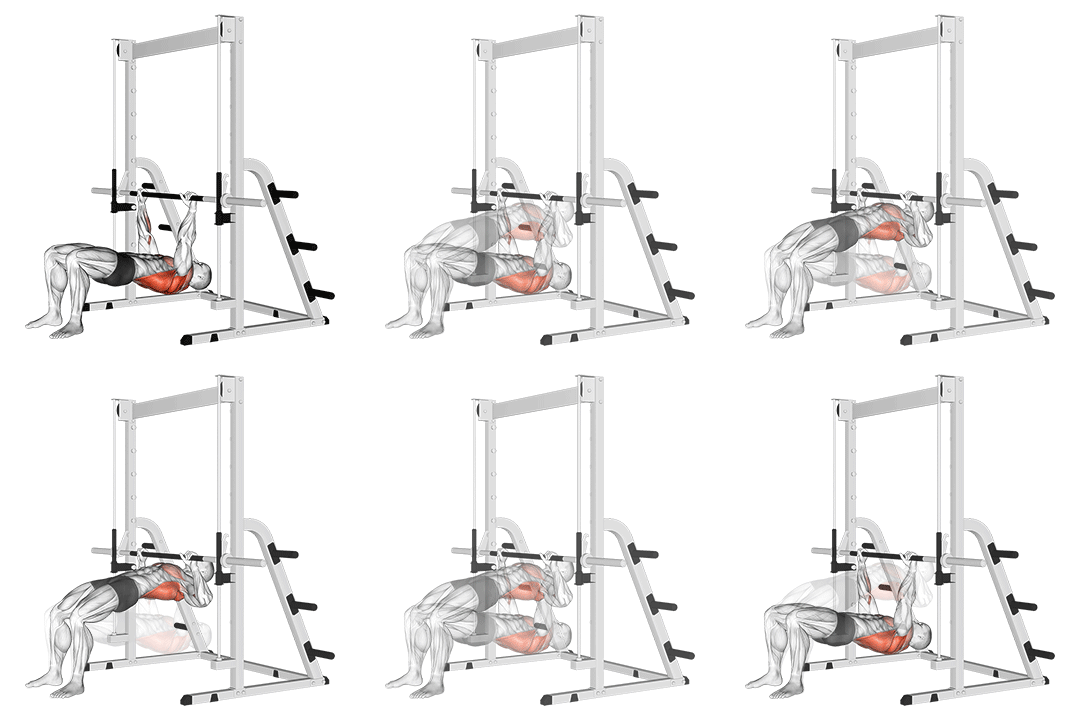
The inverted row with bent knees is a beginner-friendly variation of the standard inverted row where the knees stay bent and feet flat on the floor throughout the movement. The bent-knee position dramatically reduces the lever arm of the body, making the exercise significantly easier than straight-leg variations. For absolute beginners, older adults, or anyone returning from injury, this is often the right starting point for bodyweight horizontal pulling. This variation fills the gap between no pulling work and full-strength inverted rows. Trainees with insufficient strength for standard inverted rows often struggle through messy reps that train poor patterns. The bent-knee version lets them perform clean reps from the first session, building the pulling pattern at appropriate intensity. Over 2-4 weeks of consistent practice, most people develop the strength to begin straightening the legs gradually. Where this earns its place is as the introductory inverted row variation in any training program. It's accessible to virtually any fitness level, requires the same minimal equipment as standard inverted rows (a fixed bar, table edge, or suspension trainer), and provides the foundation that subsequent pulling progression builds on. Used as the entry point for beginners, then phased out as straight-leg variations become accessible, the bent-knee inverted row produces meaningful early progress without the frustration of attempting exercises beyond current strength capacity.
Why train the Inverted Row Bent Knees?
- Provides accessible entry point to bodyweight rowing for absolute beginners.
- Builds the foundational pulling strength that straight-leg variations build on.
- Develops shoulder blade control through deliberate retraction patterns.
- Suitable for older adults, those returning from injury, or absolute beginners.
- Uses the same equipment as standard inverted rows — no specialized gear needed.
- Pairs naturally with knee push-ups for balanced beginner upper-body training.
How to do the Inverted Row Bent Knees: step by step
- 1Set up a bar at waist height and lie underneath it.
- 2Grab the bar with an overhand grip, slightly wider than shoulder-width apart.
- 3Position your body so that your heels are on the ground and your body is straight.
- 4Pull your chest up towards the bar by squeezing your shoulder blades together.
- 5Pause for a moment at the top, then slowly lower your body back down to the starting position.
- 6Repeat for the desired number of repetitions.
Muscles worked
Primary
upper back
Secondary
biceps, forearms
Common mistakes to avoid
Pushing the hips up during the pull
When the back fatigues, the hips often lift up to use leg drive for the pull. This shifts work away from the back and turns the rep into a partial squat with arm pulling. Keep the hips at a consistent height throughout — only the upper body moves during the pull.
Pulling with the arms instead of the back
Beginners initiate with biceps. Initiate by retracting the shoulder blades; let the arms follow.
Cutting range
Full range matters: arms fully extended at the bottom, chest as close to the bar as possible at the top. Partial reps train partial patterns.
Staying with bent-knee version too long
The bent-knee variation is the introductory version, not a destination. Once 12-15 clean reps feel easy, progress to straight-leg variations. Staying indefinitely slows pulling development.
Wrong body angle for strength
Adjust hand placement and body angle to make the exercise challenging in 8-15 rep range. Too easy doesn't drive adaptation; too hard breaks form.
Easier and harder variations
Easier
Make the body more upright by walking feet closer to the bar. Or use a higher bar position to reduce the body angle.
Harder
Straighten the legs to perform standard inverted rows. The natural progression once bent-knee feels easy. Then progress to elevated-feet variations and eventually single-arm work.
Alternative exercises
Standard inverted row (straight legs)
The natural progression. Increased load through the longer lever arm.
Negative pull-up
Different vertical pulling work for trainees building toward chin-ups.
Knee push-up
Pressing complement at similar beginner difficulty. Pair both for balanced upper-body work.
How to program the Inverted Row Bent Knees into your training
The bent-knee inverted row works as introductory horizontal pulling work in beginner programs. Sets and reps: 3 sets of 8-12 reps with 60 seconds rest. Total weekly volume of 50-80 reps. Frequency: 2-3 times per week. The back recovers within 48 hours from this volume. For absolute beginners: 3 sets of 8-10 reps, 2-3 times per week, alongside other beginner-appropriate work. Build foundational strength over 2-4 weeks before transitioning to straight-leg variations. In a beginner upper-body session: 3 sets of 10 bent-knee inverted rows, 3 sets of 8 knee push-ups, 3 sets of 30-second dead hangs. Don't stay with this variation once 12-15 reps feel easy — progress to straight-leg variations.
Recovery and frequency
Bent-knee inverted rows have minimal recovery cost. The reduced load supports daily practice if needed. 24-48 hours between sessions is plenty for moderate volume.
Frequently asked questions
How many sets and reps?
3 sets of 8-12 reps with 60 seconds rest. Total weekly volume of 50-80 reps.
How often?
2-3 times per week. Beginner load supports more frequent training.
How is this different from standard inverted row?
Knees stay bent and feet flat on floor, dramatically reducing the body lever and overall load. The introductory version of the same exercise.
When should I progress?
When 12-15 clean reps feel easy. Straighten the legs to perform standard inverted rows.
Will this build my back?
Foundational development yes; serious strength no. Use as entry point and progress to harder variations as strength develops.
Is this useful for older adults?
Yes — the reduced load makes this variation accessible to most fitness levels. Excellent introduction to horizontal pulling for older trainees.
Useful tools for this exercise
Build a workout with the Inverted Row Bent Knees
Puna gives you guided bodyweight workouts you can do anywhere — no equipment, no gym, just structured progressions that build real strength.