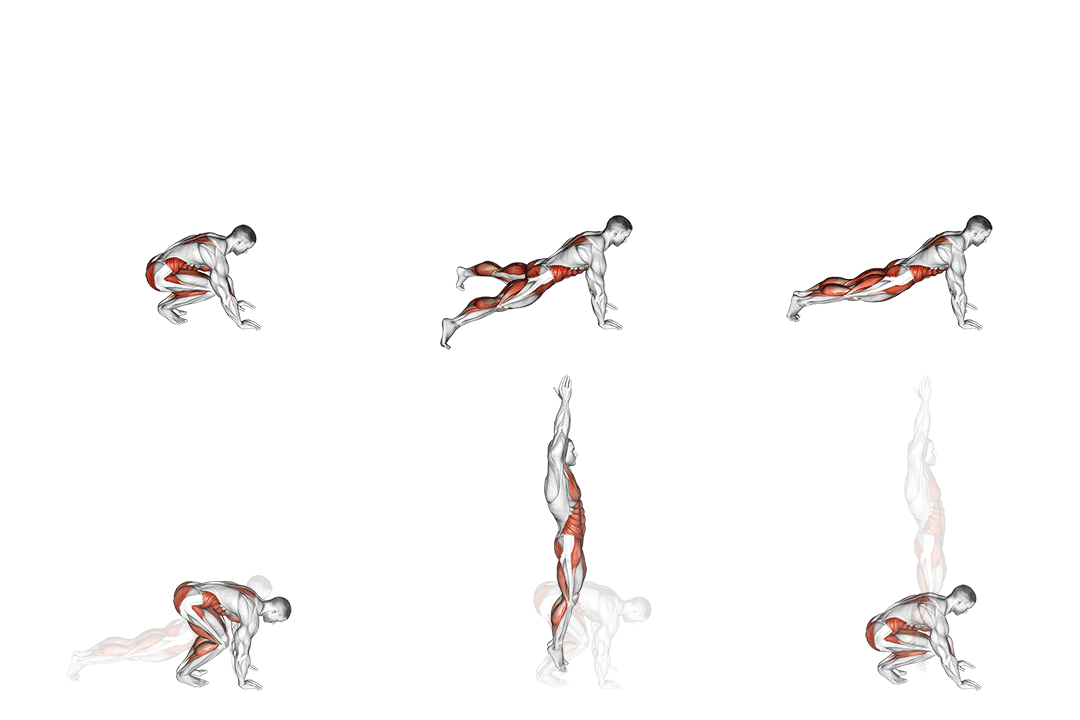
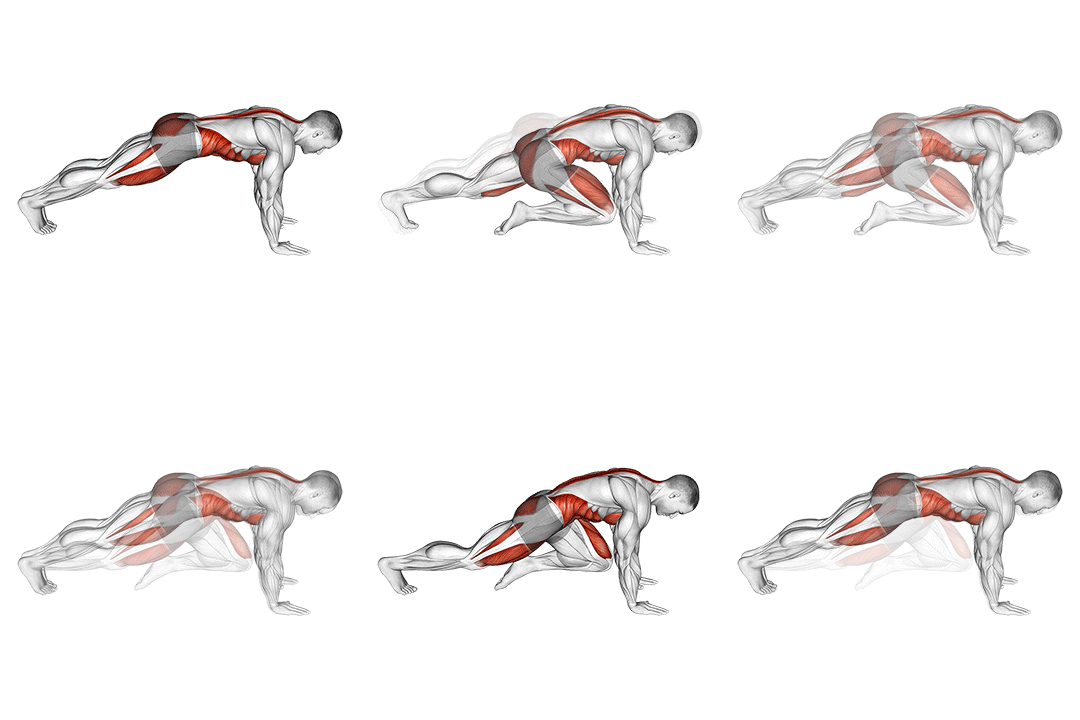
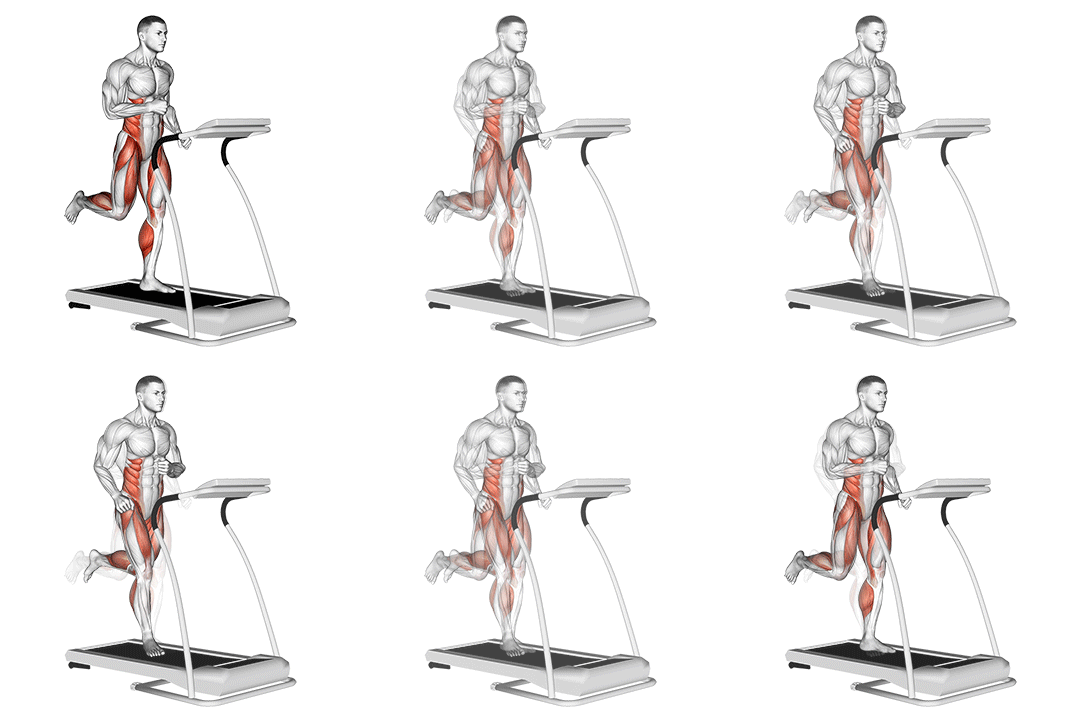
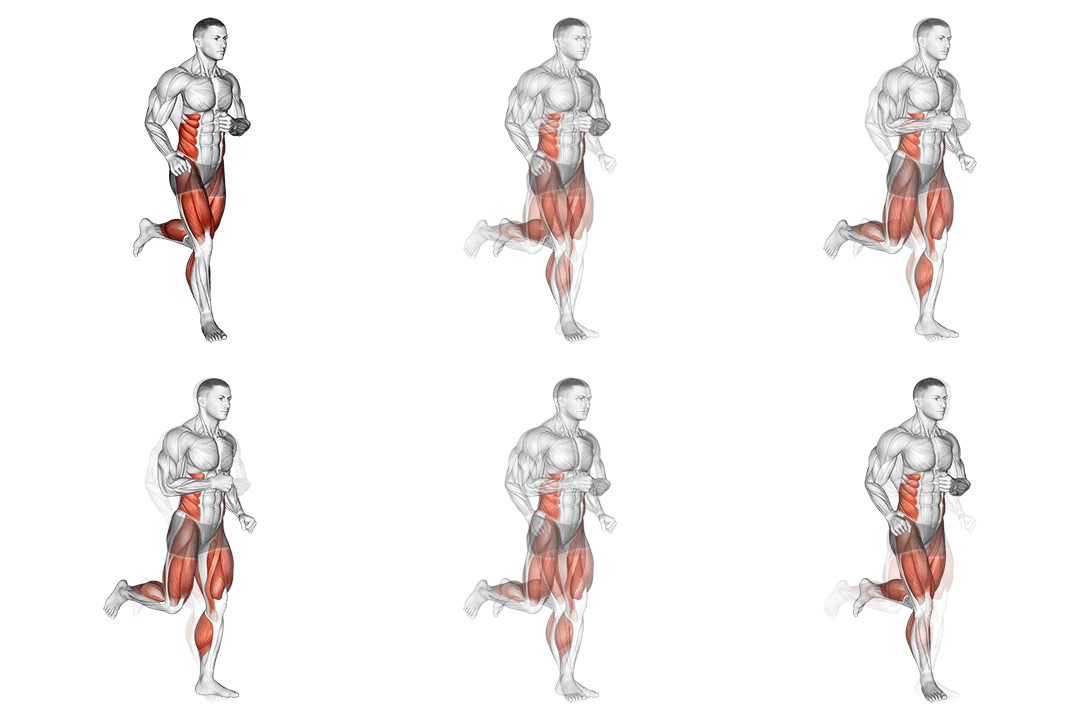
High Knee Against Wall
beginner cardio exercise · body weight · targets cardiovascular system
- Body part
- cardio
- Primary target
- cardiovascular system
- Equipment
- body weight
- Difficulty
- beginner
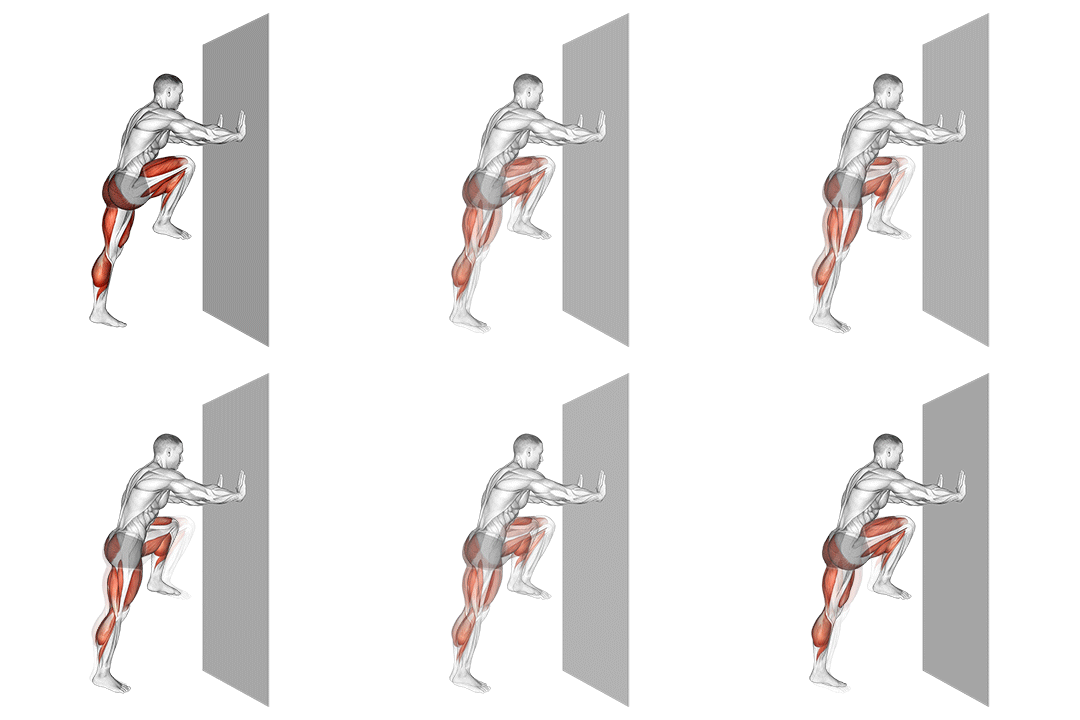
The high knee against wall is a beginner cardio drill performed by leaning slightly forward against a wall with hands placed at chest height, then alternating lifting the knees high toward the chest at speed. The wall support stabilizes the upper body, removing the balance demand of standard high-knees and letting trainees focus entirely on the leg drive and cardiovascular work. It's an excellent entry point to running-style training for beginners, deconditioned trainees, or those rehabbing leg injuries. The wall removes the balance and impact components that make standard high-knees challenging while still providing the heart rate elevation and hip flexor engagement that running demands. Most beginners can sustain 30-60 seconds of high knees against a wall before standard high-knees become possible. It's also useful as a running-specific warm-up. The high knee drive trains the hip flexors and the rapid leg cycling pattern that running uses, even though the wall version doesn't include the impact loading. Programmed for 30-60 seconds before runs or interval workouts, it primes the legs for the running pattern that follows.
Why train the High Knee Against Wall?
- Provides cardio work without the balance demand of standard high-knees — accessible for beginners.
- Trains the hip flexors and leg-cycling pattern used in running.
- Lower impact than free-standing high-knees because the wall absorbs some forward momentum.
- Useful as a running-specific warm-up drill.
- Requires only a wall — works in any space.
- Good rehabilitation tool for trainees returning from leg injuries (under medical guidance).
How to do the High Knee Against Wall: step by step
- 1Stand facing a wall with your feet hip-width apart.
- 2Place your hands on the wall for support.
- 3Engage your core and lift your right knee up towards your chest, while keeping your left foot on the ground.
- 4Quickly switch legs, bringing your left knee up towards your chest and lowering your right foot back down.
- 5Continue alternating legs in a running motion, bringing your knees up as high as possible.
- 6Maintain a fast pace and keep your upper body stable throughout the exercise.
- 7Repeat for the desired duration or number of repetitions.
Muscles worked
Primary
cardiovascular system
Secondary
quadriceps, hamstrings, glutes, calves
Common mistakes to avoid
Leaning too heavily on the wall
The wall is for stability, not full body support. Lean lightly so most of your weight stays in your feet. Pressing into the wall too hard turns the exercise into a static hold instead of a cardio drill.
Not lifting the knees high enough
The 'high knee' part matters — knees should come at least to hip height. If your knees only lift to mid-thigh, the hip flexors aren't getting the full engagement that makes the exercise effective.
Going too slow for cardio benefit
High knees should be done at moderate to fast pace for the cardio benefit. Going slow turns it into a low-intensity mobility drill. Aim for 1+ knee drives per second for cardio sets.
Hunching the upper body forward
Some trainees collapse the chest toward the wall. Keep the chest tall and the upper body upright — only the legs cycle. Posture matters even in this exercise.
Holding the breath through the work
Cardio work requires sustained breathing. Breathe rhythmically with the legs — every 2-3 knee drives, take a deeper breath. Sustained airflow lets you sustain the work.
Easier and harder variations
Easier
Slow the tempo and reduce knee height. Or stand more upright (less wall lean) to reduce intensity.
Harder
Increase tempo to maximum speed. Or progress to standing high-knees away from the wall (no support). Or add upper body movement (alternating arm pumps to mimic running form).
Alternative exercises
Standing high knees
Same drill performed without wall support. Adds balance demand and full impact, more challenging.
Running in place
Similar leg-cycling pattern but with both feet leaving the floor on each stride. More impact and cardio demand.
Walking high knees lunge
Combines high knees with walking lunges for forward movement plus knee drive. More demanding lower-body work.
How to program the High Knee Against Wall into your training
High knees against wall work as warm-up, low-intensity cardio, or part of conditioning circuits. As warm-up: 1-2 sets of 30-60 seconds at moderate tempo before strength training or running. For cardio conditioning: 4-6 rounds of 30-45 seconds work with 30-60 seconds rest. Total work time of 4-5 minutes elevates heart rate without the impact of running. For beginners building toward standard high-knees: 3 sessions per week of high knees against wall (3 sets of 30-45 seconds), progress to standing high-knees over 2-4 weeks once the wall version feels easy. In a circuit: pair with strength movements. Example circuit — 30 seconds high knees against wall, 10 push-ups, 10 squats, 30-second front plank — repeat 3-4 times. For rehabilitation use (under medical guidance): 2-3 short sessions per week as part of a return-to-running program. The wall reduces impact while reintroducing the leg-cycling pattern.
Recovery and frequency
High knees against wall have very low recovery cost — daily training is fine for most people. The wall support eliminates most impact stress that would normally limit cardio frequency. Hip flexor soreness in the first sessions is normal and fades quickly. Calf or shin discomfort is uncommon but signals form errors — usually excessive forward lean shifting weight onto the toes. Address form first.
Frequently asked questions
How many sets and reps of high knees against wall should I do?
Work in time intervals: 4-6 rounds of 30-45 seconds with 30-60 seconds rest. Or 1-2 sets of 30-60 seconds as a warm-up.
How often should I train the high knee against wall?
2-4 times per week as part of cardio programming. Lower volumes (warm-up use) can be done daily.
High knees against wall vs standing high knees: which is better?
Wall version is the accessible regression for beginners or those rehabbing injuries. Standing version is the standard exercise. Use the wall version as a stepping stone or warm-up; use standing version for primary cardio work.
Are high knees against wall good for fat loss?
They contribute to cardio work that supports fat loss, but no single exercise drives fat loss. Total weekly cardio volume and nutrition do the heavy lifting.
Can I use high knees against wall during pregnancy?
Generally yes, especially in earlier trimesters. Confirm with your healthcare provider. The wall support reduces fall risk that becomes a concern as pregnancy progresses.
Will high knees against wall improve my running?
It can help warm up the running pattern and improve hip flexor strength, but it doesn't replace actual running practice. Use it as a warm-up or rehabilitation tool, not as the primary running training.
Useful tools for this exercise
Build a workout with the High Knee Against Wall
Puna gives you guided bodyweight workouts you can do anywhere — no equipment, no gym, just structured progressions that build real strength.