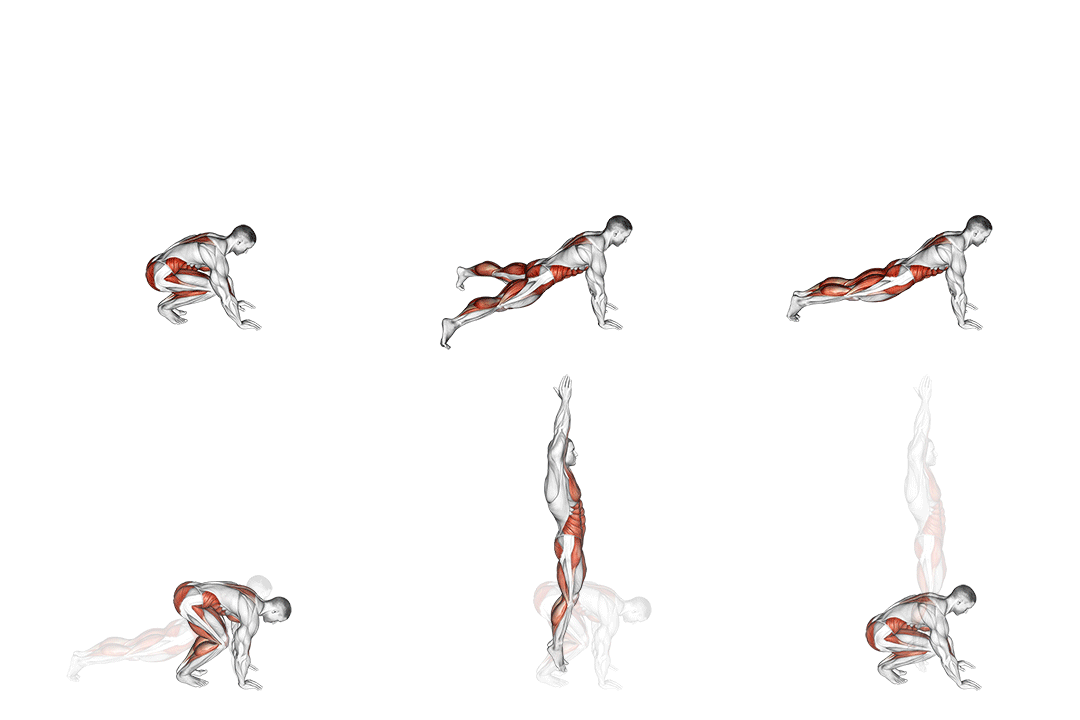
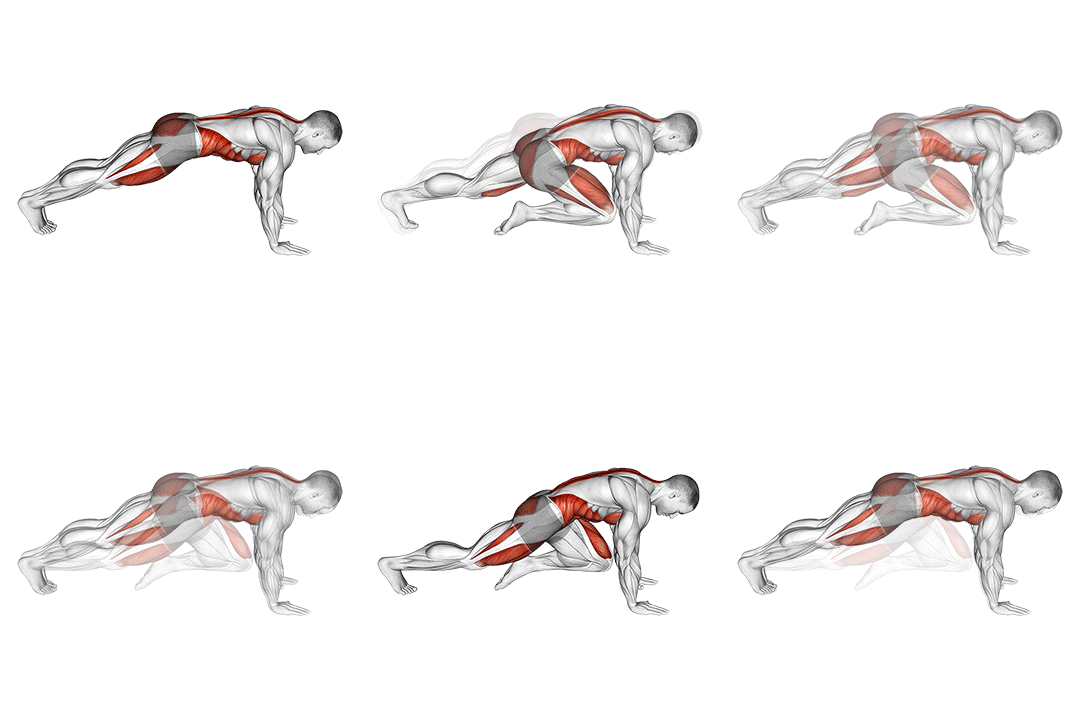
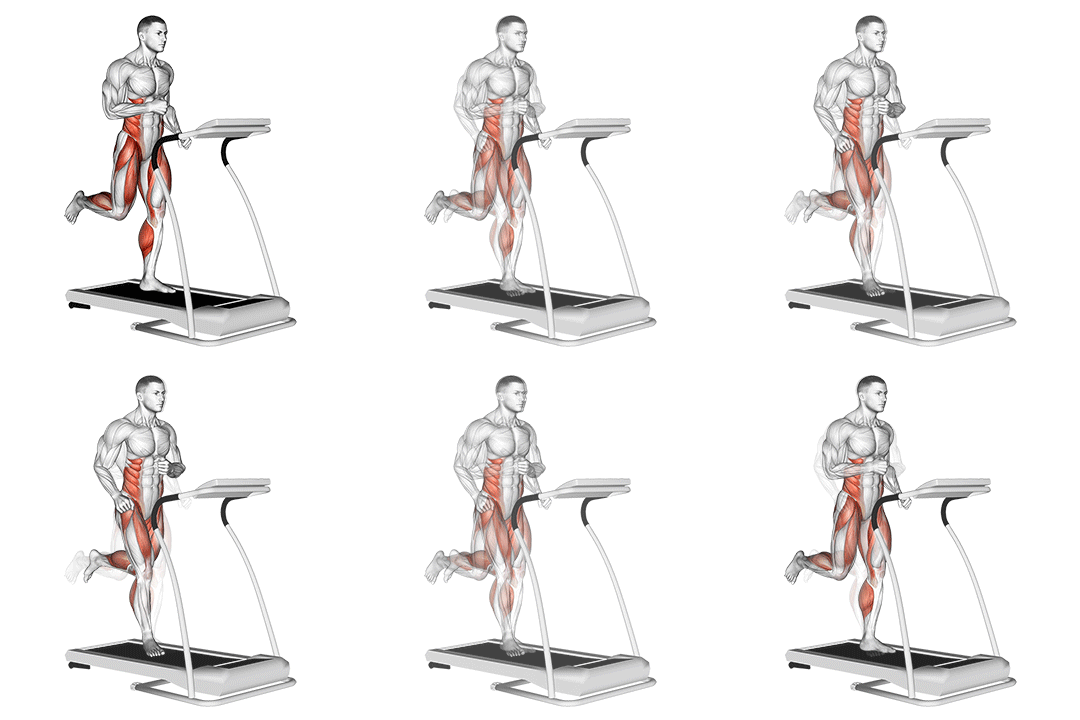
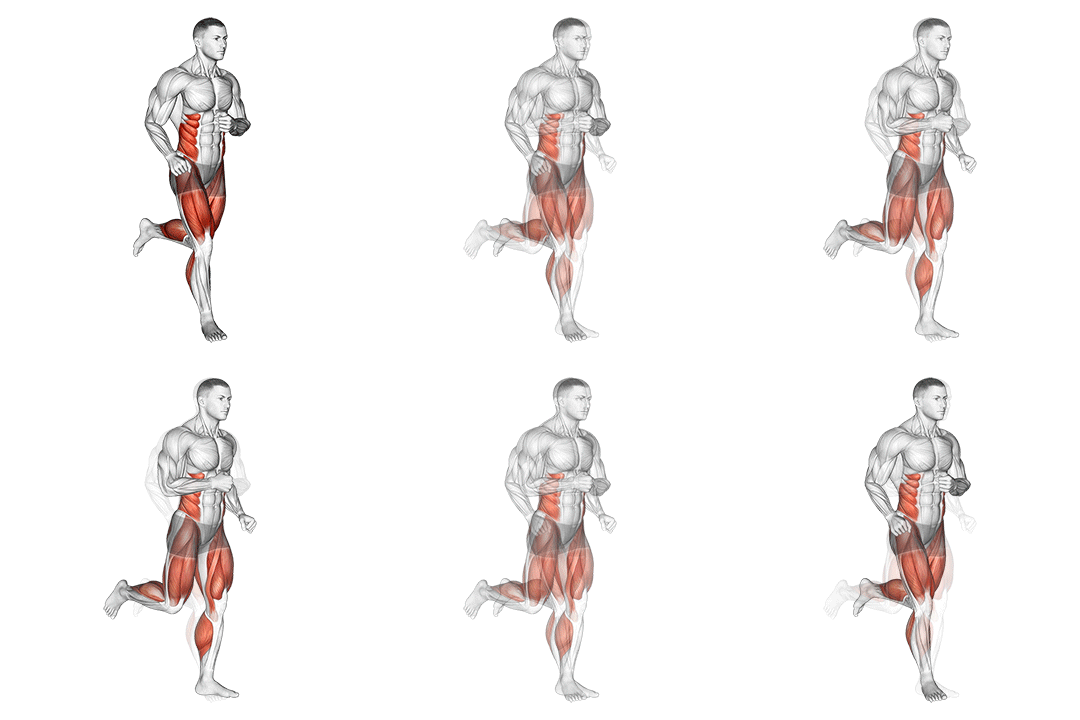
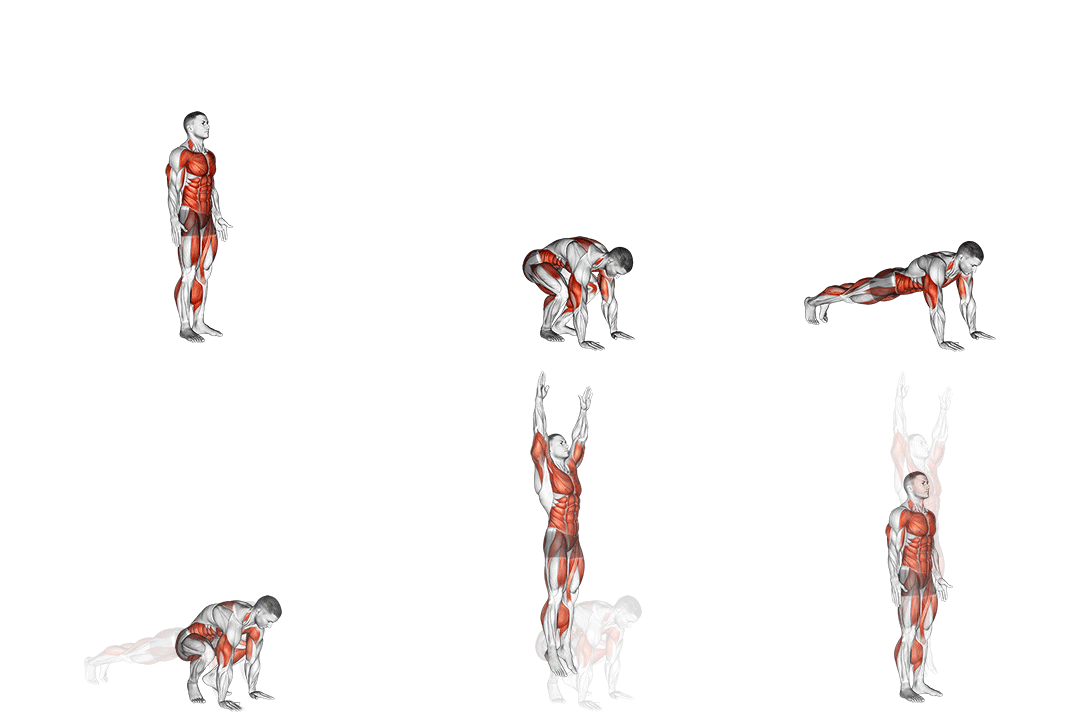
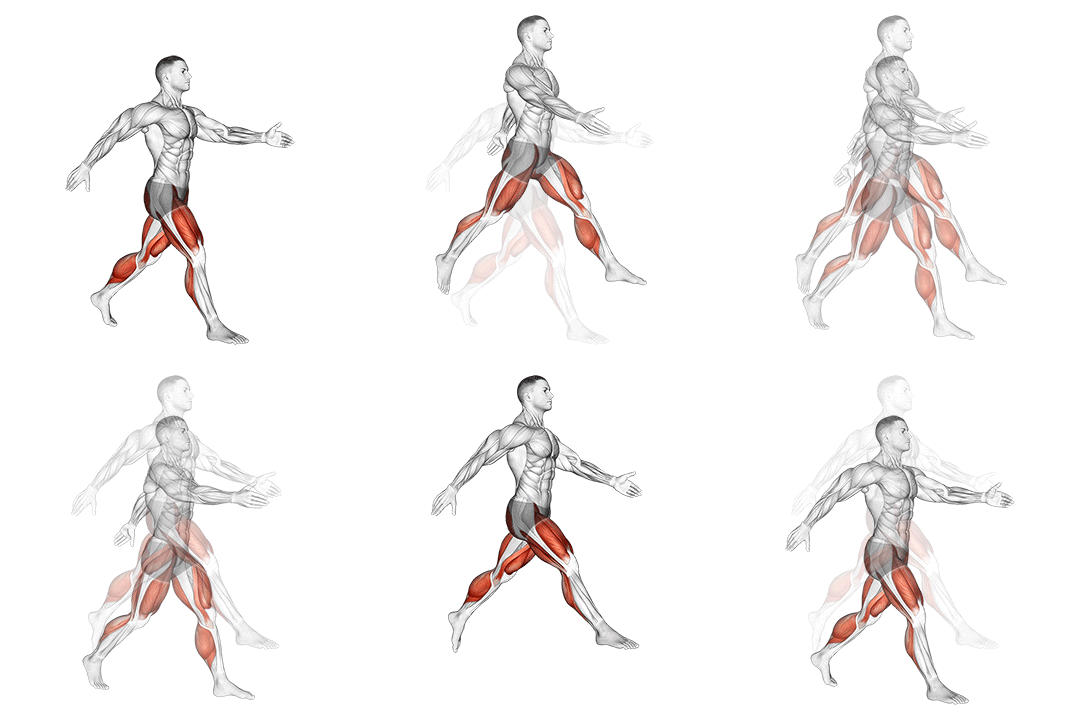
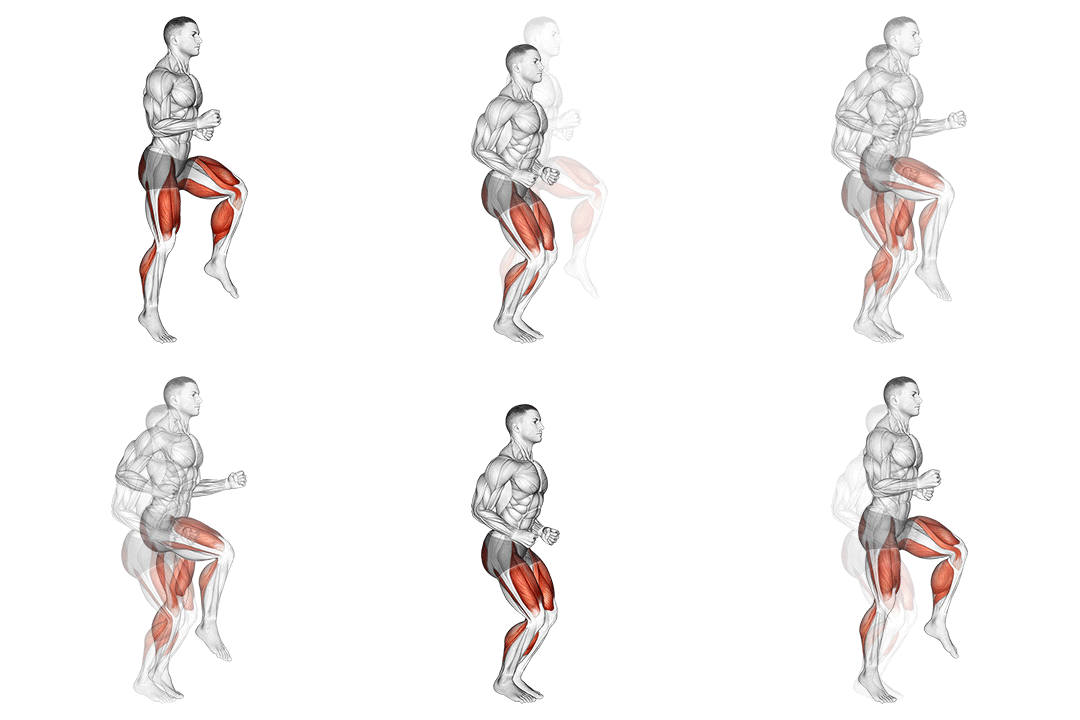
Half Knee Bends (male)
beginner cardio exercise · body weight · targets cardiovascular system
- Body part
- cardio
- Primary target
- cardiovascular system
- Equipment
- body weight
- Difficulty
- beginner
Half knee bends are a low-intensity cardio drill where you stand with feet shoulder-width apart, lower into a partial squat (roughly 45-degree knee bend), and rise back to standing. The motion is essentially a shallow bodyweight squat repeated rhythmically, with the partial range making it sustainable for extended durations. It's positioned as cardio rather than strength work because the load is light enough to elevate heart rate without producing the muscle fatigue that would limit continuous effort. This exercise occupies a useful niche between walking and full squatting. Walking provides minimal lower-body load; full squats produce significant strength stimulus but limit how long you can continue. Half knee bends sit in the middle — moderate load, sustainable for 5-15 minute continuous sessions, accessible to almost anyone regardless of fitness level. They're particularly valuable for older adults, people returning from injury, and beginners building lower-body conditioning before progressing to higher-intensity cardio. Where half knee bends earn their place is as foundational lower-body conditioning. They build basic quad and glute endurance, improve circulation in the legs after long sitting periods, and train the squatting motor pattern at low load. For anyone whose movement vocabulary doesn't include squatting (sedentary office workers, older adults who haven't exercised in years), starting with half knee bends provides a gentle entry point that progresses naturally to deeper squats and harder lower-body work over weeks. The exercise won't build serious strength or impressive cardio — but for the right starting point, it serves as a productive bridge between sedentary life and real training.
Why train the Half Knee Bends (male)?
- Provides accessible lower-body cardio for beginners, older adults, or people returning from injury.
- Improves circulation in the legs after long periods of sitting.
- Builds basic quadriceps and glute endurance without the strength demand of full squats.
- Trains the squatting motor pattern at low load, supporting progression to deeper variations.
- Costs nothing, requires minimal space, and produces no joint impact.
- Suitable for daily practice or for sustained sessions of 10-15 minutes.
How to do the Half Knee Bends (male): step by step
- 1Stand with your feet shoulder-width apart.
- 2Bend your knees and lower your body down as if you were sitting back into a chair.
- 3Keep your chest up and your weight in your heels.
- 4Pause for a moment at the bottom, then push through your heels to return to the starting position.
- 5Repeat for the desired number of repetitions.
Muscles worked
Primary
cardiovascular system
Secondary
quadriceps, hamstrings, glutes
Common mistakes to avoid
Going too deep too soon
The whole point of 'half' knee bends is the partial range. Going too deep transforms the exercise into bodyweight squats, which create more strength demand and limit how long you can continue. Stop the descent at roughly 45-degree knee bend — about a quarter to third of the way down.
Letting the knees track over the toes
Even at partial depth, the knees should track in line with the toes (not caving inward or pushing way past the toes). Knee tracking matters at any squat depth and prevents the small chronic stress that contributes to knee issues over time.
Bouncing at the bottom
Speed turns half knee bends into a quasi-plyometric drill that defeats the low-intensity purpose. Aim for 1-2 seconds in each direction with a brief pause at the bottom. The smooth rhythm makes the cardio sustainable; bouncing breaks down within minutes.
Treating it as strength training
If you can do clean bodyweight squats for sets of 15-20, half knee bends offer little additional value as strength work. Use this exercise for low-intensity cardio when applicable; use full squats and progressive variations for actual strength building.
Skipping the chest-up cue
Even at partial depth, the chest should stay up and the back stay neutral. Many trainees round the back during the descent, especially as fatigue builds across longer sets. Brace the abs and keep the chest open — the spine should be straight, not curved.
Easier and harder variations
Easier
Use a chair or sturdy surface for support — hold lightly with one or both hands during the motion. The added support reduces balance demand and is appropriate for older adults or those returning from injury. Or perform seated, simulating the standing-and-sitting motion with chair assistance.
Harder
Deepen the squat to full bodyweight squat depth (thighs parallel to floor or below). Or add tempo (3-second descent, 1-second pause, 1-second ascent) to increase time under tension. For real progression, transition to bodyweight squats and then to weighted variations.
Alternative exercises
Bodyweight squat
Full-depth version of the same motion. Significantly more strength stimulus. Use this once half knee bends feel too easy.
Walking
Lower-intensity cardio alternative with similar accessibility but less lower-body strength stimulus. Useful as the absolute starting point before half knee bends.
Chair sit-to-stand
Functional sit-and-stand pattern for older adults. Trains similar lower-body endurance with the practical motor pattern of getting in and out of chairs.
How to program the Half Knee Bends (male) into your training
Half knee bends work best as steady-state cardio for beginners or as accessory work during recovery from injury. The low intensity makes long continuous sessions possible. For beginners building cardio base: 5-10 minutes of continuous half knee bends, 3-4 times per week. Build gradually to 15-20 minute sessions over 4-6 weeks. The sustained moderate-intensity work develops cardiovascular base without overloading recovery. For desk-break protocol: 60-90 seconds of half knee bends every 60-90 minutes during long sitting sessions. The brief activity breaks counter the calf and hip flexor shortening of prolonged sitting and improve circulation. In a low-impact circuit: 60 seconds of half knee bends, 30 seconds of arm circles, 60 seconds of marching in place, 30 seconds of rest. Repeat 4-6 times. This provides full-body conditioning without joint impact. For older adults: 3 sets of 15-20 reps, 3-4 times per week, with hand support if needed. The combination of basic strength and cardio benefit improves function for daily tasks like getting in and out of cars or up from chairs. For those returning from injury: 5-10 minutes of half knee bends as part of progressive return to lower-body training. The partial range is gentle on healing tissues while maintaining lower-body conditioning. Frequency: daily is fine due to low intensity. The exercise produces minimal recovery demand. Don't program half knee bends as primary exercise for trainees who can do bodyweight squats well. Use full squats for real lower-body work; half knee bends for cardio or rehabilitation contexts.
Recovery and frequency
Half knee bends have minimal recovery cost. The partial range and bodyweight load mean the exercise produces almost no muscle damage or joint stress. Daily training is tolerated by most people without issue. The main warning signs are knee discomfort (especially in trainees with existing knee issues) and lower back fatigue from sustained partial squatting. Knee discomfort warrants checking knee alignment and possibly adding hand support for balance assistance. Lower back fatigue suggests poor bracing through the abs; review the chest-up cue and rebuild the pattern. No special recovery protocols apply beyond reasonable nutrition and sleep. The exercise is gentle enough to fit into daily routines without recovery concerns.
Frequently asked questions
How many half knee bends should I do?
5-15 minutes of continuous practice for cardio, or 3 sets of 15-20 reps in circuit contexts. The low intensity makes high volumes accessible. Aim for the duration that elevates heart rate moderately without producing significant fatigue.
How often should I do this exercise?
Daily is fine due to the low intensity. Frequency over duration produces better results — 5 minutes daily outperforms 30 minutes once per week for cardiovascular adaptation in beginners.
Is this a good cardio exercise?
For beginners or older adults, yes — the moderate intensity is sustainable for the durations needed for cardiovascular benefit. For experienced trainees, half knee bends offer too little intensity to drive meaningful cardio adaptation; running, cycling, or HIIT work better.
Will this build leg muscle?
Honestly, very little. The bodyweight load and partial range produce minimal strength stimulus. For leg muscle building, full squats and progressive variations work much better.
Can I do this with knee problems?
Often yes, especially with hand support for balance. The partial range is gentle on knee tissues compared to full squats, making this exercise often part of knee rehabilitation programs. Consult a physiotherapist for current issues; for general knee health concerns, the exercise is usually well tolerated.
When should I progress beyond half knee bends?
When 15-20 minutes of continuous practice feels too easy, transition to bodyweight squats with full depth. The deeper range and sustained loading drive greater adaptation. Half knee bends become useful for specific contexts (rehab, warm-up, beginner introduction) rather than primary training.
Useful tools for this exercise
Build a workout with the Half Knee Bends (male)
Puna gives you guided bodyweight workouts you can do anywhere — no equipment, no gym, just structured progressions that build real strength.