Glute-ham Raise
advanced strength exercise · body weight · targets hamstrings
- Body part
- upper legs
- Primary target
- hamstrings
- Equipment
- body weight
- Difficulty
- advanced
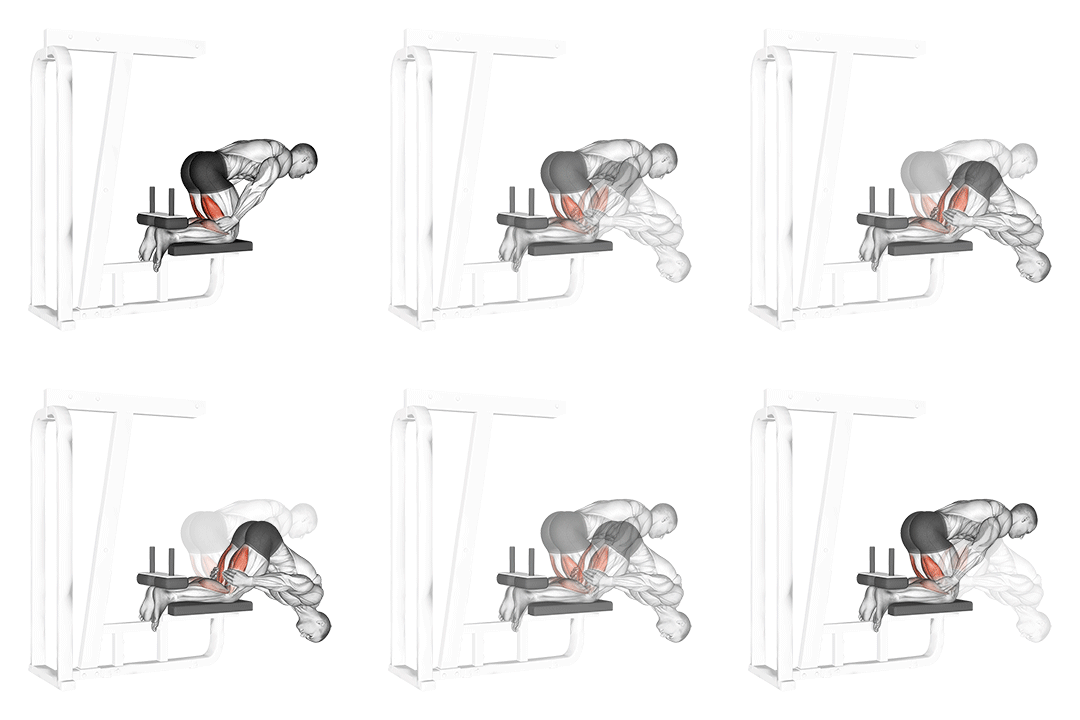
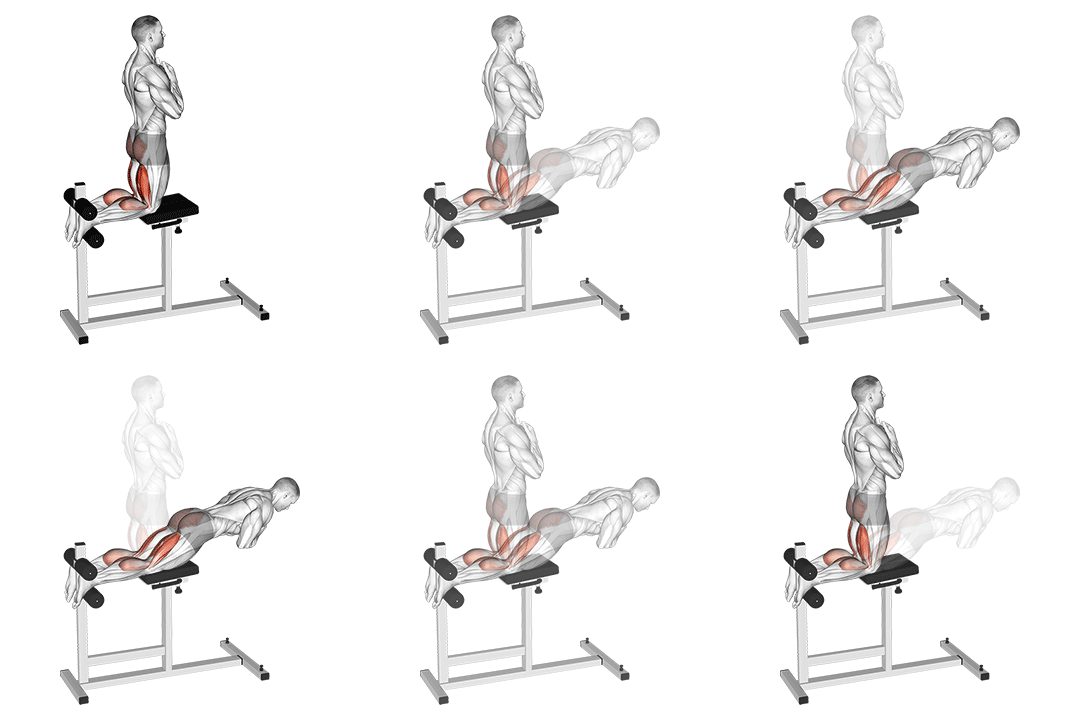
The glute-ham raise is the gold-standard bodyweight hamstring exercise — performed kneeling with feet anchored, you slowly lower the body forward through full range using only the hamstrings, then pull back to the starting position. Unlike self-assisted versions, the glute-ham raise uses no hand assistance, meaning the hamstrings handle the entire load through both eccentric and concentric phases. It's one of the most demanding bodyweight exercises in existence, comparable to weighted Romanian deadlifts in hamstring strength requirement. For trainees who reach this level, the glute-ham raise represents serious bodyweight strength achievement. The path runs through self-assisted variations over 12-24 months of consistent training, with each progression stage lasting weeks or months. Most trainees never reach unassisted glute-ham raises, and that's fine — the self-assisted versions produce meaningful hamstring development for general fitness goals. Where the full glute-ham raise earns its place is in advanced bodyweight or athletic strength training. The exercise produces hamstring development that few alternatives match without weights. For athletes in sprinting sports, combat sports requiring posterior chain power, or general trainees pursuing bodyweight mastery, the glute-ham raise represents a meaningful goal.
Why train the Glute-ham Raise?
- Builds the most extreme bodyweight hamstring strength achievable.
- Trains the hamstrings through full knee-flexion range under bodyweight load.
- Develops elite posterior chain strength comparable to heavy Romanian deadlifts.
- Provides clear progression milestone for advanced bodyweight trainees.
- Carries over to sprinting, jumping, and athletic posterior chain performance.
- Useful in equipment-limited contexts where machine work isn't accessible.
How to do the Glute-ham Raise: step by step
- 1Adjust the glute-ham raise machine to fit your body.
- 2Position yourself face down on the machine with your ankles secured.
- 3Place your hands on your chest or cross them over your chest.
- 4Engage your hamstrings and glutes to lift your upper body up towards the ceiling.
- 5Continue lifting until your body is in a straight line from your head to your heels.
- 6Pause for a moment at the top, then slowly lower your body back down to the starting position.
- 7Repeat for the desired number of repetitions.
Muscles worked
Primary
hamstrings
Secondary
glutes, lower back
Common mistakes to avoid
Insufficient prerequisites
Build through self-assisted versions over 12-24 months. Skipping stages produces injury.
Hyperextending the lower back
Keep the body straight from knees to head. Lumbar arching reduces hamstring stimulus and stresses the back.
Bouncing through bottom
Control the descent fully. Bouncing puts impact load on knees and hamstrings.
Programming too aggressively
1-2 sessions per week is the cap. Hamstring recovery from this load takes 72-96 hours.
Insufficient anchor stability
The feet must be firmly anchored. Slipping during reps is unsafe.
Easier and harder variations
Easier
Revert to self-assisted versions. Or perform negative-only reps (lowering controlled, returning with hand assistance).
Harder
Add weight (vest or weight against chest). Or progress to single-leg glute-ham raises. Or to weighted Nordic curls.
Alternative exercises
Self assisted inverse leg curl (advanced)
Easier version with hand assistance. The progression bridge.
Nordic curl
Eccentric-emphasis variation. Similar position; useful complement.
Romanian deadlift
Hip extension hamstring work. Different function but pairs for complete training.
How to program the Glute-ham Raise into your training
Glute-ham raises belong in advanced lower-body training programs. Prerequisites: Solid advanced self-assisted inverse leg curl progression, healthy lower back and knees. Sets and reps: 3 sets of 4-6 reps with 90-120 seconds rest. Total weekly volume of 18-30 reps. Frequency: 1-2 times per week. In an advanced session: 4 sets of 8 squats, 3 sets of 6 RDLs, 3 sets of 5 glute-ham raises, 3 sets of 12 calf raises. Don't program on the same day as heavy deadlifts.
Recovery and frequency
Steep recovery cost. 72-96 hours between sessions. Watch for hamstring strains and lower-back tightness.
Frequently asked questions
How many sets and reps?
3 sets of 4-6 reps with 90-120 seconds rest.
How often?
1-2 times per week. Hamstrings need 72-96 hours recovery.
How long to learn glute-ham raise?
12-24 months of consistent progressive training through the self-assisted variations.
Will this build hamstrings?
Yes — comparable to heavy Romanian deadlift training without weights.
Glute-ham raise vs Nordic curl?
Glute-ham raise has full range and concentric component. Nordic curl is eccentric-emphasis. Both have value at advanced levels.
Is this safe?
Yes when prerequisites are met. Without proper progression, hamstring strains are common.
Useful tools for this exercise
Build a workout with the Glute-ham Raise
Puna gives you guided bodyweight workouts you can do anywhere — no equipment, no gym, just structured progressions that build real strength.