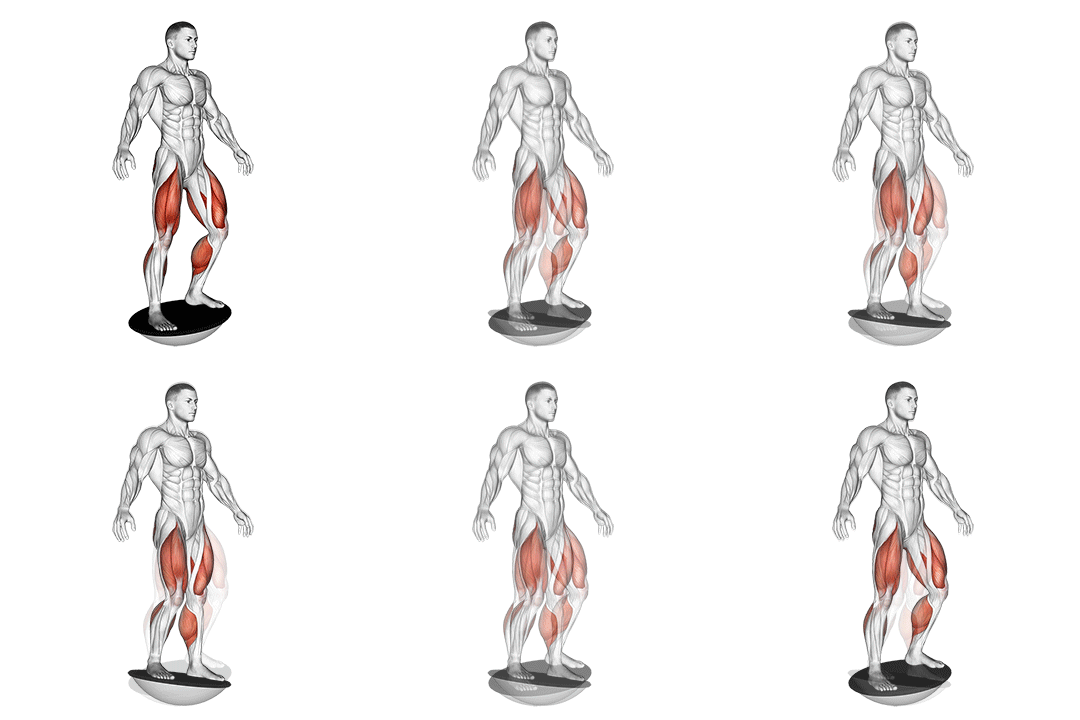
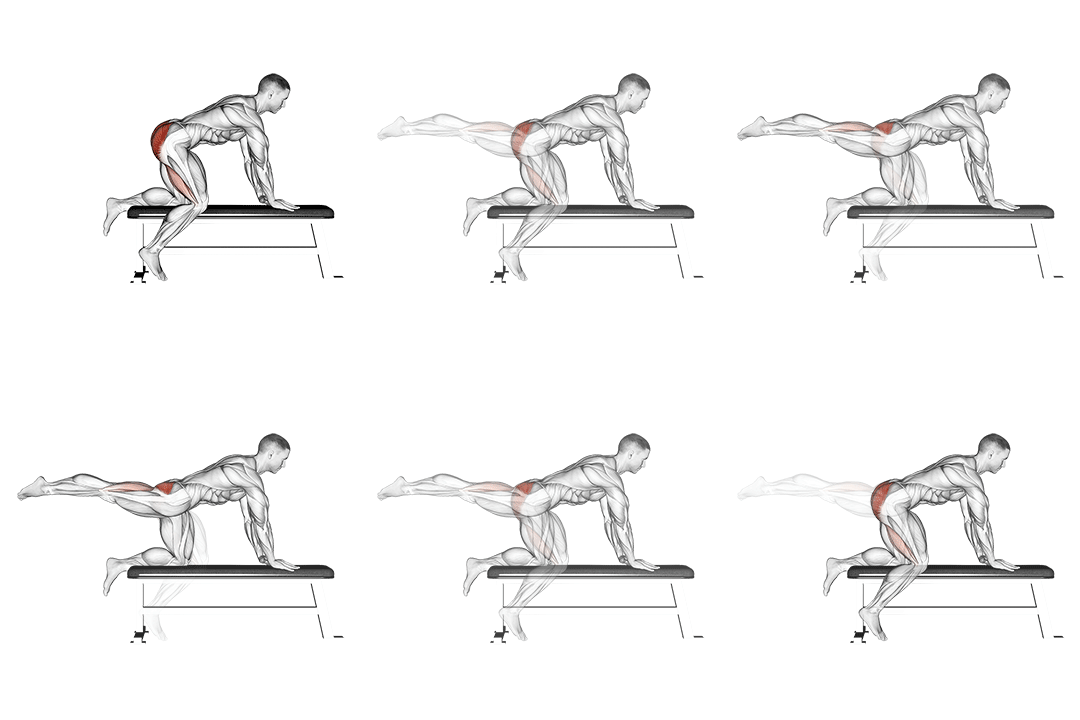
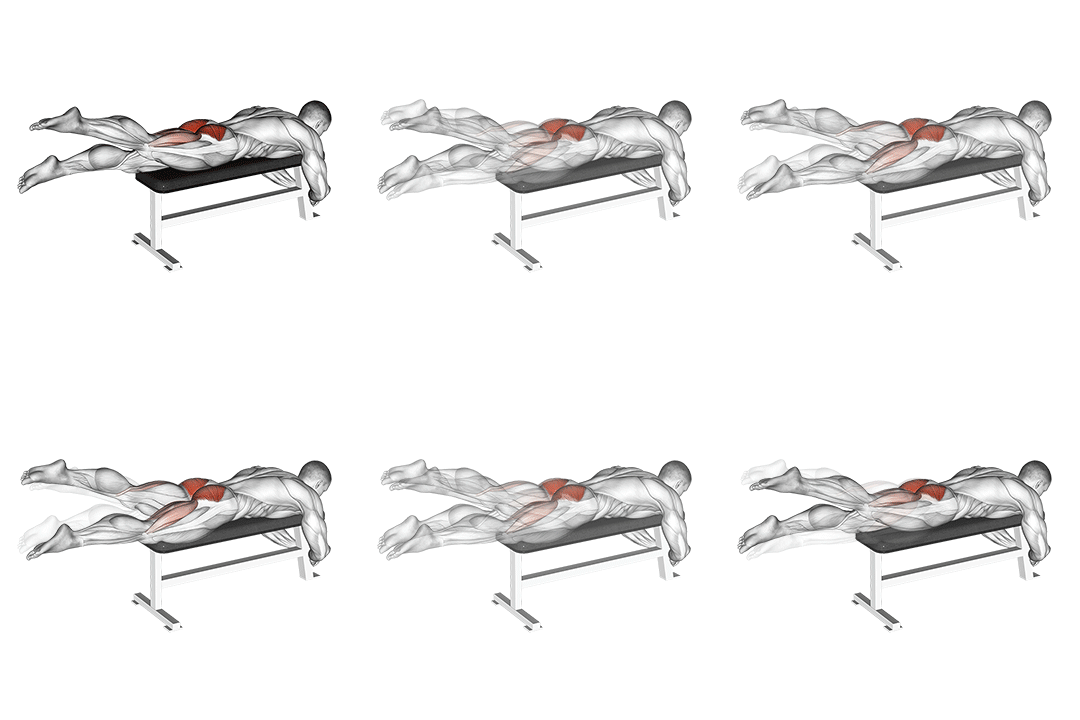
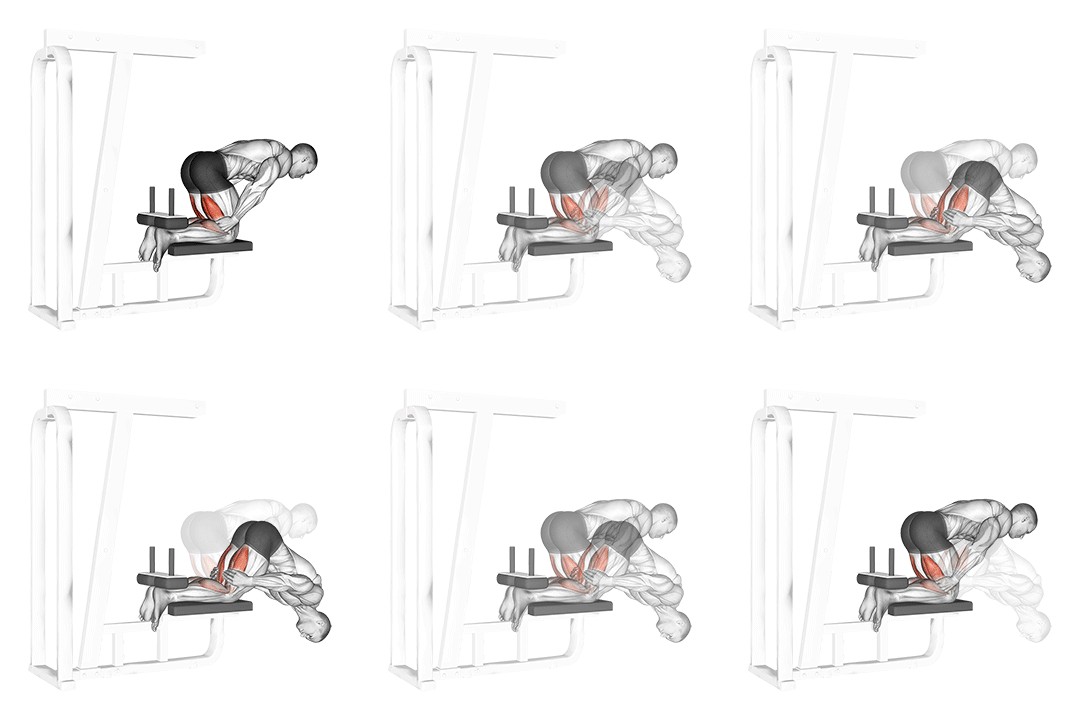
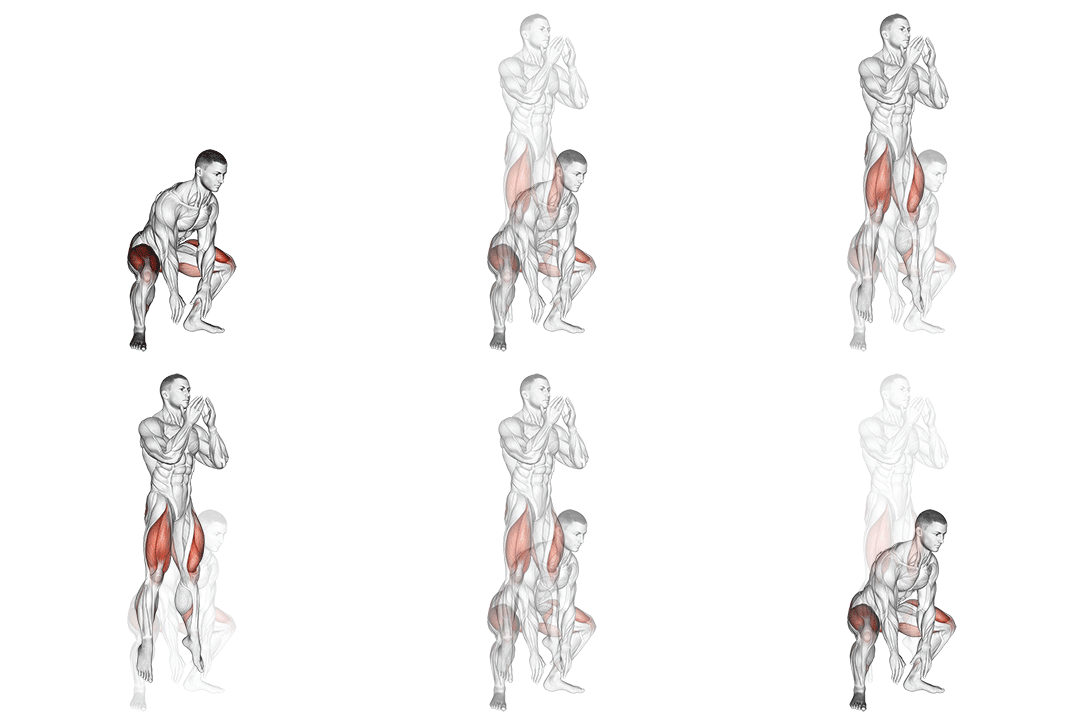
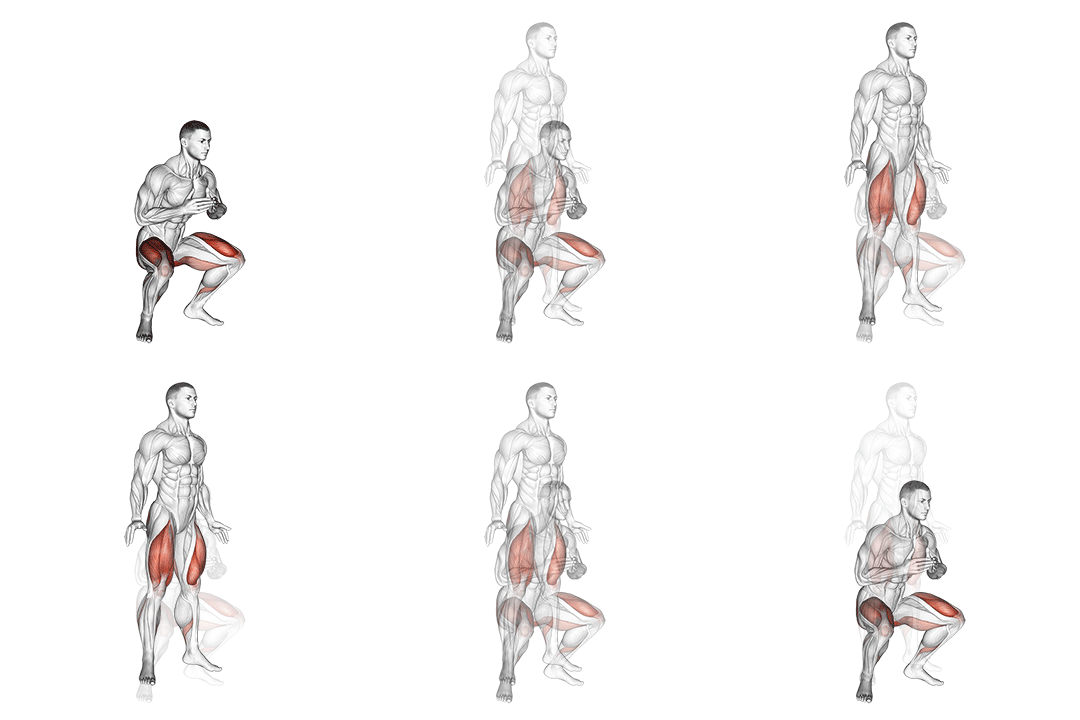
Glute Bridge Two Legs On Bench (male)
beginner strength exercise · body weight · targets glutes
- Body part
- upper legs
- Primary target
- glutes
- Equipment
- body weight
- Difficulty
- beginner
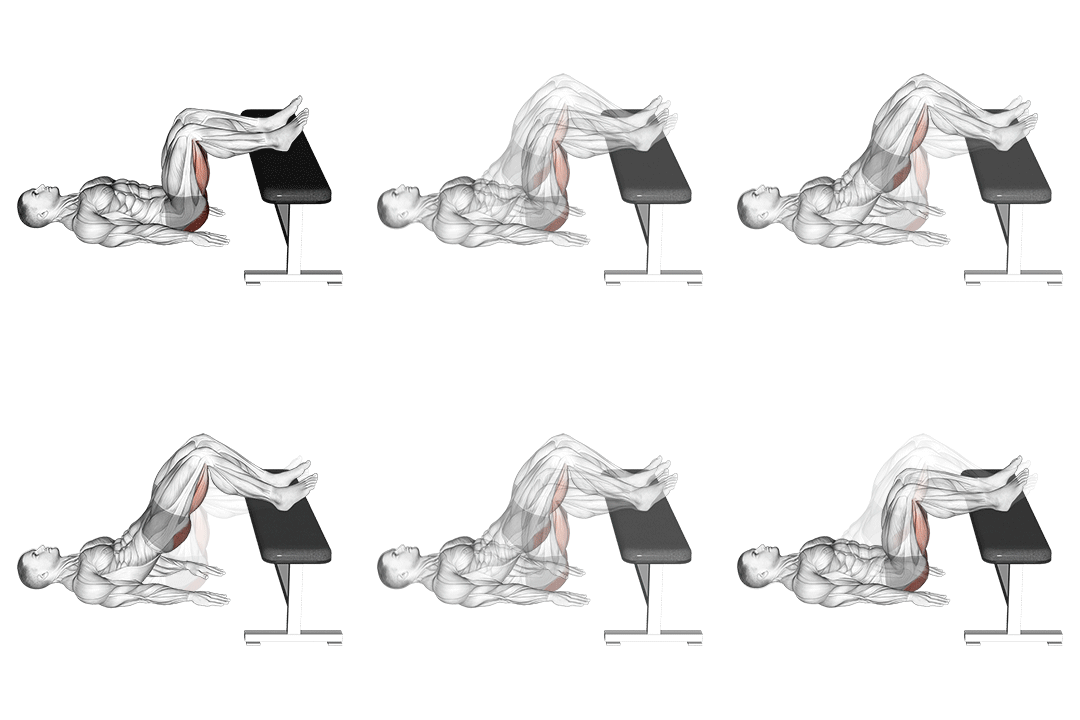
The glute bridge with two legs on a bench is a variation of the standard glute bridge where both feet rest on an elevated surface (a bench, chair, or step) instead of the floor. The elevated foot position increases the range of motion through which the glutes work, requiring more glute extension at the top of each rep. The result is a more demanding glute exercise that bridges the gap between basic glute bridges and full hip thrusts. The extra range of motion is what makes this variation valuable. Standard glute bridges (feet on floor) have a relatively short range — the hips can only rise so high before the body forms a straight line. With feet elevated, the hips can rise higher relative to the floor, putting the glutes through deeper hip extension at the top of each rep. It's a useful intermediate progression for trainees building toward weighted hip thrusts. Most beginners can do the basic glute bridge easily; once that becomes too easy, the elevated-feet variation provides 4-6 weeks of meaningful progression before adding weight or transitioning to full hip thrusts (with the upper back also elevated on a bench).
Why train the Glute Bridge Two Legs On Bench (male)?
- Increases range of motion compared to floor glute bridges.
- Builds the glutes through deeper hip extension.
- Bridges the gap between basic glute bridges and hip thrusts.
- Easy on the lower back due to the supine position.
- Requires only a bench, chair, or step.
- Pairs well with hamstring and core work for complete posterior chain training.
How to do the Glute Bridge Two Legs On Bench (male): step by step
- 1Sit on the edge of a bench with your back against it and your feet flat on the ground.
- 2Place your hands on the bench beside your hips for support.
- 3Engage your glutes and hamstrings, then lift your hips off the bench until your body forms a straight line from your knees to your shoulders.
- 4Pause for a moment at the top, then slowly lower your hips back down to the starting position.
- 5Repeat for the desired number of repetitions.
Muscles worked
Primary
glutes
Secondary
hamstrings, core
Common mistakes to avoid
Lifting with the lower back instead of the glutes
If you arch through the lumbar spine to get higher, the lower back takes the load. Initiate the lift by squeezing the glutes first; the hips rise because the glutes contract.
Going too high and overarching the lower back
Trying to lift the hips as high as possible usually means hyperextending the lower back. Stop when the body forms a straight line from feet to shoulders. Going higher doesn't activate the glutes more.
Pushing through the toes instead of the heels
Driving through the toes shifts work to the quads. Press through the heels — this isolates the glutes effectively.
Not pausing at the top
Bouncing up and down skips the contraction phase. Pause for 1-2 seconds at the top of every rep and squeeze the glutes hard.
Choosing an unstable bench
If the bench shifts under your feet, the exercise becomes about balance instead of glutes. Use a solid surface that won't move.
Easier and harder variations
Easier
Standard floor glute bridge (feet on the floor). Or use a lower elevation (a step instead of a bench).
Harder
Single-leg glute bridge with elevated foot. Add weight (a plate held on the hips). Or progress to hip thrusts with shoulders elevated on the bench.
Alternative exercises
Glute bridge
The basic floor variation. Easier baseline.
Hip thrust
Shoulders elevated on a bench, allowing for greater range of motion and easier weight loading. The natural progression.
Single-leg glute bridge
One foot off the floor for the entire rep. Doubles the load on each glute and reveals asymmetries.
How to program the Glute Bridge Two Legs On Bench (male) into your training
Elevated-feet glute bridges work as either a primary glute exercise for intermediate trainees or as accessory work in a complete lower-body session. Sets and reps: 3 sets of 10-15 reps with 60-90 seconds rest. Total weekly volume of 50-100 reps drives most adaptations. In a glute-focused session: 4 sets of 8 squats (bilateral strength), 3 sets of 12 elevated-feet glute bridges (glute focus), 3 sets of 10 walking lunges per leg (volume), 3 sets of 30-second front planks (core). For athletes or general trainees building glute strength: alternate weeks between elevated-feet glute bridges and hip thrusts as the primary glute exercise. As warm-up before lower-body strength training: 1-2 sets of 10-12 reps to activate the glutes before heavier work.
Recovery and frequency
Elevated-feet glute bridges have low to moderate recovery cost. The supine position eliminates spinal load. 48 hours between dedicated sessions is plenty. Glute soreness in the first 1-2 weeks is normal. Lower back fatigue points to form errors (back arching instead of glutes squeezing).
Frequently asked questions
How many sets and reps of elevated-feet glute bridges should I do?
3 sets of 10-15 reps with 60-90 seconds rest.
How often should I train this exercise?
2-3 times per week as part of a structured program.
Elevated-feet glute bridge vs hip thrust: what's the difference?
Elevated-feet glute bridges have feet on a bench with shoulders on the floor. Hip thrusts have shoulders on a bench with feet on the floor. Hip thrusts allow greater range of motion and easier weight loading; elevated-feet glute bridges are a stepping stone.
Will this exercise grow my glutes?
Yes — particularly for trainees who have outgrown standard glute bridges. Combined with squats and lunges, it drives genuine glute development.
How high should the bench be?
Knee height to mid-shin height works for most people. Higher benches reduce the leg drive component; lower benches reduce the range of motion benefit.
Why don't I feel my glutes during this exercise?
Probably because the hamstrings or lower back are doing the work. Squeeze the glutes before initiating the lift, push through the heels, and pause at the top with maximum glute squeeze.
Useful tools for this exercise
Build a workout with the Glute Bridge Two Legs On Bench (male)
Puna gives you guided bodyweight workouts you can do anywhere — no equipment, no gym, just structured progressions that build real strength.