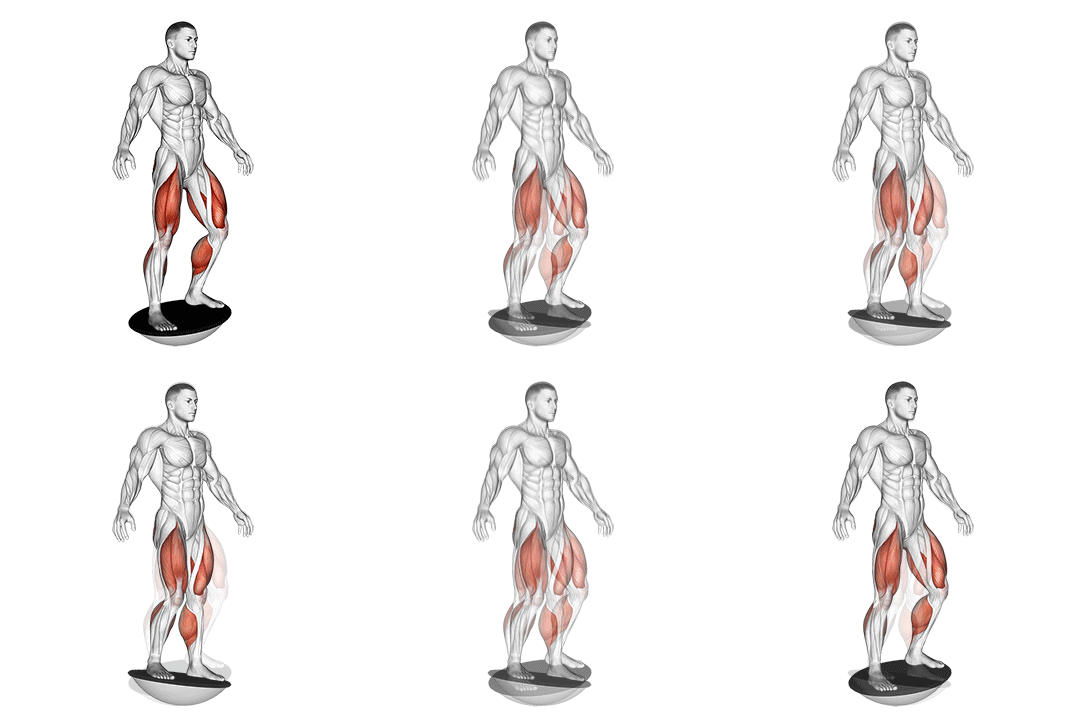
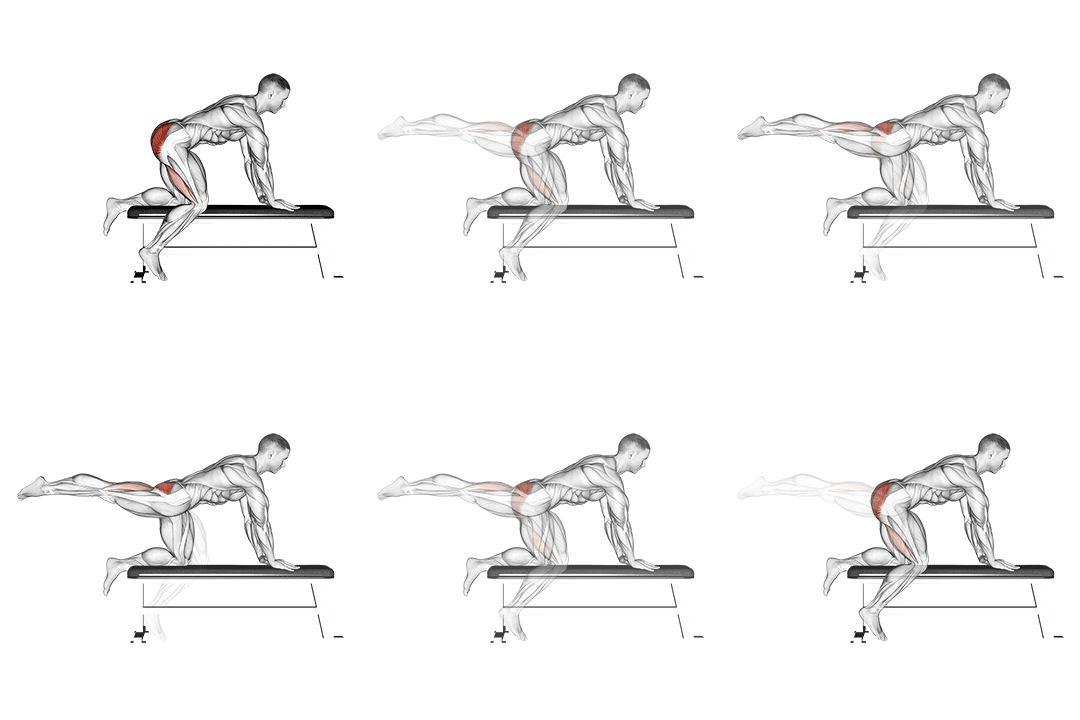
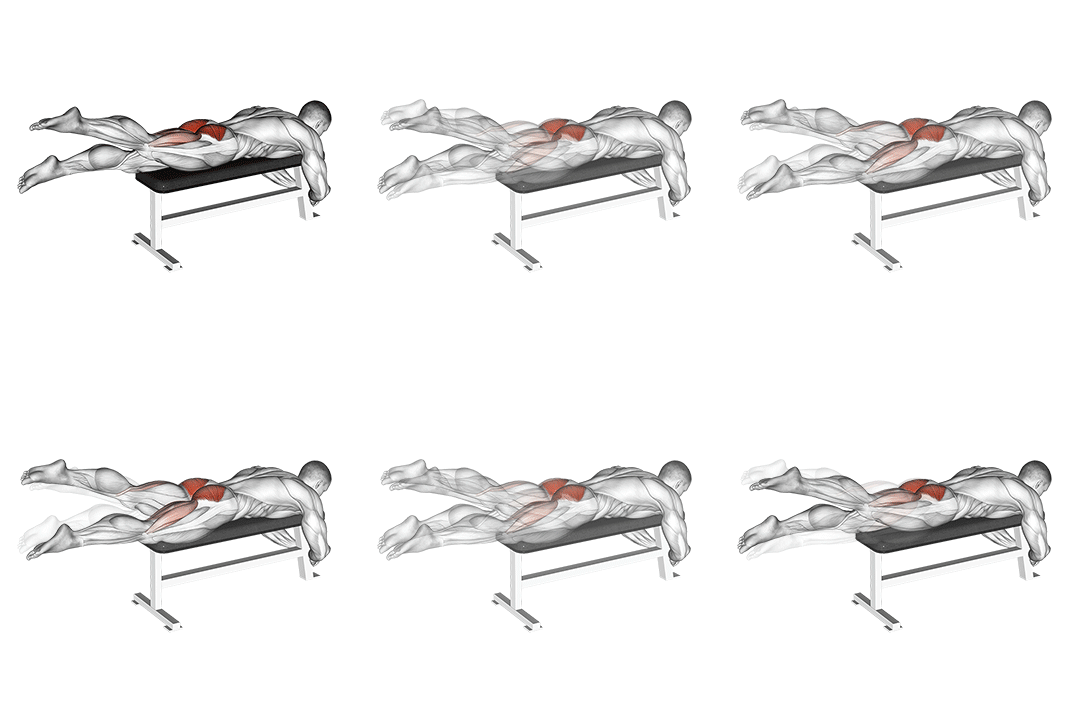
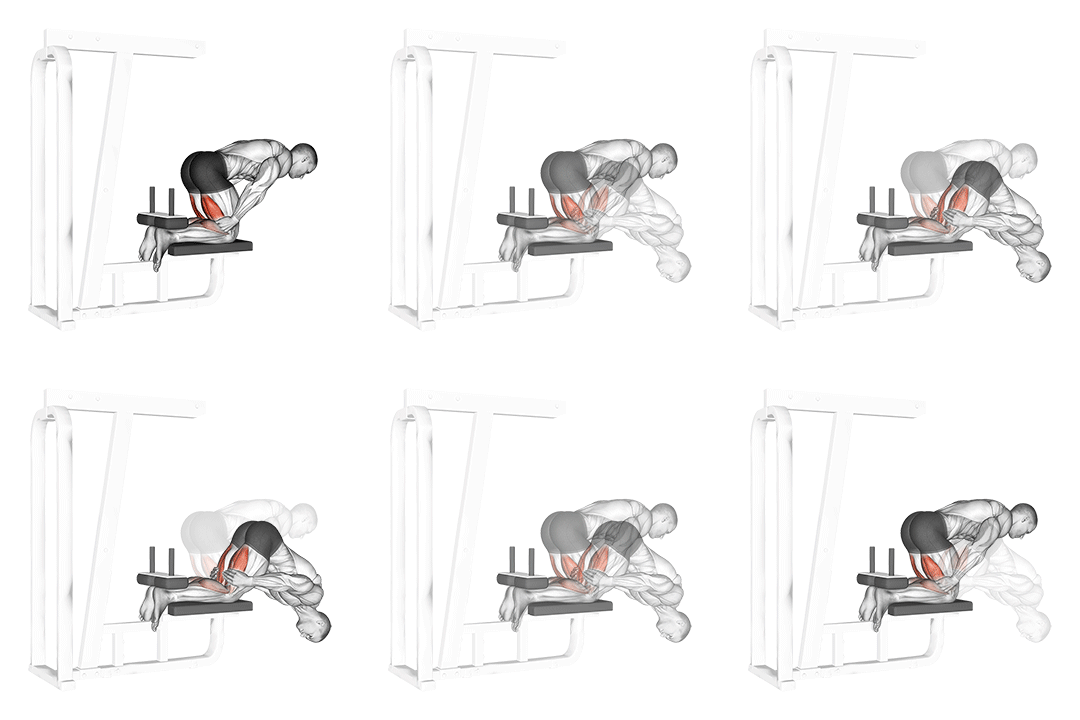
Glute Bridge March
intermediate strength exercise · body weight · targets glutes
- Body part
- upper legs
- Primary target
- glutes
- Equipment
- body weight
- Difficulty
- intermediate
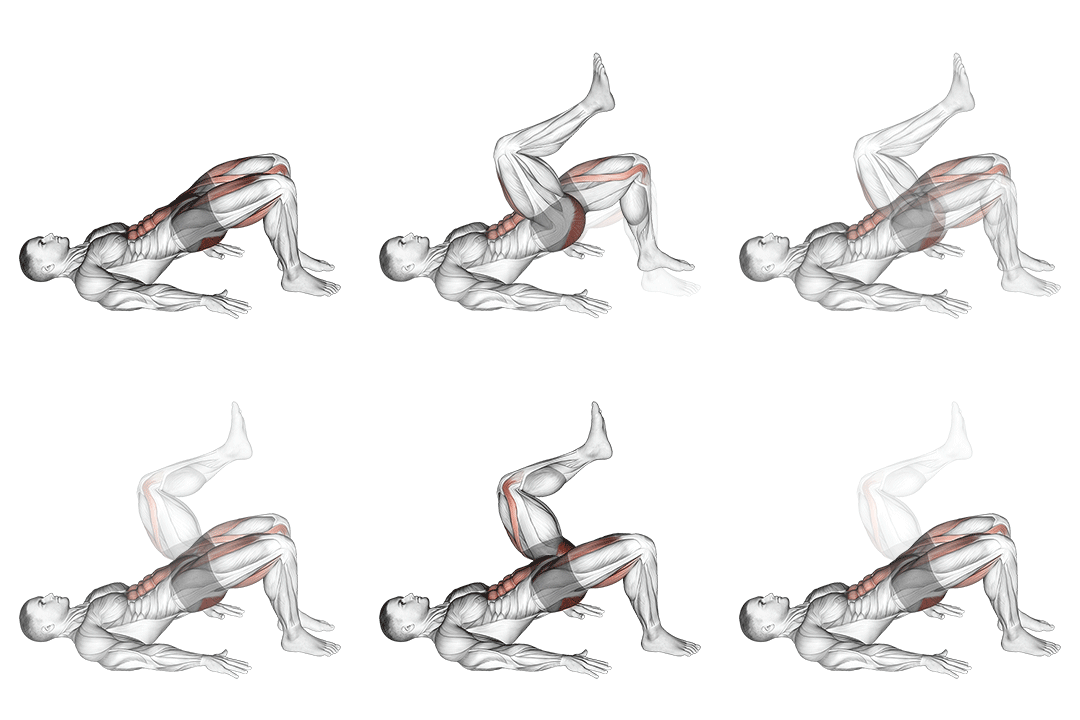
The glute bridge march is a dynamic core-and-glute exercise that combines a static hold with alternating leg lifts. From a glute bridge position (hips lifted, body forming a straight line from knees to shoulders), you alternately lift one foot off the floor at a time, holding briefly before switching. The core has to work hard to keep the hips level while the legs alternate, and the supporting glute holds an active contraction throughout. This exercise sits at an interesting intersection of glute work, anti-rotation core training, and unilateral hip stability. Each foot lift creates a brief moment where the body is supported on just one leg — and the hips want to drop on that side. Resisting that drop trains the gluteus medius and the core's anti-rotation function in the same rep that's also working the gluteus maximus through the bridge hold. It's the natural progression after standard glute bridges feel easy. Where the basic glute bridge teaches activation and builds initial strength, the marching version adds the unilateral demand and core stability work that prepares trainees for harder progressions like single-leg glute bridges or hip thrusts. Programmed twice per week alongside other glute work, it builds well-rounded glute and hip stability quickly.
Why train the Glute Bridge March?
- Combines glute, core, and hip stability work in one exercise — efficient programming.
- Trains gluteus medius (the side-of-hip muscle) directly, which most exercises miss.
- Builds anti-rotation core strength while loading the glutes.
- Reveals unilateral asymmetries between sides that bilateral glute bridges hide.
- Useful progression after standard glute bridges become easy.
- Requires no equipment and minimal space.
How to do the Glute Bridge March: step by step
- 1Lie flat on your back with your knees bent and feet flat on the ground.
- 2Engage your glutes and lift your hips off the ground, forming a straight line from your knees to your shoulders.
- 3While keeping your hips lifted, lift one foot off the ground and bring your knee towards your chest.
- 4Lower your foot back to the ground and repeat the movement with the other leg.
- 5Continue alternating legs in a marching motion while maintaining the bridge position.
- 6Repeat for the desired number of repetitions.
Muscles worked
Primary
glutes
Secondary
hamstrings, quadriceps
Common mistakes to avoid
Letting the hip drop on the lifted-leg side
When one foot lifts, the hip on that side wants to drop toward the floor. Drive that hip up to keep both hip points level — this is the anti-rotation work that makes the exercise valuable.
Lifting the foot too high
Some trainees try to lift the leg high to make the exercise feel harder. Lift only as high as you can keep the hips level — usually just a few inches off the floor. Higher leg lifts that come at the cost of hip rotation train nothing useful.
Sagging the hips during the hold
If the hips drift down throughout the set, the glutes have stopped engaging. Maintain maximum glute squeeze throughout — the hips should stay at the top position from start to finish, only the feet alternating.
Going too fast for control
Whipping the legs alternately uses momentum and skips the stabilization work. Move slowly: lift one foot, hold for 1-2 seconds, lower with control, then switch. Quality of position matters more than rep count.
Using the lower back to stabilize
If the lower back arches as the legs lift, the lumbar spine is doing the stabilization work instead of the glutes and core. Brace the abs hard and keep the body straight — the lower back should not change position.
Easier and harder variations
Easier
Standard glute bridge holds (no marching) for 30-60 seconds. Or perform the marching at a much slower tempo with longer holds per side.
Harder
Lift the foot higher with each rep, or hold each lifted-leg position for 3-5 seconds before switching. Or progress to single-leg glute bridges (one foot off the floor for entire reps), or to hip thrusts with marching.
Alternative exercises
Single-leg glute bridge
One foot off the floor for the entire rep. More demanding on the working glute than the marching variation.
Glute bridge
Standard bilateral version. Easier baseline that builds the position before adding the marching.
Bird dog
Different position (on hands and knees) but similar anti-rotation training. Useful complement.
How to program the Glute Bridge March into your training
Glute bridge marches work as accessory or warm-up in a lower-body session. Pair with squats, lunges, and deadlifts for complete lower-body development. Sets and reps: 3 sets of 10-15 reps per side with 30-60 seconds rest. Total weekly volume of 60-100 reps per side drives most adaptations. As warm-up: 1-2 sets of 8-10 reps per side before lower-body strength training. Activates the glutes and core before heavier work. In a glute-focused session: 4 sets of 8 squats (main strength), 3 sets of 12 glute bridge marches per side (unilateral work), 3 sets of 10 walking lunges per leg (volume), 3 sets of 12 hip thrusts (loaded glute work). Done twice per week. For people with weak glutes (especially desk workers): 2 sets of 12 marches per side daily as a corrective drill. The high frequency teaches the glutes and core to fire properly. Daily light marches (1-2 sets) are fine and useful as a morning hip-activation routine.
Recovery and frequency
Glute bridge marches at moderate volume have low recovery cost. The supine position eliminates spinal load, and the unilateral component is gentler than full single-leg glute bridges. Glute soreness in the first 1-2 weeks is normal. Hip discomfort during the exercise points to form errors — usually the hip dropping on the lifted-leg side. Address form first; reduce range if needed.
Frequently asked questions
How many sets and reps of glute bridge marches should I do?
3 sets of 10-15 reps per side with 30-60 seconds rest. Total weekly volume of 60-100 reps per side.
How often should I train glute bridge marches?
2-3 times per week as part of a structured program; daily at moderate volume is also fine, especially for hip activation.
Glute bridge march vs single-leg glute bridge: which is better?
Different tools. Marches train the dynamic anti-rotation function. Single-leg glute bridges load each glute heavier in static position. Use marches as the progression after standard bridges; use single-leg as the next step after marches.
Should I count one rep as both sides or each side separately?
Each side separately. Counting per side reveals asymmetries and gives clearer progression tracking.
Why is one side so much harder than the other?
Glute medius asymmetry — almost everyone has it. The dominant-side gluteus medius is usually stronger because the body is more practiced at single-leg stabilization on that side. The asymmetry typically narrows within 6-12 weeks of equal-rep practice.
Are glute bridge marches good for hip pain?
Often yes — they're frequently part of physical therapy programs for hip and lower back issues because they activate the glutes (which support both areas) without loading the spine. Confirm with a healthcare provider if you have known hip issues.
Useful tools for this exercise
Build a workout with the Glute Bridge March
Puna gives you guided bodyweight workouts you can do anywhere — no equipment, no gym, just structured progressions that build real strength.