Front Lever Reps
advanced strength exercise · body weight · targets upper back
- Body part
- back
- Primary target
- upper back
- Equipment
- body weight
- Difficulty
- advanced
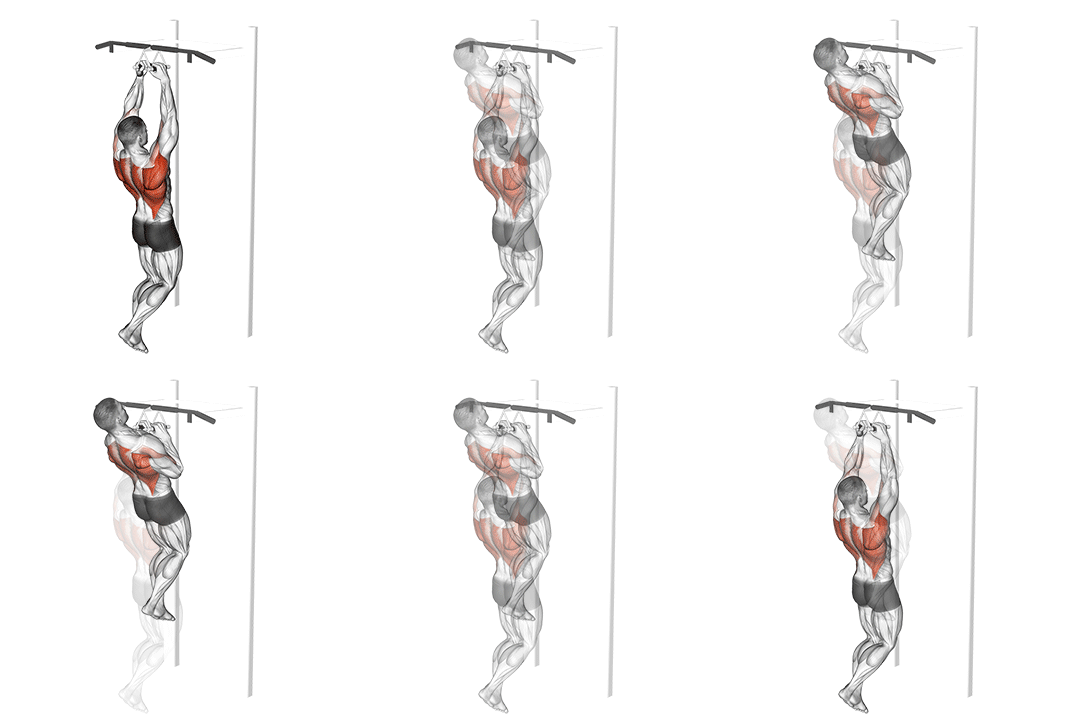
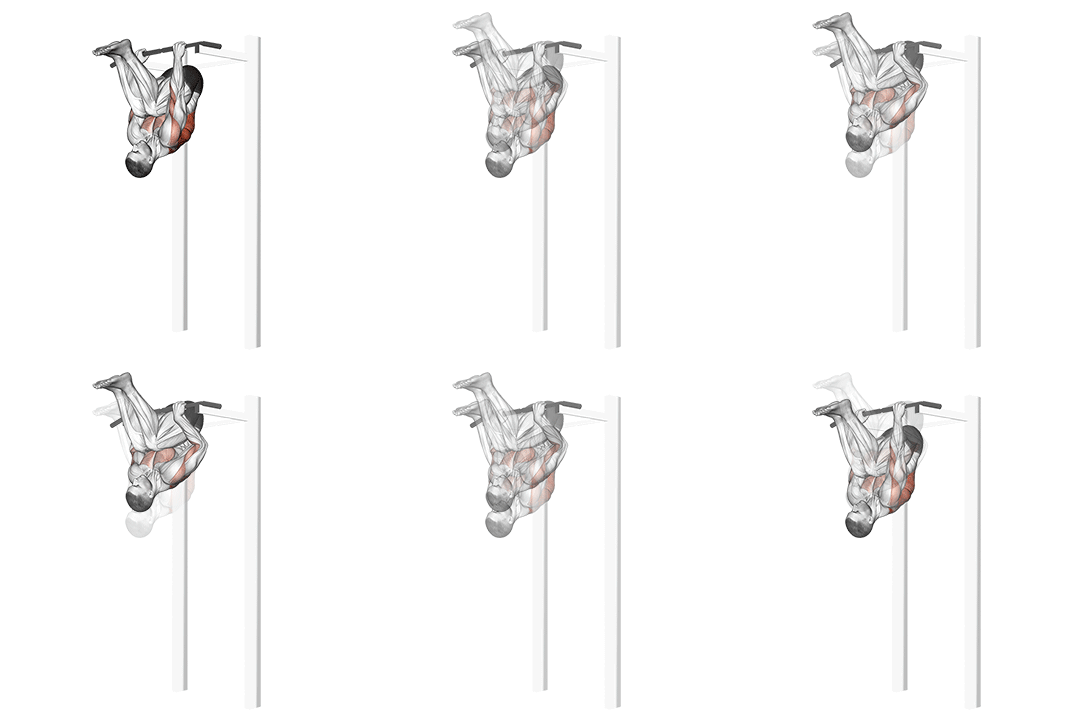
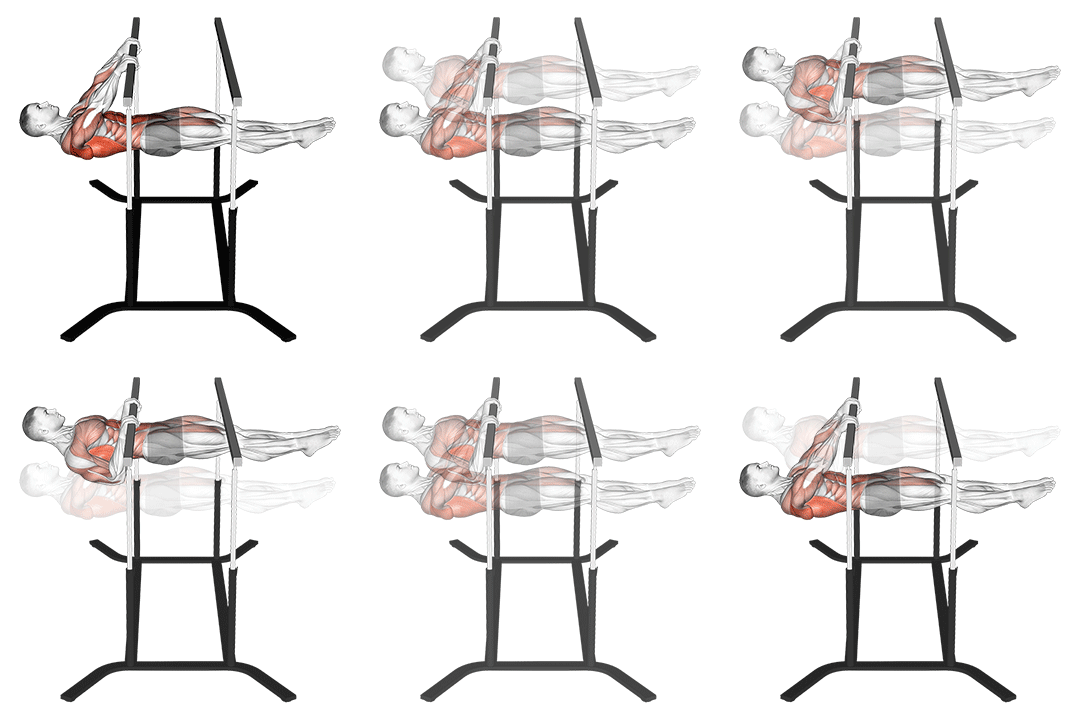
The front lever rep is one of the most demanding bodyweight strength skills in existence — performed by hanging from a pull-up bar, then pulling the body into a horizontal position with the body parallel to the floor and held momentarily before lowering back to a hang. Unlike static front lever holds (where the position is held for time), front lever reps add the dynamic component of moving in and out of the position, multiplying the demand on the lats, core, and shoulder stabilizers. The front lever is an elite gymnastic strength skill. Even reaching a full static front lever (held for 5+ seconds) typically requires 1-3 years of dedicated training; performing reps takes additional months or years on top. The strength prerequisites are extreme — significant pulling strength, exceptional core integration, and shoulder stability under unusual loading. For most trainees, the front lever remains a multi-year aspiration rather than an achievable short-term goal. What makes the skill so demanding is the lever arm. Holding the body horizontal at arm's length from the bar places enormous force through the lats and shoulders to maintain position. The core works overtime to keep the body straight rather than sagging or piking. Adding rep movement to this position multiplies the demand because each rep requires producing force from a deficit position, lowering under control, and re-pulling against gravity. For trainees willing to commit to the multi-year progression, front lever reps represent one of the pinnacle bodyweight strength achievements.
Why train the Front Lever Reps?
- Builds the most extreme integrated bodyweight pulling strength achievable.
- Develops elite core strength through the demand of holding body straight under lever load.
- Trains shoulder stability and integrity under unusual asymmetric loading patterns.
- Provides clear multi-year progression milestone for advanced bodyweight trainees.
- Carries over to all advanced gymnastic skills (planches, levers, other static holds).
- Develops shoulder and core integration that supports muscle-ups, one-arm pulling, and other elite skills.
How to do the Front Lever Reps: step by step
- 1Hang from a pull-up bar with an overhand grip, palms facing away from you.
- 2Engage your core and pull your shoulder blades down and back.
- 3Keeping your body straight, lift your legs up until they are parallel to the ground.
- 4Hold this position for as long as you can, aiming for 10-20 seconds.
- 5Slowly lower your legs back down to the starting position.
- 6Repeat for the desired number of repetitions.
Muscles worked
Primary
upper back
Secondary
core, shoulders
Common mistakes to avoid
Insufficient prerequisites
Most failed front lever attempts come from trainees without solid foundational pulling and core strength. Build to 15+ strict pull-ups, 60-second hollow body holds, and tucked front lever holds before attempting reps.
Skipping the static hold work
Front lever reps build on top of static front lever holds. Without solid static holds (5+ second body-parallel position), rep work is unmanageable. Build the static foundation first.
Letting the body pike or sag during reps
The body must stay straight throughout the rep — not bend at the hips. Piking reduces the lever arm and turns the rep into something easier than a real front lever rep.
Rushing the negative
The eccentric (lowering) phase of each rep requires control. Rushing through it stresses the shoulders and produces sloppy reps. Take 2-3 seconds to lower under control.
Programming too aggressively
1-2 sessions per week of front lever rep work is the absolute cap. The shoulder and core load is so extreme that more frequent training produces injury rather than progress.
Easier and harder variations
Easier
Progress through the lever ladder: tucked front lever holds → advanced tuck → straddle lever → full lever. Most trainees take 12-24 months to progress through these stages. Reps come after solid static holds are established at each stage.
Harder
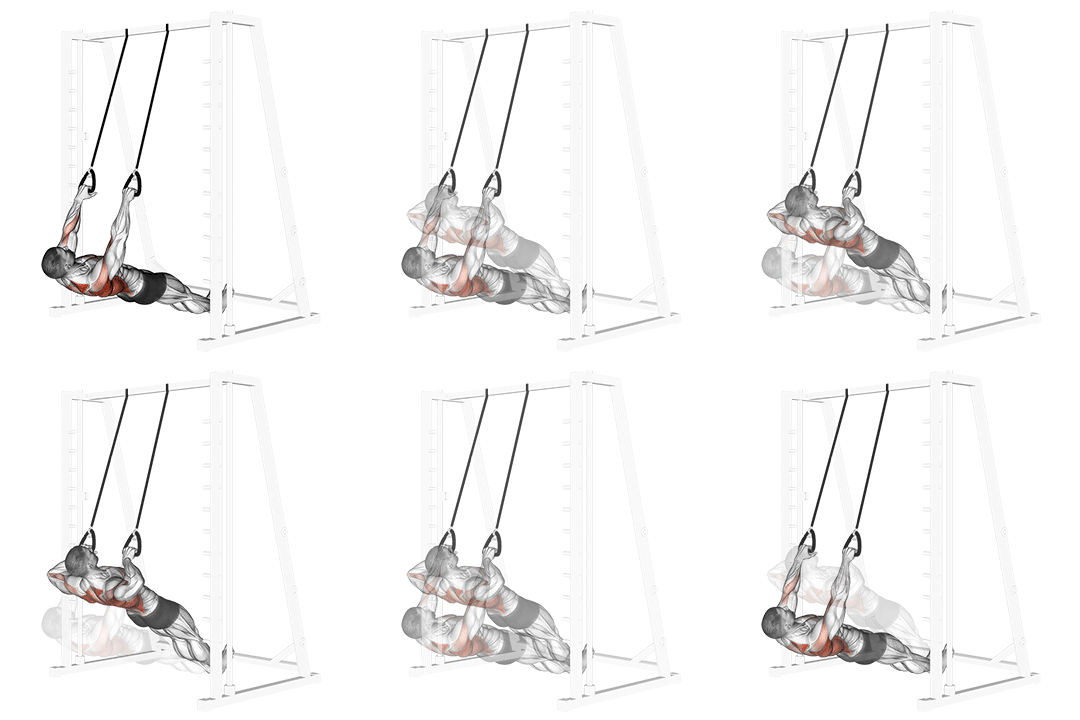
Add weight to front lever reps for serious advanced strength work. Or progress to ring front lever reps (significantly harder due to ring instability). Few trainees ever reach these levels.
Alternative exercises
Front lever hold (static)
Static version of the same skill. Build static holds first; reps come after.
Tucked front lever
Progression toward full front lever. The right starting point for trainees building toward the skill.
Hollow body hold
Foundational core integration that front lever rests on. Essential prerequisite work.
How to program the Front Lever Reps into your training
Front lever reps belong in elite advanced bodyweight programs only. Prerequisites: 15+ strict pull-ups, 60-second hollow body holds, 5+ second full front lever static holds. Sets and reps: 3-4 sets of 1-3 reps with 3-4 minutes rest. Total weekly volume of 6-15 reps. Frequency: 1-2 times per week. Recovery demands are extreme. In an advanced training session: 4 sets of 2 front lever reps, 4 sets of 6 strict pull-ups, 3 sets of front lever holds, 3 sets of 60-second hollow holds. For trainees building toward front lever: progression through the lever ladder takes 12-24 months. Patience is the predictor of success. Don't attempt front lever work when fatigued or injured.
Recovery and frequency
Front lever reps have extreme recovery cost. The shoulders, core, and lats absorb extraordinary loading. 72-96 hours between sessions is the minimum. The shoulders are usually the limiting factor. Long-term training requires monthly deload weeks. Daily shoulder mobility and rotator cuff prehab are non-negotiable.
Frequently asked questions
How long to learn front lever?
1-3 years for the static hold; additional months or years for rep work. Patience and consistency matter more than enthusiasm.
Is this realistic for general fitness?
No — front lever is an elite gymnastic skill. For general fitness, standard pull-ups and core work cover most needs. Front lever is for trainees who specifically want gymnastic-level strength.
What are the prerequisites?
15+ strict pull-ups, 60-second hollow holds, 5+ second full front lever static holds. Without these, the skill is inaccessible.
Front lever vs back lever: which is harder?
Front lever is generally considered slightly harder due to the unusual core demand. Both are advanced static holds requiring similar prerequisite strength.
Should I work toward this?
Only if you specifically want elite gymnastic strength. The multi-year commitment is significant. Most trainees benefit more from time spent on broader fitness goals.
Why do my shoulders hurt during front lever work?
Often the shoulder isn't strong enough yet for the unusual loading. Build the lever ladder progressions more thoroughly before attempting reps.
Useful tools for this exercise
Build a workout with the Front Lever Reps
Puna gives you guided bodyweight workouts you can do anywhere — no equipment, no gym, just structured progressions that build real strength.