Elevator
beginner strength exercise · body weight · targets upper back
- Body part
- back
- Primary target
- upper back
- Equipment
- body weight
- Difficulty
- beginner
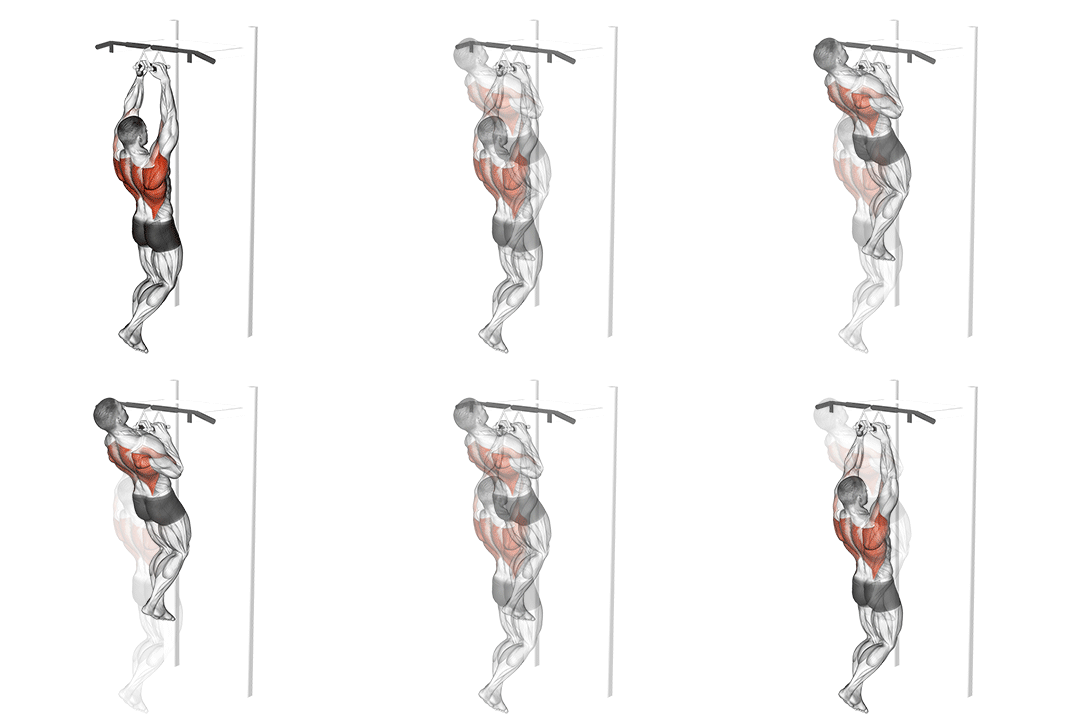
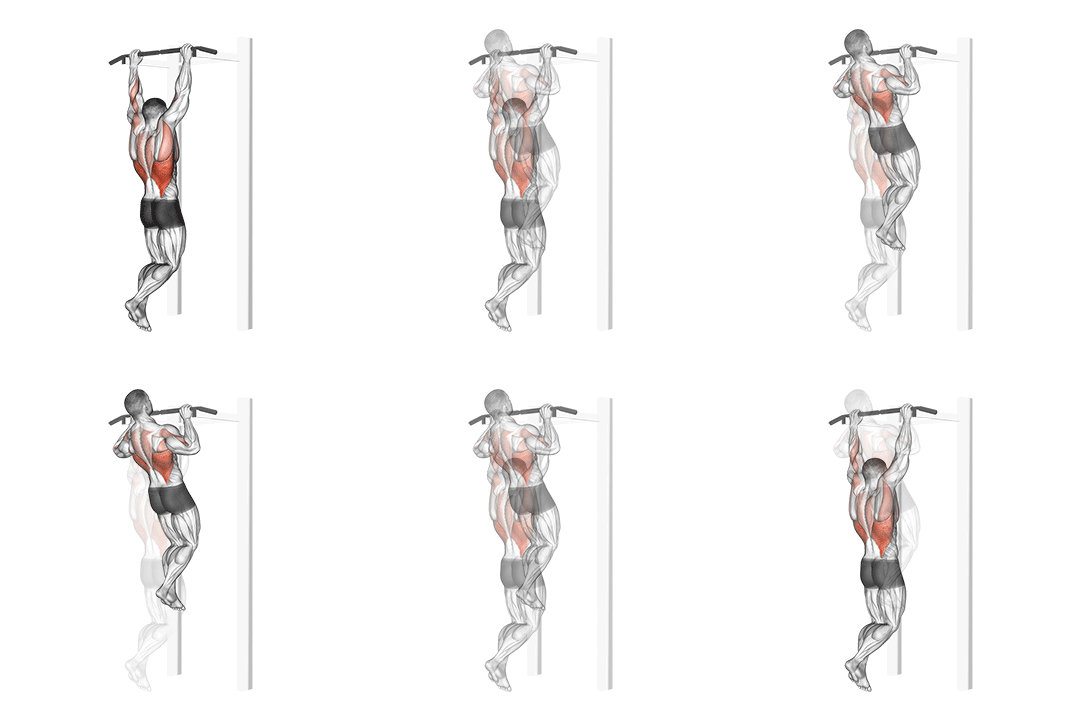
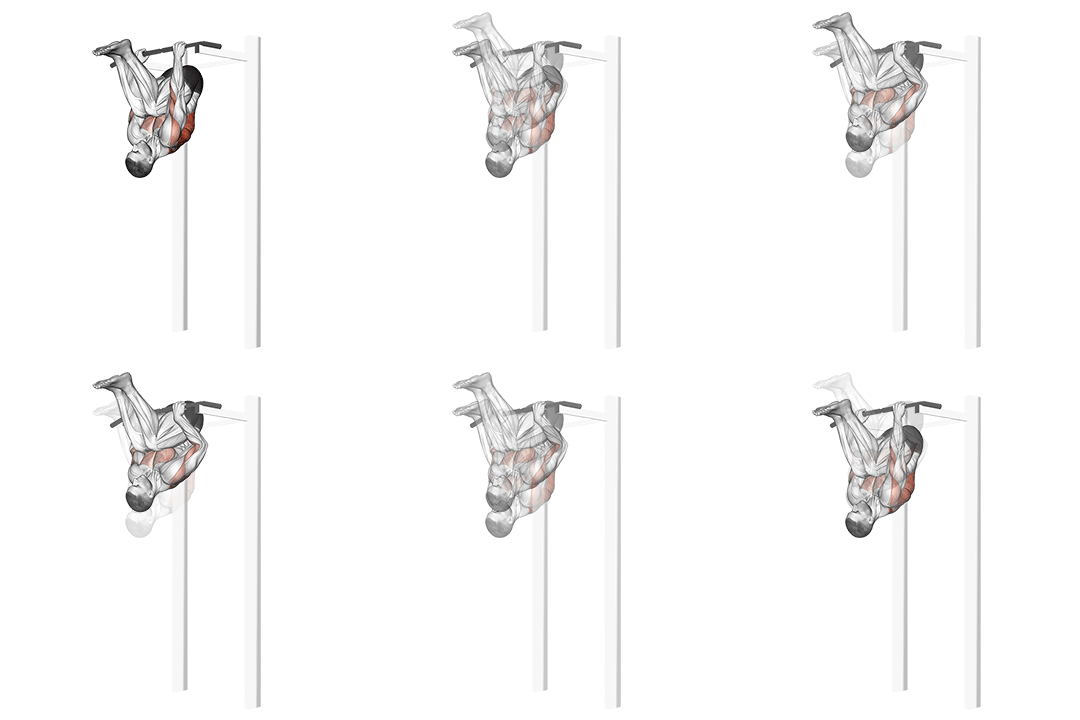
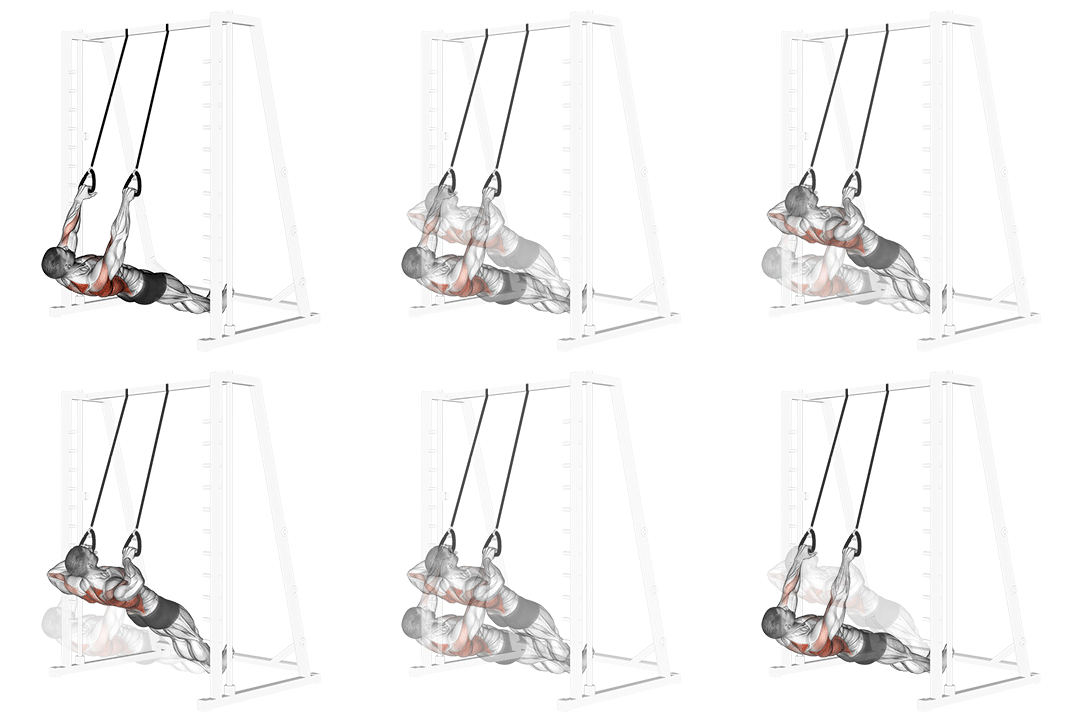
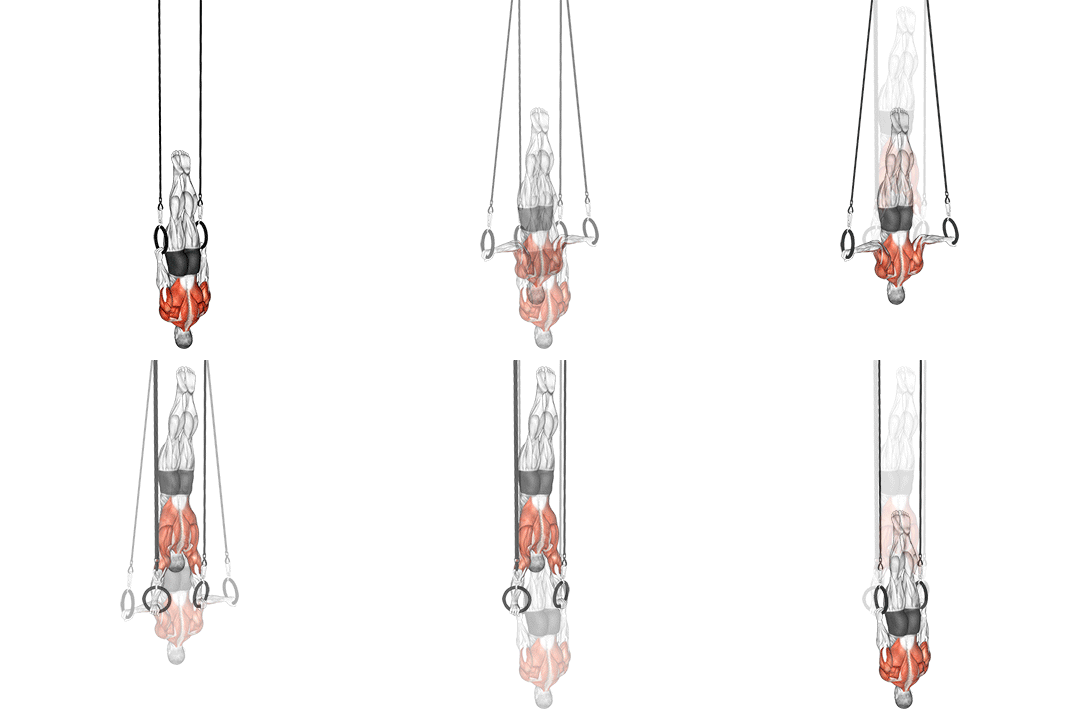
The elevator is a scapular control exercise — sometimes called scapular pull-ups or scapular dead hangs — performed by hanging from a pull-up bar with arms straight and using only the shoulder blade muscles to lift the body slightly toward the bar without bending the elbows. The motion is small (1-3 inches of movement at most), but the demand on the rhomboids, mid-traps, and serratus anterior is significant. It's one of the most effective shoulder blade strengthening exercises available with just a bar. This exercise sits in an unusual niche. It's not really pulling work in the traditional sense — the elbows don't bend, so the lats and biceps barely engage. The work is almost entirely in the small muscles that control shoulder blade position: the rhomboids that retract, the lower traps that depress, the serratus anterior that protracts. These muscles are critical for healthy shoulder mechanics during pulling exercises but rarely get dedicated training. Without scapular control work, pull-up form often degrades into shrugged-shoulder kipping rather than clean pulling. Where this earns its place is as preparation for pull-ups, especially for trainees building toward their first rep. The scapular pull-up teaches the proper shoulder position before adding the elbow bend of full pull-ups. For trainees with shoulder issues during pulling work, dedicated scapular work often resolves the issues over 4-6 weeks. Programmed 2-3 times per week as accessory work alongside pull-ups, the elevator builds the foundation that healthy pulling rests on.
Why train the Elevator?
- Strengthens the rhomboids, mid-traps, and serratus anterior — small muscles critical for shoulder blade control.
- Provides essential preparation for pull-ups, teaching proper scapular position before adding elbow bend.
- Addresses 'shoulder blade winging' that signals weak serratus and scapular control.
- Useful as warm-up activation before pull-ups or as rehabilitation work for pulling-related shoulder issues.
- Builds dead hang grip strength simultaneously with the scapular work.
- Pairs naturally with band pull-aparts and rows for complete shoulder blade training.
How to do the Elevator: step by step
- 1Stand with your feet shoulder-width apart and your knees slightly bent.
- 2Place your hands on your hips or cross them in front of your chest.
- 3Keeping your back straight, slowly bend forward at the waist, lowering your upper body towards the ground.
- 4Pause for a moment at the bottom, then slowly raise your upper body back up to the starting position.
- 5Repeat for the desired number of repetitions.
Muscles worked
Primary
upper back
Secondary
shoulders, trapezius
Common mistakes to avoid
Bending the elbows
The whole point is isolated scapular movement. If the elbows bend, you're starting a pull-up — not training the scapula. Keep arms fully straight throughout.
Using too small a range
The total range is small (1-3 inches) but should still be deliberate. Lift the body actively using the shoulder blades; lower deliberately. Tiny motion barely produces stimulus.
Shrugging the shoulders
When trying to elevate the body, the upper traps want to lift the shoulders toward the ears. The motion should retract and depress the shoulder blades, not shrug them up. Cue 'pull shoulder blades down and back'.
Treating it as a pull-up
If you find yourself doing partial pull-ups instead of pure scapular work, the elbows are bending. Resist the temptation to add elbow flexion; the value is in the isolated scapular movement.
Holding the breath
Breathe rhythmically through the small motion. Holding the breath spikes blood pressure unnecessarily.
Easier and harder variations
Easier
Perform from a doorway pull-up bar at a height where your feet still touch the floor — the partial bodyweight load makes the small motion accessible to beginners.
Harder
Add weight (vest) to increase load on the scapular muscles. Or progress to scapular push-ups in plank position for serratus emphasis. Eventually integrate scapular control into full pull-up reps.
Alternative exercises
Scapular push-up
Floor-based equivalent that emphasizes serratus anterior. Pair with elevators for compound scapular training.
Band pull-apart
Rear deltoid and rhomboid work with bands. Different position; useful complement.
Dead hang
Static version focusing on grip and shoulder stability. Use as foundation before introducing dynamic scapular work.
How to program the Elevator into your training
The elevator works as accessory or warm-up work in any pulling-based program. As accessory work: 3 sets of 8-12 reps with 60 seconds rest, 2-3 times per week. As a warm-up: 1-2 sets of 5-8 reps before pull-up sessions to activate scapular control. As preparation for first pull-ups: 4 sets of 6-10 reps, 3 times per week, alongside dead hangs and negative pull-ups. Most trainees develop their first pull-up faster with dedicated scapular work in the program. For shoulder rehabilitation: 3 sets of 8-10 reps, 3-4 times per week, as part of return-to-pulling protocols. Frequency: 2-4 times per week is appropriate. The light load supports frequent training. Don't program elevators as a substitute for full pull-up work. Use as accessory only.
Recovery and frequency
The elevator has minimal recovery cost. The light load and small motion produce little fatigue. Daily training is tolerable; 2-3 times per week is the practical sweet spot.
Frequently asked questions
How many sets and reps?
3 sets of 8-12 reps with 60 seconds rest, 2-3 times per week. As warm-up activation, 1-2 sets of 5-8 reps.
How often?
2-3 times per week as accessory; 3-4 times per week as rehab work. The light load supports frequent training.
Will this help my pull-ups?
Often yes — scapular control is the foundation that pull-ups rest on. Trainees who skip this work often develop sloppy pulling form. Dedicated scapular practice usually improves pull-up form within 4 weeks.
Why don't I feel anything?
The small range and light load make the work subtle. Try slowing the motion to 2 seconds in each direction, focusing on actively retracting and depressing the shoulder blades.
Is this safe for beginners?
Yes — the scapular pull-up is one of the safest pulling preparation exercises. Use as the entry point for trainees building toward first pull-ups.
Should I do this every day?
Daily is tolerable but unnecessary. 2-3 times per week as accessory or 3-4 times per week as rehab work produces equivalent benefit at lower training volume.
Useful tools for this exercise
Build a workout with the Elevator
Puna gives you guided bodyweight workouts you can do anywhere — no equipment, no gym, just structured progressions that build real strength.