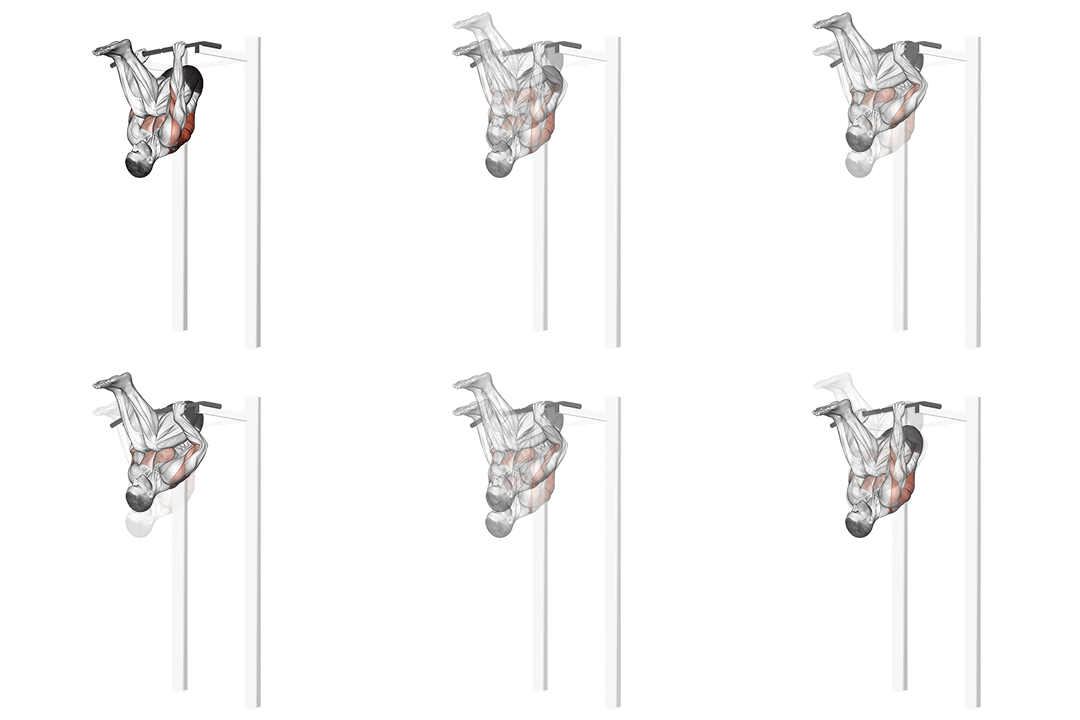
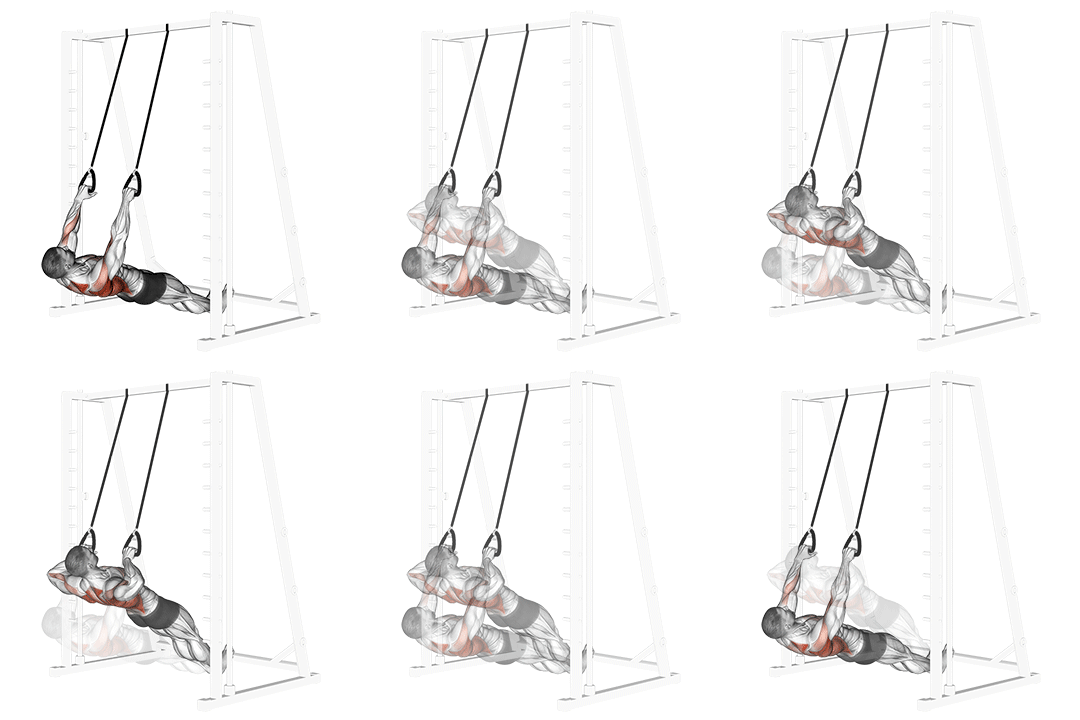
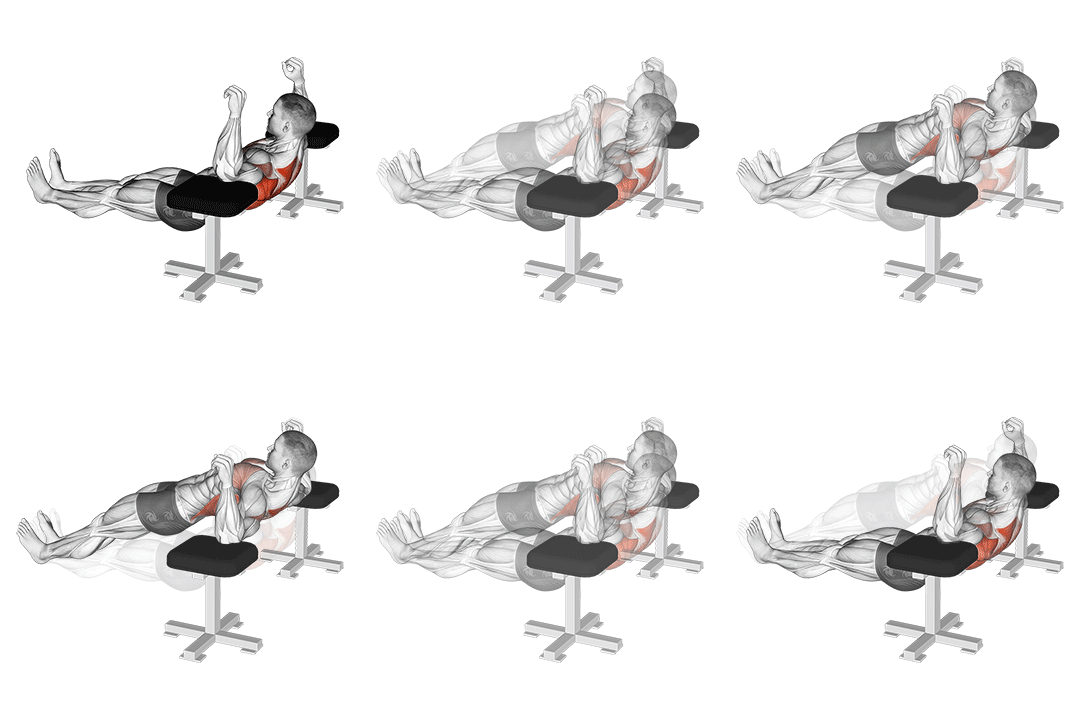
Elbow Lift - Reverse Push-up
beginner strength exercise · body weight · targets upper back
- Body part
- back
- Primary target
- upper back
- Equipment
- body weight
- Difficulty
- beginner
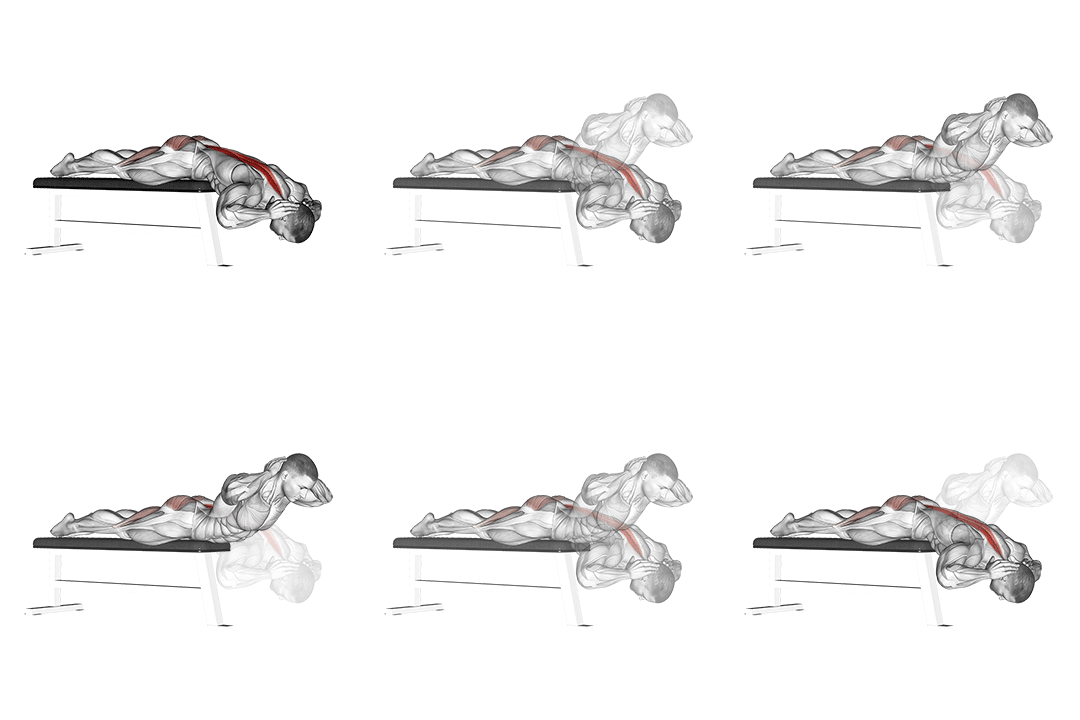
The elbow lift, sometimes called a reverse push-up, is a small-amplitude back exercise that targets the often-neglected upper back and rear delts. From a face-down position with hands under the shoulders, you press the upper body just a few inches off the ground, squeeze the upper back, and lower under control. It's not a strength builder in the way a row or pull-up is, but it's exceptional for waking up the postural muscles that hours of computer work shut down. Used as a warm-up or postural correction drill, even a few sets per day can make a noticeable difference in shoulder positioning over weeks. The rhomboids and middle trapezius — the muscles between the shoulder blades — are chronically underused in modern lifestyles, and that underuse contributes to the rounded-shoulder posture so many desk workers develop. The elbow lift trains those muscles directly, in a position the body can repeat dozens of times per day without fatigue. It's worth thinking of this exercise differently than most strength work. You're not trying to build size or move heavy weight; you're rehearsing a neuromuscular pattern. The reps don't need to be hard — they need to be frequent. A 90-second set in the morning, another at lunch, another before bed, repeated every day for 6-8 weeks, often does more for posture than a single 30-minute back workout per week. It also pairs perfectly with people rehabbing shoulder issues (under medical guidance), since the load is low enough to allow training without aggravating most rotator cuff problems.
Why train the Elbow Lift - Reverse Push-up?
- Activates the rhomboids and mid-traps, which are chronically underused in desk-bound lifestyles.
- Reinforces the cue of pulling the shoulders down and back, useful before any pressing work.
- Costs almost nothing energetically — you can do a set during a 2-minute work break without breaking a sweat.
- Improves posture awareness by training you to feel the upper back muscles contract.
- Safe for almost everyone, including those rehabbing shoulder injuries (under medical guidance).
- Builds toward more advanced back exercises by establishing the scapular control needed for rows and pull-ups.
How to do the Elbow Lift - Reverse Push-up: step by step
- 1Start by lying face down on the ground with your legs extended and your hands placed directly under your shoulders.
- 2Engage your core and press through your palms to lift your upper body off the ground, keeping your elbows close to your sides.
- 3Pause at the top for a moment, squeezing your upper back muscles.
- 4Slowly lower your body back down to the starting position.
- 5Repeat for the desired number of repetitions.
Muscles worked
Primary
upper back
Secondary
triceps, shoulders
Common mistakes to avoid
Lifting with the lower back instead of the upper back
If you arch through the lumbar spine to get higher, you're using the wrong muscles and stressing the wrong joint. Keep the lower body relaxed on the ground — only the upper torso should rise, driven by the shoulder blades pulling down and back.
Cranking the neck up to look forward
Looking up forces the cervical spine into hyperextension. Keep the neck in line with the spine, with your gaze on the floor 6-12 inches in front of your hands.
Treating it like a fast rep exercise
Speed defeats the purpose — the value comes from feeling the upper back squeeze. Pause for 1-2 seconds at the top of every rep, holding the contraction, before lowering.
Letting the elbows flare wide
Wide elbows shift the work into the rear delts and away from the rhomboids. Keep the elbows close to the ribs — that grip activates the middle back more directly.
Holding tension in the glutes or legs
Bracing the whole body during a small upper-back exercise wastes energy and stops the targeted muscles from doing their job. Keep the lower body relaxed and let the upper back do all the work.
Easier and harder variations
Easier
Reduce the lift height — even 1-2 inches off the ground is enough if the muscle activation is correct. Focus on the squeeze, not the height.
Harder
Add light external resistance: a small weight plate held against the upper back, or a resistance band looped around your back and held in your hands. Or progress to incline rows or face pulls for more substantial back development.
Alternative exercises
Prone Y raise
Lying face down, raise the arms in a Y shape. Targets the lower traps in addition to the rhomboids — useful complementary movement.
Band pull-apart
Standing version using a resistance band. Same scapular retraction pattern, easier to do at a desk.
Inverted row
Once the elbow lift becomes too easy, the inverted row is the natural progression — same muscle pattern with body-weight load.
How to program the Elbow Lift - Reverse Push-up into your training
Elbow lifts work best as a daily postural drill rather than a weekly strength session. The high-frequency, low-volume approach is what changes posture habits. Daily protocol: 2-3 sets of 12-20 reps, performed 1-3 times per day. Mornings work well; mid-afternoon (post-lunch slump) is another good anchor point. Total daily volume of 30-60 reps is the sweet spot for postural change. Before strength training: 1 set of 15-20 reps as part of your warm-up, before any pressing or pulling work. This wakes up the upper back so it can stabilize properly during heavier lifts. Within a strength session as accessory: 3 sets of 15-20 reps after your main back work. Use it as a finisher to drive blood into the upper back muscles after rows or pull-ups. For postural rehabilitation: combine with chest stretches and thoracic mobility drills. A 10-minute daily routine: 2 minutes of doorway pec stretch (1 minute per side), 2 sets of 15 elbow lifts, 2 minutes of foam roller thoracic extensions, 2 minutes of cat-cow. Done daily for 6-8 weeks, this typically produces visible posture changes most people notice. Do not program elbow lifts as your only back exercise. They're a postural primer, not a back-builder. Combine with rows, pull-ups, or face pulls for actual back strength development.
Recovery and frequency
The elbow lift has essentially no recovery cost. The load is too light to create meaningful muscle damage, and the high-frequency, low-volume nature of the exercise means it can be performed daily — even multiple times per day — without overtraining concerns. If your upper back feels sore after the first few sessions, that's normal activation soreness from waking up muscles that have been dormant; it usually fades within a week. Sharp pain in the lower back during the lift suggests form errors (using the lumbar spine instead of the upper back) — review the mistakes section and reduce the lift height. Standard recovery practices are all you need; no special protocols required.
Frequently asked questions
How many sets and reps of elbow lifts should I do?
2-3 sets of 12-20 reps with short rests (30-60 seconds). The light load means high rep counts work better than heavy low-rep sets.
How often should I train the elbow lift?
Daily is fine. The load is so light that there's no real recovery cost — frequent practice is what reinforces the postural pattern you want.
Will the elbow lift fix my rounded shoulders?
It's part of the answer, not the whole answer. Combine it with chest stretches, thoracic mobility work, and ergonomic changes to your desk setup. The elbow lift trains the muscles, but posture is also a habit problem.
Why do my lower back muscles get sore from elbow lifts?
If the lower back is fatiguing, you're using it instead of the upper back. Reduce the lift height to 1-2 inches and focus on squeezing the shoulder blades together rather than getting high off the ground.
Can I do elbow lifts during work breaks?
Yes — that's actually one of the best uses. A 60-second set every 1-2 hours during a desk-based workday combats the postural slump that builds up from sitting and screen time.
Are elbow lifts the same as Superman holds?
No. Superman holds lift the arms, chest, and legs simultaneously and emphasize the lower back. Elbow lifts isolate the upper back by keeping the legs and lower body relaxed on the floor.
Useful tools for this exercise
Build a workout with the Elbow Lift - Reverse Push-up
Puna gives you guided bodyweight workouts you can do anywhere — no equipment, no gym, just structured progressions that build real strength.