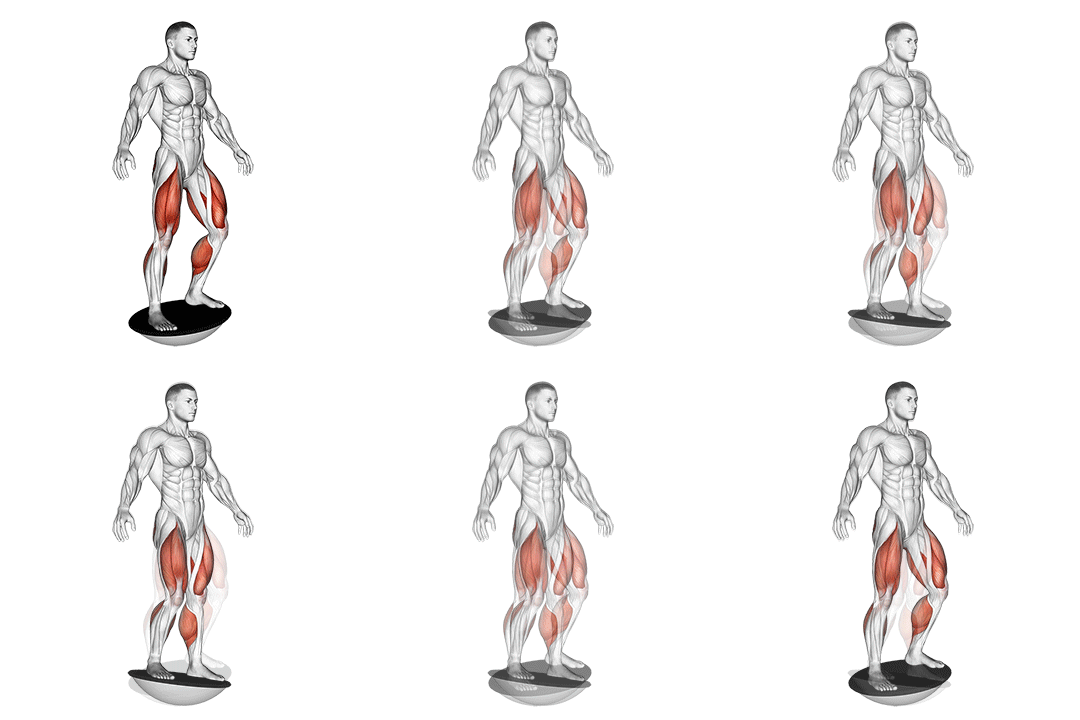
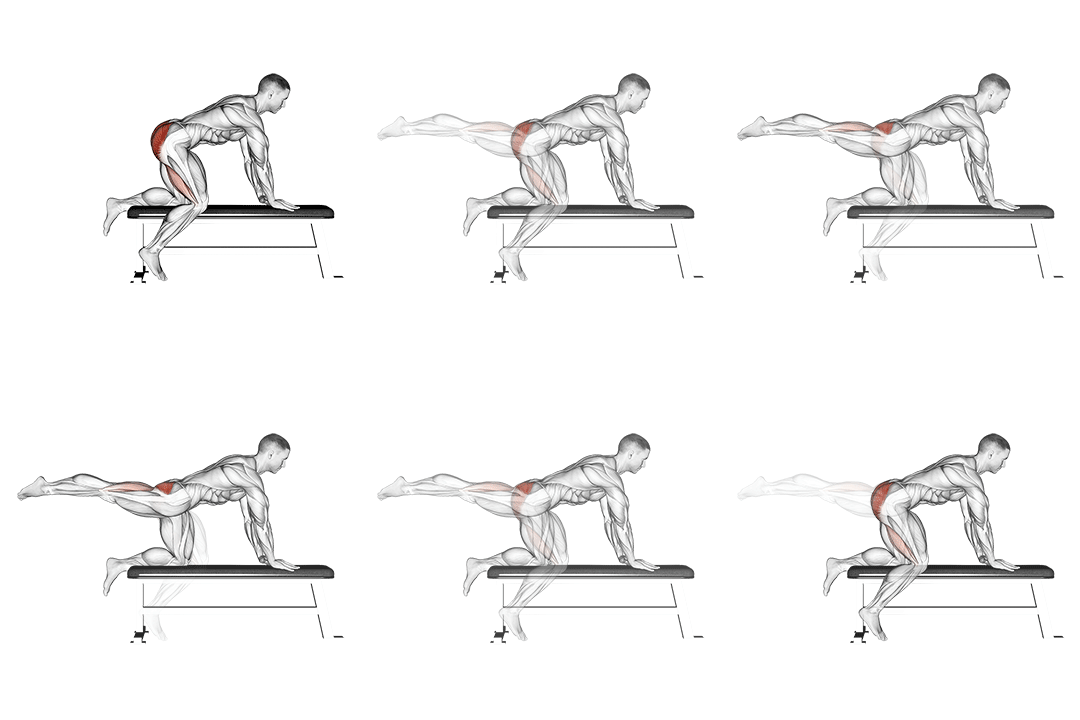
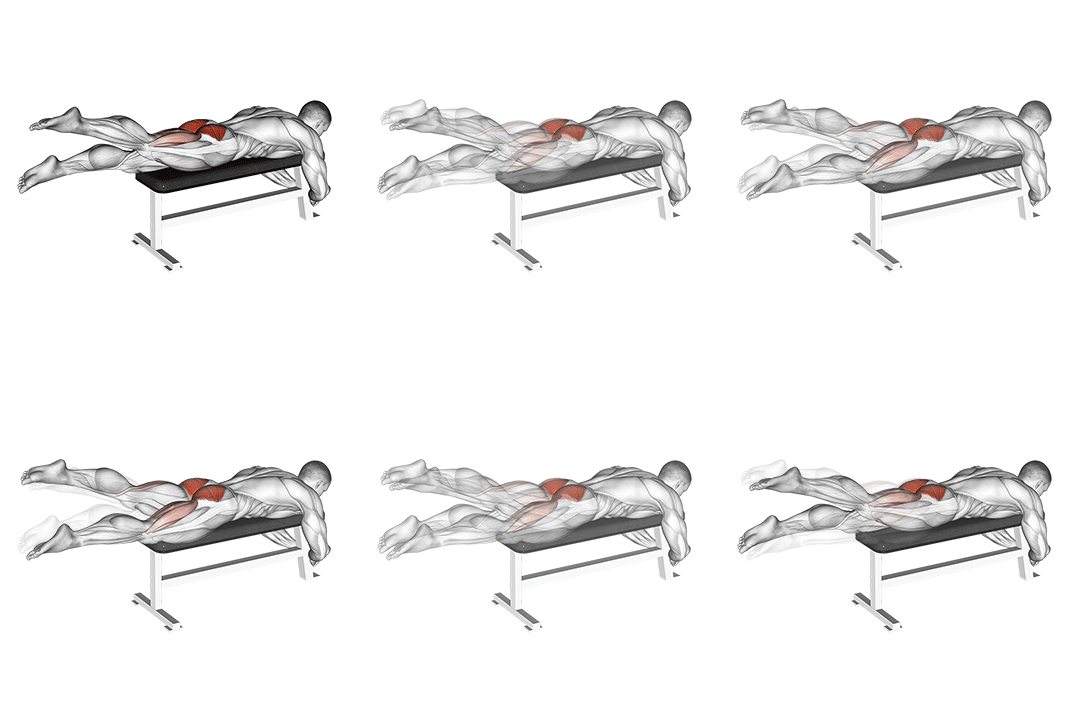
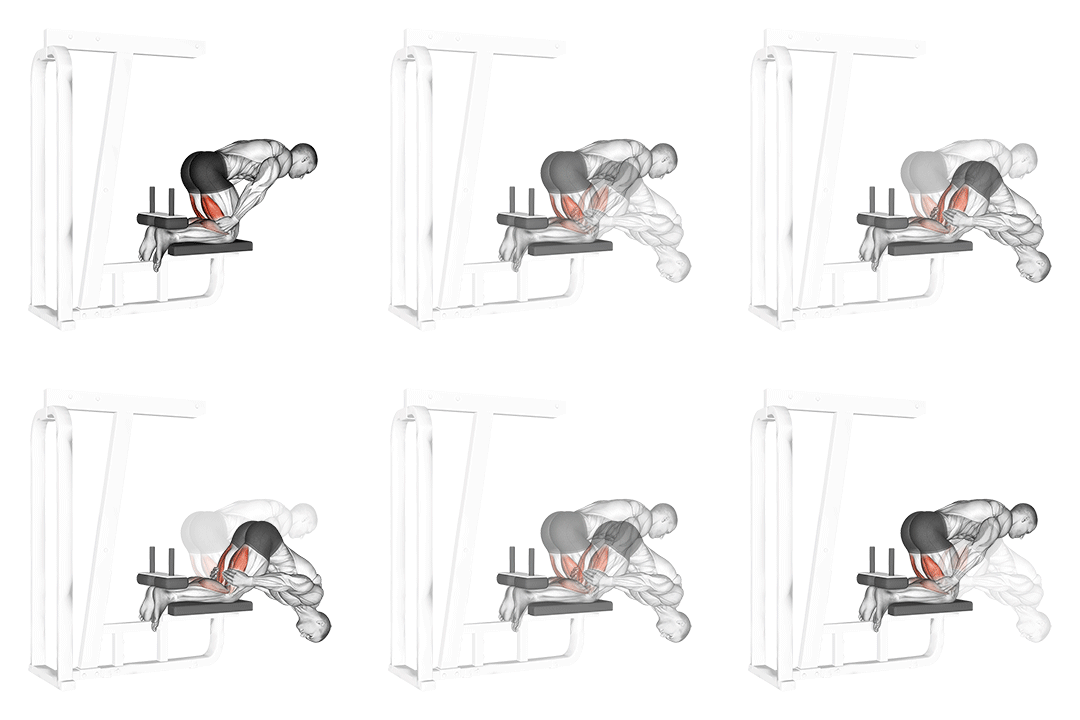
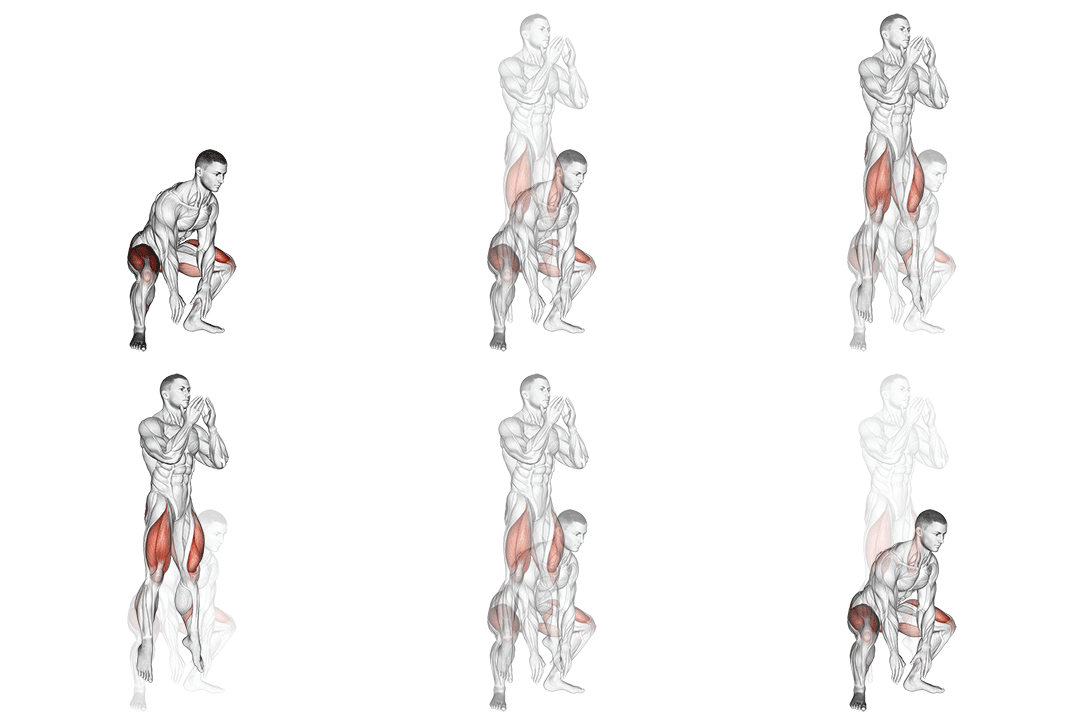
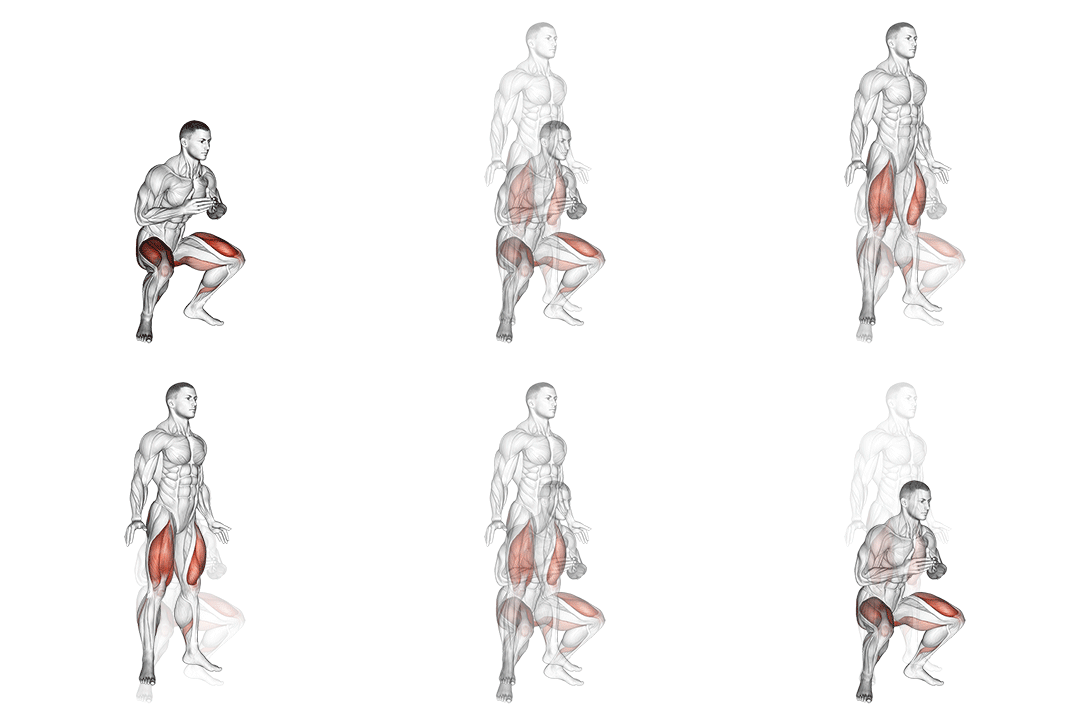
Curtsey Squat
beginner strength exercise · body weight · targets glutes
- Body part
- upper legs
- Primary target
- glutes
- Equipment
- body weight
- Difficulty
- beginner
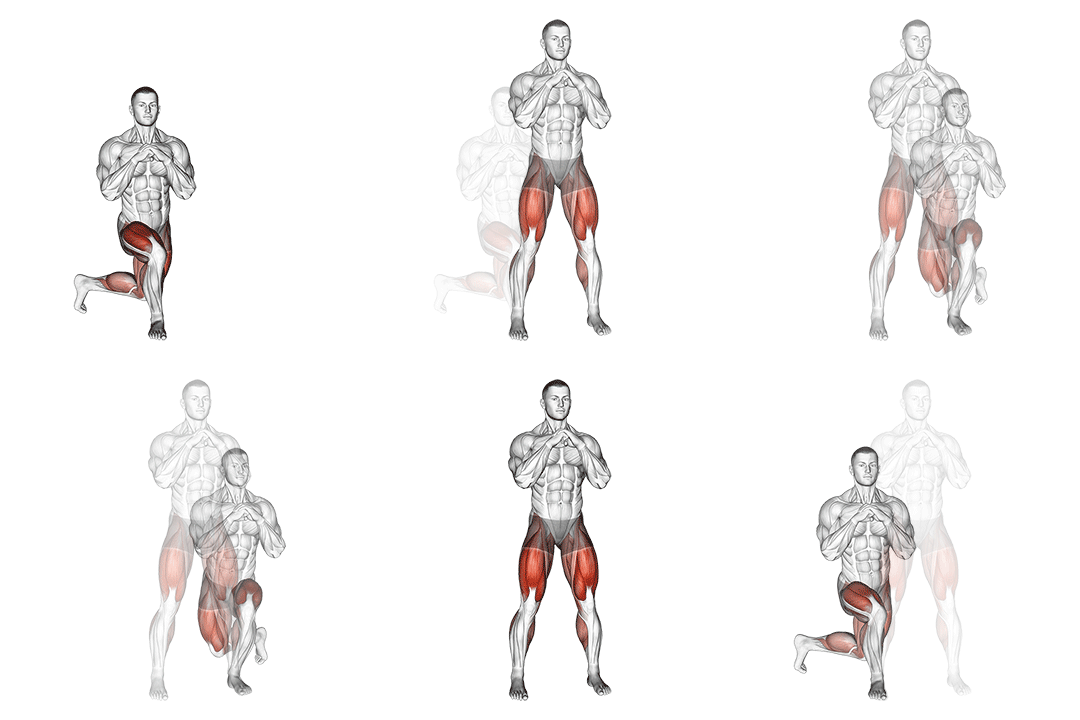
The curtsey squat is a unilateral leg exercise where, instead of lunging straight back, you cross one leg behind and slightly to the side of the other (mimicking the position of an old-fashioned curtsey). The crossing leg position shifts emphasis to the gluteus medius (the side of the hip muscle) and the inner thigh adductors, while still loading the front-leg quad and glute through the squat range. This cross-body angle is what makes the curtsey squat valuable. Most squat and lunge variations train the legs in straight forward-backward planes, missing the lateral and rotational stability that real-world movement and most sports demand. The curtsey adds that lateral component, building hip stability and the kind of multi-directional strength that helps prevent ankle, knee, and hip injuries. It's also a useful aesthetic exercise. The unique crossing pattern targets the outer hip and glute medius more directly than standard lunges, which contributes to a fuller, more sculpted hip appearance over time. For trainees focused on glute development, the curtsey squat earns a place alongside hip thrusts and walking lunges in a complete program.
Why train the Curtsey Squat?
- Trains gluteus medius and adductors more directly than standard lunges.
- Builds lateral hip stability that helps prevent injuries.
- Adds variety to lower-body programming.
- Useful for hip and glute aesthetic development.
- Carries over to multi-directional sport movements.
- Requires no equipment.
How to do the Curtsey Squat: step by step
- 1Stand with your feet shoulder-width apart.
- 2Take a step diagonally behind and across your body with your right foot, crossing it behind your left leg.
- 3Bend both knees as if you were curtsying, lowering your body towards the ground.
- 4Keep your torso upright and your weight on your front foot.
- 5Push through your front foot to return to the starting position.
- 6Repeat on the other side, stepping diagonally behind and across your body with your left foot.
Muscles worked
Primary
glutes
Secondary
quadriceps, hamstrings, calves
Common mistakes to avoid
Letting the front knee track inward
When the back leg crosses, the front knee wants to drift inward. Keep the front knee tracking out over the second toe — knee valgus during the curtsey is a top cause of knee discomfort.
Letting the torso lean forward
The unusual position tempts forward lean. Keep the chest tall and torso upright throughout — the curtsey is a hip-dominant exercise, not a hip-hinge exercise.
Going too deep before mobility allows
The crossed-leg position requires hip rotation that some people lack. Start with shallow curtseys and build depth over weeks as the mobility improves.
Crossing the back leg too far behind
If the back leg is crossing several feet behind, the angle becomes awkward. Cross only as much as feels controlled — usually the back foot lands a few inches behind and to the side of the planted foot.
Always favoring one direction
Train both directions equally — left leg crossing behind right, then right leg crossing behind left. Asymmetric training widens any existing strength asymmetries.
Easier and harder variations
Easier
Reduce the depth of the squat. Or hold a sturdy object for balance. Or perform the curtsey movement without sinking into a full squat (just touch the back foot down behind without significant knee bend).
Harder
Add weight (dumbbells held at the sides, or a goblet at the chest). Add a tempo (3 seconds down, 1-second pause, 1 second up). Or progress to curtsey lunges with jump.
Alternative exercises
Forward lunge
Standard lunge in a forward direction. Easier to learn and more focused on quad and glute work.
Cossack squat
Lateral squat that shifts weight side to side. Different multi-directional pattern with similar lateral hip emphasis.
Lateral lunge
Lunge to the side instead of forward or back. Trains lateral hip strength similarly.
How to program the Curtsey Squat into your training
Curtsey squats work as accessory unilateral leg work, not as the primary leg exercise. Pair with squats, deadlifts, and standard lunges for complete lower-body development. Sets and reps: 3 sets of 8-12 reps per side with 60-90 seconds rest. Total weekly volume of 50-80 reps per side drives most adaptations. In a lower body session: 4 sets of 8 squats (bilateral strength), 3 sets of 10 forward lunges per leg (forward unilateral), 3 sets of 10 curtsey squats per side (lateral unilateral), 3 sets of 12 single-leg glute bridges per leg (accessory). For athletes specifically training lateral hip strength: alternate weeks between curtsey squats and Cossack squats for variety. Do not pair heavy curtsey squats with heavy bilateral squats in the same session.
Recovery and frequency
Curtsey squats in moderate volume have moderate recovery cost. The lateral hip and adductor demand can leave both areas sore in the first 1-2 weeks. 48 hours between dedicated sessions is generally enough. Knee discomfort during the exercise points to form errors (knee tracking inward, going too deep too fast). Address form first.
Frequently asked questions
How many sets and reps of curtsey squats should I do?
3 sets of 8-12 reps per side with 60-90 seconds rest.
How often should I train curtsey squats?
2-3 times per week as part of a structured program.
Curtsey squats vs forward lunges: which is better?
Different tools. Forward lunges train forward-direction unilateral strength. Curtsey squats add lateral and rotational components. Use both for complete unilateral development.
Will curtsey squats grow my glutes?
Yes — particularly the gluteus medius (side of the hip), which contributes to a fuller, more sculpted appearance. Combined with hip thrusts and other glute exercises, they support visible glute development.
Why do my knees hurt during curtsey squats?
Almost certainly the front knee tracking inward as the back leg crosses. Keep the front knee out over the second toe throughout the rep. If pain persists, see a physical therapist.
Are curtsey squats safe with hip issues?
Depends on the issue. The crossed-leg position requires hip rotation that some hip conditions tolerate poorly. Get medical clearance if you have known hip issues.
Useful tools for this exercise
Build a workout with the Curtsey Squat
Puna gives you guided bodyweight workouts you can do anywhere — no equipment, no gym, just structured progressions that build real strength.