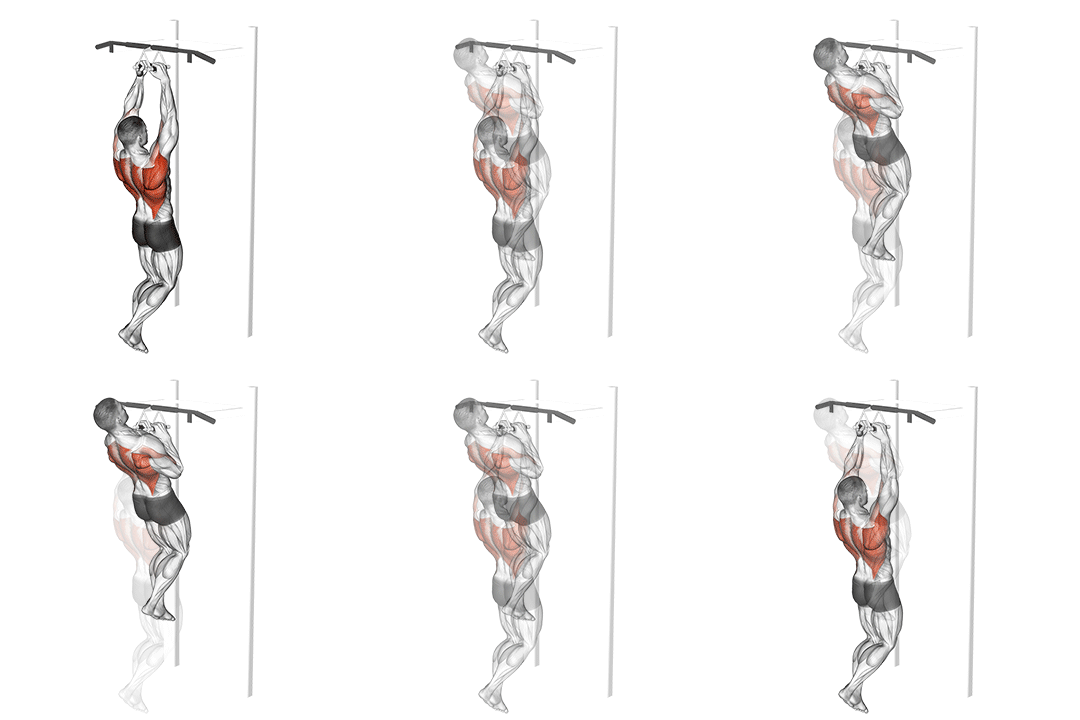
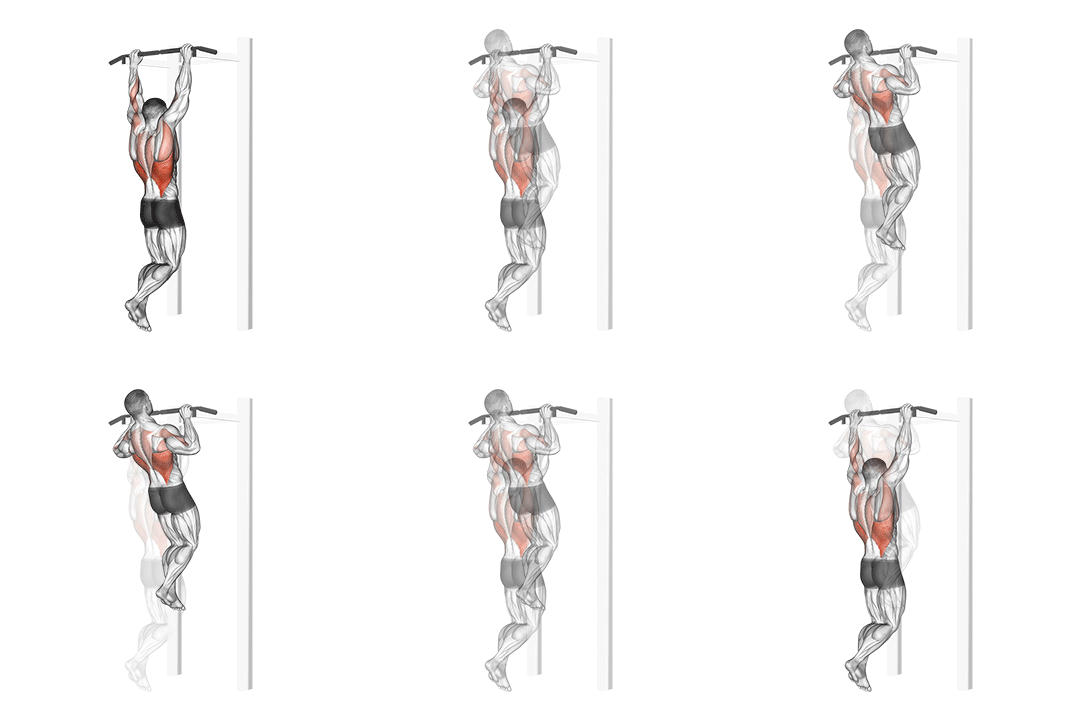
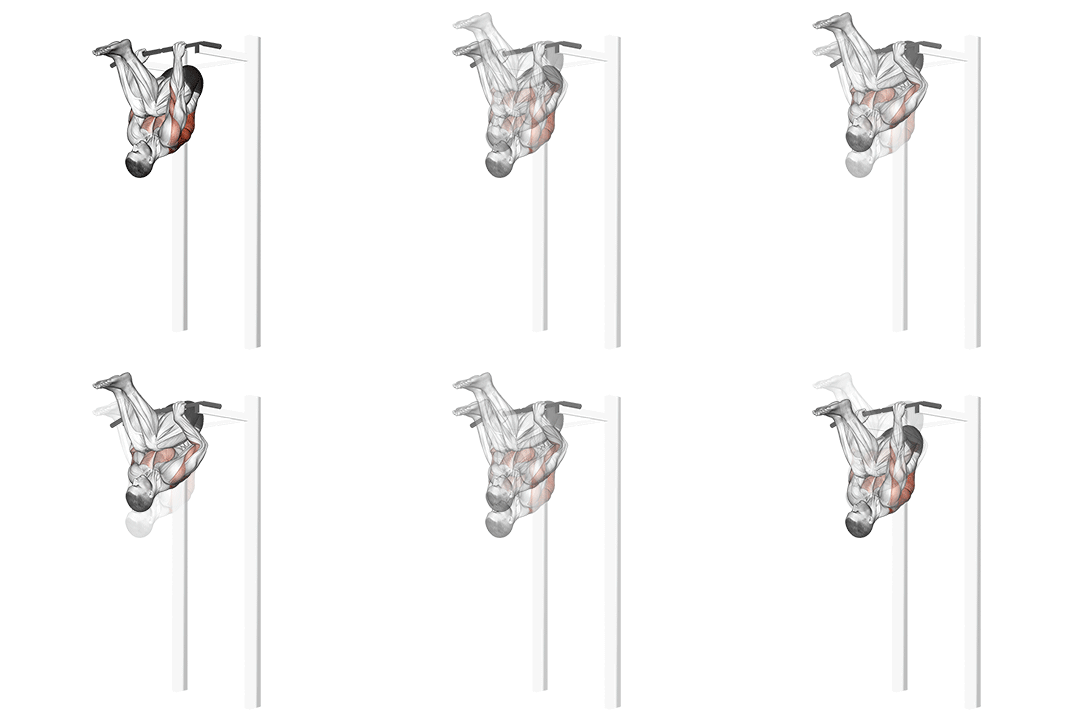
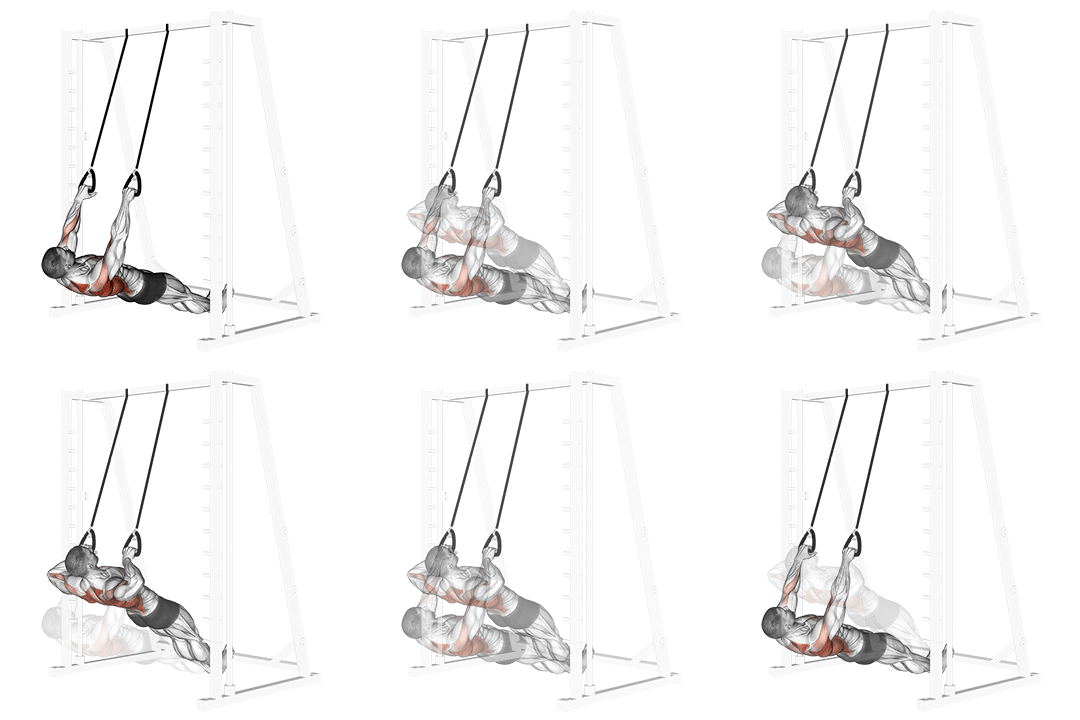
Close Grip Chin-up
intermediate strength exercise · body weight · targets lats
- Body part
- back
- Primary target
- lats
- Equipment
- body weight
- Difficulty
- intermediate
The close-grip chin-up is a chin-up variation where the hands are placed close together — typically with palms facing toward you and hands no more than shoulder-width apart, often closer. The narrower grip increases biceps emphasis and forearm involvement compared to standard chin-ups, while still building the lats and middle back. For trainees specifically targeting biceps development through bodyweight work, the close-grip chin-up is one of the most effective exercises available. This variant earns a specific niche in pulling programs. The closer grip shifts loading toward the biceps brachii (the visible biceps muscle) and brachialis (the muscle underneath that contributes to arm thickness). The lats still engage significantly through the pulling pattern, but the bias toward the biceps is meaningful. For trainees who want to develop arm size without dedicated curl work, close-grip chin-ups produce results that few isolation exercises match. The trade-off is the wrist position and elbow stress. The narrow underhand grip can be uncomfortable for trainees with limited wrist mobility, and the increased biceps loading produces more stress at the inner elbow than wider grips. Trainees with golfer's elbow tendency or wrist issues should approach close-grip variations carefully. For healthy trainees, programmed at moderate volume in rotation with other chin-up variations, close-grip chin-ups develop arms and back simultaneously in ways that bilateral isolation exercises can't replicate. The bodyweight load is significantly more meaningful than typical curl weights for most trainees.
Why train the Close Grip Chin-up?
- Biases pulling load toward the biceps and brachialis more than standard chin-ups.
- Builds significant arm size and strength through bodyweight loading.
- Develops grip strength alongside the back and biceps work.
- Provides clear progression pathway from standard chin-ups for variety.
- Useful for trainees who want arm development without dedicated curl work.
- Pairs naturally with wider chin-ups and pull-ups for complete back-and-arm training.
How to do the Close Grip Chin-up: step by step
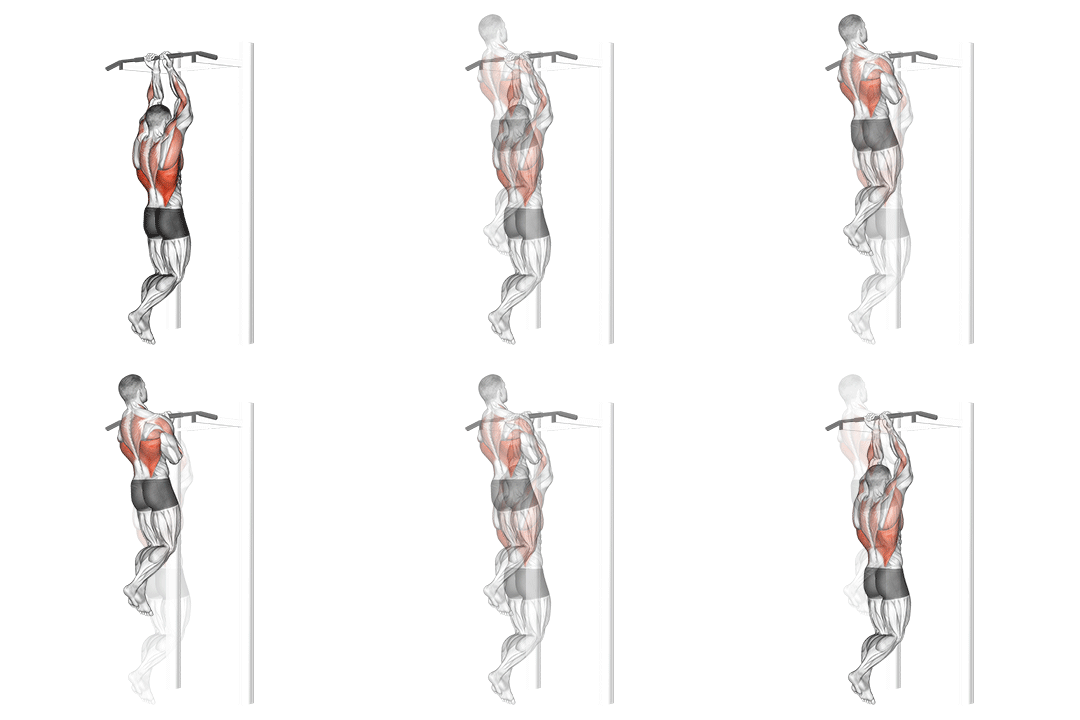
- 1Grab the pull-up bar with your palms facing towards you and your hands shoulder-width apart.
- 2Hang from the bar with your arms fully extended and your feet off the ground.
- 3Engage your back muscles and pull your body up towards the bar, keeping your elbows close to your body.
- 4Continue pulling until your chin is above the bar.
- 5Pause for a moment at the top, then slowly lower your body back down to the starting position.
- 6Repeat for the desired number of repetitions.
Muscles worked
Primary
lats
Secondary
biceps, forearms
Common mistakes to avoid
Going too narrow
Hands closer than shoulder-width apart can stress the wrists awkwardly and limit range of motion. Aim for shoulder-width or just slightly closer; going narrower than that produces wrist issues without much added benefit.
Kipping or swinging to get the chin up
Using momentum to swing the body up isn't a real chin-up. Strict form means the body stays still during the pull. If you can't pull strictly, regress to negatives or assisted variations.
Cutting depth at the bottom or top
Full range matters: arms fully extended at the bottom, chin clearing the bar at the top. Partial reps build a partial pattern and miss the strength full range develops.
Letting the elbows flare
On close-grip chin-ups, the elbows should track close to the body, not flare to the sides. Flared elbows reduce biceps emphasis and stress the shoulder capsule.
Skipping prerequisite work
Most failed close-grip chin-ups come from trainees who haven't yet built solid standard chin-up strength. Build to 8-10 strict standard chin-ups before introducing close-grip variations.
Easier and harder variations
Easier
Negative close-grip chin-ups (jump or step to top, lower slowly for 5-10 seconds) build strength faster than any assisted variation. Or perform with band assistance. Or revert to standard chin-ups until strong enough for the close-grip variation.
Harder
Add weight (vest or weight belt with plate) for serious biceps development. Or progress to commando chin-ups (alternating sides on close grip), or eventually one-arm chin-ups using close grip as preparation. For maximum challenge, weighted close-grip chin-ups produce notable arm growth.
Alternative exercises
Standard chin-up
Wider grip with similar muscle emphasis. Use as foundation; close-grip as progression for arm-building emphasis.
Pull-up (overhand)
Different grip emphasizing lats over biceps. Pair with close-grip chin-ups for complete back-and-arm training.
Inverted row (close grip)
Horizontal pulling at lower load with similar grip. Use for those building toward close-grip chin-ups.
How to program the Close Grip Chin-up into your training
Close-grip chin-up training works as primary biceps-emphasis pulling work or as variety alongside standard chin-ups. Sets and reps: 3-4 sets of 6-10 reps with 90-120 seconds rest. The increased biceps demand typically reduces rep counts compared to standard chin-ups. Total weekly volume of 30-60 reps is appropriate. Frequency: 2 times per week. The biceps and elbow tendons need 48-72 hours between sessions to recover from the close-grip emphasis. In an arm-focused session: 4 sets of 6-8 close-grip chin-ups, 3 sets of 10-12 dips, 3 sets of 8 inverted rows, 3 sets of 30-second hollow holds. Done twice per week, this produces significant arm and back development. For trainees building biceps through bodyweight work: emphasize close-grip chin-ups over isolation curls. The bodyweight load and full-range pulling produce arm development that most curl variations can't match. For variety in long-term pulling programming: rotate close-grip chin-ups with standard chin-ups, pull-ups, and neutral grip variations across training cycles. The varied stimulus produces more complete back development than any single variation. For general fitness: include close-grip chin-ups occasionally for variety, but standard chin-ups and pull-ups should be the primary rotation. Avoid programming close-grip chin-ups as the only chin-up variation due to elbow stress accumulation. Don't program close-grip chin-ups daily — the elbow load accumulates faster than expected.
Recovery and frequency
Close-grip chin-ups have higher recovery cost than wider variations due to the increased biceps and elbow demand. 48-72 hours between sessions is the minimum. The main warning signs are inner elbow pain (medial epicondylitis / golfer's elbow), persistent biceps soreness, and wrist discomfort. Inner elbow issues warrant reducing volume immediately and adding eccentric forearm work. Wrist soreness benefits from daily wrist mobility (circles, prayer stretches). Long-term, regular close-grip chin-up training pairs with daily wrist and elbow mobility work to maintain joint health. Sleep, hydration, and protein intake support the recovery demand.
Frequently asked questions
How many sets and reps?
3-4 sets of 6-10 reps with 90-120 seconds rest. Total weekly volume of 30-60 reps is appropriate.
How often should I do close-grip chin-ups?
2 times per week. The biceps and elbows need 48-72 hours between sessions due to the close-grip emphasis.
Will this build my biceps?
Yes, more directly than standard chin-ups. The close grip biases loading toward the biceps and brachialis. Combined with the bodyweight load, close-grip chin-ups produce significant arm growth.
How is this different from standard chin-up?
Same general pattern with narrower hand placement. The close grip shifts loading toward biceps and brachialis at the expense of slightly less lat emphasis.
Can I do this if I have golfer's elbow?
Cautiously, if at all. The close grip stresses the inner elbow more than wider variations. If you have current golfer's elbow, switch to wider grips and revisit close-grip work after the elbow settles.
Should I use this instead of curls?
Often yes, for trainees with the strength to do bodyweight close-grip chin-ups. The bodyweight load and full-range pulling produce arm development that most curl variations can't match. Pair with rows for complete training.
Useful tools for this exercise
Build a workout with the Close Grip Chin-up
Puna gives you guided bodyweight workouts you can do anywhere — no equipment, no gym, just structured progressions that build real strength.