Butterfly Yoga Pose
beginner stretching exercise · body weight · targets adductors
- Body part
- upper legs
- Primary target
- adductors
- Equipment
- body weight
- Difficulty
- beginner
The butterfly yoga pose — sometimes called bound angle or cobbler's pose — is a foundational hip mobility drill performed sitting on the floor with the soles of the feet pressed together and knees dropping outward toward the floor. The position lengthens the inner thighs (adductors), opens the hips, and stretches the groin area in ways that compound exercises don't reach. It's one of the most universally useful hip mobility drills for adults of any fitness level. Most adults have meaningful adductor and groin tightness from sedentary patterns combined with single-plane movement. Sitting compresses the inner thighs; walking, running, and most strength training move only in the sagittal plane (forward and back). Without dedicated lateral hip work, the adductors and surrounding tissue chronically shorten. Tight adductors limit squat width, contribute to groin strains in athletic contexts, and underlie much of the chronic hip stiffness that desk-bound adults accumulate. The butterfly pose addresses this directly. Combined with hip flexor stretches and other hip mobility drills, daily butterfly practice over 4-6 weeks produces noticeable improvement in squat width, hip range of motion, and athletic comfort. The accessibility (no equipment, sitting position) makes it suitable for trainees at any fitness level. For older adults focused on hip mobility maintenance or athletes addressing groin tightness, butterfly pose is essential.
Why train the Butterfly Yoga Pose?
- Lengthens the adductors and groin area chronically tight in sedentary adults.
- Improves hip rotation that supports better squat width and athletic movement.
- Reduces groin strain risk in athletic contexts.
- Counters the lateral-plane neglect of most strength training.
- Accessible to all fitness levels including older adults.
- Pairs naturally with hip flexor stretches for comprehensive hip mobility.
How to do the Butterfly Yoga Pose: step by step
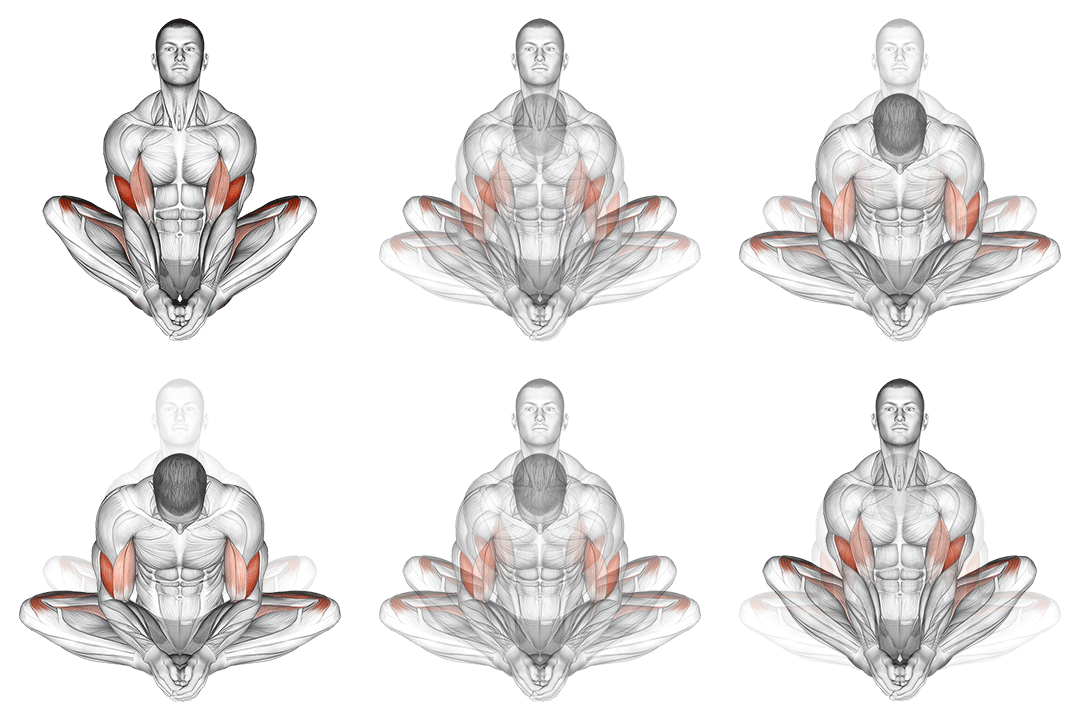
- 1Sit on the floor with your legs extended in front of you.
- 2Bend your knees and bring the soles of your feet together, allowing your knees to fall out to the sides.
- 3Hold onto your ankles or feet with your hands.
- 4Sit up tall and lengthen your spine.
- 5Gently press your knees down towards the floor, feeling a stretch in your inner thighs.
- 6Hold this position for a few breaths.
- 7To release, slowly bring your knees back up and extend your legs.
Muscles worked
Primary
adductors
Secondary
hamstrings, groin
Common mistakes to avoid
Forcing the knees down
Pressing forcefully on the knees can stress the joints. Let gravity and breath gradually lower the knees over weeks; don't force them down in single sessions.
Rounding the back excessively
Sit tall with the spine relatively straight. Rounding shifts the stretch away from the hips.
Holding the breath
Breathe slowly throughout. Each exhale supports gradual tissue release.
Holding too short
60-90 seconds produces meaningful tissue change. Brief holds barely cue release.
Skipping daily practice
Adductor tightness rebuilds with daily sitting. Daily practice prevents accumulation; occasional sessions don't keep up.
Easier and harder variations
Easier
Sit on a folded blanket or cushion to elevate the hips. The elevation reduces forward lean demand and is appropriate for trainees with very tight hips.
Harder
Lean forward from the hips while in butterfly position to deepen the stretch. Or progress to deeper hip-opening yoga poses.
Alternative exercises
Frog pose
Deeper adductor stretch in quadruped position. Use as progression once butterfly becomes easy.
Side lying adductor stretch
Lying version with different leverage. Pair with butterfly for compound adductor work.
Cossack squat
Active version that combines adductor mobility with strength.
How to program the Butterfly Yoga Pose into your training
Daily routine: 1-2 sets of 60-90 seconds, once or twice per day. Morning routine: Excellent timing — counters overnight stiffness. Post-workout cooldown: After lower-body sessions for tissue length adaptation. For those with chronic hip tightness: 3-4 sessions per day, paired with hip flexor and glute mobility.
Recovery and frequency
Zero recovery cost. Daily practice is safe. Sharp inner-knee pain warrants reducing intensity.
Frequently asked questions
How long should I hold?
60-90 seconds, 1-2 sets per session.
How often?
Daily. Adductor tightness rebuilds with sitting.
Will this help my squat?
Often yes. Tight adductors limit squat width and depth. Daily butterfly practice over 4-6 weeks usually opens up squat range.
Why can't my knees touch the floor?
Tight adductors. The knees-to-floor position is the long-term goal, not a starting expectation. Build over months with daily practice.
Can I do this with hip issues?
Often yes, with reduced range. Sit on cushion to elevate hips and reduce demand. Consult a physiotherapist for acute issues.
Butterfly vs frog pose?
Butterfly is gentler entry point. Frog pose is significantly deeper. Use butterfly as foundation.
Useful tools for this exercise
Build a workout with the Butterfly Yoga Pose
Puna gives you guided bodyweight workouts you can do anywhere — no equipment, no gym, just structured progressions that build real strength.