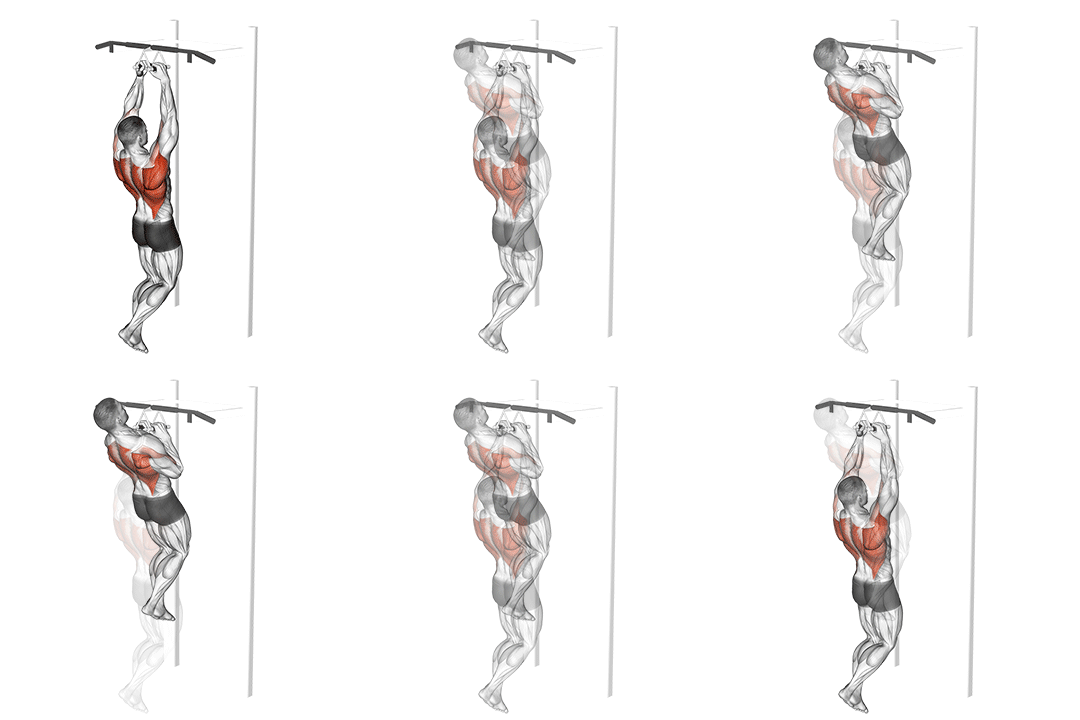
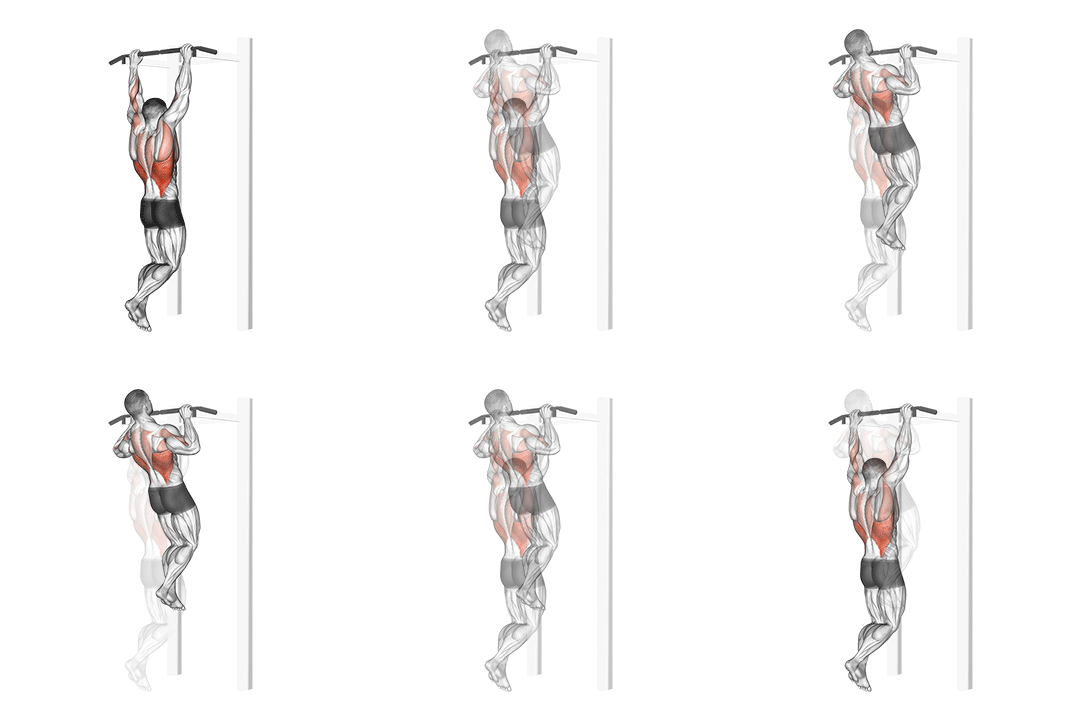
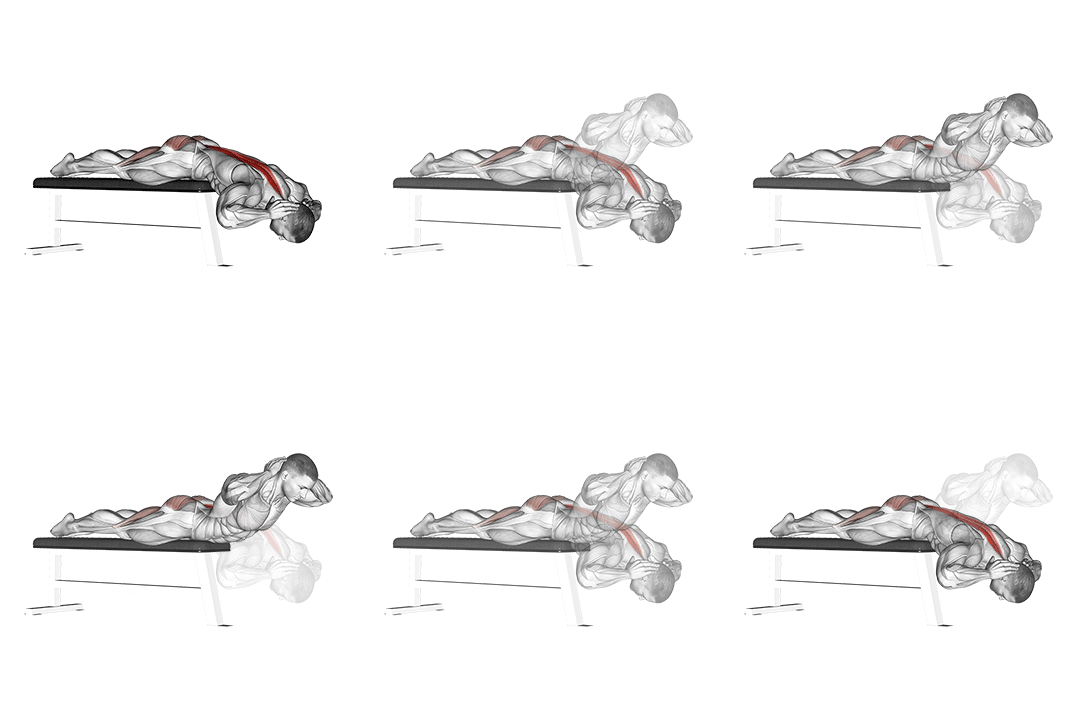
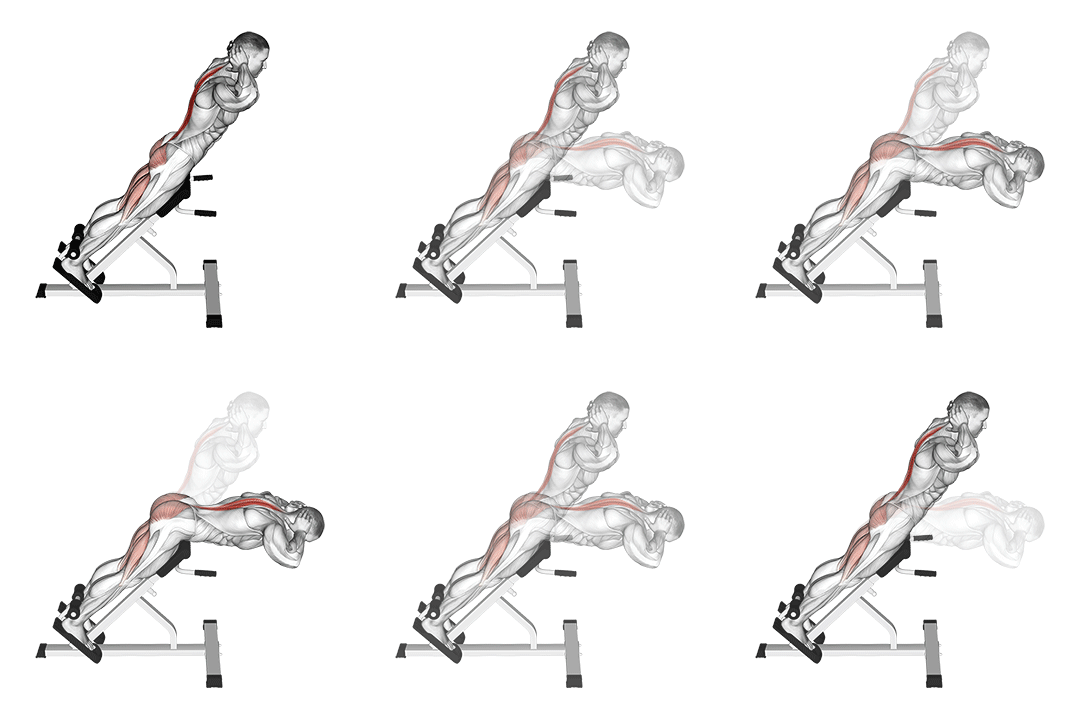
Bodyweight Standing Row
beginner strength exercise · body weight · targets upper back
- Body part
- back
- Primary target
- upper back
- Equipment
- body weight
- Difficulty
- beginner
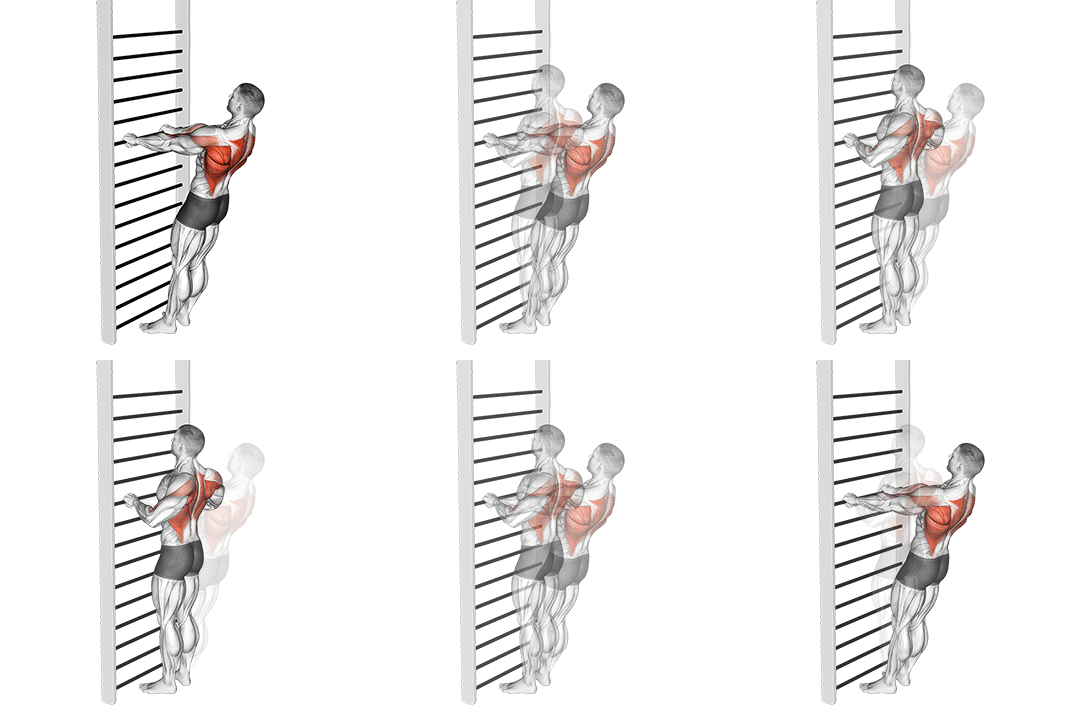
The bodyweight standing row is a bilateral horizontal pulling exercise performed standing while gripping a fixed anchor (handle, bar, or sturdy hold) and leaning back to create resistance. By pulling the chest toward the anchor, you build the upper back, lats, and biceps through bodyweight loading. The standing position differs from inverted rows lying under a bar — both are valid, with the standing variation often more accessible in home settings. For home trainees with a sturdy attachment point at chest height (suspension trainer handle, sturdy hook, fixed bar), the standing row provides accessible horizontal pulling. The body angle controls difficulty: more horizontal body equals harder rep, more upright body equals easier. The exercise scales from beginner-accessible at upright angles to advanced at near-horizontal angles. Where this earns its place is as primary horizontal pulling work in suspension-trainer-based training. The bilateral version is the foundation; once mastered, single-arm progressions add unilateral training. Combined with push-ups for pressing and pull-ups for vertical pulling, the standing row completes a balanced bodyweight upper-body program. The trade-off versus inverted rows under a bar is the slightly different anchor position and grip orientation; both produce similar back development.
Why train the Bodyweight Standing Row?
- Provides accessible bilateral horizontal pulling using common equipment (handle, bar, sturdy hold).
- Builds the upper back, lats, and biceps through full bodyweight loading.
- Scales easily through body angle adjustment for any fitness level.
- Trains shoulder blade control through deliberate retraction.
- Pairs naturally with push-ups for balanced bodyweight upper-body training.
- Useful as progression toward pull-ups when bar access is limited.
How to do the Bodyweight Standing Row: step by step
- 1Stand with your feet shoulder-width apart and knees slightly bent.
- 2Grasp a bar or handles with an overhand grip, palms facing down.
- 3Keep your back straight and core engaged.
- 4Pull the bar or handles towards your body, squeezing your shoulder blades together.
- 5Pause for a moment at the top of the movement.
- 6Slowly release and extend your arms back to the starting position.
- 7Repeat for the desired number of repetitions.
Muscles worked
Primary
upper back
Secondary
biceps, shoulders
Common mistakes to avoid
Hips sagging during the pull
Brace the abs and glutes throughout. The body should travel as one unit, not collapse in segments.
Pulling with arms instead of back
Initiate by retracting the shoulder blades. Let the arms follow.
Standing too upright
If the body is too vertical, the load is too light. Walk feet forward to challenge yourself in 8-15 rep range.
Cutting range
Full range matters: arms fully extended at the bottom, chest as close to the anchor as possible at the top.
Letting the head poke forward
The chin tends to lead the pull, especially under fatigue. Keep the head neutral; let the chest do the work.
Easier and harder variations
Easier
Stand more upright by walking feet closer to the anchor. Reduces load through the back.
Harder
Walk feet further forward for more horizontal body. Progress to single-arm rows for asymmetric loading. Eventually, elevated-feet inverted rows multiply demand.
Alternative exercises
Inverted row
Lying-under-bar version of horizontal pulling. Different position; similar stimulus.
Bodyweight standing one arm row
Single-arm version. Use as progression once bilateral feels easy.
Pull-up
Vertical pulling alternative. Pair with standing rows for complete back development.
How to program the Bodyweight Standing Row into your training
The bodyweight standing row works as primary horizontal pulling work in any suspension or fixed-handle setup. Sets and reps: 3-4 sets of 8-15 reps with 60-90 seconds rest. Frequency: 2-3 times per week. Back recovers within 48 hours. In a session: 4 sets of 10 standing rows, 4 sets of 8 push-ups, 3 sets of 6 pull-ups, 3 sets of 30-second planks. For general fitness: 3 sets of 10-12 reps, 2 times per week. Don't program daily — 48 hours minimum between sessions.
Recovery and frequency
Recovery within 24-48 hours. Watch for biceps tendinopathy, grip fatigue, and shoulder discomfort.
Frequently asked questions
How many sets and reps?
3-4 sets of 8-15 reps with 60-90 seconds rest. Adjust body angle to keep reps challenging.
How often?
2-3 times per week. Back recovers within 48 hours.
Standing row vs inverted row: which is better?
Different positions, similar stimulus. Standing version is more accessible in many home setups; inverted version under a bar is more space-efficient.
Will this build my back?
Yes — same horizontal pulling stimulus as inverted rows. Adequate volume produces meaningful development.
What equipment do I need?
A fixed anchor at chest height — suspension trainer, sturdy bar, or rated hook. The exercise needs a stable hold-point for the body to pull against.
Can this prepare me for pull-ups?
Yes — horizontal pulling builds the foundation that vertical pulling rests on. Combined with dead hangs and negatives, standing rows prepare you for first pull-ups.
Useful tools for this exercise
Build a workout with the Bodyweight Standing Row
Puna gives you guided bodyweight workouts you can do anywhere — no equipment, no gym, just structured progressions that build real strength.