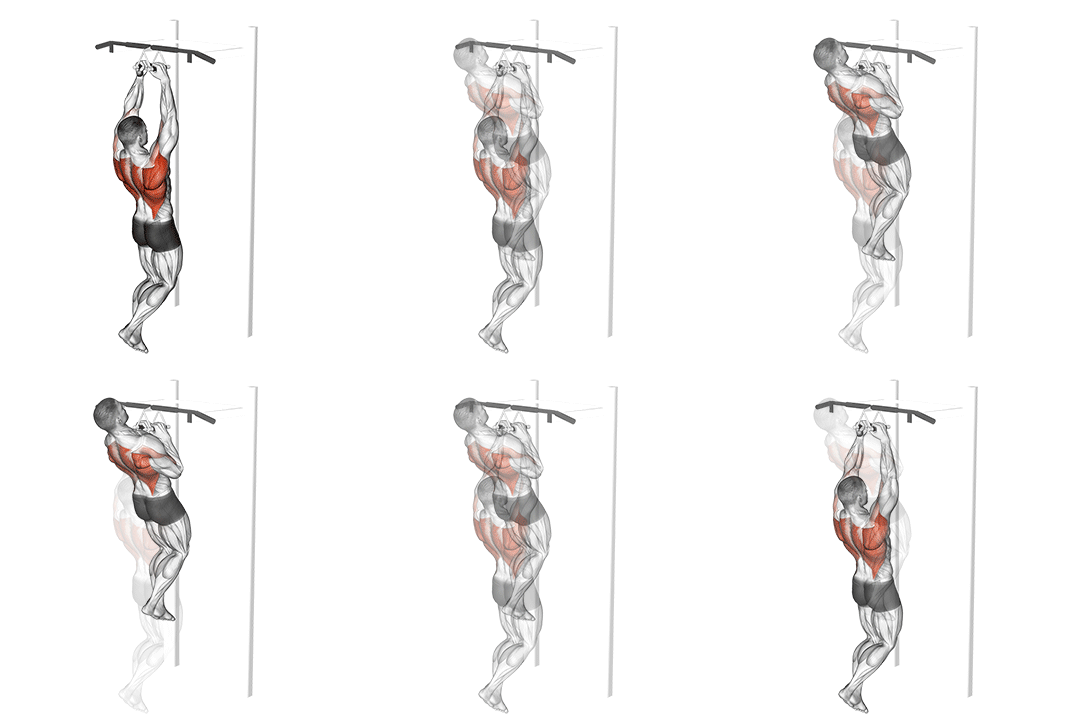
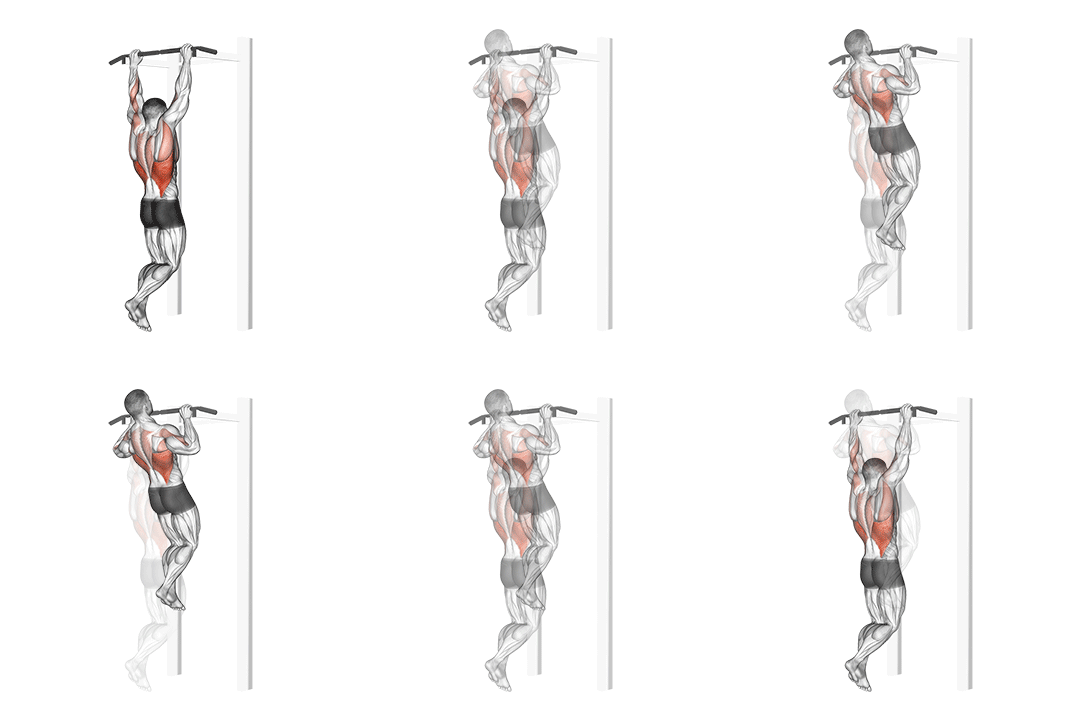
Bodyweight Standing One Arm Row
beginner strength exercise · body weight · targets upper back
- Body part
- back
- Primary target
- upper back
- Equipment
- body weight
- Difficulty
- beginner
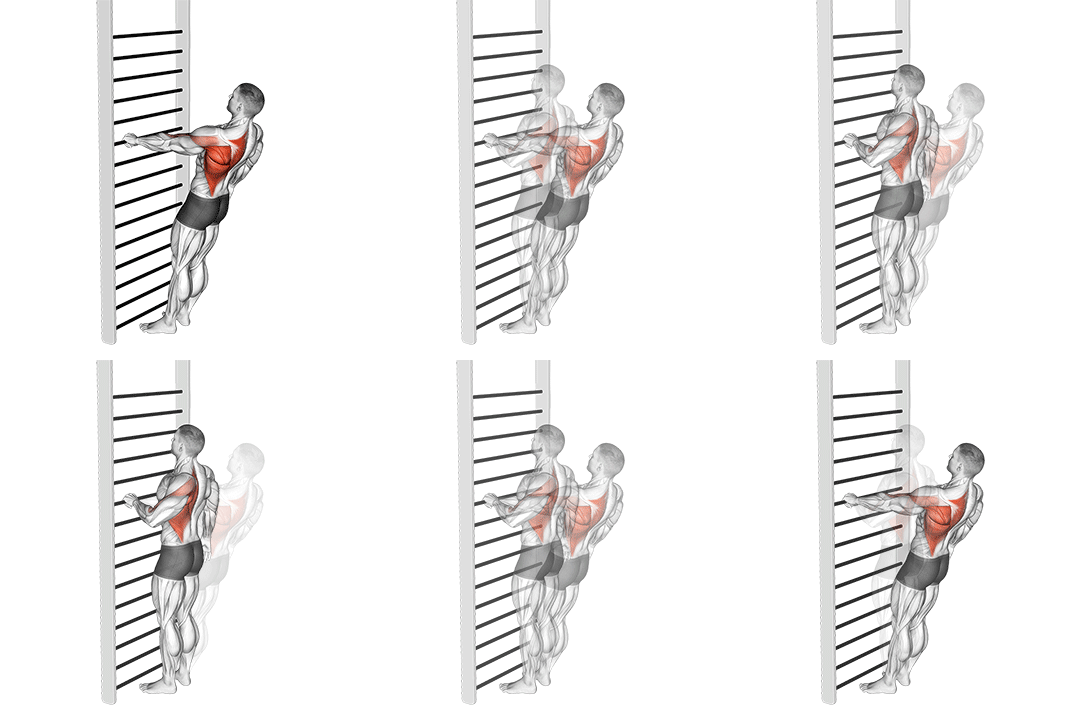
The bodyweight standing one arm row is a unilateral horizontal pulling exercise performed with one hand gripping a fixed anchor (bar, handle, or sturdy hold) while the body leans back to create resistance. By pulling the chest toward the anchor with one arm, you build asymmetric pulling strength that bilateral rowing exercises don't develop. The exercise sits in a useful niche for trainees with access to a single-handle or bar setup who want unilateral back work. For home trainees with a pull-up bar or stable handle, the standing one arm row is one of the best unilateral pulling exercises available. The single-arm execution effectively doubles the work per arm compared to bilateral horizontal pulling, exposing left-right imbalances that bilateral exercises mask. The body angle adjusts difficulty: more horizontal is harder, more upright is easier. Where this earns its place is in addressing pulling asymmetries while building unilateral back strength. Most trainees discover after months of training that one side pulls harder than the other; bilateral exercises let the strong side carry more load. The standing one arm row exposes this and forces each side to handle its share. Programmed 2-3 times per week alongside bilateral rowing and push-ups, it produces well-rounded back development with addressed asymmetries.
Why train the Bodyweight Standing One Arm Row?
- Builds unilateral pulling strength that bilateral rowing exercises don't develop.
- Doubles effective load per arm compared to bilateral horizontal pulling.
- Exposes and addresses left-right pulling imbalances.
- Develops the back, lats, and biceps simultaneously through full bodyweight loading.
- Trains core stability through the asymmetric loading pattern.
- Pairs naturally with single-arm push-ups for complete unilateral upper-body training.
How to do the Bodyweight Standing One Arm Row: step by step
- 1Stand with your feet shoulder-width apart, knees slightly bent, and hold a dumbbell in one hand.
- 2Bend forward at the hips, keeping your back straight and your core engaged.
- 3Let the dumbbell hang straight down in front of you, with your arm fully extended.
- 4Pull the dumbbell up towards your chest, keeping your elbow close to your body.
- 5Squeeze your shoulder blades together at the top of the movement.
- 6Lower the dumbbell back down to the starting position.
- 7Repeat for the desired number of repetitions, then switch sides.
Muscles worked
Primary
upper back
Secondary
biceps, forearms
Common mistakes to avoid
Body twisting during the pull
The unilateral loading wants to rotate the body toward the working arm. Brace the abs and keep the chest square — straight body movement, no rotation.
Pulling with the arm only
Initiate by retracting the shoulder blade. The back drives the rep; the arm transmits force.
Standing too upright
If the body is too vertical, the load is too light. Walk feet forward until reps challenge you in 8-12 range.
Cutting range
Full range matters: arm fully extended at the bottom, hand reaching the chest at the top. Partial reps train partial patterns.
Rushing through reps
Speed reduces time under tension. Aim for 1-2 seconds in each direction with deliberate engagement.
Easier and harder variations
Easier
Stand more upright by walking feet closer to the anchor. The reduced body angle reduces the load through the back.
Harder
Walk feet further forward for more horizontal body angle. Or elevate feet on a low surface for inverted body angle. For maximum challenge, single-leg single-arm rows multiply stability demand.
Alternative exercises
Bilateral inverted row
Both-hands version. Use as foundation before progressing to single-arm work.
Single-arm dumbbell row
Loaded version when dumbbells are available. More effective for serious strength building.
Bodyweight standing one arm row with towel
Same exercise using a towel as the handle. Useful when no fixed bar is available.
How to program the Bodyweight Standing One Arm Row into your training
The bodyweight standing one arm row works as primary unilateral horizontal pulling work. Sets and reps: 3-4 sets of 8-12 reps per arm with 60-90 seconds rest. Frequency: 2-3 times per week. Back recovers within 48 hours. In a session: 4 sets of 10 single-arm rows per arm, 4 sets of 8 push-ups, 3 sets of 6 pull-ups, 3 sets of 30-second hollow holds. For addressing imbalances: weak side gets slightly more volume than strong side. Don't program daily — 48 hours minimum between sessions.
Recovery and frequency
Recovery within 24-48 hours. Watch for biceps tendinopathy, asymmetric soreness, and grip fatigue.
Frequently asked questions
How many sets and reps?
3-4 sets of 8-12 reps per arm with 60-90 seconds rest.
How often?
2-3 times per week. Back recovers within 48 hours.
Will this build my back?
Yes — the unilateral load is meaningful for back and biceps development.
Single-arm vs bilateral row: which is better?
Single-arm doubles effective load per arm and exposes asymmetries. Better for advanced training; use bilateral as foundation.
Should one side be stronger than the other?
Common to have a slight asymmetry. Address with extra volume on the weaker side until the imbalance closes.
Can I do this at home?
Yes if a sturdy anchor (pull-up bar, doorway bar with side handle, sturdy hook) is available.
Useful tools for this exercise
Build a workout with the Bodyweight Standing One Arm Row
Puna gives you guided bodyweight workouts you can do anywhere — no equipment, no gym, just structured progressions that build real strength.