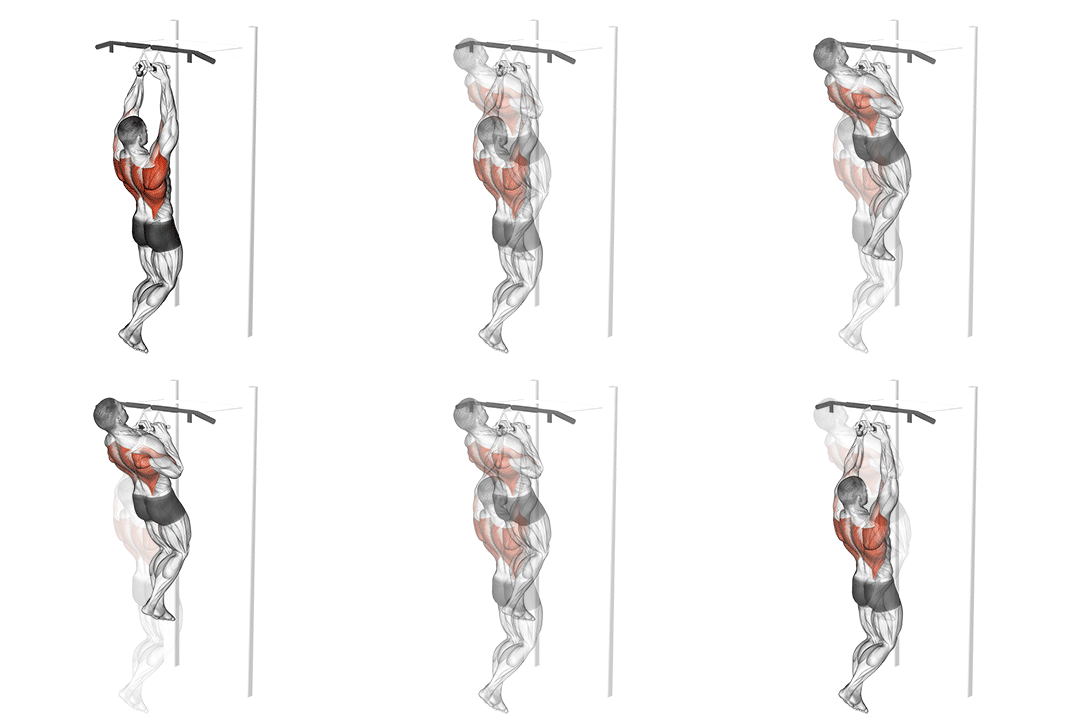
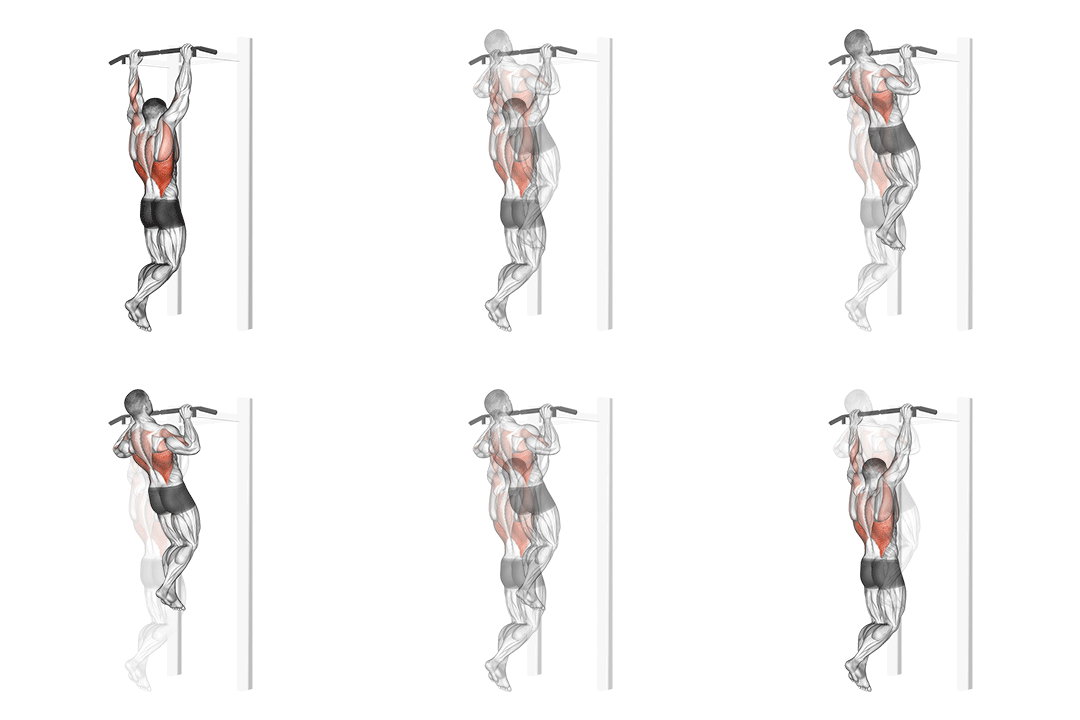
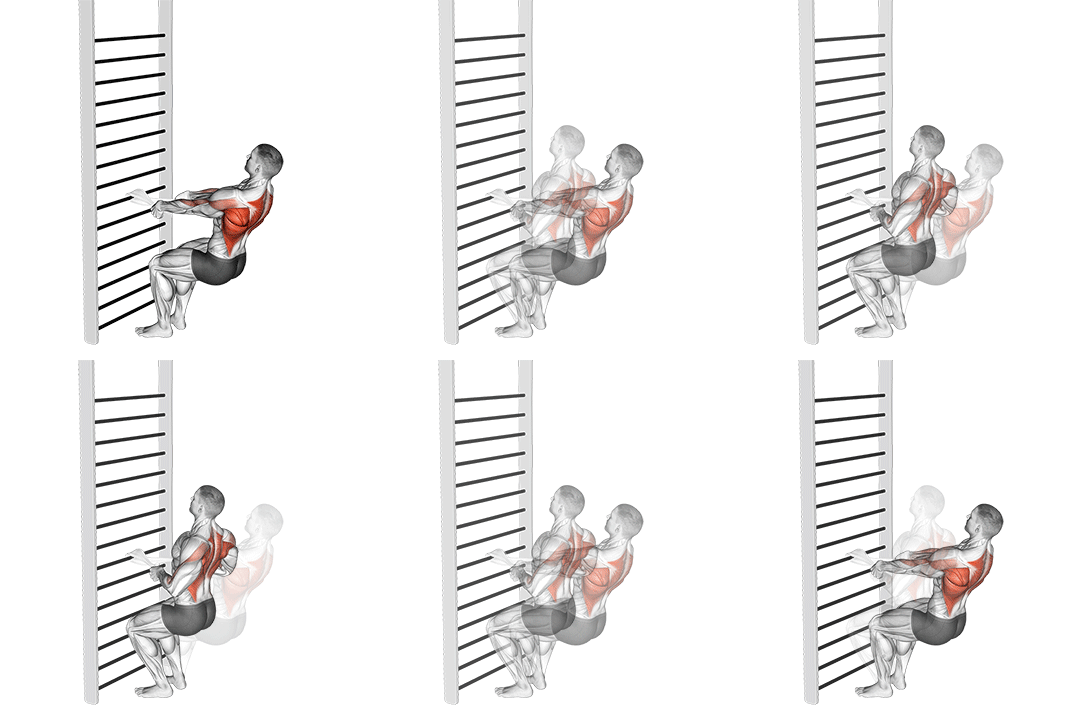
Bodyweight Squatting Row (with Towel)
beginner strength exercise · body weight · targets upper back
- Body part
- back
- Primary target
- upper back
- Equipment
- body weight
- Difficulty
- beginner
The bodyweight squatting row with towel is a beginner-friendly horizontal pulling exercise that uses a towel looped through a closed door (or around a sturdy pole) as the gripping point. From a squatting position with the towel held in both hands, you pull the body forward and up by squeezing the back muscles, then return under control. The towel grip provides the connection point that fixed equipment usually requires. It's particularly useful for home trainers who don't have a low bar setup or pull-up station. A solid door (with the towel looped over the top, door closed firmly) plus a sturdy towel provides everything needed to train horizontal pulling. Most apartments and homes can accommodate this setup, making the exercise accessible where standard inverted rows aren't. Like all rowing variations, the form fundamentals matter — initiating the pull from the back muscles (not just the arms), maintaining a rigid body throughout, controlling the descent. The towel adds a small grip-strength component compared to fixed bars, since the soft grip surface requires more forearm work to maintain.
Why train the Bodyweight Squatting Row (with Towel)?
- Provides horizontal pulling work without fixed equipment.
- Trains the back, biceps, and grip simultaneously.
- Adjustable difficulty by changing body angle.
- Useful for home gyms or hotel rooms.
- Pairs well with vertical pulling for complete back development.
- Beginner-friendly accessibility.
How to do the Bodyweight Squatting Row (with Towel): step by step
- 1Stand with your feet shoulder-width apart, holding a towel in front of you with your palms facing down.
- 2Bend your knees and lower your body into a squat position, keeping your back straight and your chest up.
- 3As you lower into the squat, simultaneously pull the towel towards your chest, squeezing your shoulder blades together.
- 4Pause for a moment at the bottom of the squat, then slowly return to the starting position while extending your arms.
- 5Repeat for the desired number of repetitions.
Muscles worked
Primary
upper back
Secondary
biceps, shoulders
Common mistakes to avoid
Using a thin or weak towel
The towel must support body weight. Use a thick, sturdy towel or rope; not a thin hand towel that could tear.
Pulling with the arms instead of the back
Initiate the pull by squeezing the shoulder blades together first — this engages the lats and middle back. Bicep-only pulls miss the primary back work.
Letting the hips sag
Maintain a rigid plank-like body throughout the row. Sagging hips reduce the effectiveness.
Cutting depth at the top of the pull
Bring the chest as close to the gripping point as possible at the top of every rep.
Choosing an unstable door
Test the door's solidity before loading body weight. A door that opens or shifts will cause injury.
Easier and harder variations
Easier
Stand more upright (closer to vertical) to reduce the load. Or use a higher gripping point so the body angle is steeper.
Harder
Squat lower or use a lower gripping point so the body is more horizontal. Once that becomes manageable, progress to inverted rows on a low bar.
Alternative exercises
Inverted row (low bar)
Same horizontal pulling pattern with cleaner setup. Use this if you have access to a barbell or low bar.
Bodyweight squatting row (without towel)
Uses a fixed object instead of a towel. Slightly cleaner but requires a sturdy gripping surface.
Suspension trainer row
Same exercise using TRX or rings. More stable than towel but requires equipment.
How to program the Bodyweight Squatting Row (with Towel) into your training
Towel squatting rows work as primary horizontal pulling for home trainers without bar access. Sets and reps: 3-4 sets of 8-15 reps with 60-90 seconds rest. Total weekly volume of 50-100 reps drives most adaptations. In a balanced upper body session: 4 sets of 8 push-ups, 4 sets of 10 towel rows, 3 sets of 8 chin-ups (if accessible), 3 sets of 30-second hollow holds. Done 2-3 times per week.
Recovery and frequency
Towel rows recover similarly to other rowing variations — 48 hours between sessions is plenty. Grip and forearm tightness is more pronounced than with bar rows due to the towel grip. Forearm stretches help.
Frequently asked questions
How many sets and reps should I do?
3-4 sets of 8-15 reps with 60-90 seconds rest.
How often should I train towel rows?
2-3 times per week with 48 hours between sessions.
Is the towel safe?
If the towel is sturdy (thick fabric, not thin) and the door is solid (closed firmly, with the towel looped over the top), yes. Test the setup carefully before loading body weight.
Towel rows vs inverted rows: which is better?
Inverted rows on a fixed low bar are usually preferred for cleaner form and no equipment risk. Use towel rows when bars aren't available.
Will towel rows develop my back?
Yes — they provide effective horizontal pulling stimulus. Combined with vertical pulling (pull-ups, chin-ups, scapular pull-ups on a doorframe), they build well-rounded back development.
Can I use any towel?
No — use a thick, sturdy towel or rope. Thin hand towels can tear under body weight.
Useful tools for this exercise
Build a workout with the Bodyweight Squatting Row (with Towel)
Puna gives you guided bodyweight workouts you can do anywhere — no equipment, no gym, just structured progressions that build real strength.