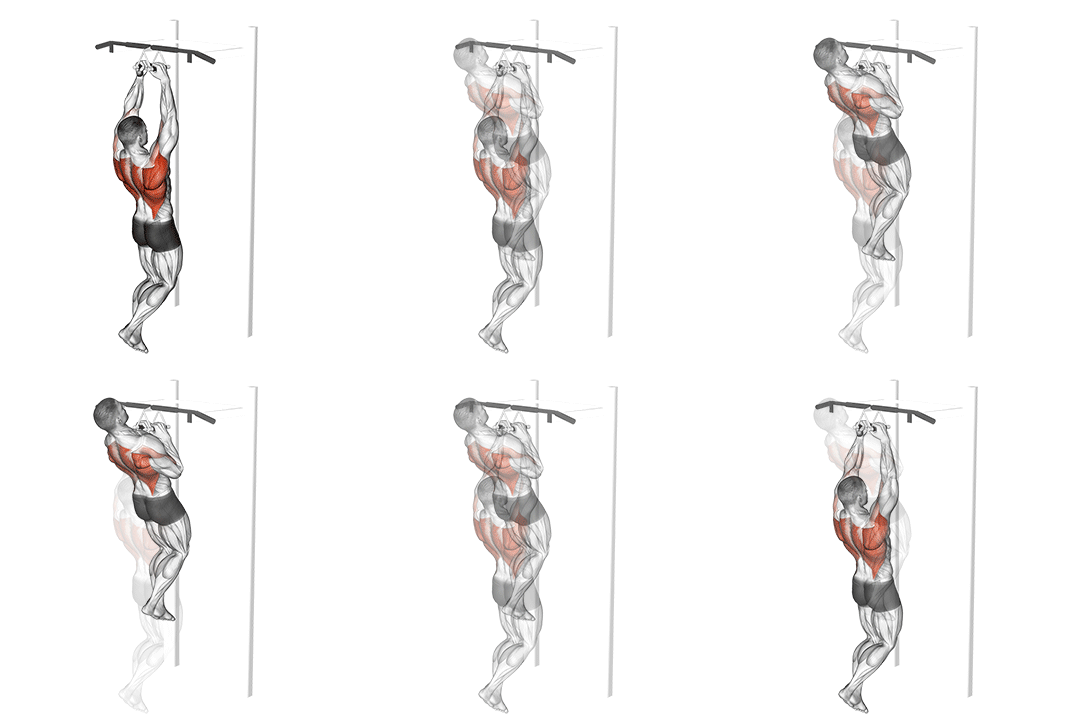
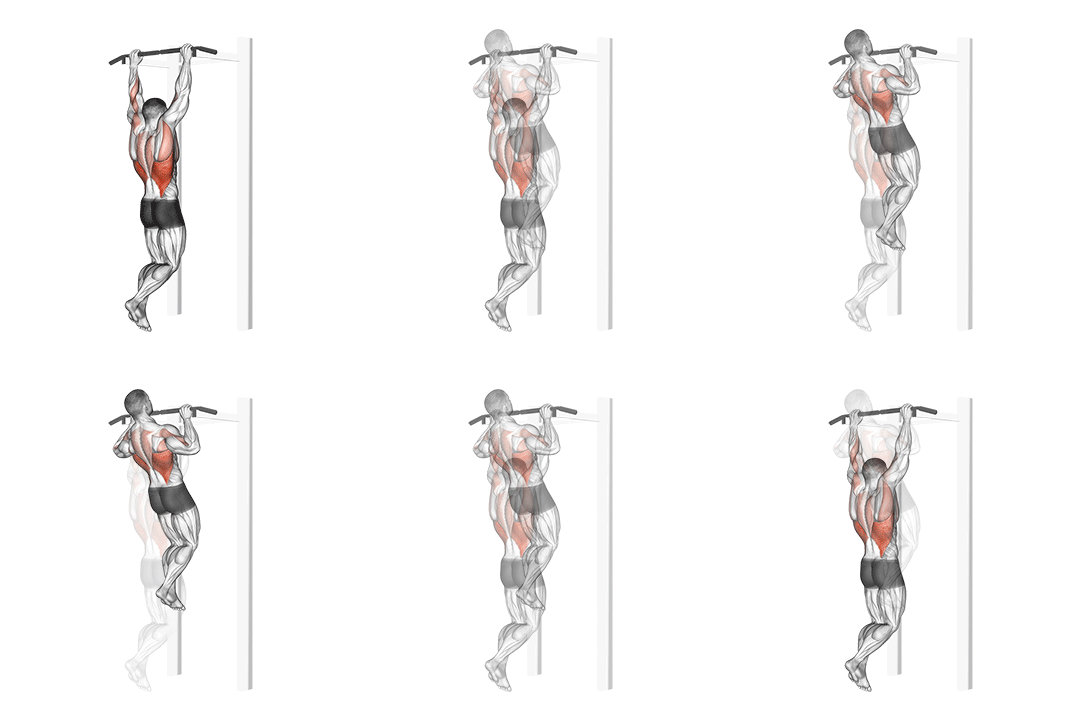
Bodyweight Squatting Row
intermediate strength exercise · body weight · targets upper back
- Body part
- back
- Primary target
- upper back
- Equipment
- body weight
- Difficulty
- intermediate
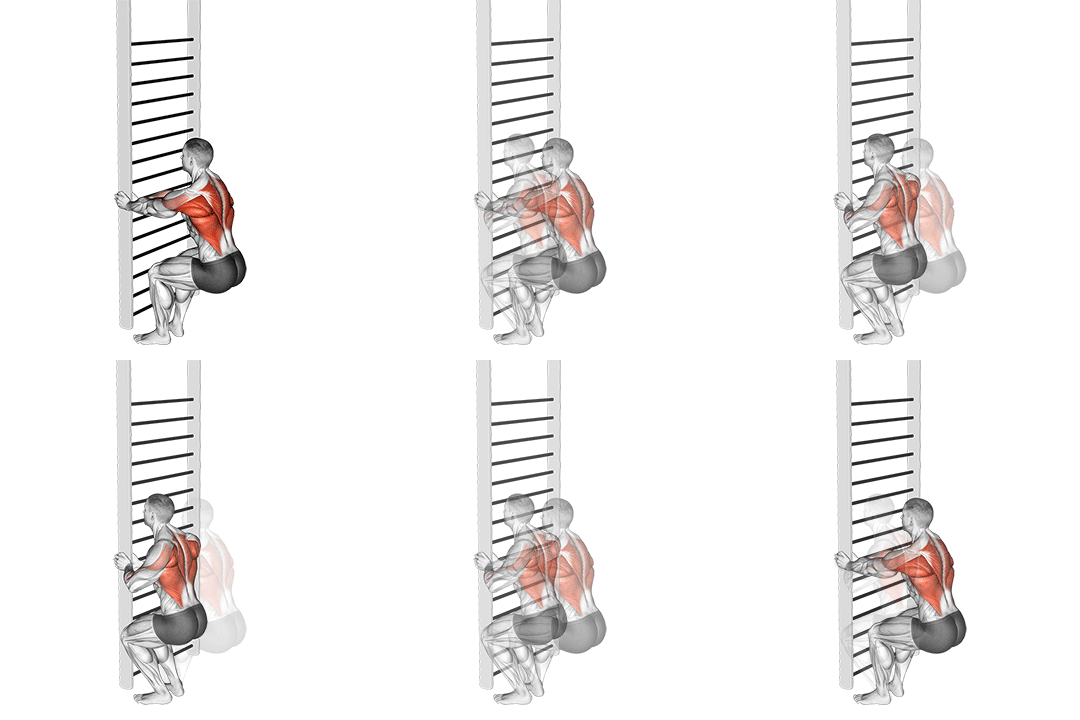
The bodyweight squatting row is an inverted row variation performed by gripping a sturdy object (a doorframe, pole, table edge, or low bar) and squatting your body down and back so the arms are extended, then pulling the body forward and up by squeezing the back muscles. The combination of hand position and squat stance creates a horizontal pulling exercise that requires no specialized equipment. It's an excellent choice for people who don't have access to a pull-up bar or low bar setup. While inverted rows on a barbell are the standard horizontal pulling exercise, the squatting row gives you a similar movement pattern using whatever sturdy object you can find. A sturdy doorframe, the edge of a kitchen counter, or even a strong railing all work. The intermediate difficulty level reflects the angle: with the body more vertical (because of the squatting position), the load on the arms is somewhat reduced compared to a horizontal inverted row. That makes it a useful stepping stone for trainees building toward harder rowing variations or for those who lack the equipment for the standard version.
Why train the Bodyweight Squatting Row?
- Provides horizontal pulling work without needing a barbell or low bar setup.
- Trains the lats, biceps, and middle back through a full range of motion.
- Adjustable difficulty by changing how vertical or horizontal the body is.
- Useful at home, in a hotel, or anywhere with a sturdy object to grip.
- Pairs well with vertical pulling (pull-ups, chin-ups) for complete back development.
- Safe and accessible for most fitness levels.
How to do the Bodyweight Squatting Row: step by step
- 1Stand with your feet shoulder-width apart, holding onto a sturdy object or suspension trainer with your arms extended.
- 2Lower your body into a squat position, keeping your back straight and your knees behind your toes.
- 3From the squat position, pull your body up towards the object or suspension trainer, squeezing your shoulder blades together.
- 4Pause for a moment at the top, then slowly lower your body back down to the starting position.
- 5Repeat for the desired number of repetitions.
Muscles worked
Primary
upper back
Secondary
biceps, shoulders
Common mistakes to avoid
Pulling with the arms instead of the back
If you focus on bending the elbows, you'll bias the biceps. Initiate every rep by squeezing the shoulder blades together first — this engages the lats and middle back, which are the primary targets.
Letting the hips sag during the pull
Some people let the body collapse at the hips during the row. Maintain a rigid plank-like body throughout — the entire body moves as one unit, hips and shoulders rising together.
Cutting depth at the top of the pull
Full range matters: arms fully extended at the bottom, chest near the gripped object at the top. Trainees who cut range build a partial pattern and miss the back contraction full range provides.
Choosing an unstable object to grip
If the object you grip wobbles, slides, or feels unsafe, the exercise becomes about not falling rather than training the back. Test the object's stability before loading body weight on it — if it shifts, find another option.
Going too fast for control
Whipping through reps using momentum reduces back work. Move slowly: 1-2 seconds up, brief pause at the top with the back squeezed, 1-2 seconds down. Quality of contraction matters more than rep count.
Easier and harder variations
Easier
Stand more vertical (closer to upright) to reduce the load on the arms. Or use a higher gripped object so the body is at a steeper angle.
Harder
Squat down further or use a lower gripped object so the body is more horizontal. Once that becomes manageable, try one-arm rows or progress to inverted rows on a low bar.
Alternative exercises
Inverted row (low bar)
Same horizontal pulling pattern with cleaner setup. Use this if you have access to a barbell or low bar.
Bodyweight squatting row with towel
Beginner version using a towel through a doorframe for grip. Easier to set up but less stable than a fixed object.
Suspension trainer row
Same exercise using TRX or rings. Adds an instability component that engages stabilizers more.
How to program the Bodyweight Squatting Row into your training
Bodyweight squatting rows work as the primary horizontal pulling exercise when you don't have access to a barbell or low bar. Sets and reps: 3-4 sets of 8-15 reps with 60-90 seconds rest. Total weekly volume of 50-100 reps drives most adaptations. In a balanced upper body session: 4 sets of 8 push-ups, 4 sets of 10 squatting rows, 3 sets of 8 chin-ups or pull-ups (if accessible), 3 sets of 30-second hollow holds. Done 2-3 times per week. For home programming without any bar, build a complete pulling routine: squatting rows as primary horizontal pulling, scapular pull-ups on a doorframe pull-up bar (or this exercise with high grip) for vertical pulling stimulus, banded pull-aparts for shoulder health. As a regression for trainees building toward inverted rows or pull-ups, programmed 3 times per week with progressive volume. Do not pair squatting rows with heavy deadlifts in the same session — the cumulative back load is excessive.
Recovery and frequency
Squatting rows recover similarly to other rowing variations — 48 hours between sessions is plenty. Forearms and grip take significant load due to the unconventional grip surfaces (towel, doorframe, etc.); forearm tightness after sessions is common and fades with consistent training. Grip stretches and forearm mobility work between sessions help. Standard recovery practices (sleep, hydration) cover the rest.
Frequently asked questions
How many sets and reps of bodyweight squatting rows should I do?
3-4 sets of 8-15 reps with 60-90 seconds rest. Total weekly volume of 50-100 reps drives most adaptations.
How often should I train the bodyweight squatting row?
2-3 times per week with 48 hours between sessions. The back recovers within 48 hours of moderate work.
Bodyweight squatting row vs inverted row: which is better?
Inverted row (on a barbell or low bar) is generally superior because the body can be more horizontal, increasing the load on the back. Squatting rows are the alternative when you don't have access to that equipment.
What can I grip for squatting rows at home?
Sturdy doorframes (test stability first), kitchen counter edges, sturdy table edges, strong handrails, tree branches outdoors. Avoid anything that could break or shift under your body weight.
Can I do squatting rows daily?
Not recommended at full volume. Daily moderate sets (1-2 sets of 10-15 reps) are fine as activation work, but full strength training sessions should be 2-3 times per week with recovery days between.
How do I know if I'm doing the row correctly?
You should feel the muscles between your shoulder blades and the lats working — not just the biceps. If you only feel the arms, focus on initiating from the shoulder blades (squeeze them together first) and check that the body stays rigid throughout the rep.
Useful tools for this exercise
Build a workout with the Bodyweight Squatting Row
Puna gives you guided bodyweight workouts you can do anywhere — no equipment, no gym, just structured progressions that build real strength.