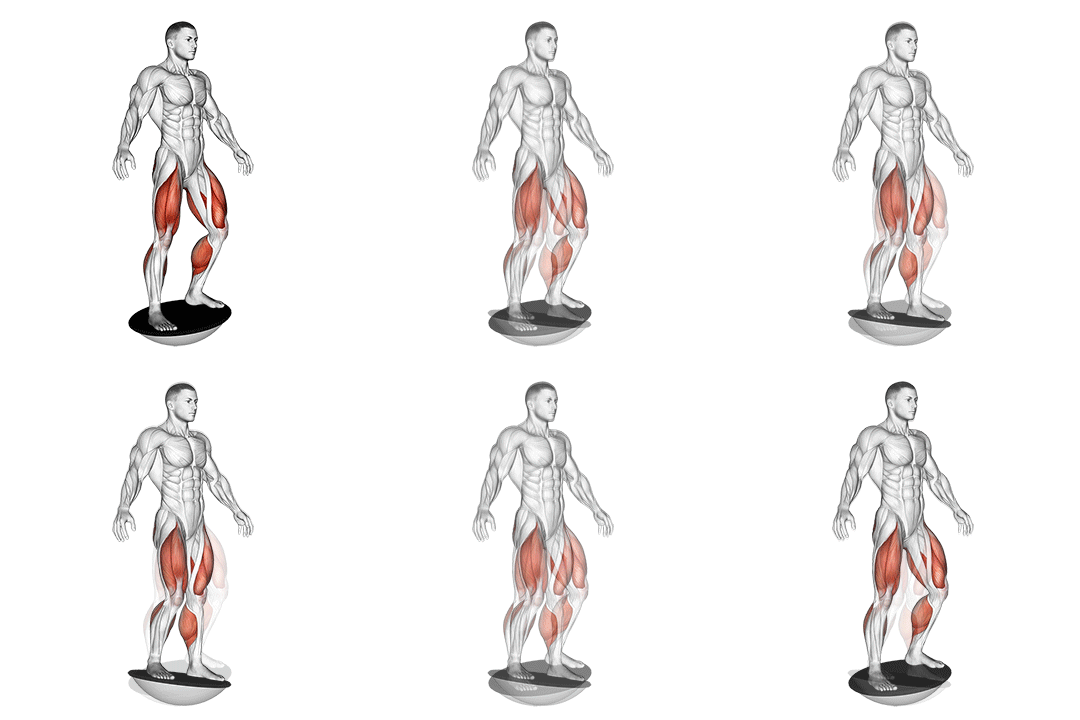
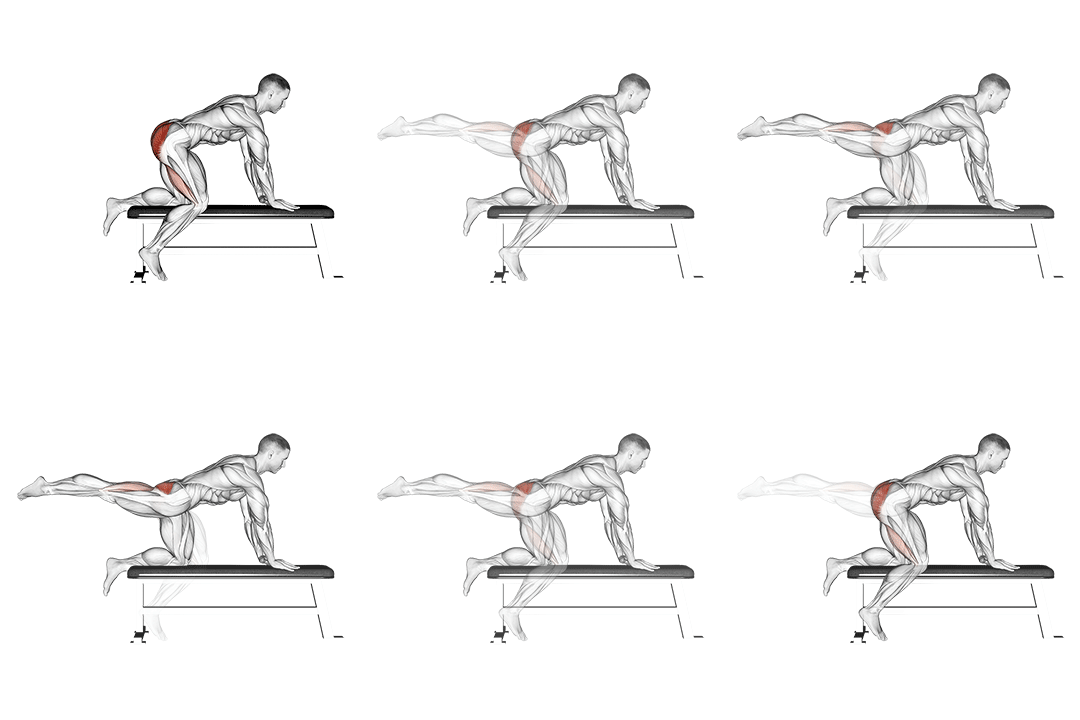
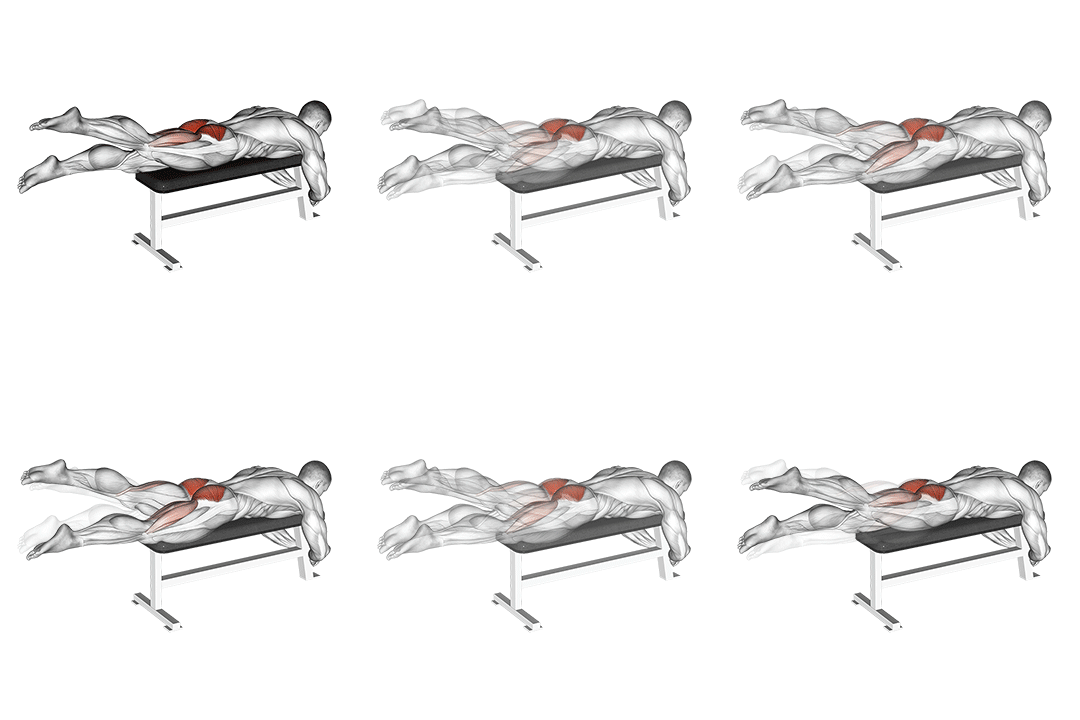
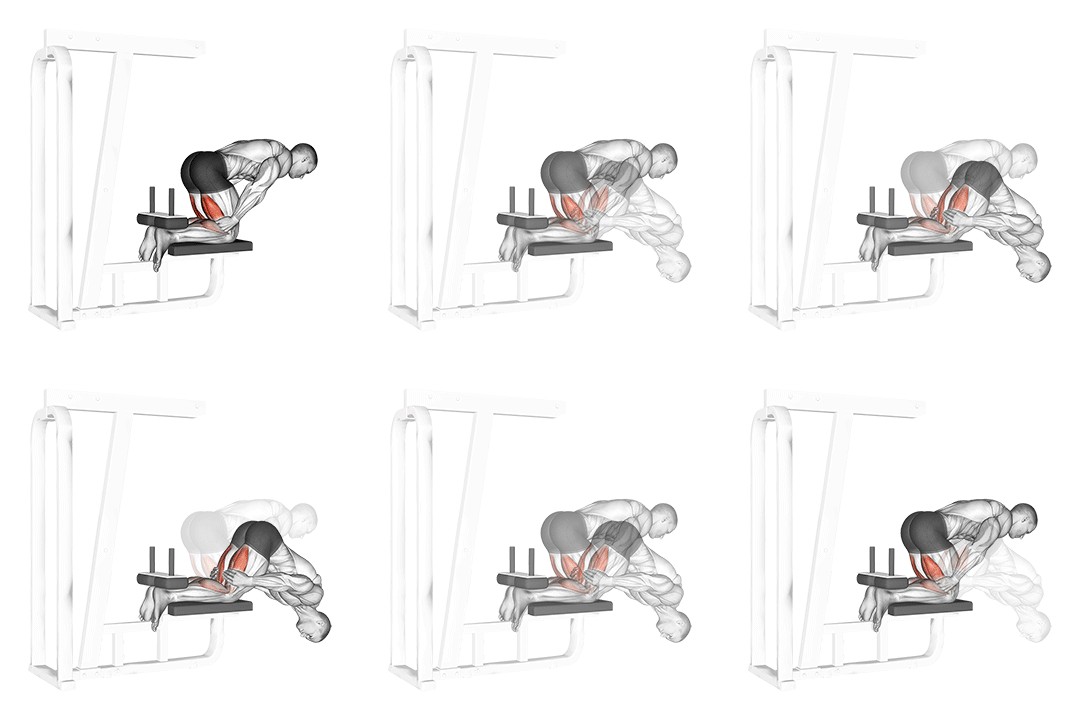
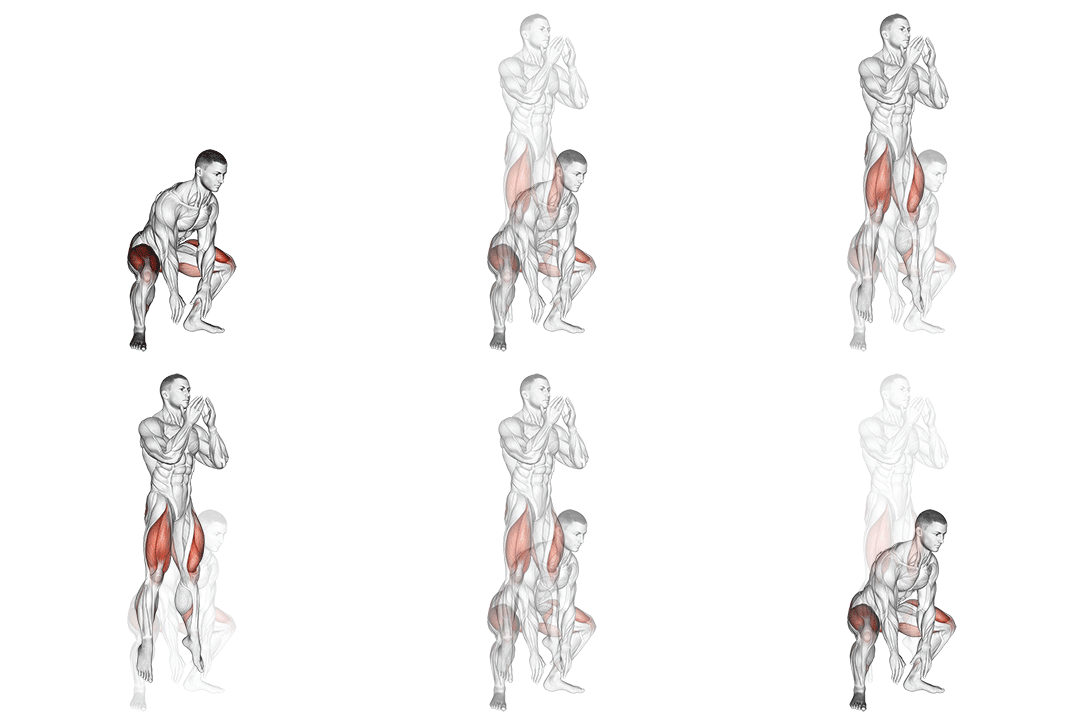
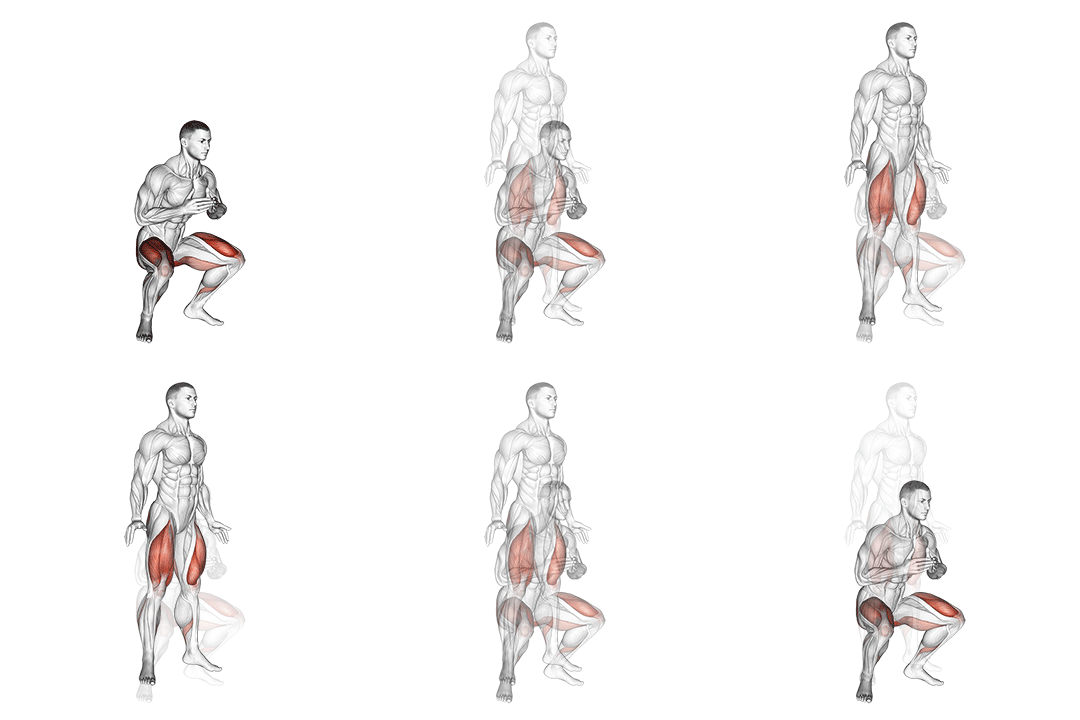
Bodyweight Drop Jump Squat
intermediate plyometrics exercise · body weight · targets glutes
- Body part
- upper legs
- Primary target
- glutes
- Equipment
- body weight
- Difficulty
- intermediate
The bodyweight drop jump squat is a plyometric exercise where you start standing on a low surface (a step or low box, typically 12-18 inches), drop down to the floor, and immediately explode into a jump squat. The drop pre-loads the legs with eccentric force from the descent, and the immediate jump trains the body to absorb and reuse that energy in the form of a powerful concentric contraction. This sequence — eccentric loading immediately followed by concentric explosion — is called the stretch-shortening cycle, and it's the underlying mechanism that produces most explosive athletic movements. Sprinting, jumping, throwing, and changing direction all rely on this cycle. Drop jump squats train it more directly than almost any other exercise. The trade-off is the joint stress. The drop loads the knees and ankles harder than a standard jump squat, and repeated reps accumulate force quickly. Most coaches limit drop jump volume to 30-40 reps per session, two sessions per week max, and only program them for athletes who already have a solid strength base. For general fitness, jump squats without the drop are usually plenty.
Why train the Bodyweight Drop Jump Squat?
- Trains the stretch-shortening cycle directly — the mechanism behind most explosive athletic movements.
- Improves vertical jump and short-distance sprint times more than non-drop jumping work.
- Builds reactive strength in the legs that transfers to sport.
- Quick to perform — full sessions take 10-15 minutes including warm-up.
- Requires only a low box or step.
- Provides clear progression: increase the drop height as strength and tendon resilience develop.
How to do the Bodyweight Drop Jump Squat: step by step
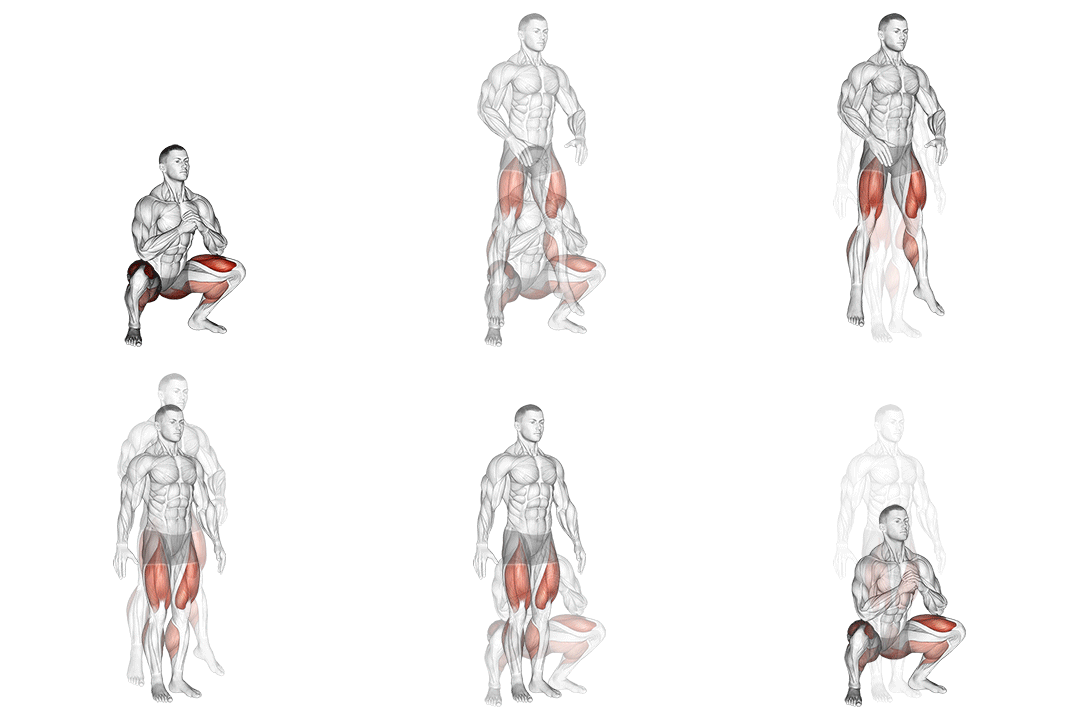
- 1Stand with your feet shoulder-width apart.
- 2Lower your body into a squat position by bending your knees and pushing your hips back.
- 3Jump up explosively, extending your hips, knees, and ankles.
- 4While in mid-air, quickly bring your feet together.
- 5Land softly on the balls of your feet and immediately drop back into a squat position.
- 6Repeat for the desired number of repetitions.
Muscles worked
Primary
glutes
Secondary
quadriceps, hamstrings, calves
Common mistakes to avoid
Pausing at the bottom of the drop
If you pause to gather yourself before jumping, you've broken the stretch-shortening cycle that makes the exercise valuable. The jump should follow the landing immediately — touch the floor and explode up.
Landing flat-footed and stiff-legged
Coming down with locked knees sends impact straight into the joints. Land on the balls of the feet first, then absorb through the knees and hips before the immediate explosive jump.
Choosing too high a drop box
Excessive drop height increases impact without proportionally increasing the training benefit. Start with a 12-inch box and stay there for several weeks before progressing. Most athletes never need to go above 24 inches.
Doing too many reps per session
Drop jump volume should stay low — typically 20-40 quality reps per session. Going beyond that fatigues the central nervous system and degrades reactive quality. Stop the workout when the bounce starts feeling slow.
Programming them without a strength base
Drop jumps assume you can already squat your own body weight cleanly and jump well. Without that base, the joint stress isn't matched by adequate tissue tolerance. Build strength first, then add drop jumps.
Easier and harder variations
Easier
Standard jump squats (no drop) — same explosive jump without the eccentric pre-load. Or drop landings only (no jump) — practice absorbing the drop softly before adding the explosive return.
Harder
Increase the drop height (max 24 inches for most athletes). Add a tuck (knees to chest at the top of each jump). Or progress to depth jumps with a target (jump onto a higher box after the drop).
Alternative exercises
Box jump
Jump onto a higher box from a stationary start. Trains explosive power without the impact of drop landings. Safer for beginners.
Jump squat
Standard jump squat without the drop. Lower joint stress, trains less of the stretch-shortening cycle.
Depth jump
Drop from a box and jump onto a second box. Higher demand than drop jump squat. Reserved for advanced athletes.
How to program the Bodyweight Drop Jump Squat into your training
Drop jump squats are advanced plyometric training. Program them with respect for the joint and CNS load. Sets and reps: 3-4 sets of 5-8 reps with 90-120 seconds full rest between sets. Full rest matters — power training requires fresh nervous system on every rep. Total weekly volume of 30-40 quality reps. In a power session: drop jump squats first (when fresh), then heavier strength work (loaded squats), then accessory work. Power before strength is the right order. For athletic populations: 1-2 sessions per week of drop jump squats, programmed in 3-6 week blocks within a larger periodized strength program. Combine with other plyometric variety (broad jumps, bounds, lateral jumps) for complete reactive strength development. Do not program drop jumps on consecutive days. Tendon recovery from this kind of load takes 48-72 hours. For general fitness trainees, drop jump squats are usually unnecessary. Standard jump squats and box jumps cover most of the benefit with less joint stress. Use drop jumps only if you have a sport-specific reason.
Recovery and frequency
Drop jump squats are demanding on knees, ankles, and the central nervous system. 48-72 hours between sessions is the right cadence; more frequent training leads to patellar tendinopathy or Achilles issues within weeks. Quad and calf soreness is normal in the first 2 weeks. Sharp knee pain — particularly under or around the kneecap — is a stop signal. Address with rest, mobility work, and form review before continuing. Daily calf and ankle mobility help the tissues handle repeated impact.
Frequently asked questions
How many sets and reps of drop jump squats should I do?
3-4 sets of 5-8 reps with 90-120 seconds full rest. Total weekly volume of 30-40 quality reps. Stop when bounce quality drops.
How often should I train the drop jump squat?
1-2 times per week with at least 48-72 hours between sessions. The joint and CNS demand requires recovery.
Drop jump vs jump squat: which is better?
Different tools. Drop jumps train the stretch-shortening cycle more directly. Jump squats train explosive concentric power without the impact. For sport-specific power, drop jumps are superior; for general fitness, jump squats are sufficient.
What height should the drop box be?
Start at 12 inches and stay there for 3-4 weeks before increasing. Most athletes never need to go above 24 inches — higher boxes increase impact without proportional training benefit.
Are drop jumps safe?
For trained athletes with a strength base and good landing mechanics, yes. For untrained or deconditioned trainees, no — joint and tendon issues develop quickly. Build strength and basic jumping skill first.
Will drop jump squats improve my vertical jump?
Yes — they're one of the most effective ways to train reactive vertical jump power. Combined with heavy squat work, most athletes see noticeable vertical jump gains in 6-12 weeks of consistent training.
Useful tools for this exercise
Build a workout with the Bodyweight Drop Jump Squat
Puna gives you guided bodyweight workouts you can do anywhere — no equipment, no gym, just structured progressions that build real strength.