Bench Pull-ups
beginner strength exercise · body weight · targets lats
- Body part
- back
- Primary target
- lats
- Equipment
- body weight
- Difficulty
- beginner
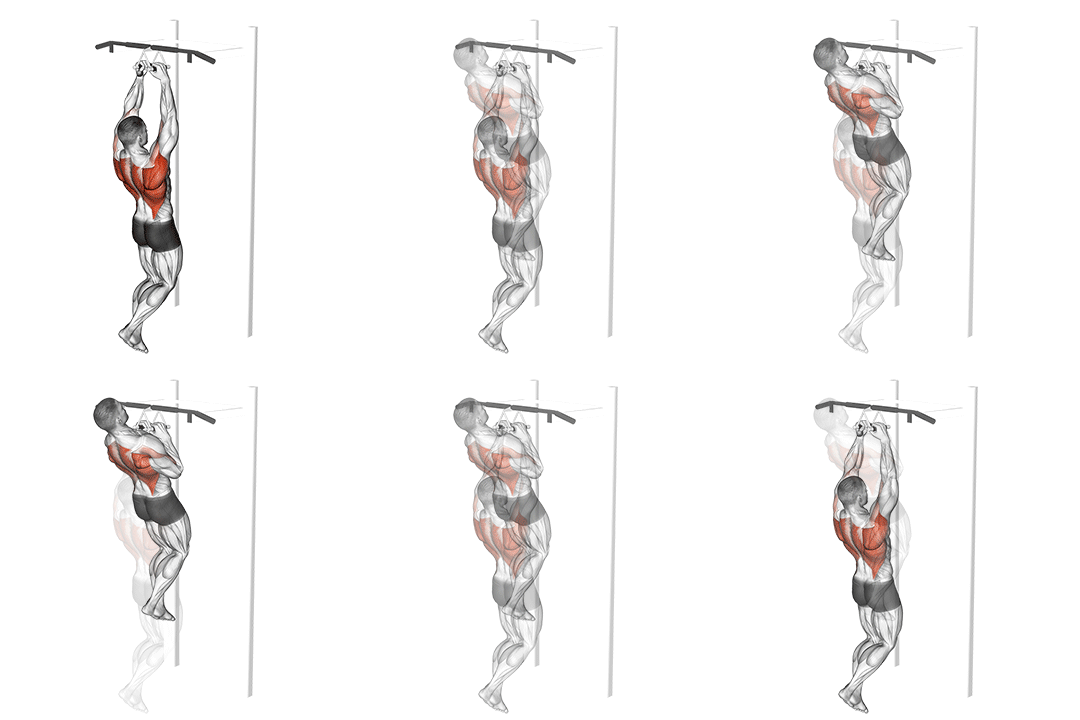
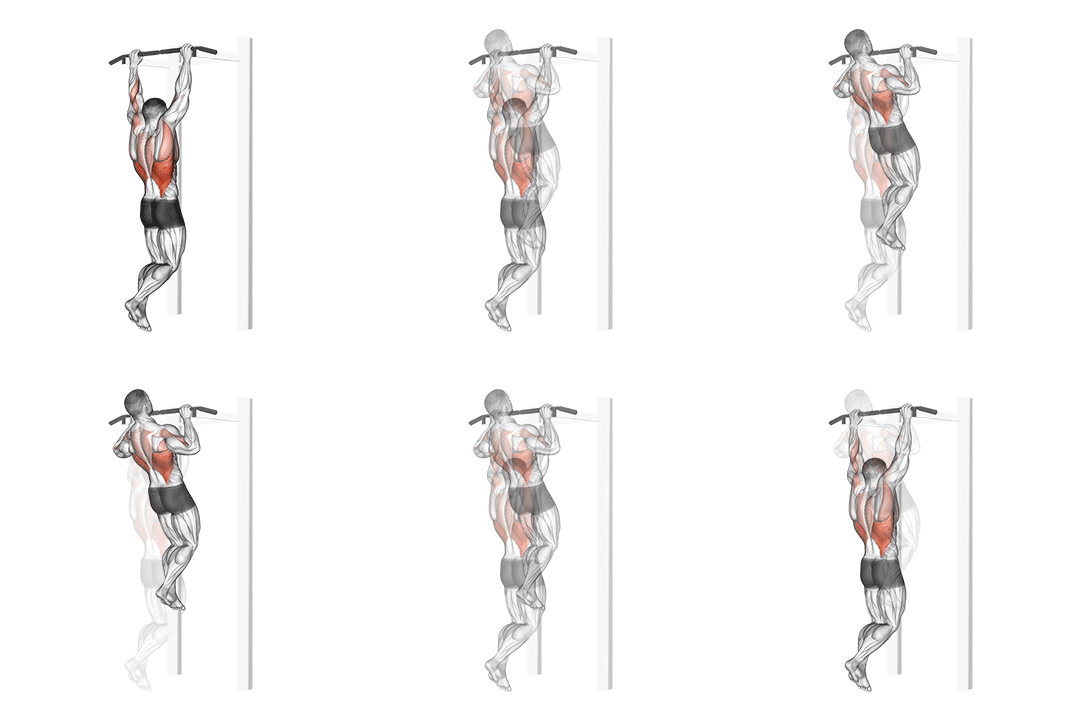
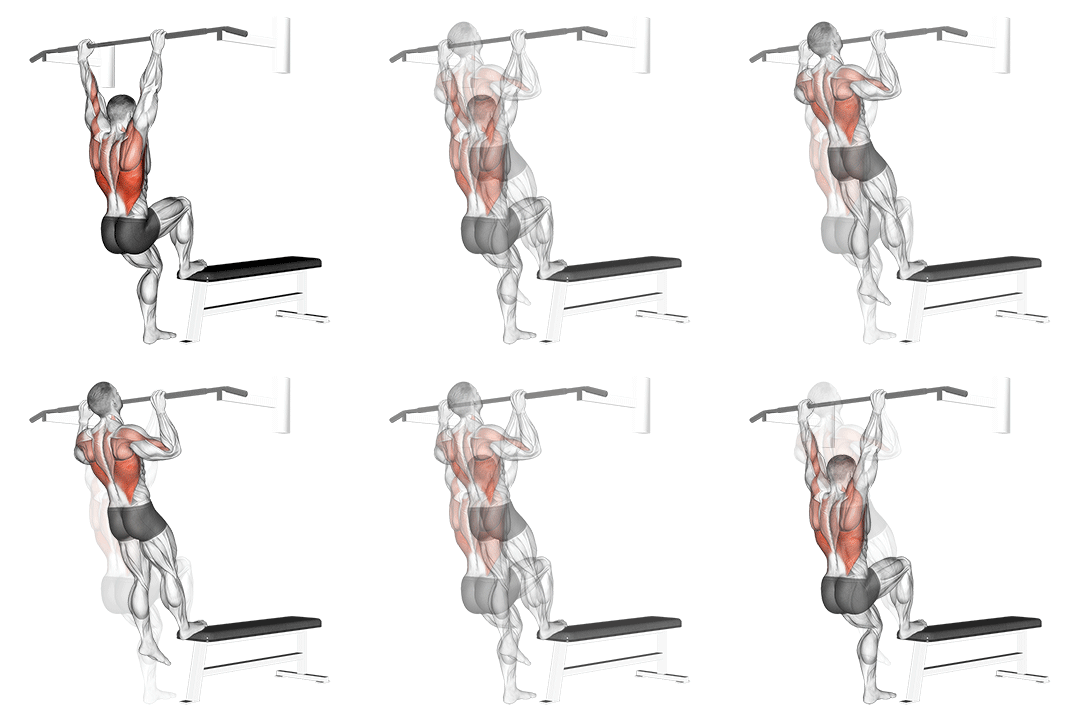
The bench pull-up is a regression of the standard pull-up performed with the feet supported on a bench or chair, reducing the body weight the arms have to pull. From a hanging position with feet on the elevated surface, you pull yourself up until the chin clears the bar, then lower under control. The supported feet take 30-60% of body weight off the upper body, depending on how much you push through them, making the exercise accessible to almost anyone working toward a strict pull-up. This is one of the most useful regressions in the pull-up family because the load can be self-adjusted on every rep. Push hard through the feet and the exercise becomes very light; barely touch the feet down and it approaches a full pull-up in difficulty. That self-regulation lets you find exactly the right level of challenge as you build strength over weeks. The alternative regressions — banded pull-ups and assisted pull-up machines — both work, but banded pull-ups overassist at the bottom and underassist at the top (where most people struggle most), while assisted machines aren't accessible at home. Bench pull-ups solve both problems with nothing but a bar and a chair, making them the right starting point for most people working toward their first strict pull-up.
Why train the Bench Pull-ups?
- Provides scalable assistance for the pull-up — easy to adjust by changing how much you push through the feet.
- Trains the same muscles as a strict pull-up (lats, biceps, forearms) at reduced load.
- More accessible than band-assisted variations, which over- and under-assist depending on position.
- Requires only a bar and a bench or chair — works in any home gym setup.
- Self-regulation makes it usable for years as you progress from heavy assistance to minimal assistance.
- Builds the grip and shoulder readiness needed for full pull-ups with less wrist and elbow stress.
How to do the Bench Pull-ups: step by step
- 1Position yourself under a bar or a sturdy horizontal surface that is at chest height.
- 2Grab the bar or surface with an overhand grip, slightly wider than shoulder-width apart.
- 3Hang with your arms fully extended and your body straight.
- 4Pull your chest towards the bar or surface by squeezing your shoulder blades together and bending your elbows.
- 5Continue pulling until your chin is above the bar or surface.
- 6Lower yourself back down to the starting position with control.
- 7Repeat for the desired number of repetitions.
Muscles worked
Primary
lats
Secondary
biceps, forearms
Common mistakes to avoid
Pushing too hard through the feet on every rep
If you push hard enough that the feet do most of the work, the exercise becomes a leg drive with arm assistance. Push only as much as needed to make the rep possible — then push less on the next rep as strength improves.
Bouncing through reps using leg drive
Some trainees use the legs to power through the bottom of every rep. This is a kipping pattern that doesn't build strict pulling strength. Move slowly: 1-2 seconds up, brief pause, 1-2 seconds down, with the arms doing as much as possible.
Setting the bench too far away
If the bench is too far from the bar, you can't comfortably reach with the feet, and the angle becomes awkward. Position the bench close enough that the feet rest comfortably under the body in the hanging position.
Cutting depth at the top or bottom
Full range matters: arms fully extended at the bottom, chin clearing the bar at the top. Trainees who cut range to inflate rep counts build a partial pattern and miss the strength full range develops.
Using the same level of foot support for months
Bench pull-ups should get progressively less assisted over weeks as you build strength. If you're using the same amount of foot push at week 12 as week 1, you're not actually progressing toward a strict pull-up.
Easier and harder variations
Easier
Push more aggressively through the feet to take more body weight off the arms. Or use a higher bench or step (closer to standing height) for even more assistance.
Harder
Push less through the feet — eventually just touch them down for balance, not propulsion. Then progress to negatives (jump or step to the top, lower slowly), then to your first strict pull-up.
Alternative exercises
Negative pull-up
Jump or step to the top position, then lower slowly for 5-10 seconds. Builds pulling strength faster than most assisted variations once you have basic strength.
Banded pull-up
Resistance band looped around the bar with one foot in it for assistance. Works but over-assists at the bottom of the rep.
Inverted row
Body horizontal under a bar with feet on the floor. Trains pulling pattern at much lower load than even bench pull-ups — useful for absolute beginners.
How to program the Bench Pull-ups into your training
Bench pull-ups work as the primary pulling exercise during the weeks or months you're working toward your first strict pull-up. Sets and reps: 3-4 sets of 5-10 reps with 90-120 seconds rest, 3 sessions per week. Progress by reducing the foot-push assistance over weeks, not by chasing higher rep counts. Combined pull-up progression session: 4 sets of 8 bench pull-ups, 3 sets of 30-60 second dead hangs, 3 sets of 3-5 second negative pull-ups (jump up, lower slowly), 3 sets of 5-8 inverted rows. Done 2-3 times per week. Most trainees reach their first strict pull-up within 8-16 weeks of this kind of focused progression. For trainees who can already do 1-3 strict pull-ups, bench pull-ups remain useful as volume work — perform strict pull-ups first (when fresh), then finish with bench pull-ups for additional volume. Pair bench pull-ups with horizontal pulling (rows) and pressing work for balanced upper body development. A complete session: 3 sets of 8-10 push-ups, 4 sets of 6 bench pull-ups, 3 sets of 8-10 inverted rows, 3 sets of 30-second hollow holds. Progression test: every 4 weeks, try a strict pull-up (no foot assistance). When you can do at least 3 strict reps, transition to strict pull-up programming with bench pull-ups as the secondary volume work.
Recovery and frequency
Bench pull-ups have lower recovery cost than full pull-ups due to the reduced load — 48 hours between sessions is generally enough. Forearms and grip take more load than the lats during early bench pull-up work, so forearm tightness is the most common feedback after sessions. Wrist circles and grip stretches help. Sleep, hydration, and standard recovery practices cover everything else.
Frequently asked questions
How many sets and reps of bench pull-ups should I do?
3-4 sets of 5-10 reps with 90-120 seconds rest. Progress by reducing foot-push assistance over weeks rather than chasing rep counts.
How often should I train the bench pull-up?
2-3 times per week with 48 hours between sessions. The reduced load allows higher session frequency than strict pull-ups.
How long until I can do a strict pull-up using bench pull-ups?
Most beginners reach their first strict pull-up in 8-16 weeks of consistent bench pull-up training combined with negatives and dead hangs. Lighter, leaner trainees usually progress faster.
Bench pull-ups vs band-assisted pull-ups: which is better?
Bench pull-ups give more even assistance throughout the rep and are easier to self-regulate (push less as you get stronger). Band-assisted pull-ups over-assist at the bottom and under-assist at the top, where most people struggle.
Should I use both feet on the bench or just one?
Both feet at first — it's easier to balance and self-regulate. As you get stronger, try just one foot, then no feet (just hovering) for periods of each rep.
Why don't I feel my back working during bench pull-ups?
Likely because you're pulling with the arms instead of initiating from the lats. Before each rep, pack the shoulders down (drive them away from the ears) — this engages the lats. The pull should feel like the elbows are driving down, not the hands pulling up.
Useful tools for this exercise
Build a workout with the Bench Pull-ups
Puna gives you guided bodyweight workouts you can do anywhere — no equipment, no gym, just structured progressions that build real strength.