Bear Crawl
intermediate cardio exercise · body weight · targets cardiovascular system
- Body part
- cardio
- Primary target
- cardiovascular system
- Equipment
- body weight
- Difficulty
- intermediate
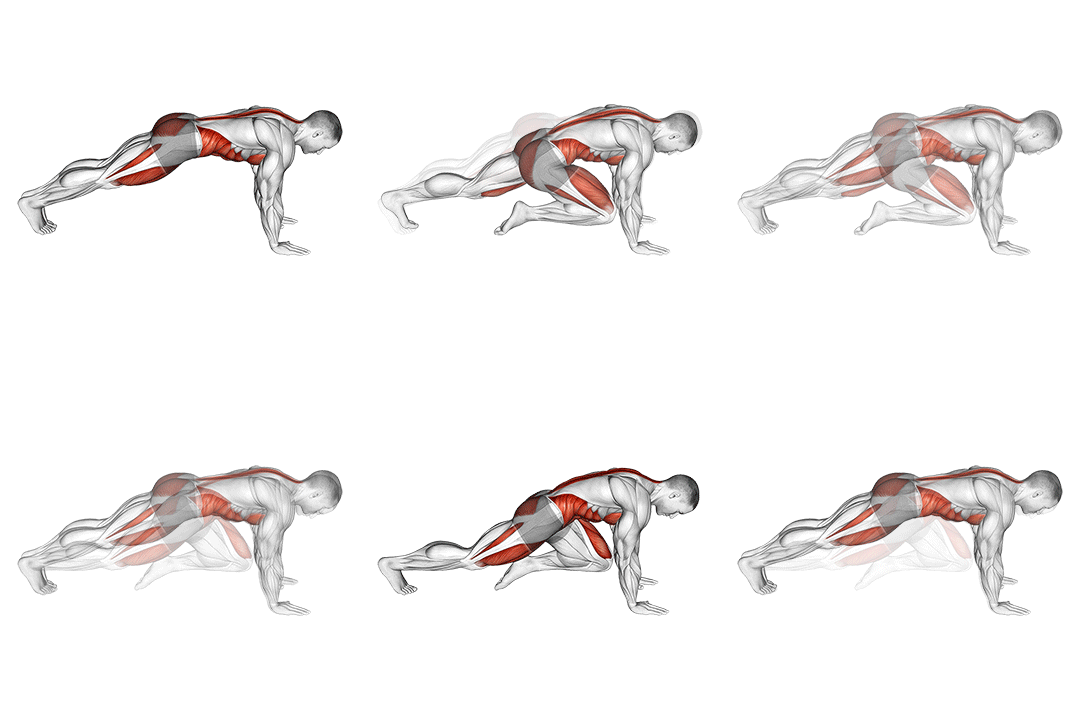
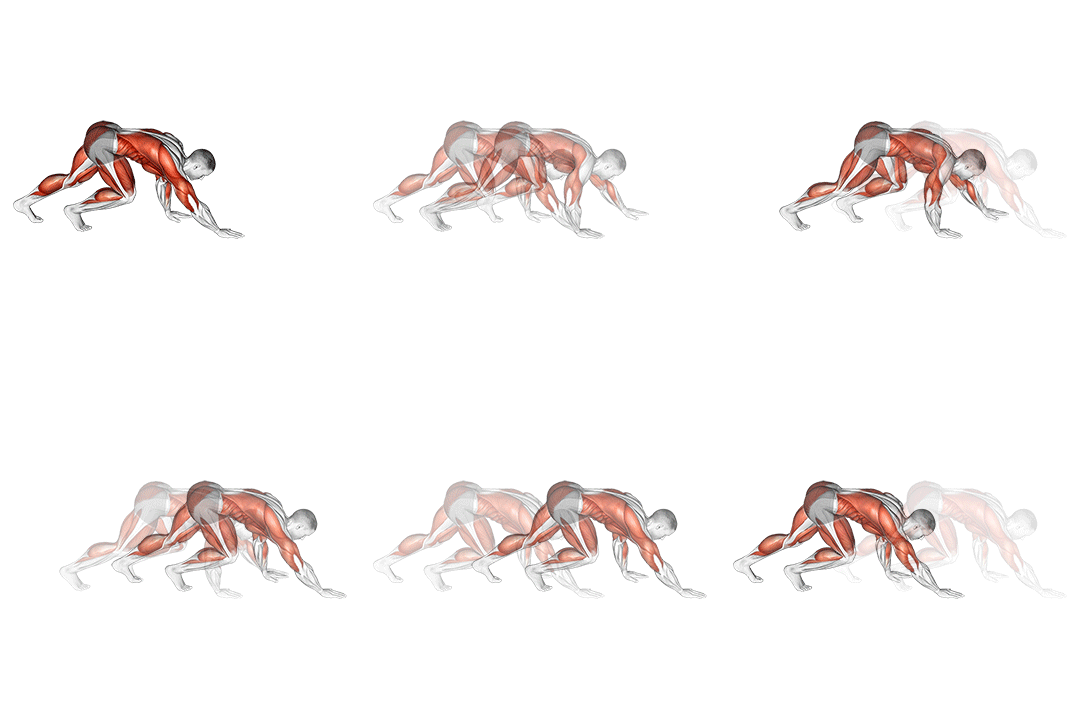
The bear crawl is one of the most underrated full-body conditioning exercises in bodyweight training. From a hands-and-knees position with the knees lifted slightly off the ground, you crawl forward by alternating opposite hand and foot — right hand and left foot together, then left hand and right foot. The continuous quadruped motion engages virtually every major muscle group simultaneously: shoulders, triceps, core, hip flexors, quads, calves. Few bodyweight exercises produce as much full-body stimulus per minute. The origin of bear crawls in serious training comes from gymnastics and military conditioning, where the pattern serves as both warm-up and conditioning work. The cross-body coordination (opposite hand and foot moving together) reinforces the locomotor pattern that walking and running rest on, which is why physical therapists use bear crawls in rehabilitation for trainees recovering from neurological issues or coordination problems. For general fitness, the value is more about the cardio and core demand than the coordination training. What makes bear crawls particularly valuable is the time efficiency. 30-60 seconds of continuous bear crawling produces serious heart rate elevation and engages the core in ways planks alone can't match. For trainees with limited time and no equipment, bear crawls fit into almost any program — as warm-up, finisher, conditioning circuit, or main cardio drill. The trade-off is the wrist demand; supporting bodyweight on hands repeatedly stresses the wrists, especially for trainees who haven't built up wrist tolerance through other bodyweight work. Programmed thoughtfully with adequate wrist preparation, bear crawls are one of the most effective bodyweight conditioning tools available.
Why train the Bear Crawl?
- Engages full-body musculature simultaneously — shoulders, core, hips, and legs in one motion.
- Spikes heart rate quickly for time-efficient cardiovascular conditioning.
- Builds severe core endurance through the constant bracing required to support the lifted-knee position.
- Trains cross-body coordination, which has neurological benefits beyond pure fitness.
- Develops wrist and shoulder stability under sustained loading.
- Requires no equipment — usable in any space large enough to crawl in.
How to do the Bear Crawl: step by step
- 1Start on all fours with your hands directly under your shoulders and your knees directly under your hips.
- 2Lift your knees slightly off the ground, keeping your back flat and your core engaged.
- 3Move your right hand and left foot forward simultaneously, followed by your left hand and right foot.
- 4Continue crawling forward, alternating your hand and foot movements.
- 5Maintain a steady pace and keep your core tight throughout the exercise.
- 6Continue for the desired distance or time.
Muscles worked
Primary
cardiovascular system
Secondary
core, shoulders, triceps
Common mistakes to avoid
Letting the hips rise too high
When the hips lift up like a downward dog, the load shifts away from the core and the exercise becomes much easier (and less productive). Keep the hips low — back roughly parallel to the floor. The flat back is what creates the brutal core demand.
Letting the knees drop to the floor
The knees should hover 1-2 inches off the floor throughout — not touch down between steps. If knees drop, the core unloads and the exercise becomes a quadruped crawl rather than a bear crawl. The constant low hover is the source of the demand.
Moving same-side hand and foot together
The pattern is opposite-side: right hand with left foot, then left hand with right foot. Same-side movement is awkward and breaks the natural cross-body coordination. If you find yourself moving same-side, slow down dramatically and rebuild the pattern from a controlled crawl.
Moving too fast at the start
Bear crawls are deceptively demanding. The first sets should be moderate pace, focused on form and breathing. Speed comes after the pattern is grooved; rushing the early sets produces messy reps that feel like nothing accomplished.
Skipping wrist preparation
Bear crawls load the wrists significantly. Going into sets cold dramatically increases wrist strain risk. 1-2 minutes of wrist circles, prayer stretches, and gentle wrist push-ups before sets pays off in injury prevention.
Easier and harder variations
Easier
Drop the knees to the floor (transforming this into a basic quadruped crawl) — the load on the core and wrists drops substantially, making the pattern accessible to beginners. Or reduce the speed to deliberate crawling, focusing on form rather than cardio intensity.
Harder
Increase pace to maximum sustainable speed for 30-60 second intervals. Or progress to backward bear crawls (more challenging coordination), lateral bear crawls (sideways movement), or weighted bear crawls with a vest. For maximum challenge, perform with explosive movement (bear crawl bounds).
Alternative exercises
Plank to elbow plank
Static core endurance work. Different stimulus (isometric vs. dynamic) but trains similar core control. Pair with bear crawls for compound core training.
Mountain climbers
Stationary alternative with similar cardio demand. Useful when space is limited or when consistent crawl-distance isn't available.
Crab walk
Quadruped position facing up rather than down. Different muscle emphasis (more posterior chain) but similar full-body conditioning principle.
How to program the Bear Crawl into your training
Bear crawls work as cardio conditioning, full-body warm-up, or core finisher work. The intensity makes them flexible across many programming contexts. As cardio intervals: 30-45 seconds of bear crawling, 30 seconds of rest, 6-10 rounds. Total session: 8-15 minutes. This produces excellent full-body cardiovascular conditioning with bodyweight only. As a warm-up: 30-60 seconds of moderate-pace bear crawling before strength training. The full-body activation prepares the shoulders, core, and hips simultaneously, replacing several individual warm-up drills. As a core finisher: 2-3 sets of 30-45 seconds at the end of upper-body or core sessions. The brutal core demand finishes the abs effectively after primary work. In a circuit: 30 seconds bear crawl, 30 seconds push-ups, 30 seconds squats, 30 seconds rest. Repeat 4-6 times for a 12-18 minute full-body session. Frequency: 2-3 times per week is appropriate for primary use. As warm-ups, daily is fine. The main limiting factor is wrist accumulation; if wrists feel tweaky, reduce frequency. For athletes: bear crawls fit well into agility and conditioning training. The cross-body coordination has carryover to most sport contexts. For general fitness: as warm-up or in HIIT circuits. Less commonly used as a main cardio choice unless variety is the goal. Don't program bear crawls daily at high volume — the wrist load accumulates faster than expected. Pair with daily wrist mobility work to maintain joint health.
Recovery and frequency
Bear crawls recover within 24-48 hours when programmed at moderate volume. Higher-intensity HIIT sessions need 48-72 hours. The main warning signs are wrist soreness (especially at the heel of the hand), shoulder fatigue, and lower back tightness from poor hip position. Wrist soreness usually means too much volume too soon — reduce frequency and add wrist preparation. Shoulder fatigue is normal in early sessions and improves with practice. Lower back tightness suggests the hips were dropping too low; review the flat-back cue. Long-term, regular bear crawl training requires daily wrist mobility (2-5 minutes of circles, prayer stretches, gentle eccentric work) to maintain wrist tolerance. Standard recovery practices — sleep, hydration, protein intake — apply.
Frequently asked questions
How long should I bear crawl for?
30-60 seconds per set, 6-10 sets per session. Total session of 8-15 minutes provides excellent cardio and core stimulus. Longer continuous sessions are possible but rarely necessary for the training benefit.
How often should I do bear crawls?
2-3 times per week as primary work, daily as warm-ups. The main limiting factor is wrist tolerance; if wrists feel sore, reduce frequency.
Are bear crawls a good cardio?
Yes — bear crawls produce serious heart rate elevation in short time frames, alongside meaningful core and full-body conditioning. They're particularly time-efficient for trainees with limited training windows.
Will bear crawls hurt my wrists?
They can if you build volume too fast or skip wrist preparation. With consistent wrist mobility work and gradual volume progression, most trainees develop wrist resilience rather than pain. The 2-5 minutes of daily wrist work is non-negotiable for serious bear crawl training.
What's the difference between bear crawl and crawling normally?
The lifted-knee position is the key difference. Standard crawling has the knees on the ground, which is gentler. Bear crawls keep the knees hovering 1-2 inches off the ground, which loads the core continuously throughout the movement.
How fast should I bear crawl?
Depends on goal. For cardio HIIT, fast pace (35-45 seconds for the duration). For warm-up, moderate pace. For core focus, slower deliberate pace with longer sets. The pattern works at any speed; intensity shifts the stimulus.
Useful tools for this exercise
Build a workout with the Bear Crawl
Puna gives you guided bodyweight workouts you can do anywhere — no equipment, no gym, just structured progressions that build real strength.