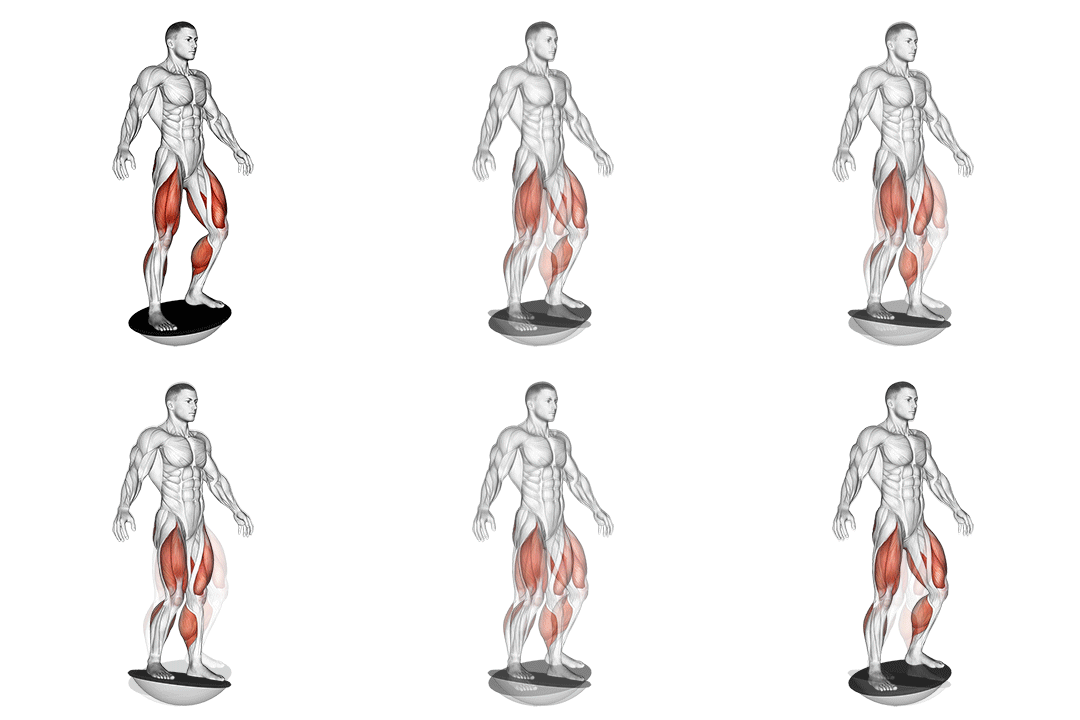
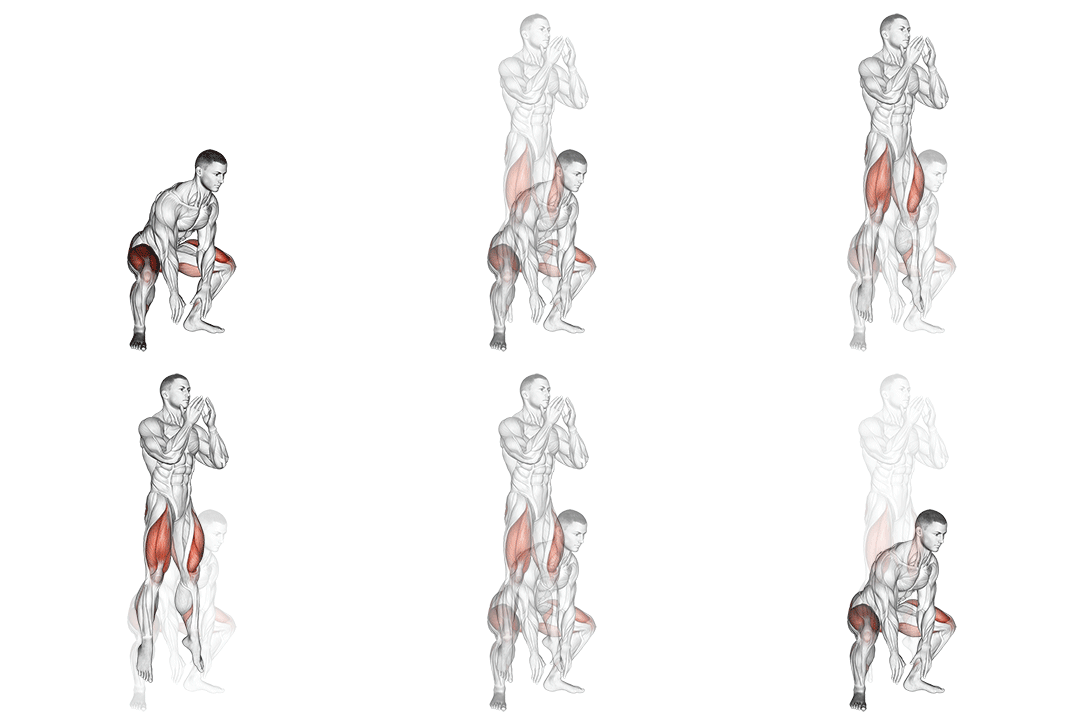
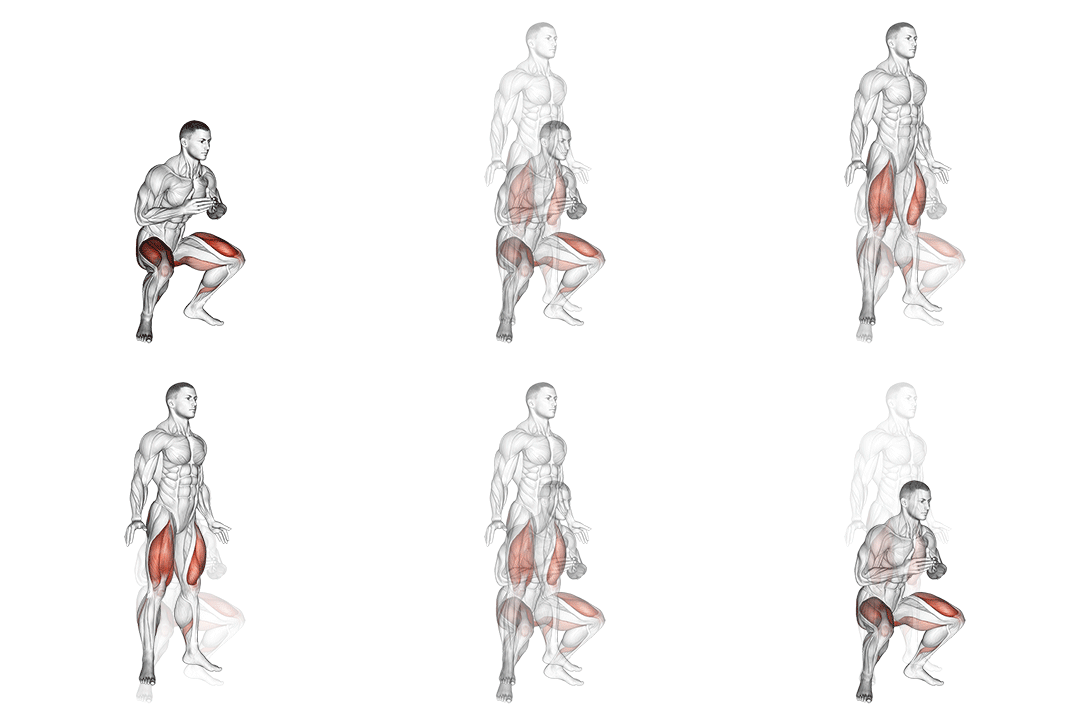
Backward Jump
intermediate plyometrics exercise · body weight · targets quads
- Body part
- upper legs
- Primary target
- quads
- Equipment
- body weight
- Difficulty
- intermediate
The backward jump is a plyometric exercise performed by jumping explosively backward from a standing position, landing softly with bent knees. Unlike the more familiar forward jump (which trains horizontal power in the direction athletes typically run), the backward jump trains explosive force production in the opposite direction — relevant for athletes who decelerate or move backward in sport (defenders in basketball, rugby, soccer) and for general athletic conditioning that addresses both directions of movement. This variation is less commonly programmed than forward jumps, partly because most athletic contexts emphasize forward movement. But for athletes who need to move backward under control (defensive positions, certain combat scenarios), the backward jump trains specific motor patterns that forward-only training neglects. Even for general fitness trainees, alternating forward and backward jump work develops more complete athletic movement vocabulary. The trade-off is the technical complexity and increased fall risk. Backward jumps require significant proprioceptive awareness — you can't see where you're landing. Trainees must commit to the motion confidently while maintaining body control. For those with appropriate space and willingness to learn the pattern carefully, backward jumps add useful variety to plyometric programming. The exercise also addresses balance and proprioception in a way forward jumps don't fully replicate.
Why train the Backward Jump?
- Builds explosive backward power for sports requiring backward movement.
- Trains proprioception by requiring confident movement without visual feedback.
- Addresses the kinetic chain in the opposite direction from typical forward training.
- Develops the deceleration capacity needed for athletic direction changes.
- Provides variety in plyometric programming.
- Carries over to defensive sport scenarios.
How to do the Backward Jump: step by step
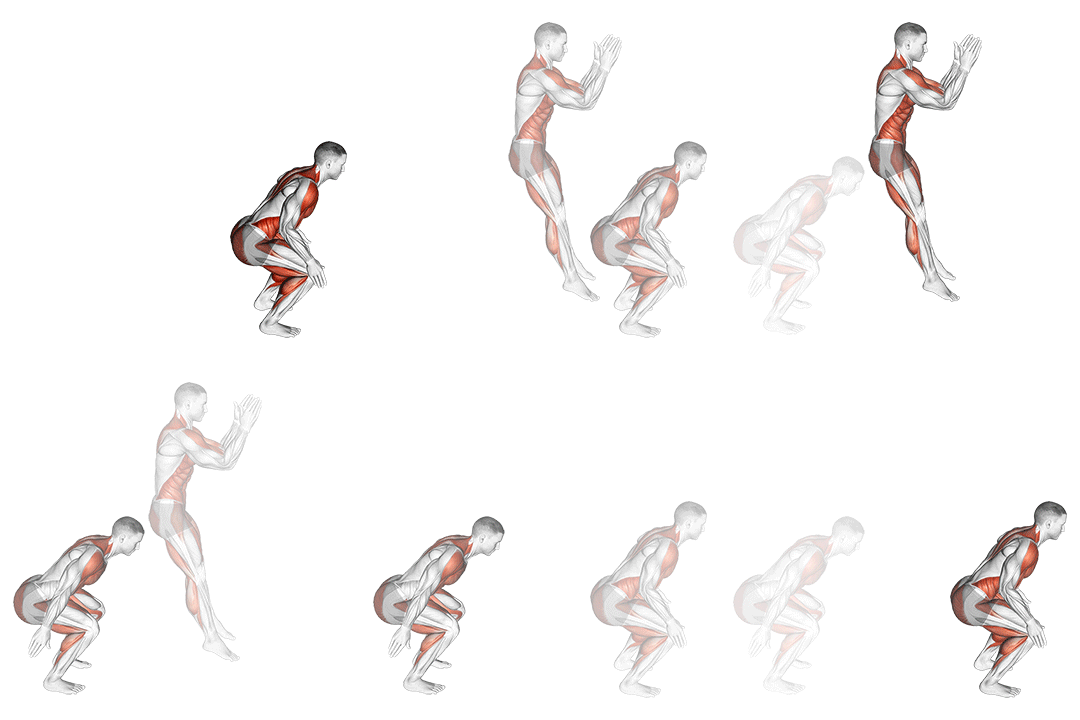
- 1Stand with your feet shoulder-width apart.
- 2Bend your knees slightly and jump backwards, pushing off with both feet.
- 3Land softly on the balls of your feet, bending your knees to absorb the impact.
- 4Repeat for the desired number of repetitions.
Muscles worked
Primary
quads
Secondary
hamstrings, glutes, calves
Common mistakes to avoid
Falling backward instead of jumping
The motion should be a controlled jump with quick landing, not a fall. Drive through the legs to produce backward propulsion, not just lean back.
Crashing into landings
Soft landings with knees bending immediately. Hard landings spike joints.
Looking back during the jump
Twisting the head back to look stresses the neck. Trust the jump distance based on practice.
Insufficient space behind
Backward jumps need clear space — collisions with walls or furniture cause injury. Verify clearance before sets.
Programming too frequently
1-2 times per week is the cap. Plyometric demand needs recovery.
Easier and harder variations
Easier
Start with small backward hops to learn the pattern. Or perform from a stable starting position with conservative jump distance.
Harder
Progress to consecutive backward jumps. Or alternate forward and backward jumps in sequence. Or add a vertical component (backward broad jump).
Alternative exercises
Forward jump
More common direction. Pair with backward jumps for complete movement training.
Lateral jump
Side-to-side plyometric work. Useful for cutting sports.
Vertical jump
Ascending plyometric. Different stimulus; useful complement.
How to program the Backward Jump into your training
Backward jumps work as athletic conditioning for trainees needing backward movement capability. Sets and reps: 3 sets of 3-5 reps with 90-120 seconds rest. Frequency: 1-2 times per week. In an athletic session: pair with forward jumps for varied directional work. For general fitness: optional. Forward jumps cover most needs. Don't program backward jumps in tight spaces.
Recovery and frequency
Recovery within 48-72 hours. Watch for ankle and knee discomfort.
Frequently asked questions
How many sets and reps?
3 sets of 3-5 reps with 90-120 seconds rest.
How often?
1-2 times per week.
Why do backward jumps?
Trains backward movement capability for sports and general athletic vocabulary.
Is this safe?
Yes with appropriate space and gradual introduction. Verify backward clearance before sets.
Should beginners try this?
Master forward jumps first. Backward jumps add complexity and risk that beginners shouldn't tackle initially.
Forward vs backward jump?
Forward is more common and more directly applicable to most sports. Backward addresses specific defensive scenarios.
Useful tools for this exercise
Build a workout with the Backward Jump
Puna gives you guided bodyweight workouts you can do anywhere — no equipment, no gym, just structured progressions that build real strength.