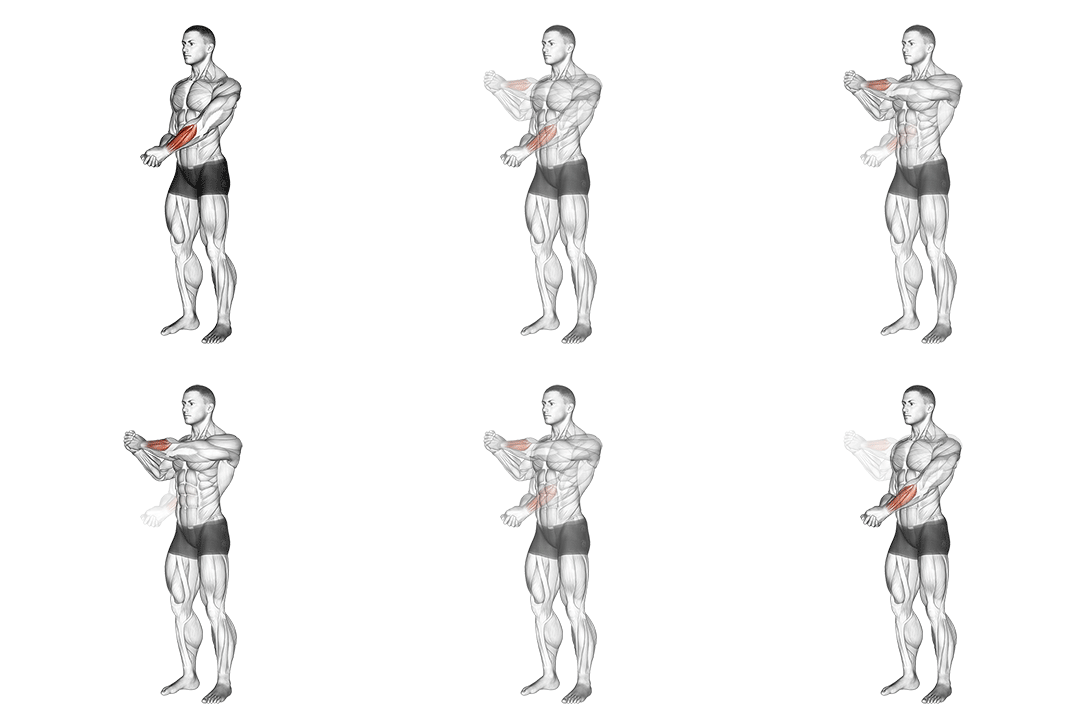
Wrist Circles
beginner mobility exercise · body weight · targets forearms
- Body part
- lower arms
- Primary target
- forearms
- Equipment
- body weight
- Difficulty
- beginner
Wrist circles are the most basic mobility drill in human movement: arms extended forward, hands closed in fists, and the wrists rotated through circles in both directions. The drill is so simple that most people skip it entirely or do a few half-hearted rotations as part of a warm-up. That's a missed opportunity, because wrist mobility deteriorates faster than almost any other joint range in adults — and the cost shows up in everything from grip strength to push-up tolerance to wrist pain on a keyboard. The wrist is a small joint that absorbs a surprising amount of daily mechanical input: typing, gripping, scrolling, supporting body weight on push-ups, holding objects. Without dedicated mobility work, the surrounding tissue stiffens, the joint capsule contracts, and the rotational range slowly shrinks. Most adults have lost meaningful supination and pronation range by their 30s without ever noticing — until they try a yoga pose or a kettlebell move and realize their wrists won't comply. Wrist circles, done daily for 60 seconds, restore and maintain the full rotational range. They're particularly useful first thing in the morning (when wrists are stiffest), before any pressing or pulling work, and as a desk-break reset every couple of hours during long computer sessions. The total time investment is laughable — a minute a day — and the carryover is broad: better push-ups, easier yoga, less keyboard strain, more confident grip on novel objects.
Why train the Wrist Circles?
- Maintains and restores rotational range of the wrist joint, which deteriorates fastest with sedentary life.
- Prepares the wrists for pressing or weight-bearing exercises like push-ups, planks, and handstands.
- Reduces morning wrist stiffness within 1-2 weeks of daily practice.
- Improves circulation in the small muscles of the forearm and hand, useful before grip-intensive sessions.
- Helps prevent typing-related wrist discomfort by breaking up chronic static positions.
- Costs nothing, takes 60 seconds, and doubles as a useful fidget during long meetings.
How to do the Wrist Circles: step by step
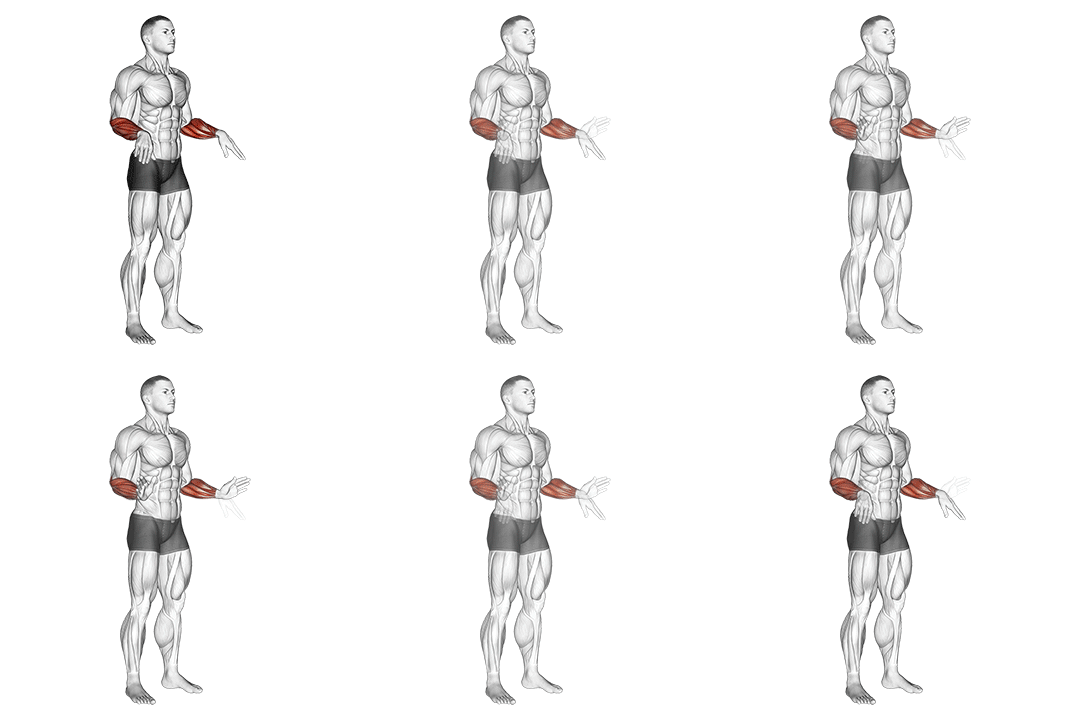
- 1Extend your arms straight out in front of you.
- 2Make a fist with both hands.
- 3Rotate your wrists in a circular motion, keeping your arms still.
- 4Continue the wrist circles for the desired number of repetitions.
Muscles worked
Primary
forearms
Secondary
hands, wrists
Common mistakes to avoid
Moving the elbows or shoulders to make the circles
The arms must stay still. If the elbows or shoulders rotate to compensate, the wrists never reach their actual end range. Lock the arms straight in front of you and isolate the rotation entirely at the wrist.
Making tiny circles
Most people do small lazy circles that don't approach the joint's full range. Force the circles to be as large as the wrist allows — you should feel a slight tension at the extremes of each rotation. Small circles maintain only the middle of the range and let the extremes shrink.
Rushing through fast circles
Speed reduces the range of each rep — momentum carries the wrist through the easy middle without reaching the extremes. Slow each circle down to about 1-2 seconds per rotation, and you'll feel the joint actually working.
Skipping the reverse direction
Many people only rotate one way (typically the more comfortable direction). The wrist needs symmetrical work in both directions to maintain balanced range. Always do equal reps clockwise and counterclockwise.
Treating it as warm-up only
Wrist circles compound far better with frequency than with duration. A single session before a workout achieves less than three 30-second sessions throughout the day. Distribute the practice rather than concentrating it.
Easier and harder variations
Easier
If holding the arms extended fatigues the shoulders, perform the circles with elbows bent and resting at your sides. The wrist work is identical; the shoulder demand drops to zero. This is a useful adaptation for older adults or anyone with shoulder restrictions.
Harder
Open the hand instead of fisting, fingers spread wide, and perform large circles with the open palm. The added finger extension challenges the deeper forearm muscles. Or progress to weighted circles holding a 1-3 lb dumbbell, which loads the rotational range and builds rotational strength alongside mobility.
Alternative exercises
Prayer stretch sequence
Pairs forearm flexor and extensor stretches with the rotational work of wrist circles. Use both for a complete forearm-and-wrist mobility routine in 3-4 minutes.
Wrist push and pull stretches
Static stretches that complement wrist circles by addressing end-range length specifically. Circles maintain middle-range mobility; static stretches push the extremes.
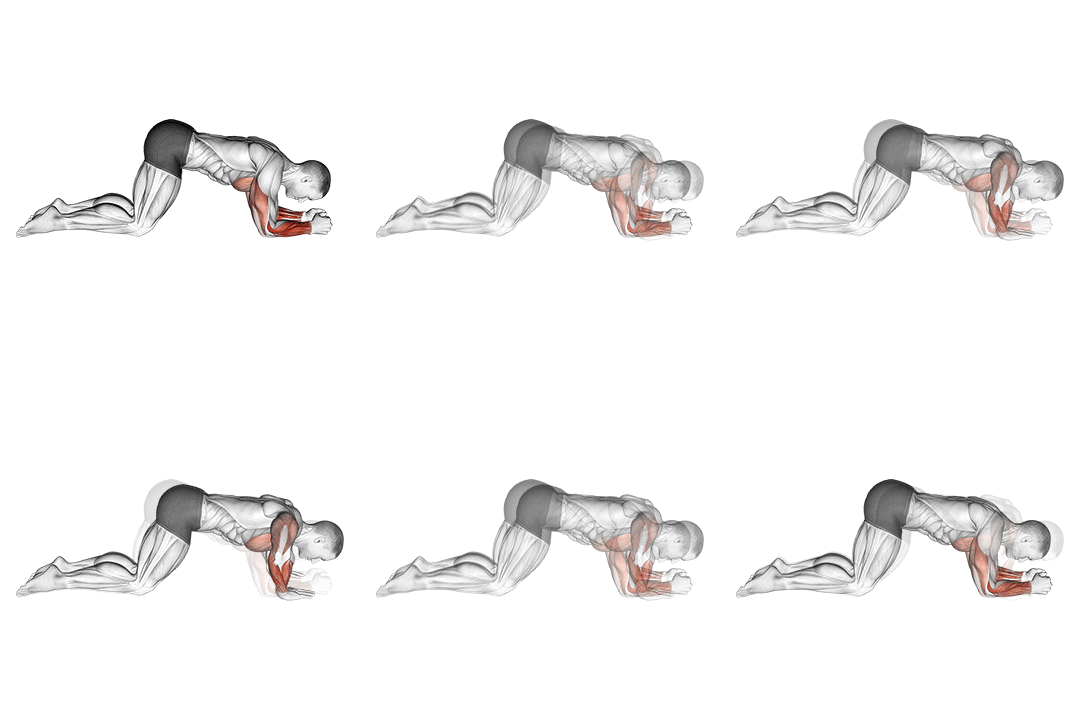
Push-up to forearm transition
More demanding mobility-strength hybrid for the wrists. Once basic circles feel easy, progress to dynamic loaded variations like this.
How to program the Wrist Circles into your training
Wrist circles work as a high-frequency, low-volume daily drill. The total time per day should sum to around 1-2 minutes, distributed across 2-4 sessions rather than crammed into one. Morning routine: 30 seconds in each direction, performed before getting out of bed or right after waking. The wrists are stiffest first thing in the morning, and 60 seconds of mobility makes the rest of the day's typing, scrolling, and lifting feel noticeably looser. Pre-workout warm-up: 30 seconds in each direction before any upper-body session, especially before push-ups, planks, handstands, or anything that loads the wrist in extension. The warmth and circulation prepare the joint to handle weight-bearing. Desk-break protocol: 30 seconds every 60-90 minutes during long computer sessions. The frequency prevents stiffness from accumulating rather than addressing it after the fact. Combine with brief shoulder rolls and neck stretches for a 90-second total reset. For those with chronic wrist tightness or returning from a wrist injury: increase frequency to 5-6 sessions per day at 30 seconds each. Combine with prayer stretches and gentle wrist push/pull stretches for compound benefit. Visible improvement typically appears within 1-2 weeks of consistent practice. Don't program wrist circles as part of an isolated 'mobility day' — they belong in a daily distribution, integrated into existing routines.
Recovery and frequency
Wrist circles have no recovery cost — perform them as often as you'd like throughout the day. The motion involves no muscle damage, no tissue stress, and no joint loading; it's pure rotational range maintenance. The main signal to monitor is sharp pain or clicking with discomfort in any direction. Painless clicking is normal in many wrists and usually harmless. Painful clicking, however, may indicate a tendon catching on a roughened joint surface, and warrants assessment. For ordinary stiffness or sluggish wrist mobility, circles are entirely safe and beneficial. The recovery is immediate; the benefits compound over weeks.
Frequently asked questions
How many wrist circles should I do?
30 seconds in each direction is plenty per session, performed 2-4 times per day. Total daily volume of 1-2 minutes is enough to maintain mobility for most people. Higher volumes don't add much benefit.
How often should I do wrist circles?
Daily, distributed into multiple short sessions. Frequency matters more than duration for joint mobility. 2-4 mini-sessions throughout the day outperform a single longer routine.
Will wrist circles help carpal tunnel symptoms?
They can be part of the picture, but don't address the median nerve compression that defines carpal tunnel directly. Combine with median nerve glides, ergonomic adjustments, and forearm flexor stretches for a complete approach. If symptoms persist or worsen, see a physiotherapist.
Should I do wrist circles before push-ups?
Yes, especially if you feel any wrist stiffness. 30 seconds of circles plus a brief prayer stretch prepares the wrist to handle pressing load. The few seconds you spend warming up reduces wrist discomfort during sets and after.
Can I do wrist circles every day?
Yes — daily is ideal. There's no recovery cost and the mobility benefits compound with frequency. Many people do them multiple times per day without any issue.
Why do my wrists pop during circles?
Painless popping or clicking is common and usually harmless — it indicates fluid or tendons moving past joint structures. If the popping is accompanied by sharp pain or swelling, however, see a healthcare provider. For typical clicking without pain, ignore it and continue the practice.
Useful tools for this exercise
Build a workout with the Wrist Circles
Puna gives you guided bodyweight workouts you can do anywhere — no equipment, no gym, just structured progressions that build real strength.