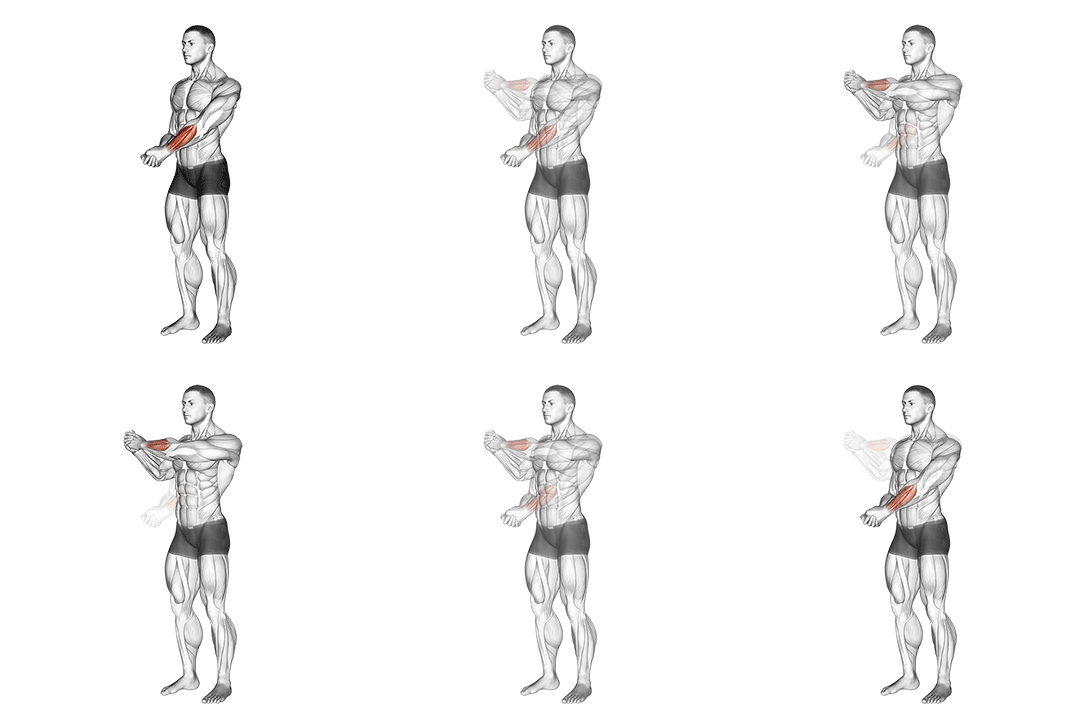
Side Wrist Pull Stretch
beginner stretching exercise · body weight · targets forearms
- Body part
- lower arms
- Primary target
- forearms
- Equipment
- body weight
- Difficulty
- beginner
The side wrist pull stretch is a deceptively simple drill for the forearm flexors — the underside of the forearm responsible for gripping, typing, and most of the daily motions that quietly shorten over time. You extend one arm to the side at shoulder height with the palm facing down, then use the opposite hand to gently pull the fingers and palm back toward your body. Done correctly, you'll feel a clean stretch running from the inner wrist up through the belly of the forearm. This is one of the most under-prescribed stretches given how universally tight modern forearms are. Hours of typing, mouse use, and phone scrolling keep the wrist flexors in a permanently shortened state. The result shows up as wrist stiffness in the morning, reduced grip endurance, and that low-grade aching that sits in the forearm after a long workday. Most people accept it as background noise; it isn't, and a 60-second stretch addresses it directly. What makes the side wrist pull particularly useful is its accessibility — it can be done at a desk, in a meeting, or while waiting in line. Combined with its complement (the wrist push stretch, which targets the extensors on the other side), it forms a complete forearm-mobility duo. Daily practice over 4-6 weeks visibly reduces forearm tightness for most desk-bound trainees and makes hand-intensive workouts more tolerable.
Why train the Side Wrist Pull Stretch?
- Lengthens the forearm flexors, the underside muscles that chronically shorten from typing and gripping.
- Reduces wrist stiffness, especially the morning kind that takes 30 minutes to fade after waking.
- Improves grip endurance during workouts by restoring resting length to the gripping muscles.
- Helps prevent and manage tendinitis around the inner elbow (often called golfer's elbow) when paired with the wrist push stretch.
- Costs nothing, requires no equipment, and can be done discreetly anywhere — desk, plane, kitchen.
- Pairs naturally with wrist circles or the wrist push stretch for a 90-second forearm reset routine.
How to do the Side Wrist Pull Stretch: step by step
- 1Stand with your feet shoulder-width apart and your arms extended in front of you.
- 2Extend your right arm out to the side, parallel to the ground, with your palm facing down.
- 3With your left hand, grab your right hand and gently pull it towards your body, feeling a stretch in your right forearm.
- 4Hold the stretch for 15-30 seconds, then release.
- 5Repeat on the other side.
Muscles worked
Primary
forearms
Secondary
wrists, hands
Common mistakes to avoid
Pulling too hard on the fingers
Aggressive pulling can sprain the small joints of the fingers and overstretch the wrist ligaments. Apply only enough force to feel a clean stretch — no pain, no sharp sensations. The forearms release with patience, not force.
Letting the elbow bend during the pull
If the working arm bends, the stretch transfers from the forearm to the biceps and shoulder. Keep the working arm fully straight and locked out throughout. The lockout is what isolates the stretch to the target muscles.
Rotating the shoulder forward
When you pull the hand back, the working shoulder often rounds forward. Press the chest open and the working shoulder back as you pull — otherwise the stretch dilutes across the shoulder capsule instead of staying in the forearm.
Holding for only 5-10 seconds
The forearm flexors release slowly. A short hold barely cues the tissue to soften. Aim for at least 30 seconds, ideally 45, and you'll feel the stretch deepen on its own about halfway through.
Skipping the opposite stretch
Stretching only the flexors and ignoring the extensors creates muscular asymmetry — common in trainees with chronic wrist or elbow issues. Always pair the side wrist pull with the wrist push stretch to balance the forearm.
Easier and harder variations
Easier
Lower the working arm slightly below shoulder height — this reduces the stretch on the upper forearm and shoulder. Or perform with the palm slightly turned (rather than fully facing down) to find a less intense angle while you build tolerance.
Harder
After holding the basic stretch, slowly rotate the wrist outward (palm away from you) while maintaining the pull. This adds a rotational component that targets the deeper forearm flexors. Or extend the arm against a wall at shoulder height and step away gradually.
Alternative exercises
Wrist push stretch (extensor stretch)
Stretches the opposite side of the forearm — the extensors. Always pair with the side wrist pull to keep the forearm balanced.
Prayer stretch
Both palms pressed together at chest height, then lowered to stretch both forearm flexors simultaneously. Faster than doing each side separately when time is short.
Wrist circles
Mobility complement that restores rotational range, while the side wrist pull restores end-range length. The two together address most forearm restrictions.
How to program the Side Wrist Pull Stretch into your training
The side wrist pull works best as a frequent, brief practice rather than as a workout-time stretch. The forearms stay engaged through most of the day, so short repeated exposures release tension better than longer occasional sessions. Daily routine: 2 sets of 30-45 seconds per arm, once or twice per day. A natural anchor point is at the start and end of any computer-based work session — the stretch becomes a transition cue between focused typing and rest. Desk-worker protocol: 1 set of 30 seconds per arm every 90 minutes during long work sessions. Tied to existing triggers (every coffee break, before each meeting), the routine compounds without willpower cost. Pre-workout warm-up: 1 set of 30 seconds per arm before pull-ups, rows, deadlifts, or any heavy grip work. Warm tissue stretches better, and pre-grip preparation reduces the risk of forearm cramping during high-volume sets. Post-workout protocol: 2 sets of 45 seconds per arm after grip-intensive sessions (climbing, pull-ups, hangs). The combination of warm tissue and post-exercise activation makes the stretch particularly effective for preventing next-day forearm soreness. For those with chronic wrist tightness or early signs of golfer's elbow: 4-5 sessions per day at 30 seconds each, paired with extensor stretches. Visible improvement typically appears within 2-3 weeks.
Recovery and frequency
The side wrist pull has zero recovery cost. You can perform it many times per day without any consequence for muscle tissue or joint health, when done within painless range. The main signal to monitor is sharp pain or pins-and-needles sensation during the stretch — these point to nerve irritation rather than muscle tightness, and warrant a different approach. If symptoms persist despite gentler technique, consult a physiotherapist before continuing. For ordinary forearm tightness, the stretch is safe, the tissue recovers immediately, and consistent practice produces noticeable results within 2-4 weeks.
Frequently asked questions
How long should I hold the side wrist pull stretch?
30-45 seconds per arm, ideally 2 sets per side. Holds shorter than 20 seconds don't trigger meaningful release. Longer than 60 seconds offers diminishing returns; better to do another set after a brief rest.
How often should I stretch my wrist flexors?
Multiple times per day, especially during long computer sessions. Forearms stay chronically engaged, and frequent short stretches outperform occasional long ones. Aim for 4-6 mini-sessions on a heavy typing day.
Will this stretch help my wrist pain from typing?
Often yes. Most typing-related wrist discomfort comes from chronic flexor shortening combined with extensor weakness. Daily side wrist pull stretches address the shortening directly, and pairing with extensor stretches plus wrist mobility work resolves most cases within 3-6 weeks.
Should I stretch before or after lifting?
Both serve different goals. Before lifting: 15-30 seconds as part of a warm-up sequence. After lifting: 45-60 seconds when tissue is warm. The post-session stretch is when most lasting tissue change happens.
Can I do this stretch with carpal tunnel?
Sometimes. Mild carpal tunnel symptoms often improve with gentle daily flexor and extensor stretching combined with median nerve glides. But forceful stretching can aggravate the nerve. Start gentle, monitor for tingling or numbness, and consult a physiotherapist if symptoms worsen.
Why does my elbow hurt when I do this stretch?
Elbow discomfort during the side wrist pull usually signals golfer's elbow (medial epicondylitis) — inflammation where the flexor muscles attach at the inner elbow. The stretch is generally safe and even therapeutic for this, but reduce intensity and consider adding eccentric wrist curls to strengthen the affected tissue.
Useful tools for this exercise
Build a workout with the Side Wrist Pull Stretch
Puna gives you guided bodyweight workouts you can do anywhere — no equipment, no gym, just structured progressions that build real strength.