Wind Sprints
intermediate cardio exercise · body weight · targets abs
- Body part
- waist
- Primary target
- abs
- Equipment
- body weight
- Difficulty
- intermediate
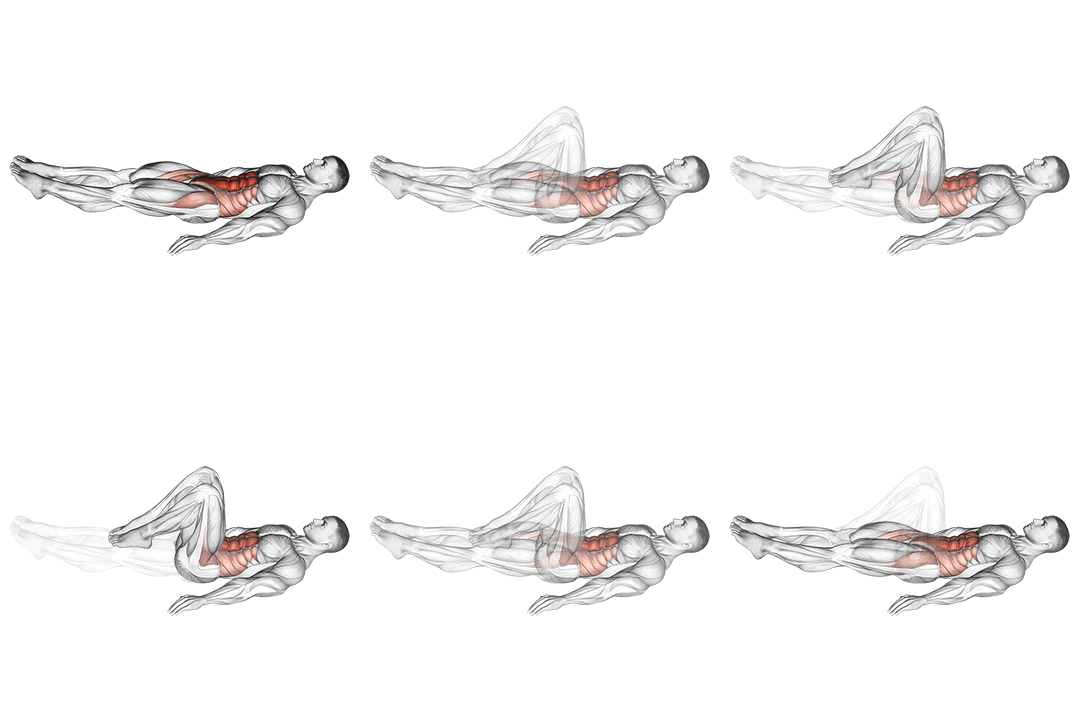
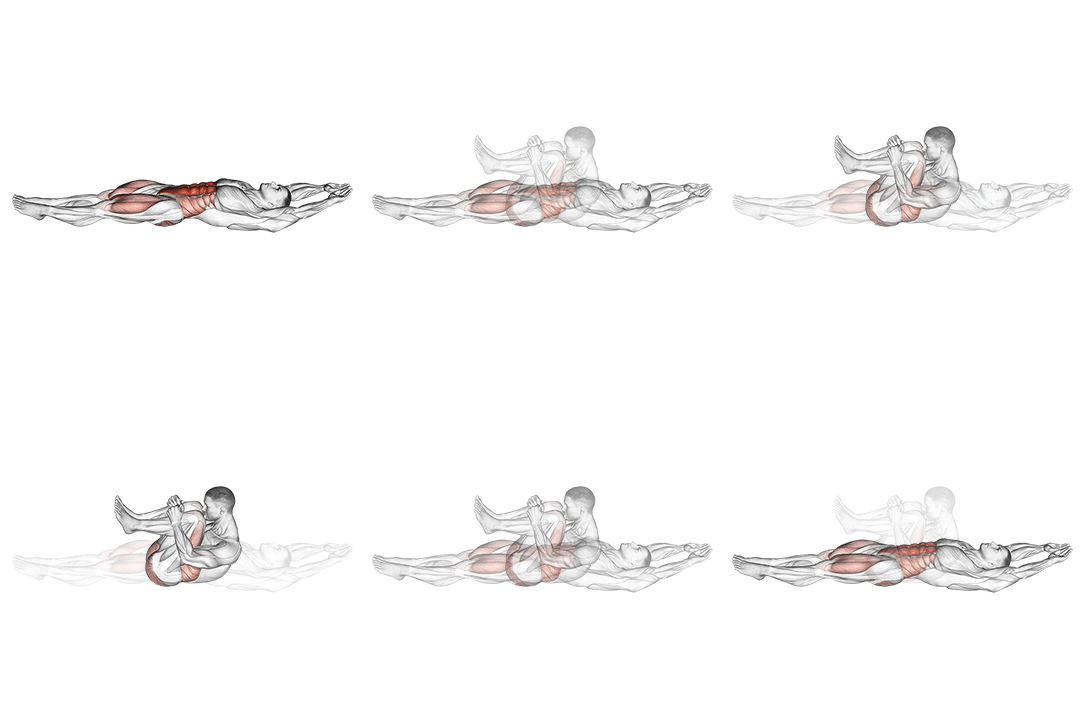
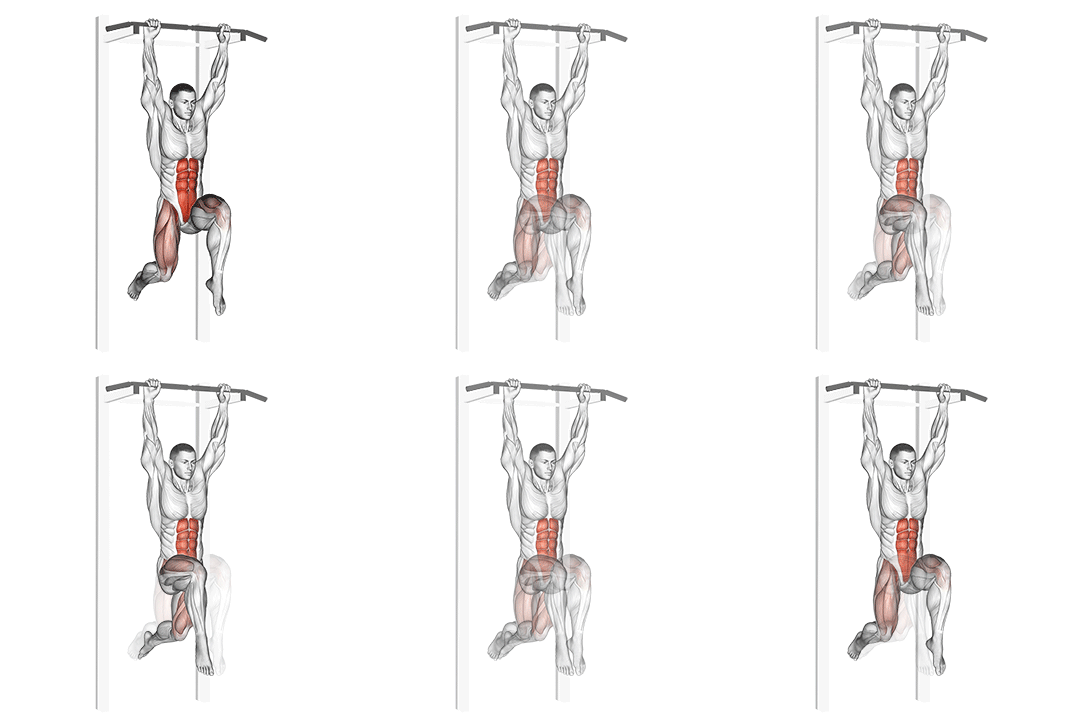
Wind sprints are short-distance maximum-effort sprints performed for cardiovascular conditioning and ab activation. Typically run for distances of 20-100 meters at near-maximum effort with brief rest between, wind sprints produce serious cardio elevation alongside meaningful core engagement. Despite the cardio classification, the abs work intensely during sprinting to stabilize the body and transfer power through the kinetic chain. This is one of the most effective combined cardio-and-core exercises in any program. The high-intensity sprinting elevates heart rate dramatically while the abs work to maintain posture and transfer force. For athletes seeking time-efficient combined training or general fitness trainees pursuing cardiovascular conditioning, wind sprints earn a place. The trade-off is the joint demand. Sprint work stresses the calves, hamstrings, and ankles significantly. Programmed thoughtfully (1-2 times per week) with adequate recovery, this isn't a problem for most healthy adults. For older adults, those returning from injury, or trainees with chronic lower-body issues, lower-impact alternatives are preferable.
Why train the Wind Sprints?
- Combines high-intensity cardio with core engagement.
- Spikes heart rate quickly through near-maximum effort sprints.
- Builds explosive lower-body power.
- Engages abs through stabilization during sprinting.
- Time-efficient training for combined goals.
- Improves athletic performance for sprint-based sports.
How to do the Wind Sprints: step by step
- 1Find an open space or a track to perform the exercise.
- 2Start by standing with your feet shoulder-width apart.
- 3Begin running as fast as you can, pumping your arms and driving your knees up.
- 4Continue sprinting for a specific distance or time period.
- 5Rest and repeat for the desired number of repetitions.
Muscles worked
Primary
abs
Secondary
quadriceps, hamstrings, calves
Common mistakes to avoid
Insufficient warm-up
Cold sprinting causes hamstring strains. Warm up thoroughly with progressive runs before sprint sets.
Going too aggressive too soon
Build to maximum effort gradually. Untrained bodies need progressive sprint exposure.
Cutting recovery between sets
Sprint quality requires full recovery between reps. Insufficient rest reduces sprint quality.
Programming too frequently
1-2 times per week. Sprint work has steep recovery demands.
Sprinting through pain
Sharp pain warrants stopping. Hamstring tweaks become full strains if pushed.
Easier and harder variations
Easier
Reduce sprint intensity to 70-80% effort. Or shorter distances (10-20 meters).
Harder
Add hill sprints or sled work. Or longer distances (60-100 meters). Or shorter rest between reps for cardio emphasis.
Alternative exercises
Tempo runs
Lower intensity sustained running. Less joint stress.
Hill sprints
Sprint variation with reduced impact load.
Cycling intervals
Non-impact cardio alternative.
How to program the Wind Sprints into your training
Sets and reps: 6-10 sprints of 20-60 meters with 90 seconds to 3 minutes rest. Frequency: 1-2 times per week. In an athletic session: as conditioning work after main strength training, or as standalone cardio session.
Recovery and frequency
Steep recovery cost. 48-72 hours between sessions. Watch for hamstring tightness.
Frequently asked questions
How many sprints?
6-10 sprints per session.
How often?
1-2 times per week.
What distance?
20-60 meters typically. Shorter for max effort, longer for endurance focus.
Will this build abs?
Indirectly through stabilization demand. For visible abs, combine with diet and dedicated ab training.
Are sprints safe?
With adequate warm-up and progression, yes. Hamstring strains are the main risk.
Wind sprint vs distance running?
Different stimuli. Sprints for power and high-intensity cardio; distance running for sustained endurance.
Useful tools for this exercise
Build a workout with the Wind Sprints
Puna gives you guided bodyweight workouts you can do anywhere — no equipment, no gym, just structured progressions that build real strength.