Bottoms-up
intermediate strength exercise · body weight · targets abs
- Body part
- waist
- Primary target
- abs
- Equipment
- body weight
- Difficulty
- intermediate
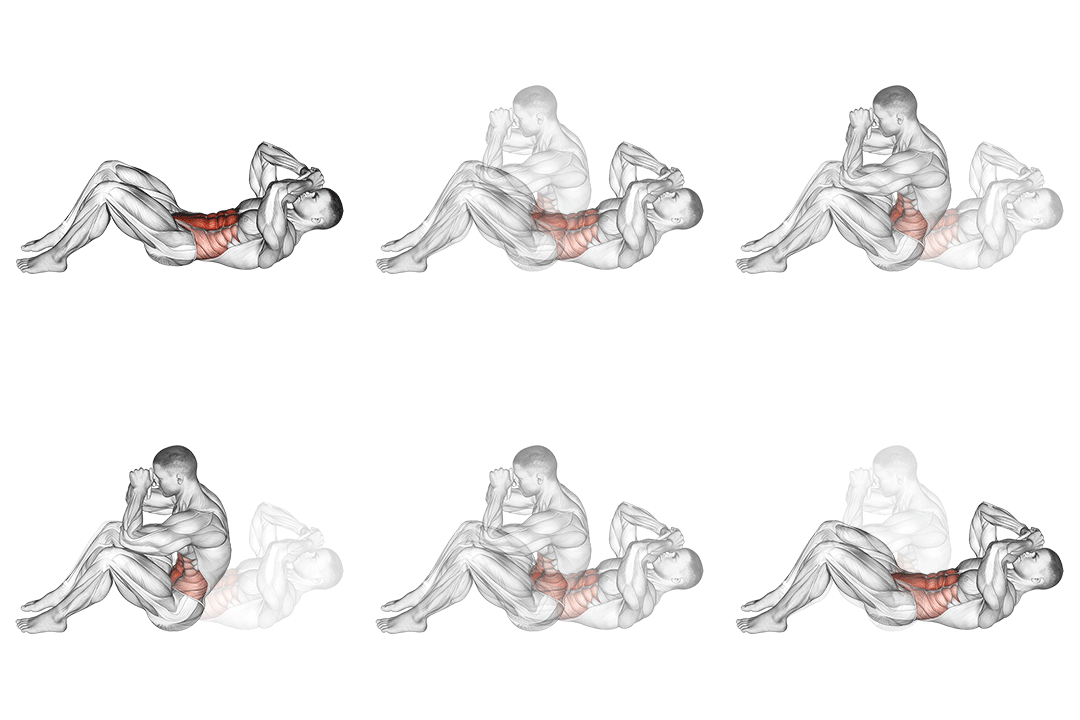
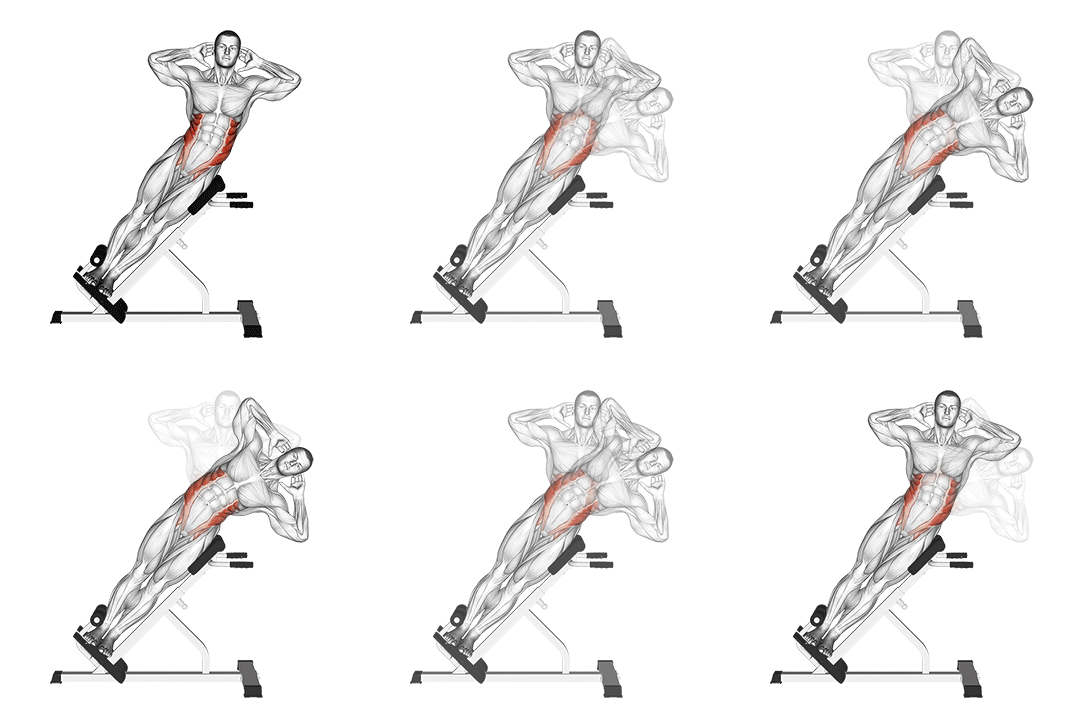
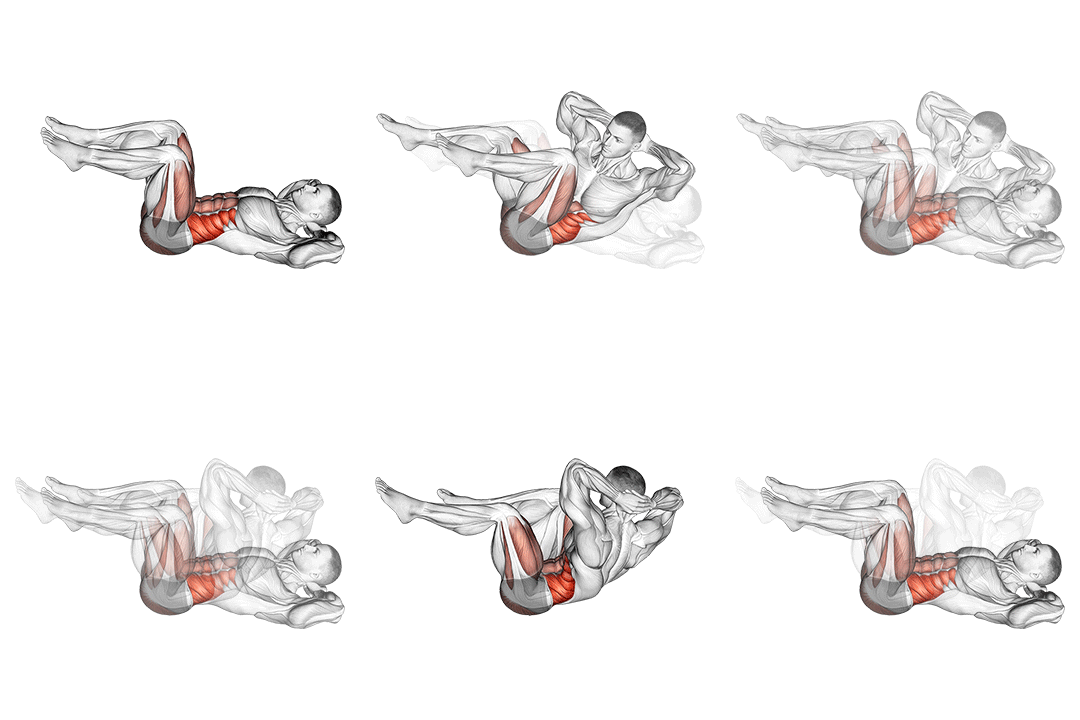
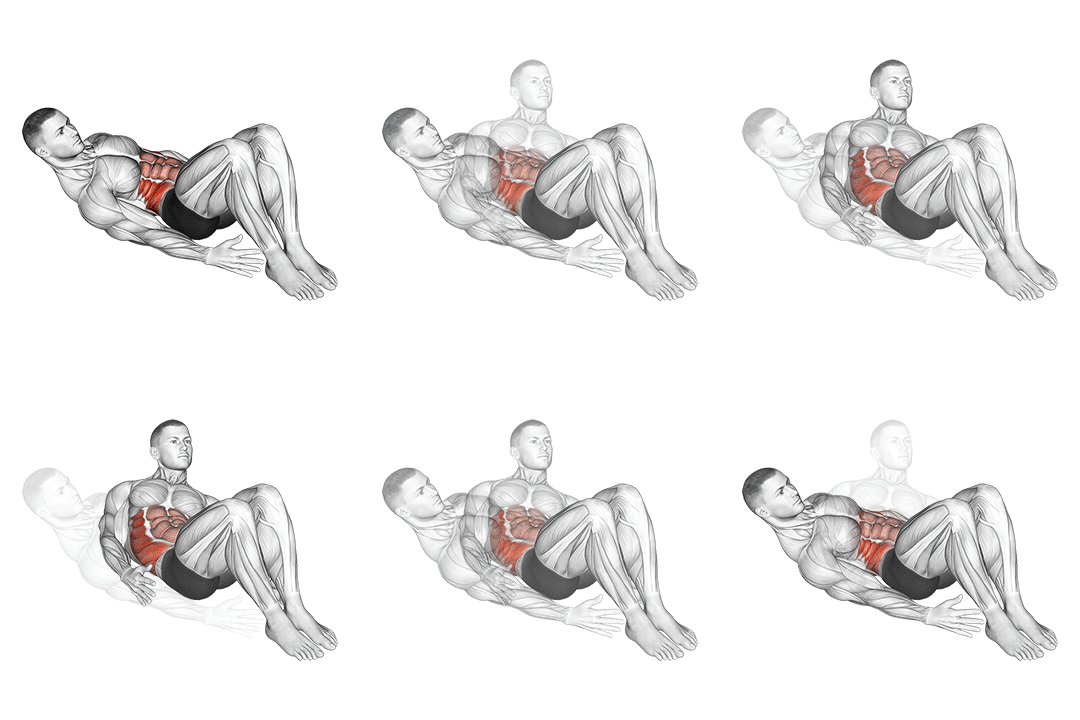
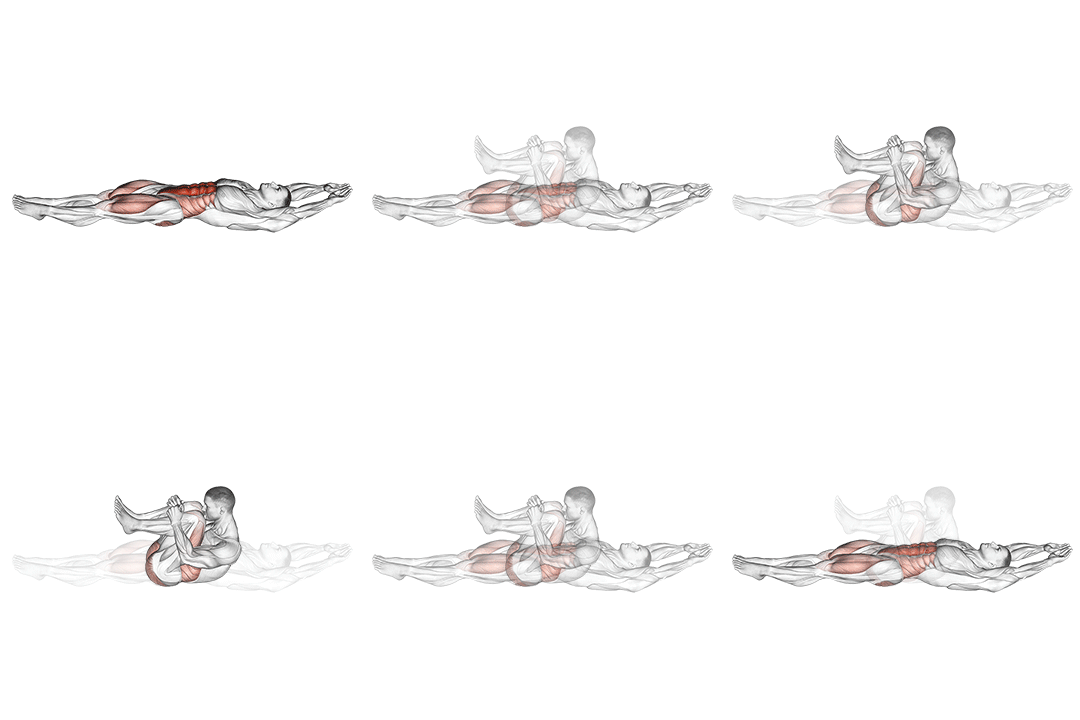
Bottoms-up is an inverted core exercise performed lying on the back with hips lifted using a hand-under-pelvis support, then drawing the legs toward the chest in a controlled manner. The exercise targets the lower abs specifically through the upside-down position that compound core exercises don't replicate. The hand support stabilizes the body while the legs perform the work. This is one of the more unusual lower-ab exercises. The inverted body position changes the gravity vector through the abdominal muscles, providing a different stimulus than traditional crunches or leg raises. For trainees seeking variety in core training or those with limited equipment, bottoms-up earns a niche. The trade-off is the slightly awkward setup and demand on the supporting hands. The exercise requires sustained hand support which can fatigue the wrists during longer sets. Programmed thoughtfully (2-3 times per week, conservative volume), bottoms-up provides unique core stimulus that complements other ab training.
Why train the Bottoms-up?
- Targets the lower abs through the inverted body position.
- Provides unique stimulus that compound core exercises don't replicate.
- Builds wrist stability through the supporting hand position.
- Useful as accessory work in core programming.
- Costs nothing and requires no equipment.
- Engages the obliques alongside the front abs.
How to do the Bottoms-up: step by step
- 1Lie flat on your back with your legs extended and your arms by your sides.
- 2Bend your knees and bring them towards your chest, keeping your feet off the ground.
- 3Engaging your abs, lift your hips off the ground, bringing your knees towards your head.
- 4Pause for a moment at the top, then slowly lower your hips back down to the starting position.
- 5Repeat for the desired number of repetitions.
Muscles worked
Primary
abs
Secondary
obliques, hip flexors
Common mistakes to avoid
Bouncing through reps
Slow controlled motion produces ab engagement.
Insufficient hand support
The supporting hand must stabilize the pelvis. Loose support produces uncontrolled motion.
Letting the legs swing
The legs should travel in controlled motion, not swing freely.
Holding the breath
Breathe rhythmically through the motion.
Programming too frequently
2-3 times per week is appropriate. Wrist load benefits from recovery.
Easier and harder variations
Easier
Reduce range. Or perform standard reverse crunches without the inverted hip position.
Harder
Add weight (ankle weights). Or progress to hanging variations like hanging leg raises.
Alternative exercises
Reverse crunch
Standard floor-based version. More accessible.
Hanging leg raise
Hanging version with much higher load.
Dead bug
Different pattern with similar lower-ab focus.
How to program the Bottoms-up into your training
Sets and reps: 3 sets of 8-15 reps with 60 seconds rest. Frequency: 2-3 times per week. In core sessions: as accessory after main exercises.
Recovery and frequency
Recovery within 24-48 hours. Watch for wrist soreness from supporting hand position.
Frequently asked questions
How many sets and reps?
3 sets of 8-15 reps.
How often?
2-3 times per week.
Will this build lower abs?
Some — the inverted position provides unique lower-ab stimulus. Pair with leg raises and reverse crunches for compound work.
Why is it called bottoms-up?
Refers to the inverted hip position with the bottom raised.
Is this for beginners?
Intermediate. Requires basic core strength and wrist tolerance.
Bottoms-up vs reverse crunch?
Different positions with related stimulus. Reverse crunch is more accessible; bottoms-up adds unique angle.
Useful tools for this exercise
Build a workout with the Bottoms-up
Puna gives you guided bodyweight workouts you can do anywhere — no equipment, no gym, just structured progressions that build real strength.