Cross Body Crunch
beginner strength exercise · body weight · targets abs
- Body part
- waist
- Primary target
- abs
- Equipment
- body weight
- Difficulty
- beginner
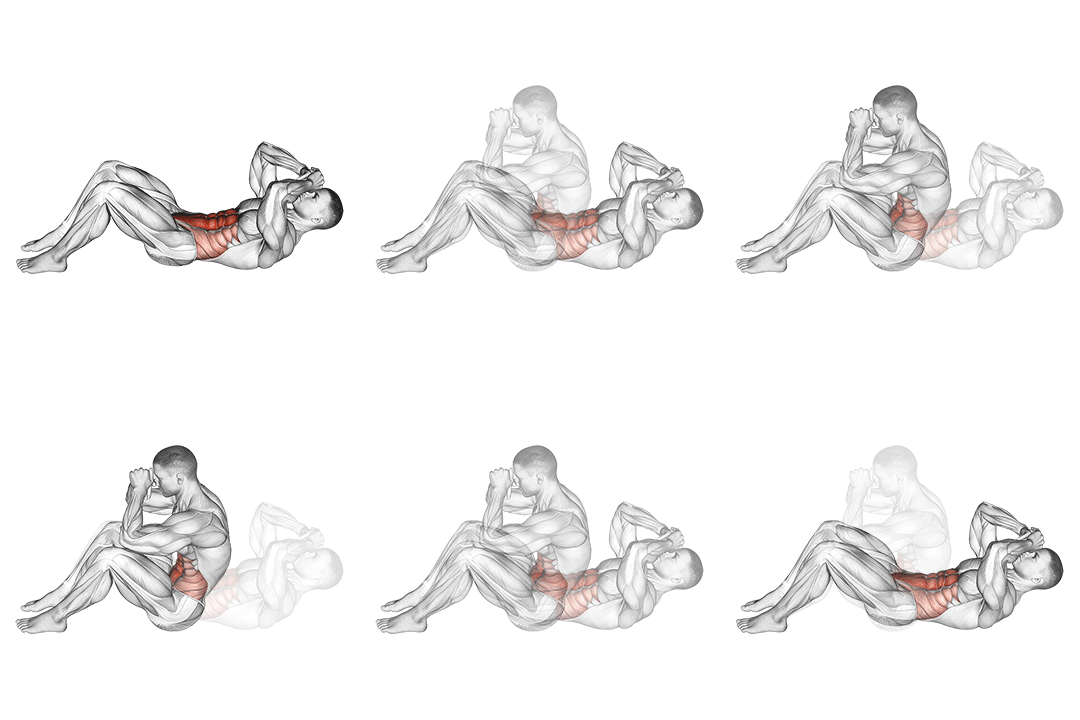
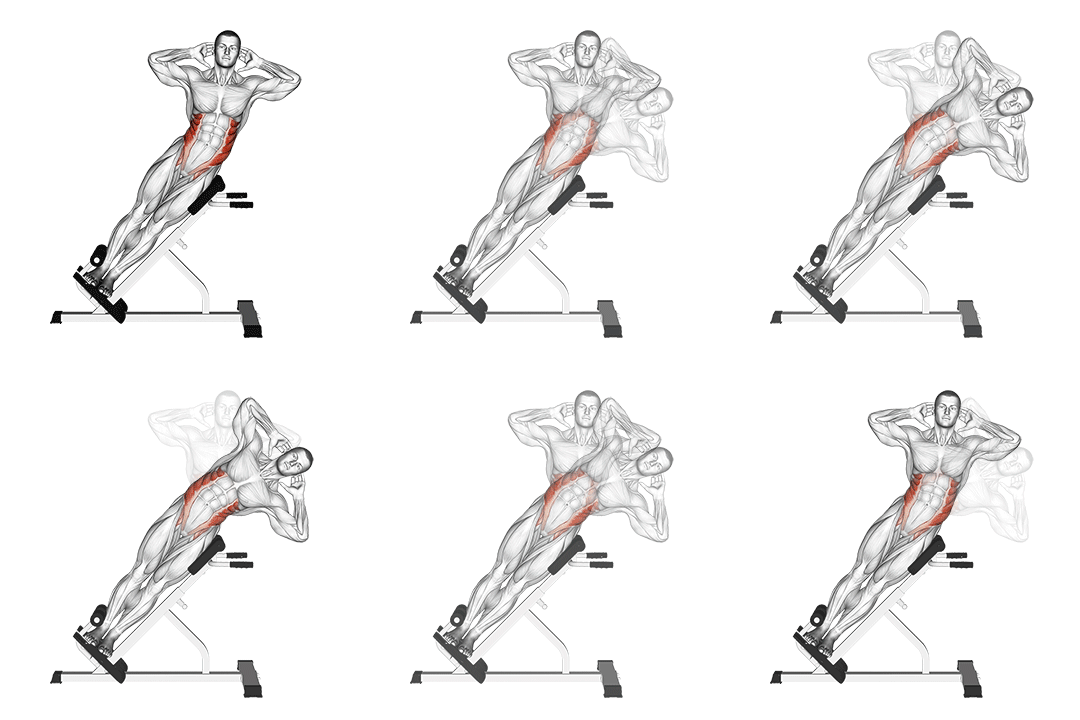
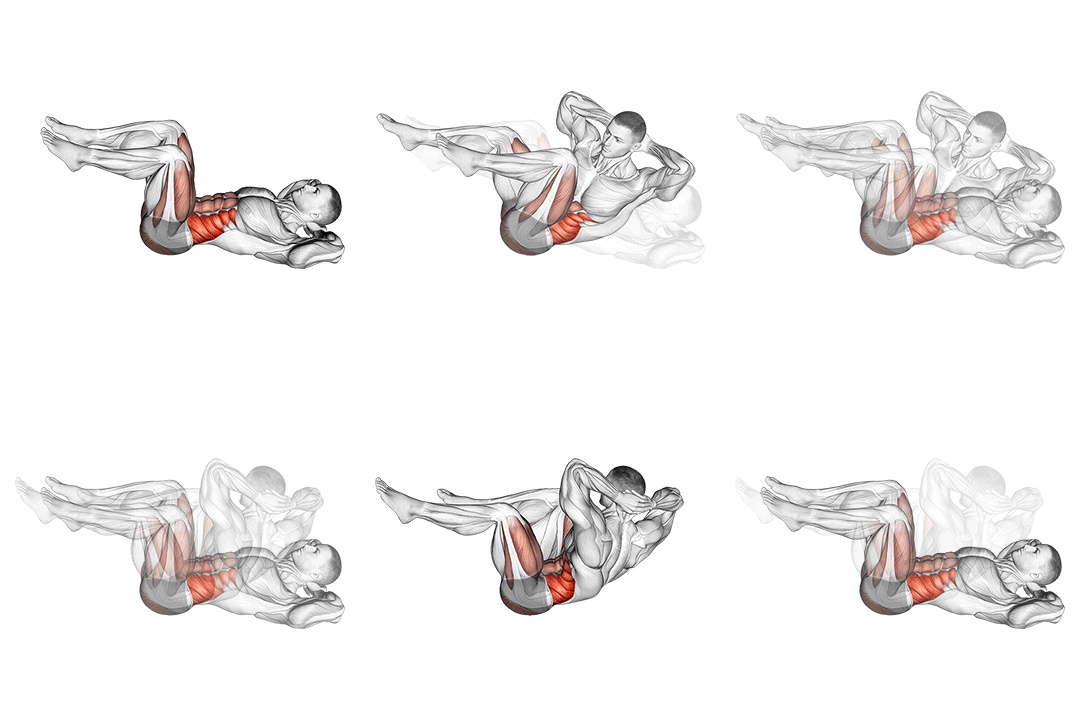
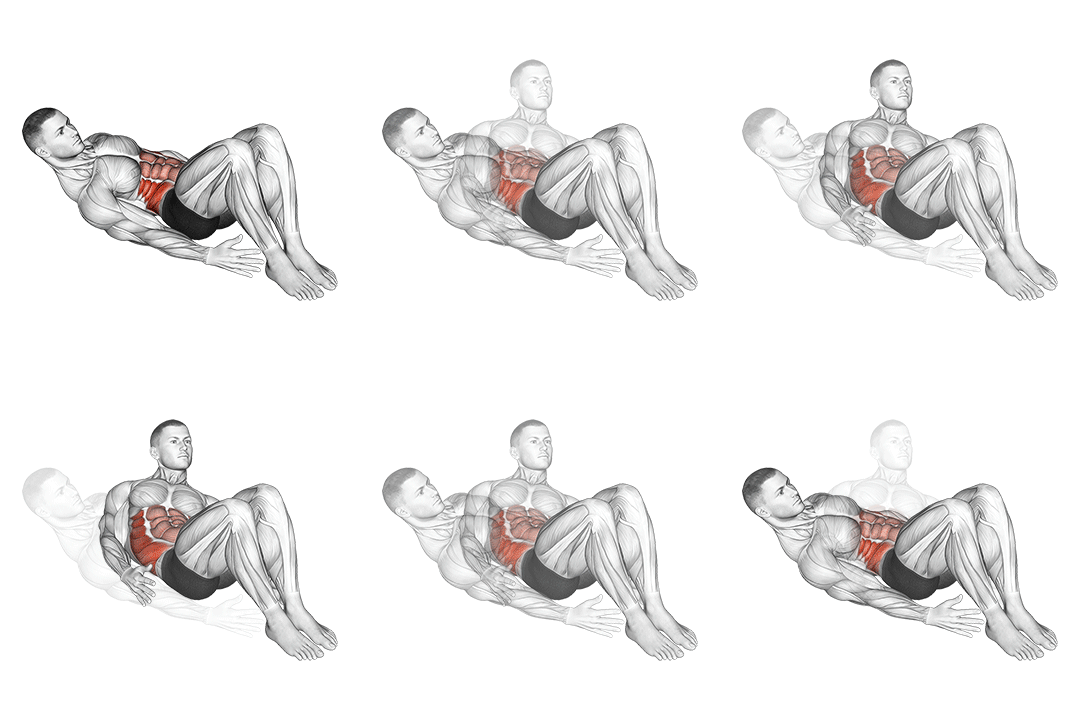
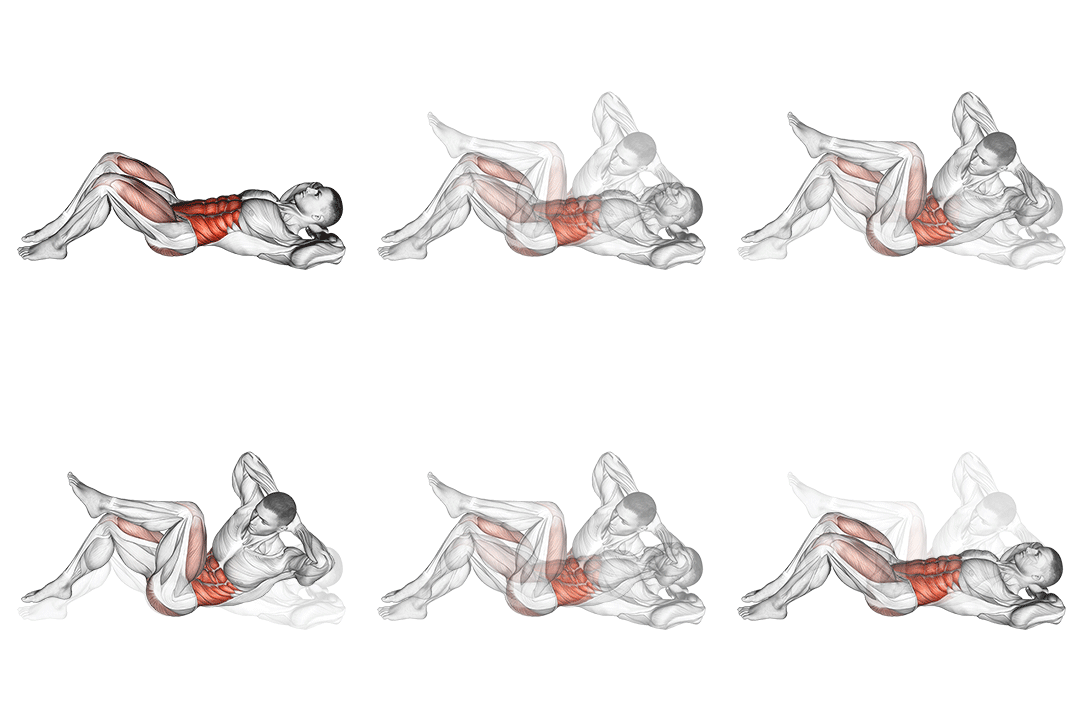
The cross body crunch combines a basic crunch with a leg movement: lying face-up with knees bent and hands behind the head, you crunch up while bringing one knee toward the opposite elbow, then alternate sides. The combination loads the upper abs (from the crunch), the lower abs and hip flexors (from the leg lift), and the obliques (from the rotation toward the opposite side) all in one rep. What makes the cross body crunch worth knowing is the efficiency. Many ab programs use separate exercises for upper abs (crunches), lower abs (leg raises), and obliques (Russian twists). The cross body crunch combines all three stimuli in one movement, which makes it a useful time-saver in shorter workouts. Three sets of cross body crunches accomplish what would otherwise require six sets of separate exercises. The trade-off is the moderate intensity. The cross body crunch doesn't load any single ab portion as heavily as their dedicated exercises do. For trainees specifically chasing maximum strength in any one area, separate exercises are more effective. For general ab fitness, time-constrained training, or those who want efficient ab work, the cross body crunch fills the role well.
Why train the Cross Body Crunch?
- Trains upper abs, lower abs, and obliques in one efficient movement.
- Time-saving for shorter workouts when separate ab exercises aren't practical.
- Reveals oblique asymmetries between sides that bilateral ab exercises hide.
- Adds rotational variety to ab programming dominated by flexion exercises.
- Requires no equipment and minimal space.
- Easier on the lower back than full sit-ups.
How to do the Cross Body Crunch: step by step
- 1Lie flat on your back with your knees bent and feet flat on the ground.
- 2Place your hands behind your head with your elbows pointing outwards.
- 3Engaging your abs, lift your upper body off the ground and twist to bring your right elbow towards your left knee.
- 4Pause for a moment at the top, then slowly lower your upper body back down to the starting position.
- 5Repeat on the other side, bringing your left elbow towards your right knee.
- 6Repeat for the desired number of repetitions.
Muscles worked
Primary
abs
Secondary
obliques
Common mistakes to avoid
Pulling on the neck with the hands
Hands behind the head are a guide, not a tool. Pulling the head forward strains the cervical spine and removes the abs from the work. Imagine an apple under your chin; keep that space throughout every rep.
Going too fast for control
Speed kills the cross body crunch — the rotation gets sloppy and the abs stop driving the movement. Take 1-2 seconds per rep with a brief pause at the top contraction. Slow control beats fast volume.
Not getting full rotation toward the opposite side
If the elbow only comes partway toward the opposite knee, the obliques aren't getting the full work. Drive the elbow across the body so it nearly touches the opposite knee at the top of every rep.
Letting the lower back arch off the floor
When the leg lifts and the upper body crunches, the lower back wants to arch. Press the lower back into the floor throughout the rep — never let it lift away.
Holding the breath through the rep
Bracing tightly often means stopping breathing. Exhale on the crunch, inhale on the descent. Continuous breathing supports better core engagement.
Easier and harder variations
Easier
Reduce the leg lift — keep the foot on the floor and only crunch the upper body across with rotation. Or perform with arms crossed at the chest instead of behind the head.
Harder
Add a hold at the top of each rep (squeeze the cross-body position for 1-2 seconds). Add ankle weights for resistance. Or progress to bicycle crunches (continuous alternating motion without pausing at the top).
Alternative exercises
Bicycle crunch
Continuous version of the cross body crunch with no pauses. Higher cardio component, similar muscle recruitment.
Russian twist
Pure rotational ab exercise. More focused oblique work without the flexion component.
Dead bug
Same supine position with combined upper- and lower-body movement. Different stimulus pattern, equally efficient combined work.
How to program the Cross Body Crunch into your training
Cross body crunches work as accessory or stand-alone core exercise in any session. Pair with planks (anti-extension) and dead bugs (deep core stability) for complete core development. Sets and reps: 3 sets of 12-20 reps per side with 30-60 seconds rest. Total weekly volume of 75-150 reps per side drives most adaptations. In a complete core circuit: 3 rounds of 15 cross body crunches per side, 30-second front plank, 12 reverse crunches, 30-second side plank per side. Done 2-3 times per week. As a finisher: 2-3 sets of 12-15 reps per side at the end of an upper-body session. Adds combined ab volume in 5 minutes. For people with limited training time (single ab exercise programmed 3 times per week): 3 sets of 15 reps per side per session. Not optimal for advanced ab development but sufficient for general fitness. Daily cross body crunches in moderate volume (30-50 reps per side) are fine and useful as part of a morning routine.
Recovery and frequency
Cross body crunches at moderate volume have low recovery cost — daily training is fine for most people. The combined ab and oblique demand can leave both areas sore in the first 1-2 weeks, but the soreness fades quickly. Neck soreness usually means the neck flexors are doing too much. Reduce range and place hands at the chest if it persists. Hip flexor tightness from the leg lift component is common; daily hip flexor stretches between sessions help.
Frequently asked questions
How many sets and reps of cross body crunches should I do?
3 sets of 12-20 reps per side with 30-60 seconds rest. Total weekly volume of 75-150 reps per side.
How often should I train the cross body crunch?
2-3 times per week as part of a structured core program; daily at moderate volume is fine.
Cross body crunch vs bicycle crunch: what's the difference?
Cross body crunches typically have a brief pause at the top of each rep. Bicycle crunches are continuous (no pausing). Cross body trains stronger contractions; bicycle trains more cardio component. Both are useful.
Will cross body crunches give me visible abs?
They build the muscle, but visible abs come from low body fat. Diet drives the visibility; training drives the size.
Should I count one rep as both sides or each side separately?
Each side separately. Counting per side gives clearer progression tracking and reveals asymmetries between sides.
Why is one side so much harder than the other?
Almost everyone has oblique asymmetry. The dominant-side oblique is usually stronger. The asymmetry typically narrows within 6-12 weeks of equal-rep practice.
Useful tools for this exercise
Build a workout with the Cross Body Crunch
Puna gives you guided bodyweight workouts you can do anywhere — no equipment, no gym, just structured progressions that build real strength.