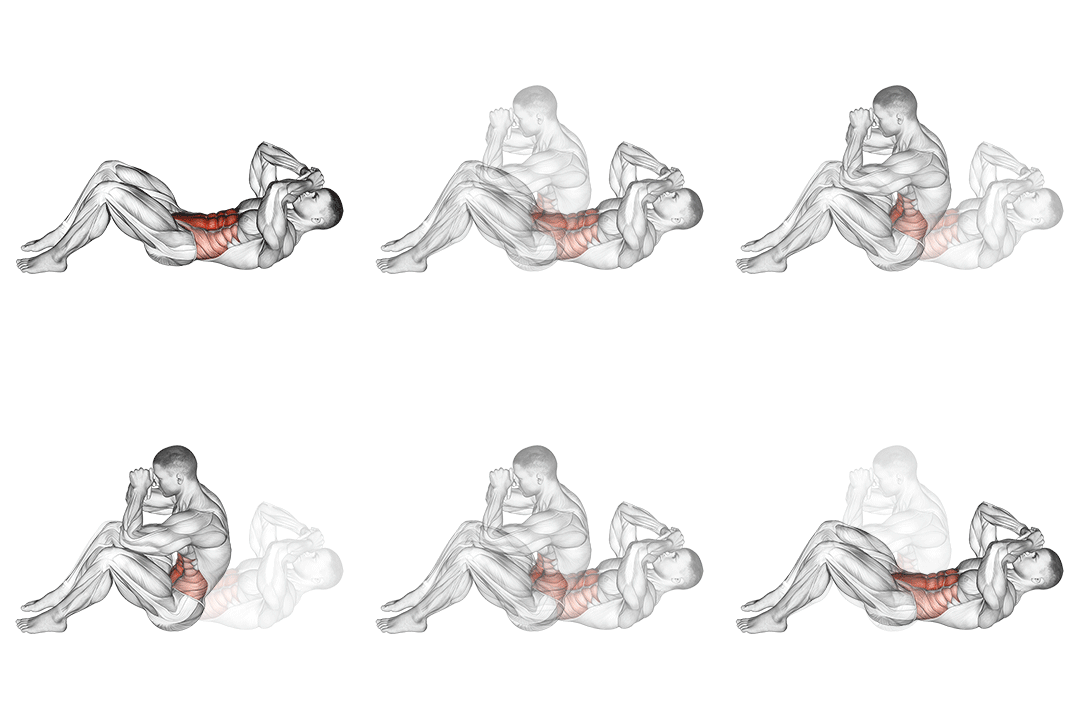
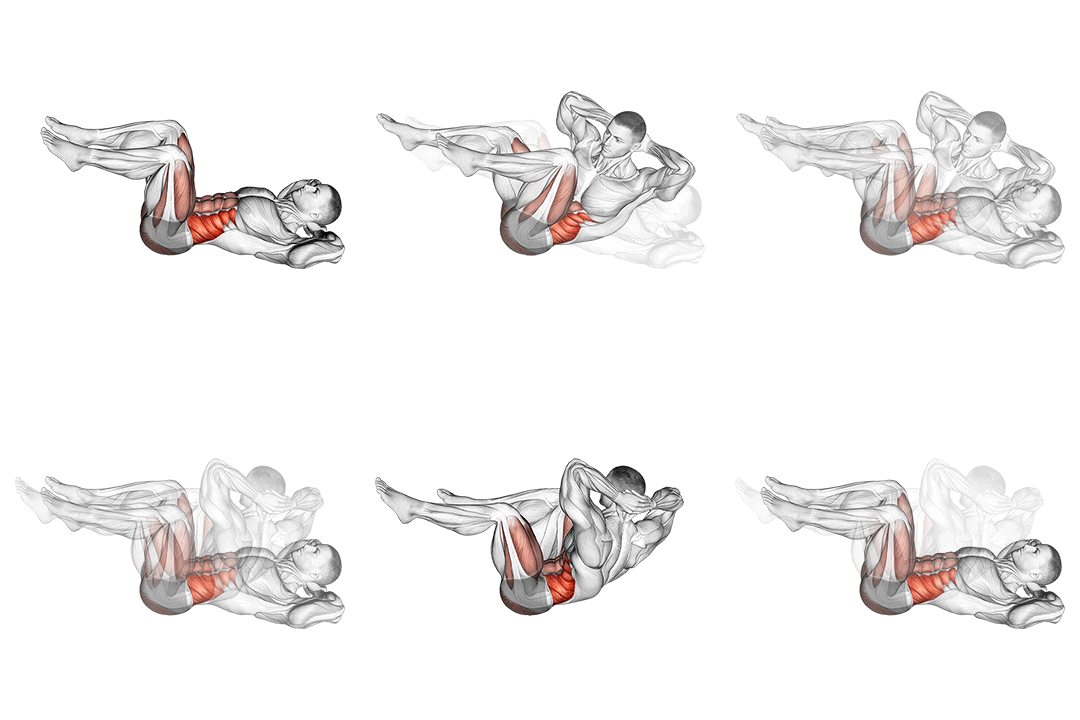
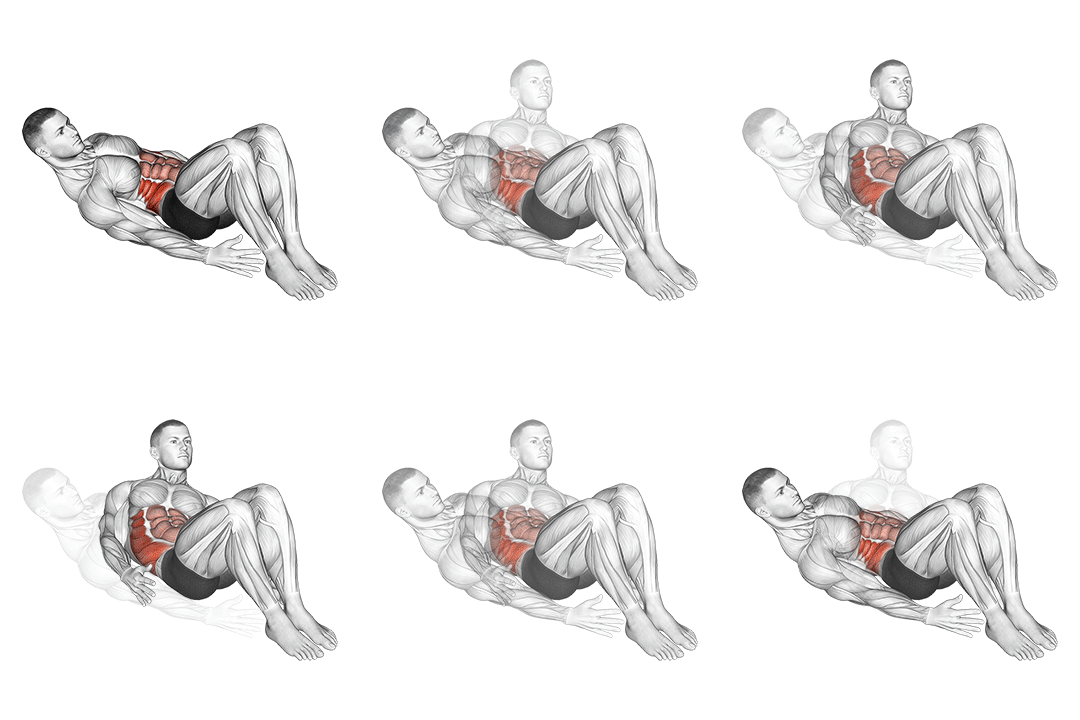
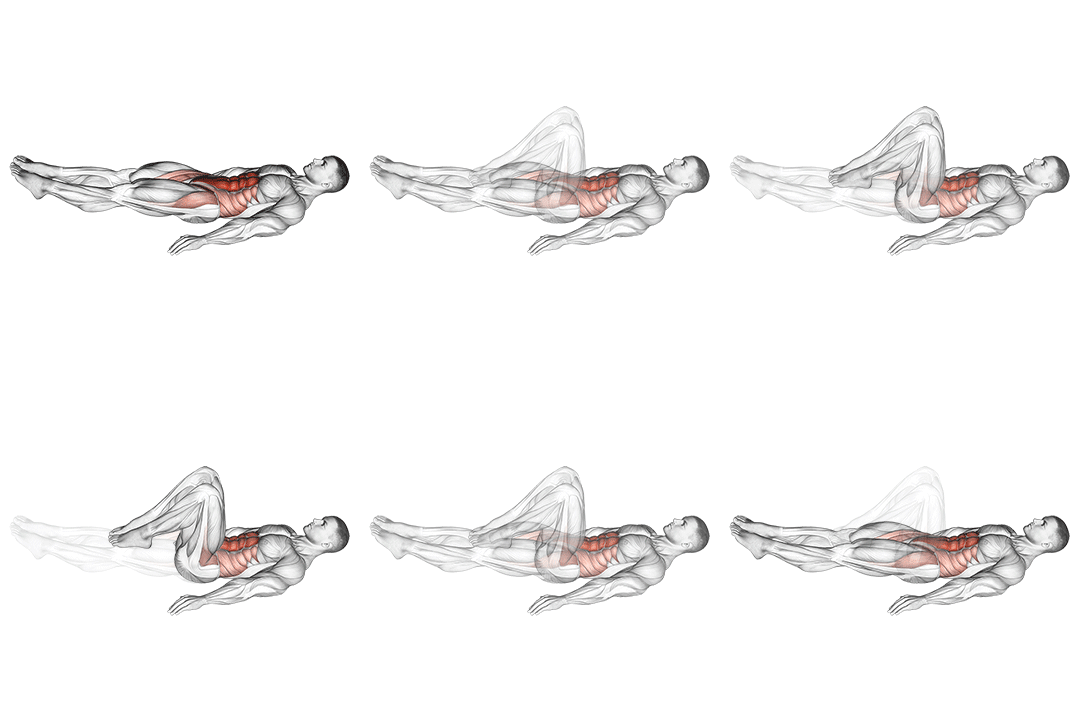
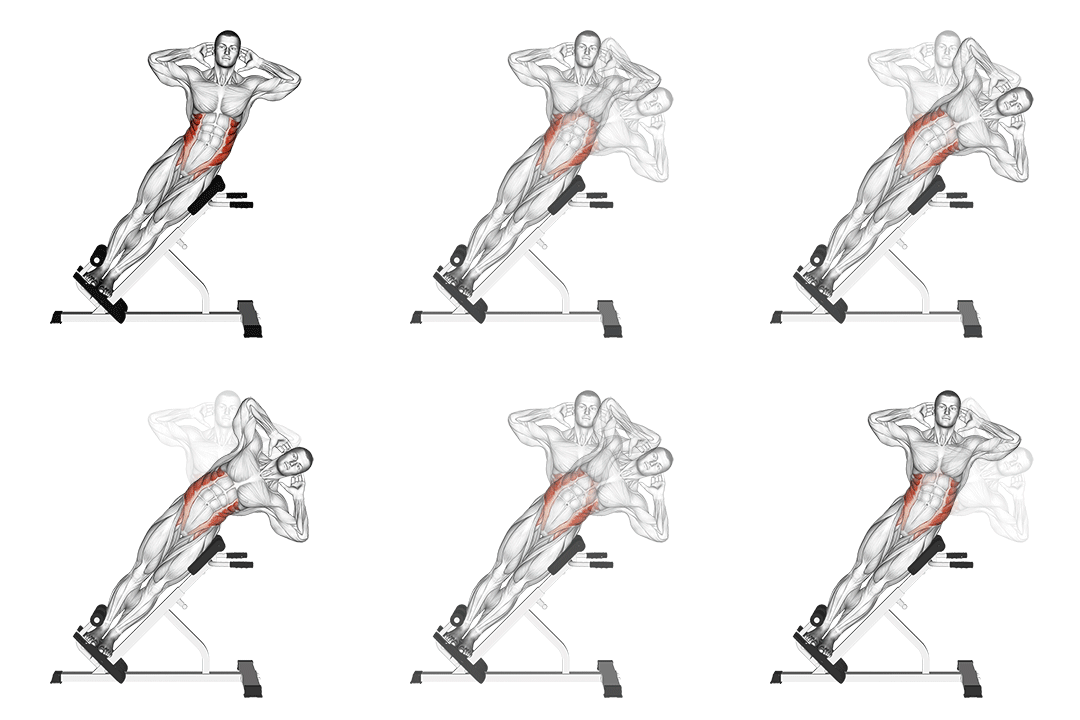
45° Side Bend
beginner strength exercise · body weight · targets abs
- Body part
- waist
- Primary target
- abs
- Equipment
- body weight
- Difficulty
- beginner
The 45-degree side bend is a foundational oblique exercise performed standing or sitting, then bending the upper body to one side at approximately a 45-degree angle. The motion targets the obliques (the lateral abdominal muscles) through controlled lateral flexion. Despite the simple appearance, the exercise builds the often-neglected lateral core when programmed at appropriate volume. Most core training emphasizes anti-extension (planks) and rotation (Russian twists). Lateral flexion gets less attention, leaving the obliques under-trained in many programs. The 45-degree side bend addresses this gap with accessible direct oblique work that compound exercises don't replicate. Where this earns its place is as oblique-focused accessory work in core training. Combined with planks, hollow holds, and rotational exercises, lateral side bends complete the abdominal training spectrum. The trade-off is the modest training stimulus — pure bodyweight side bends won't drive serious oblique development; weighted versions (holding a dumbbell) produce more meaningful change.
Why train the 45° Side Bend?
- Targets the obliques through lateral flexion that compound exercises miss.
- Builds the lateral core that contributes to overall trunk strength.
- Accessible to all fitness levels.
- Easy to scale through dumbbell weight or duration.
- Useful as warm-up or accessory work in core training.
- Pairs naturally with planks for compound core training.
How to do the 45° Side Bend: step by step
- 1Stand with your feet shoulder-width apart and your arms extended straight down by your sides.
- 2Keeping your back straight and your core engaged, slowly bend your torso to one side, lowering your hand towards your knee.
- 3Pause for a moment at the bottom, then slowly return to the starting position.
- 4Repeat on the other side.
- 5Continue alternating sides for the desired number of repetitions.
Muscles worked
Primary
abs
Secondary
obliques
Common mistakes to avoid
Bending forward instead of laterally
Pure lateral flexion only — no forward bend. Forward lean engages the wrong muscles.
Letting the hips shift sideways
The lower body should stay anchored. Hip shifts reduce the lateral flexion stimulus.
Bouncing through reps
Slow controlled tempo (2 seconds each side) drives oblique stimulus.
Excessive range
45 degrees is appropriate. Bending further stresses the spine without additional benefit.
Skipping the second side
Always do both sides equally.
Easier and harder variations
Easier
Reduce range or perform fewer reps while building strength.
Harder
Hold a dumbbell or weight in one hand for added load. Or perform with arms overhead for increased lever arm.
Alternative exercises
Russian twist
Rotational core work. Pair with side bends for compound oblique training.
Side plank
Isometric oblique work. Different stimulus.
Suitcase carry
Functional anti-lateral-flexion. Trains the same muscles in opposing pattern.
How to program the 45° Side Bend into your training
Sets and reps: 3 sets of 15-25 reps per side with 30-60 seconds rest. Frequency: 2-3 times per week. In a core session: 3 sets of 20 side bends, 3 sets of 30-second planks, 3 sets of 15 Russian twists. For general fitness: 2-3 times per week as accessory work.
Recovery and frequency
Recovery within 24-48 hours. Modest load tolerates frequent training.
Frequently asked questions
How many sets and reps?
3 sets of 15-25 reps per side.
How often?
2-3 times per week.
Will this give me visible obliques?
Builds muscle underneath; visibility depends on body fat. Diet drives visibility.
Should I add weight?
Yes for serious oblique development. Hold a dumbbell in one hand at a time.
Will this slim my waist?
No — side bends train obliques but don't burn fat or reduce waist circumference. Diet drives waist size.
Side bend vs Russian twist?
Different motions. Side bend = lateral flexion; Russian twist = rotation. Both useful.
Useful tools for this exercise
Build a workout with the 45° Side Bend
Puna gives you guided bodyweight workouts you can do anywhere — no equipment, no gym, just structured progressions that build real strength.