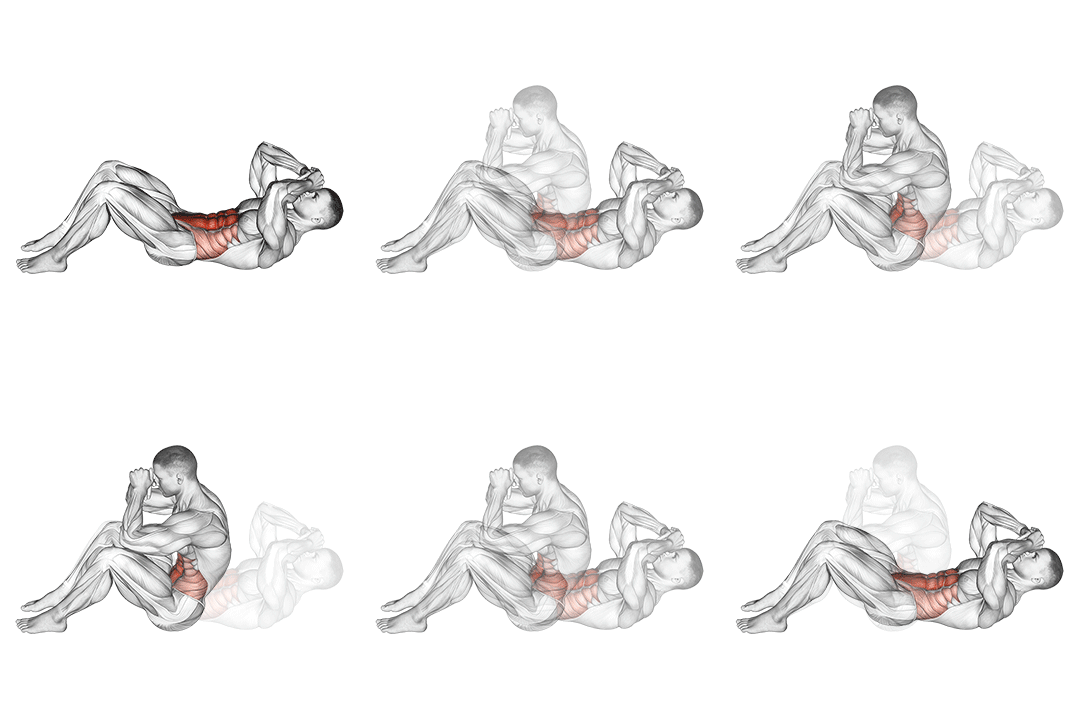
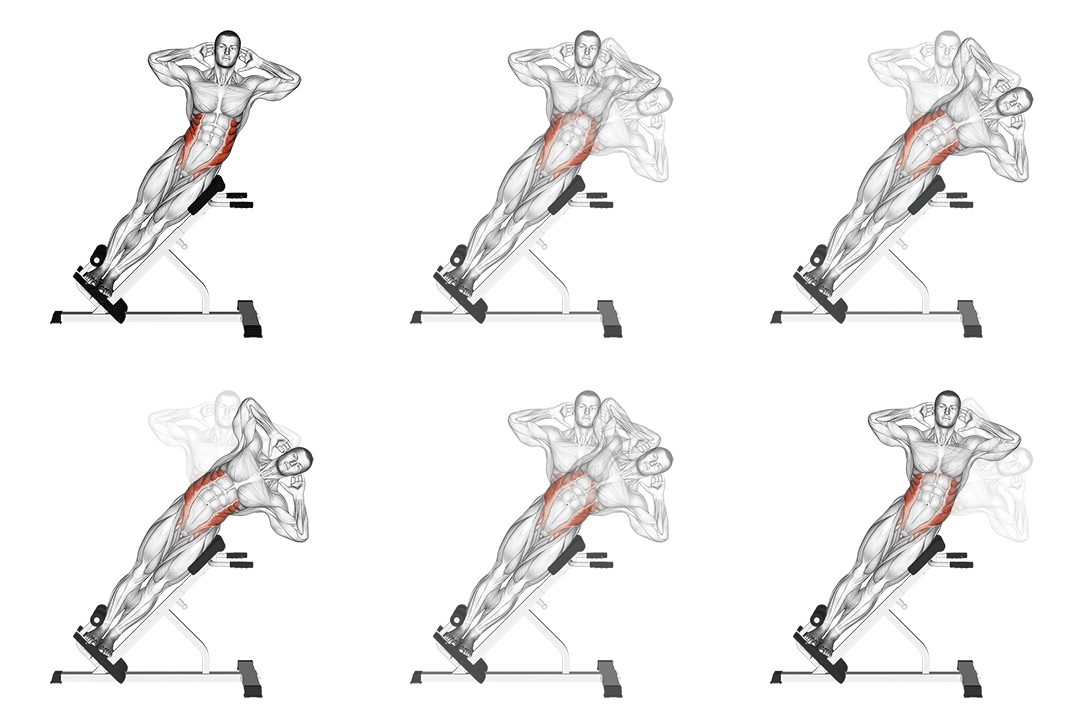
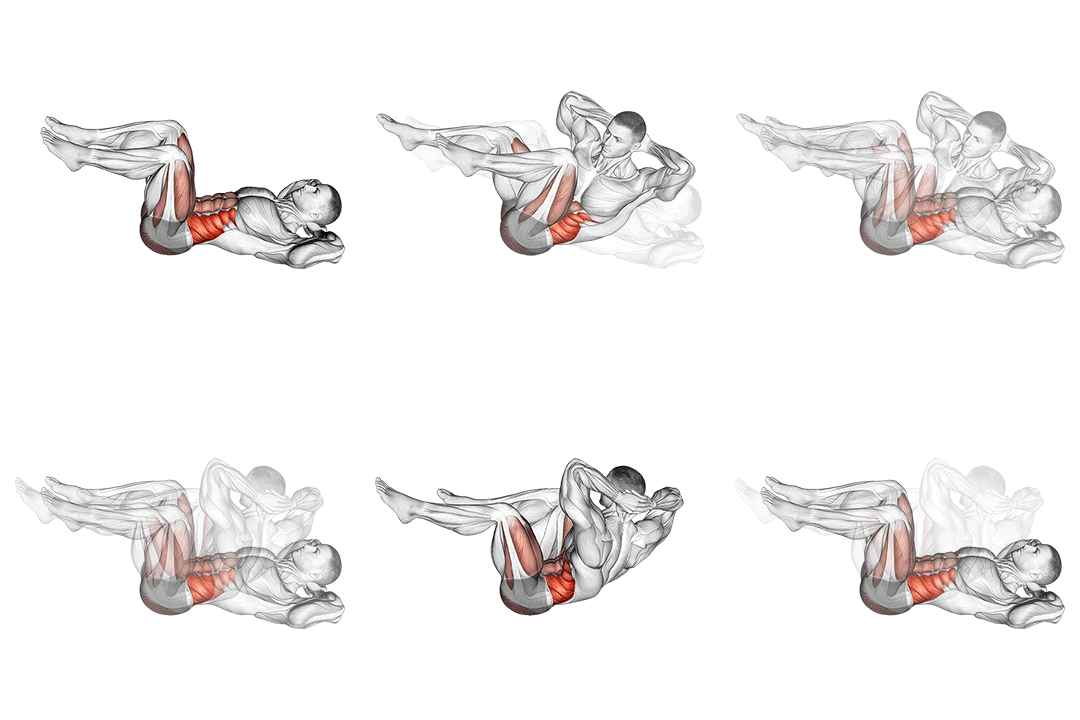
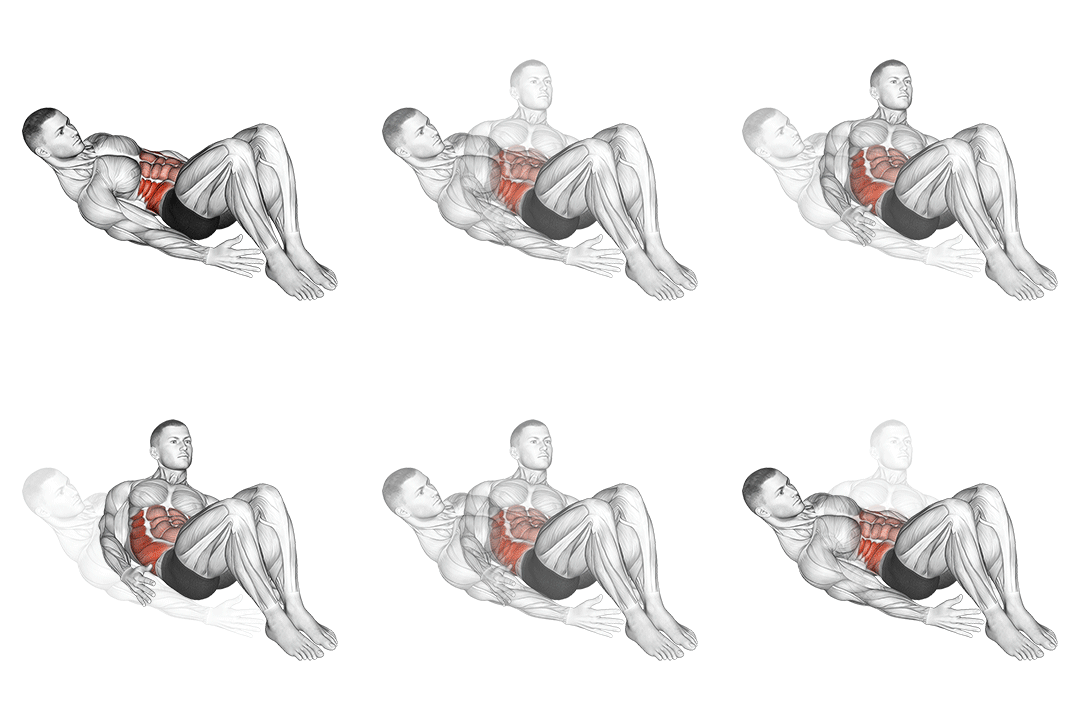
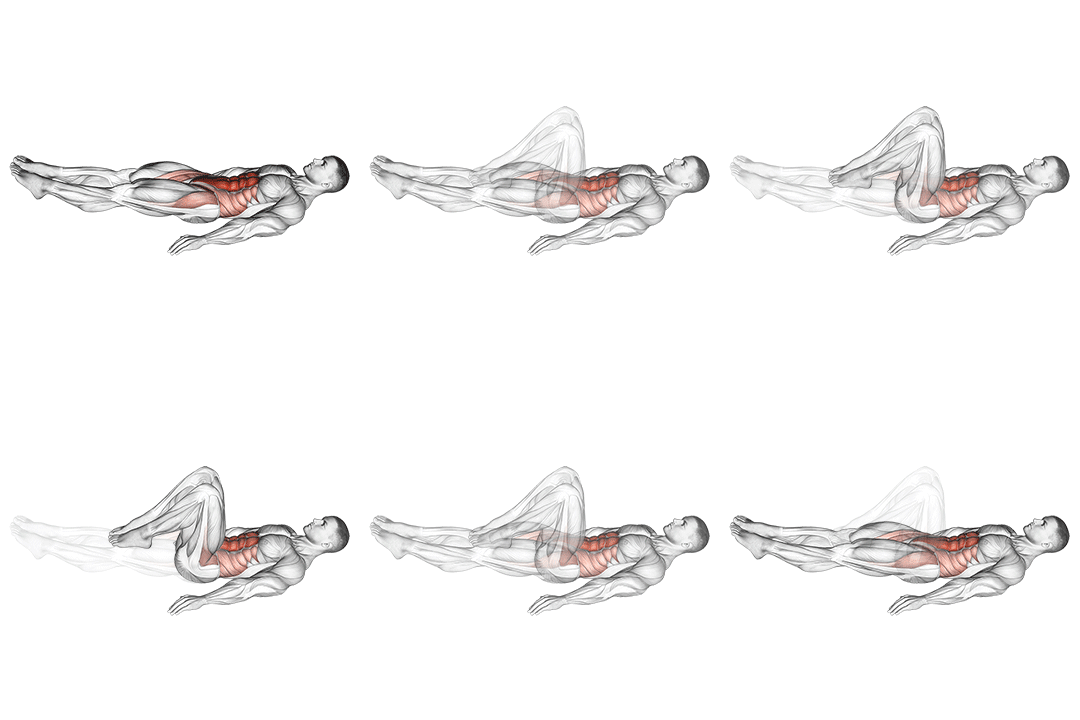
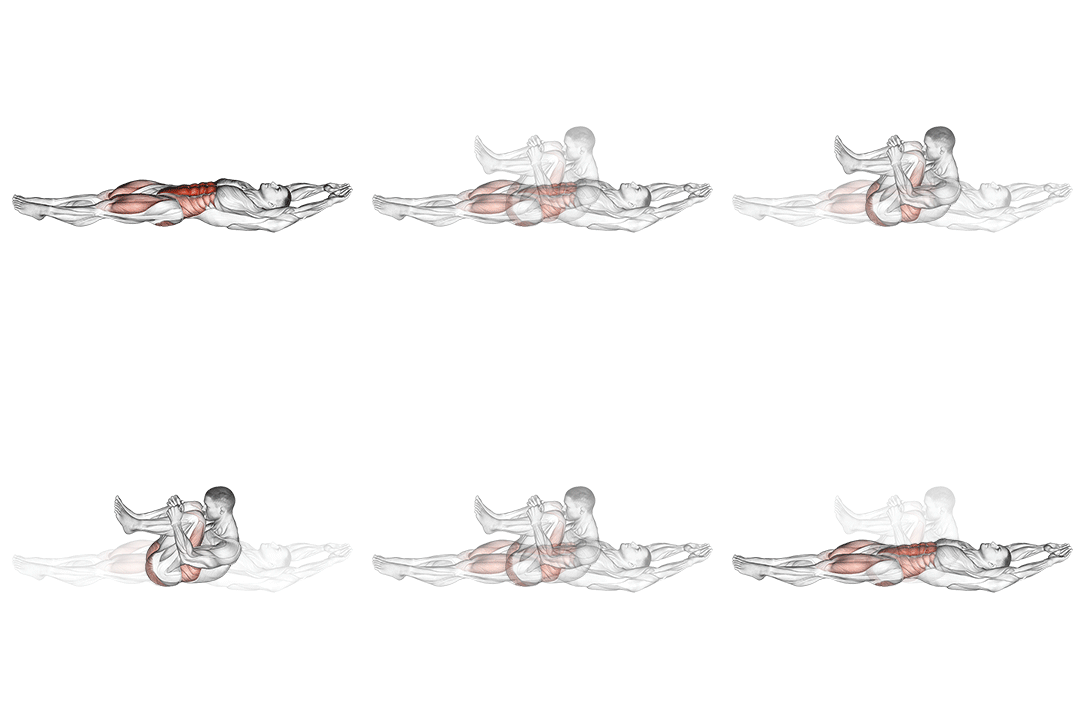
Twisted Leg Raise
intermediate strength exercise · body weight · targets abs
- Body part
- waist
- Primary target
- abs
- Equipment
- body weight
- Difficulty
- intermediate
The twisted leg raise combines a lying leg raise with a rotational element — as you raise the legs, you also rotate them slightly to one side, then alternate sides on each rep. The combination loads the lower abs (from the leg raise) and the obliques (from the rotation) in one efficient movement. This variation matters for trainees who want oblique work alongside lower-ab training. Most lower-ab exercises (reverse crunches, leg raises) train the rectus abdominis without much oblique involvement. Most oblique exercises (Russian twists, side planks) don't load the lower abs. The twisted leg raise combines both, making it a useful efficient exercise when training time is limited. The trade-off is moderate intensity per area. The combined movement loads neither the lower abs nor the obliques as heavily as their dedicated exercises do. For maximum strength in either area, separate exercises are more effective. For general fitness training and time-efficient programming, however, twisted leg raises earn their place.
Why train the Twisted Leg Raise?
- Trains lower abs and obliques in one efficient exercise.
- Time-saving for shorter workouts.
- Reveals oblique asymmetries between sides.
- Adds rotational variety to ab programming dominated by flexion exercises.
- Easy on the lower back than full sit-ups.
- Requires no equipment.
How to do the Twisted Leg Raise: step by step
- 1Lie flat on your back with your legs extended and your arms by your sides.
- 2Place your hands under your glutes for support.
- 3Engage your abs and lift both legs off the ground, keeping them straight.
- 4As you lift your legs, twist your hips to one side, bringing your legs towards your opposite shoulder.
- 5Pause for a moment at the top, then slowly lower your legs back down to the starting position.
- 6Repeat the movement, this time twisting your hips to the other side.
- 7Continue alternating sides for the desired number of repetitions.
Muscles worked
Primary
abs
Secondary
obliques, hip flexors
Common mistakes to avoid
Letting the lower back arch off the floor
When the legs lower with rotation, the lower back wants to arch. Press the lower back into the floor throughout the rep — never let it lift away.
Going too fast for control
Speed kills the rotation work. Move slowly: 1-2 seconds up with the twist, brief pause at the top, 2-3 seconds back down.
Twisting only with the legs, not the trunk
Some trainees rotate only the legs while the trunk stays facing up. The rotation should engage the obliques — feel them contract on the opposite side as the legs twist.
Bending the knees mid-rep
The exercise is more effective with relatively straight legs. Bending the knees significantly turns it into a different exercise.
Always favoring one direction
Train both directions equally — twist left, then right, alternating. Asymmetric training widens existing asymmetries.
Easier and harder variations
Easier
Reduce the twist angle. Or perform with bent knees throughout. Or do separate leg raises and Russian twists as different exercises.
Harder
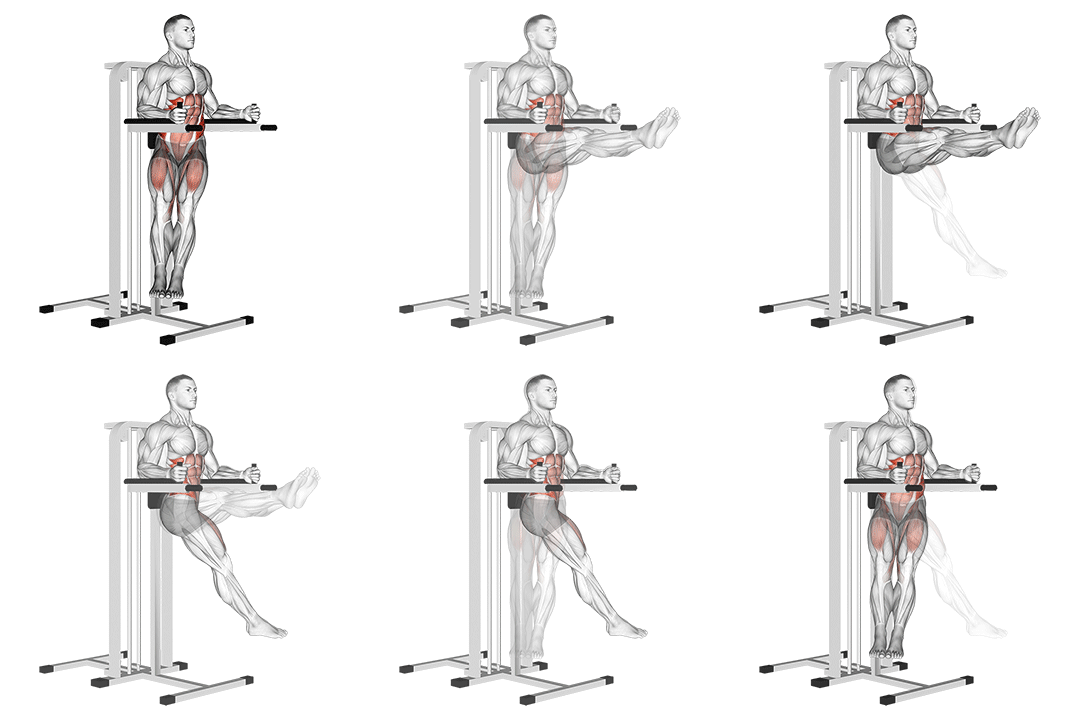
Add ankle weights. Slow the tempo significantly. Hold a medicine ball between the feet. Or progress to hanging twisted leg raises for advanced training.
Alternative exercises
Lying leg raise (straight)
Same lower-ab focus without the twist. Easier baseline.
Russian twist
Pure rotational ab work without the leg raise. Different stimulus pattern.
Bicycle crunch
Combines crunch and rotation with leg cycling. Different combined-stimulus pattern.
How to program the Twisted Leg Raise into your training
Twisted leg raises work as accessory or stand-alone core exercise. Pair with planks (anti-extension) and crunches (upper abs) for complete development. Sets and reps: 3 sets of 10-15 reps per side with 60-90 seconds rest. Total weekly volume of 60-100 reps per side. In a complete core circuit: 3 rounds of 12 twisted leg raises per side, 30-second front plank, 12 crunches, 30-second side plank per side. Done 2-3 times per week. As a finisher: 2-3 sets of 10-12 per side at the end of an upper-body session.
Recovery and frequency
Twisted leg raises at moderate volume have low recovery cost — daily training is fine for most people. The combined lower-ab and oblique demand can leave both areas slightly sore in the first 1-2 weeks. Hip flexor tightness is common; daily stretches help. Lower back fatigue points to form errors.
Frequently asked questions
How many sets and reps of twisted leg raises should I do?
3 sets of 10-15 reps per side with 60-90 seconds rest.
How often should I train twisted leg raises?
2-3 times per week as part of a structured program; daily at moderate volume is fine.
Twisted leg raise vs separate leg raise + Russian twist: which is better?
Twisted leg raises are more efficient (one exercise instead of two). Separate exercises load each area more heavily. Use twisted leg raises for time-efficient combined work; use separate exercises for maximum stimulus to each area.
Will twisted leg raises give me visible obliques?
They build the obliques, but visible muscle requires low body fat. Diet drives visibility; training drives the muscle.
Should I count one rep as both sides or each side separately?
Each side separately. Counting per side reveals asymmetries.
Why is one side so much harder than the other?
Oblique asymmetry — almost everyone has it. The asymmetry typically narrows within 6-12 weeks of equal-rep practice.
Useful tools for this exercise
Build a workout with the Twisted Leg Raise
Puna gives you guided bodyweight workouts you can do anywhere — no equipment, no gym, just structured progressions that build real strength.