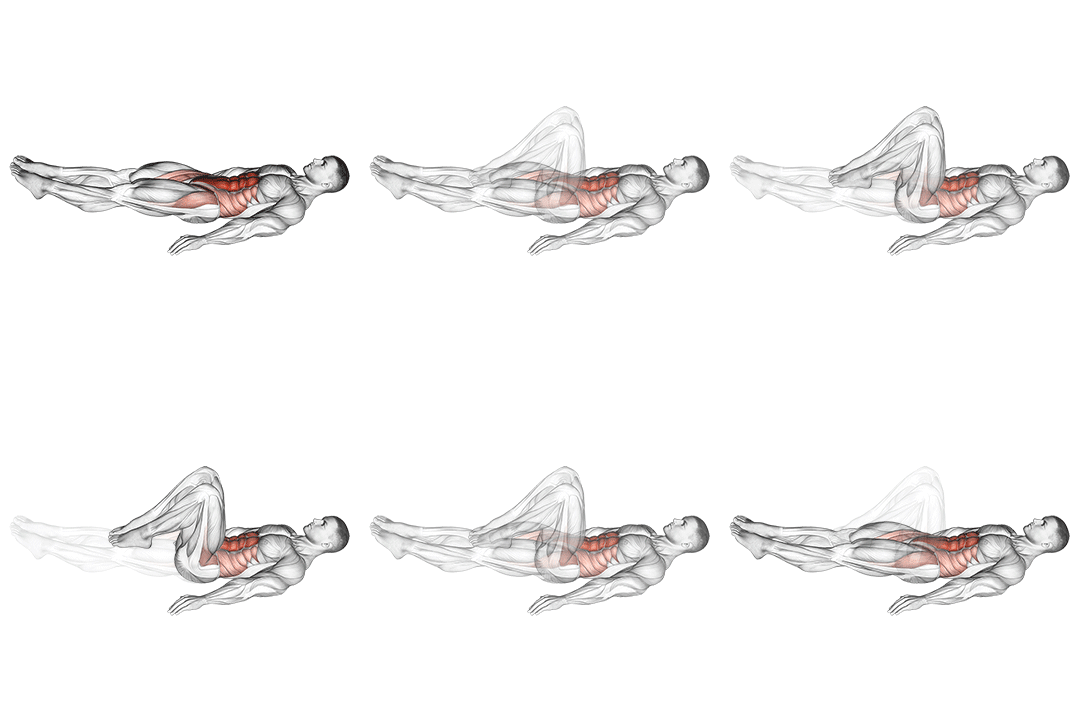
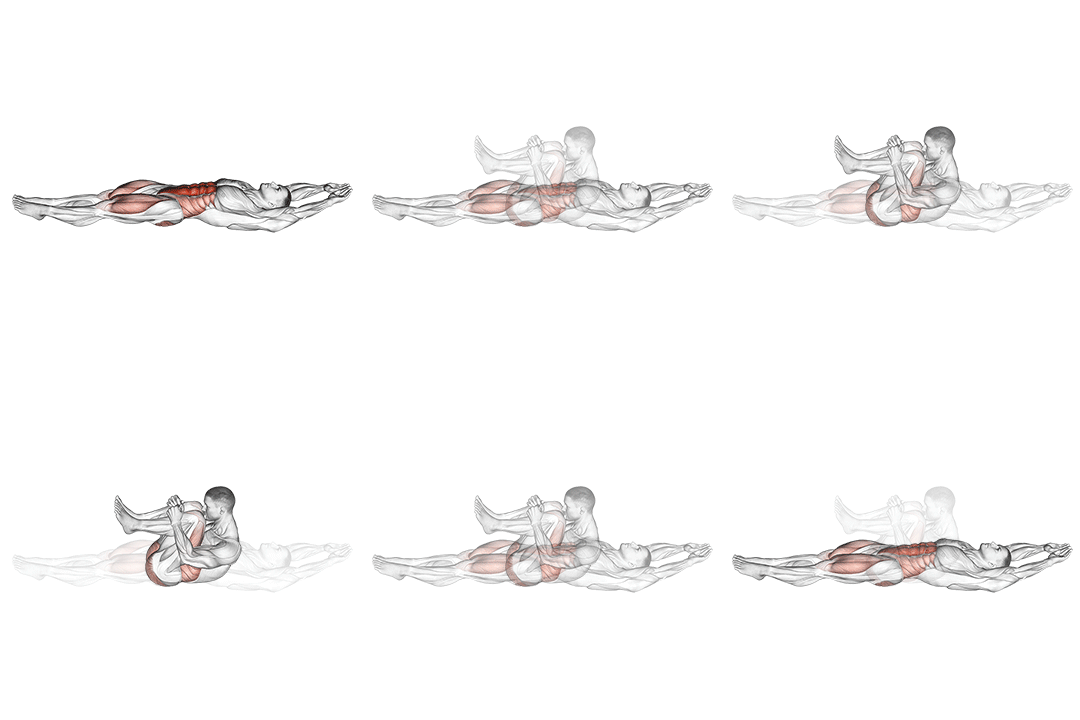
Tuck Crunch
beginner strength exercise · body weight · targets abs
- Body part
- waist
- Primary target
- abs
- Equipment
- body weight
- Difficulty
- beginner
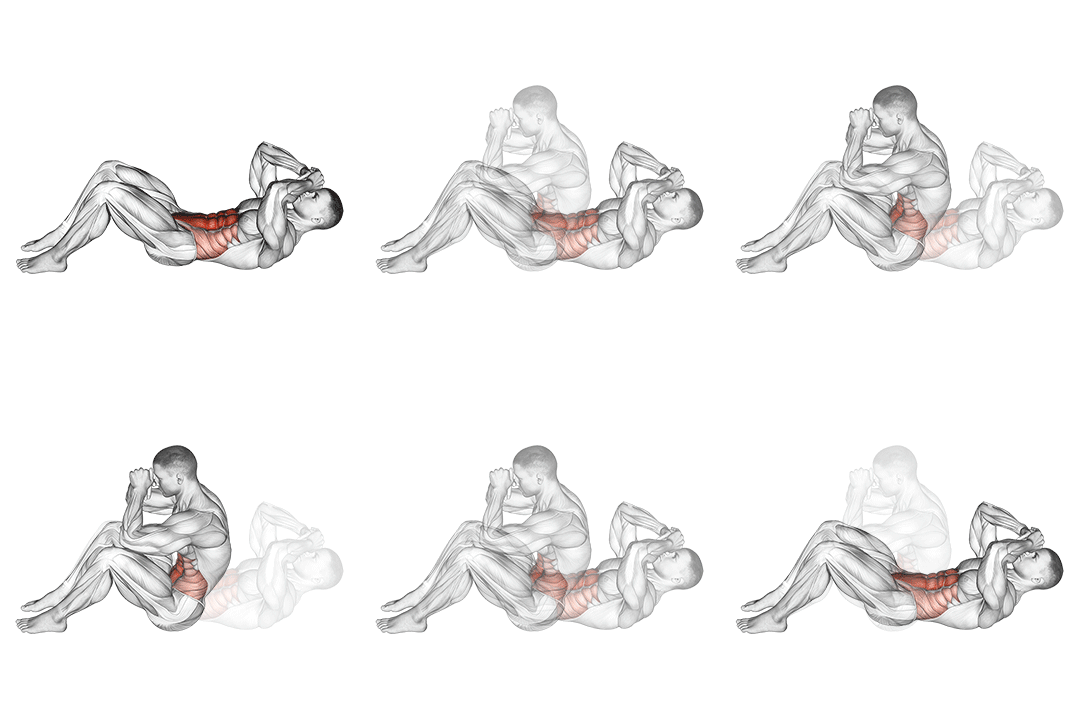
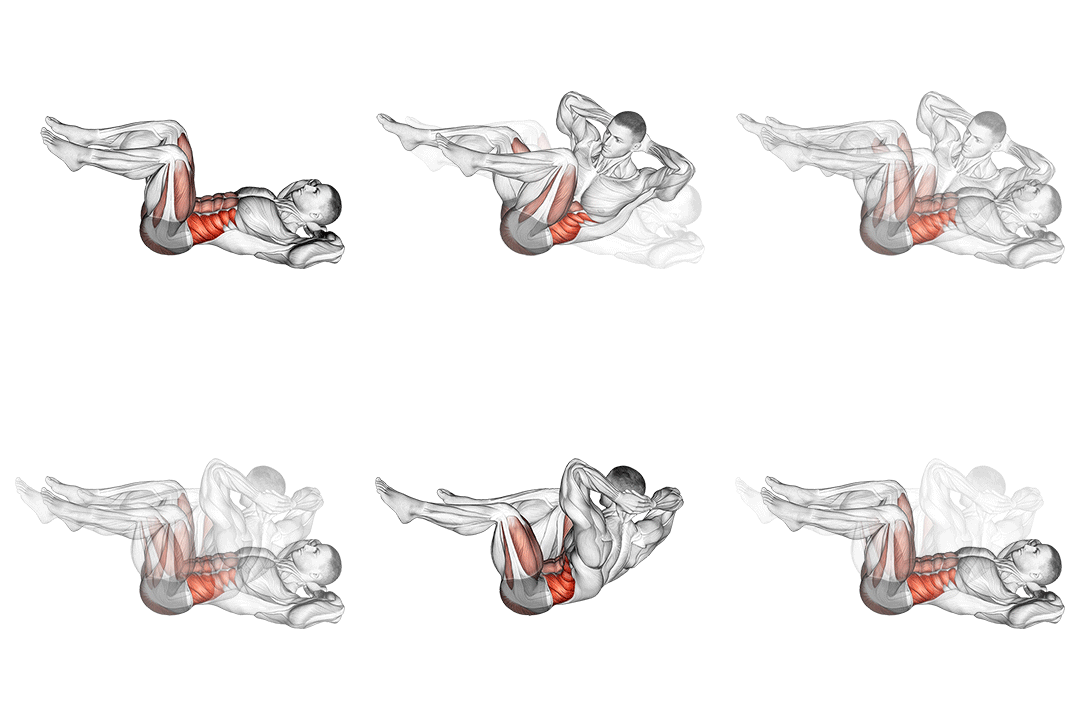
The tuck crunch is a variation of the basic crunch where the legs are held in a tucked position (knees bent, feet hovering near the chest) throughout the entire rep. By keeping the legs lifted, the lower abs and hip flexors stay engaged isometrically while the upper abs do the dynamic crunch work. The result is an ab exercise that loads both upper and lower portions of the rectus abdominis simultaneously. What makes the tuck crunch worth knowing is the efficiency. Many ab programs use separate exercises for upper abs (crunches) and lower abs (reverse crunches or leg raises). The tuck crunch combines both stimuli in one exercise, which makes it a useful time-saver in shorter workouts. Three sets of tuck crunches accomplish what would otherwise require six sets of two separate exercises. The trade-off is the moderate intensity. The tuck crunch doesn't load either the upper or lower abs as heavily as their dedicated exercises do. For trainees specifically chasing maximum upper-ab or lower-ab strength, separate exercises are more effective. But for general ab fitness, time-constrained training, or trainees who want a single efficient ab movement, the tuck crunch fills the role well.
Why train the Tuck Crunch?
- Trains upper and lower abs simultaneously in one efficient movement.
- Time-saving for shorter workouts when separate ab exercises aren't practical.
- Easier on the lower back than full sit-ups or weighted ab work.
- Requires no equipment and minimal space.
- Pairs well with planks and side planks for complete core training.
- Accessible to most fitness levels with simple regression options.
How to do the Tuck Crunch: step by step
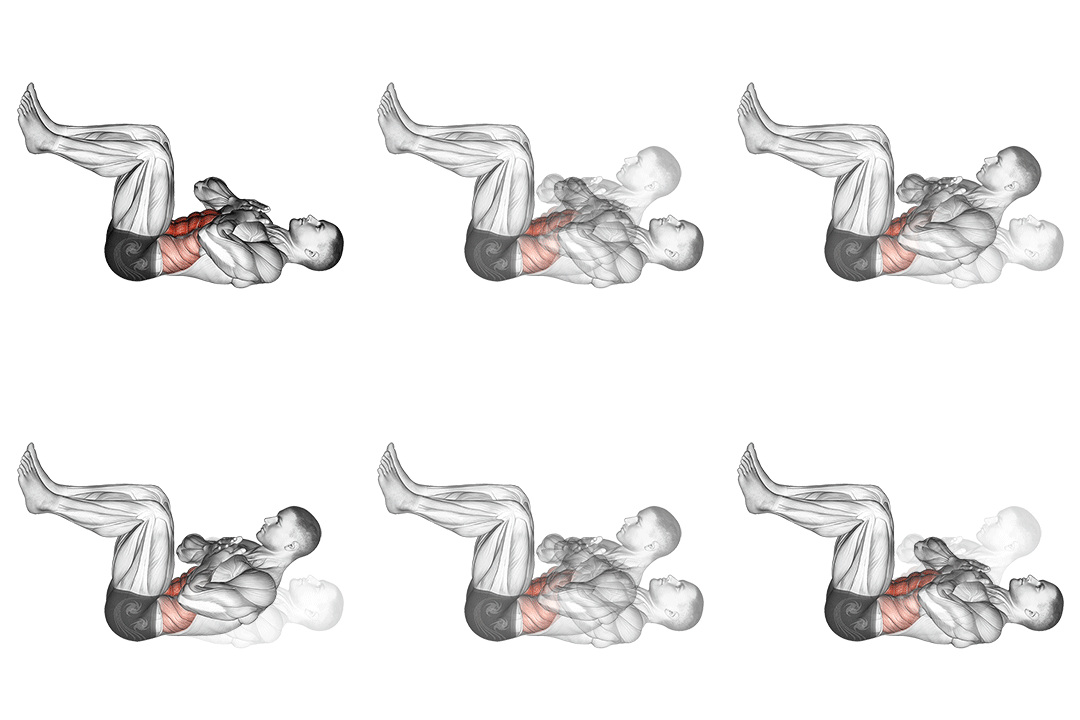
- 1Lie flat on your back with your knees bent and feet flat on the ground.
- 2Place your hands behind your head with your elbows pointing outwards.
- 3Engaging your abs, lift your shoulder blades off the ground and bring your knees towards your chest, simultaneously curling your upper body towards your knees.
- 4Pause for a moment at the top, then slowly lower your shoulder blades and extend your legs back to the starting position.
- 5Repeat for the desired number of repetitions.
Muscles worked
Primary
abs
Secondary
hip flexors
Common mistakes to avoid
Letting the feet drop to the floor between reps
The tuck position should be maintained throughout the entire set. Letting the feet rest on the floor between reps removes the lower-ab and hip flexor engagement that distinguishes this from a regular crunch. Keep the knees tucked and feet hovering throughout.
Pulling on the neck with the hands
Hands behind the head are a guide, not a tool. Pulling the head forward strains the cervical spine. Imagine an apple under your chin; keep that space throughout every rep.
Going too fast for control
Speed defeats the purpose. Slow each rep down: 1-2 seconds up, brief pause at the top, 1-2 seconds down. The maintained tuck position requires sustained tension that benefits from controlled pace.
Rocking the body side to side for momentum
Maintaining the tuck position is hard, and rocking side to side can feel like it helps. It doesn't — it shifts work away from the abs. Keep the body steady, with movement only in the upper torso during the crunch.
Holding the breath through the rep
Bracing tightly often means stopping breathing. Exhale on the crunch, inhale on the descent. Continuous breathing supports better core engagement.
Easier and harder variations
Easier
Place the feet on the floor with knees bent (no tuck), turning the exercise into a standard crunch. Or hold the tuck position only between reps — let the feet rest briefly during each crunch.
Harder
Add a reverse crunch motion (bring the knees toward the chest as you lift the upper body). Or hold a light weight (1-2 lb) at the chest or above the head. Or progress to V-ups (legs straight throughout).
Alternative exercises
Bicycle crunch
Combines crunch with leg cycling. Different stimulus pattern, similar combined upper- and lower-ab demand.
V-up
More demanding version with legs straight throughout. Significantly harder due to the longer lever arm.
Dead bug
Different position (supine with limbs extending) but similar combined upper- and lower-ab work.
How to program the Tuck Crunch into your training
Tuck crunches work as accessory or stand-alone core exercise in any session. Pair with planks (anti-extension) and dead bugs (deep core stability) for complete core development. Sets and reps: 3 sets of 12-20 reps with 30-60 seconds rest. Total weekly volume of 75-150 reps drives most adaptations. In a complete core circuit: 3 rounds of 15 tuck crunches, 30-second front plank, 30-second side plank per side, 10 dead bugs per side. Done 2-3 times per week. As a finisher: 2-3 sets of 15 tuck crunches at the end of an upper-body session. Adds combined upper- and lower-ab volume in 5 minutes. For people working a busy schedule (single ab exercise programmed 3 times per week): 3 sets of 15-20 tuck crunches per session. Not optimal for advanced ab development but sufficient for general fitness. Daily tuck crunches in moderate volume (30-50 reps) are fine and useful as part of a morning routine.
Recovery and frequency
Tuck crunches at moderate volume have low recovery cost — daily training is fine for most people. The combined upper- and lower-ab demand means soreness can extend to both areas in the first 1-2 weeks of training, but it fades quickly. Hip flexor tightness from the maintained tuck position is the most common feedback. Daily hip flexor stretches between sessions help. Neck soreness usually means the neck flexors are doing too much; reduce range and place hands at the chest if it persists.
Frequently asked questions
How many sets and reps of tuck crunches should I do?
3 sets of 12-20 reps with 30-60 seconds rest. Total weekly volume of 75-150 reps drives most adaptations.
How often should I train the tuck crunch?
2-3 times per week as part of a structured program; daily at moderate volume is fine — the abs recover quickly.
Tuck crunch vs regular crunch: which is better?
Tuck crunches add lower-ab and hip flexor engagement to the upper-ab work of regular crunches. Better choice if you want efficiency in one exercise; separate crunches and reverse crunches are better if you want maximum stimulus to each portion.
Will tuck crunches give me a six-pack?
They build the muscle, but visible abs come from low body fat. Doing tuck crunches daily won't make abs visible if body fat is too high. Diet drives visibility; training drives the muscle development.
Why do my hip flexors get tight from tuck crunches?
The maintained tuck position requires constant hip flexor engagement. Daily hip flexor stretches between sessions prevent the cumulative tightness. If the tightness becomes uncomfortable, reduce volume or alternate with non-tuck ab exercises.
Are tuck crunches good for back pain?
Often yes — they're gentler on the spine than full sit-ups and avoid the spinal flexion of weighted ab work. Confirm with a healthcare provider if you have known back issues.
Useful tools for this exercise
Build a workout with the Tuck Crunch
Puna gives you guided bodyweight workouts you can do anywhere — no equipment, no gym, just structured progressions that build real strength.