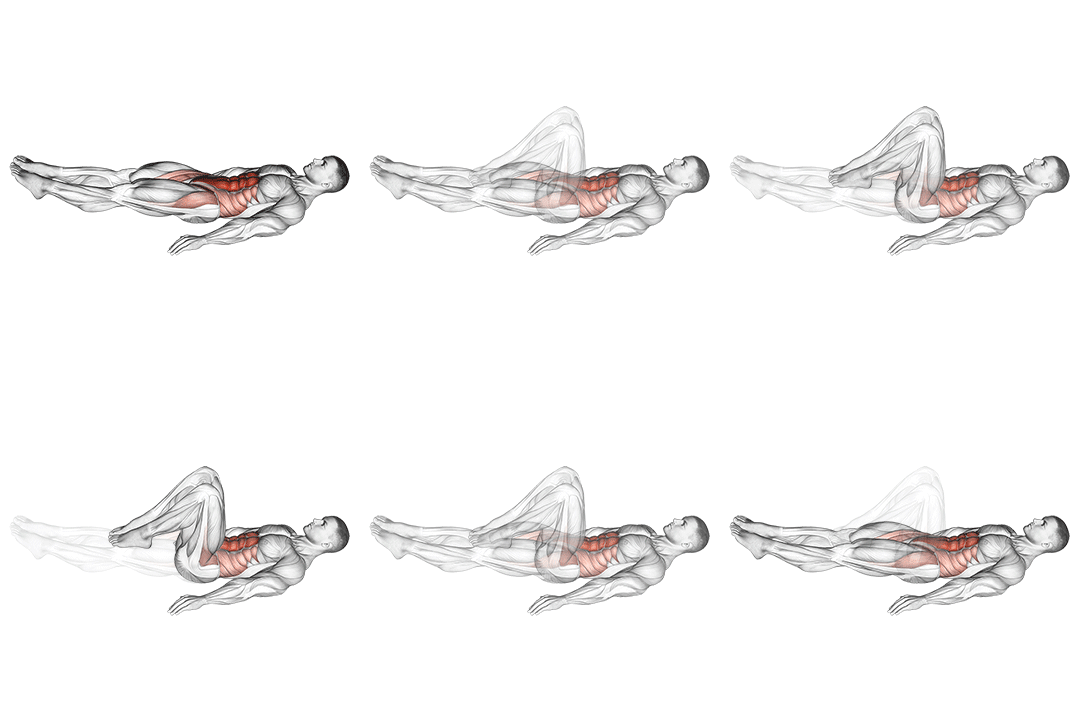
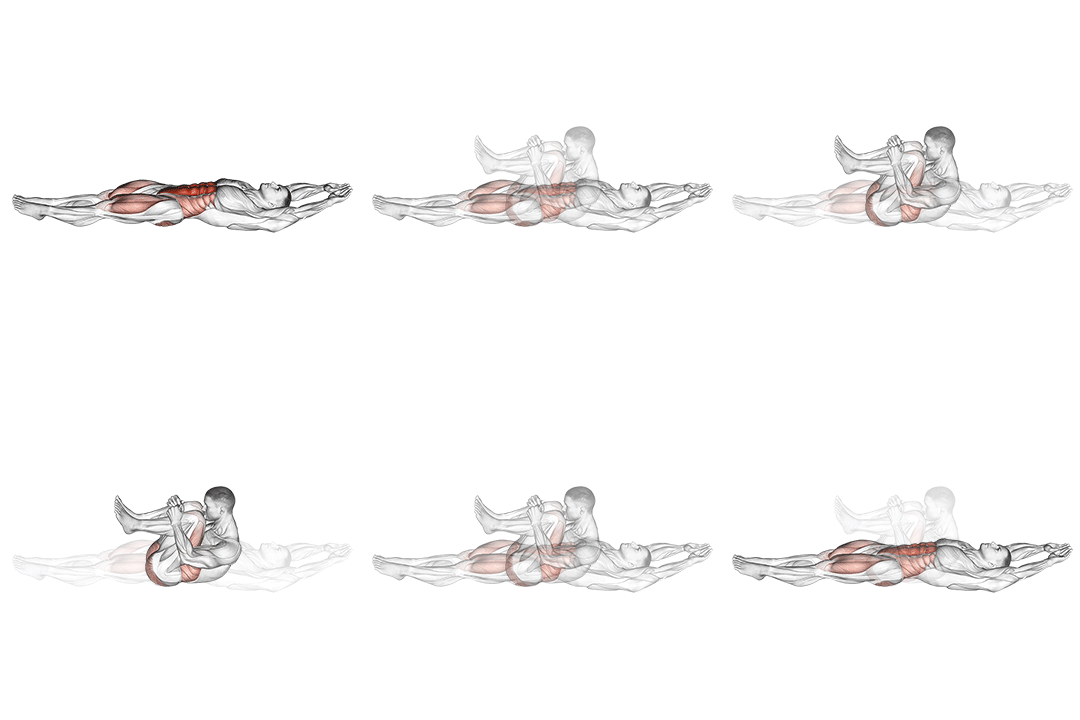
Suspended Reverse Crunch
advanced strength exercise · body weight · targets abs
- Body part
- waist
- Primary target
- abs
- Equipment
- body weight
- Difficulty
- advanced
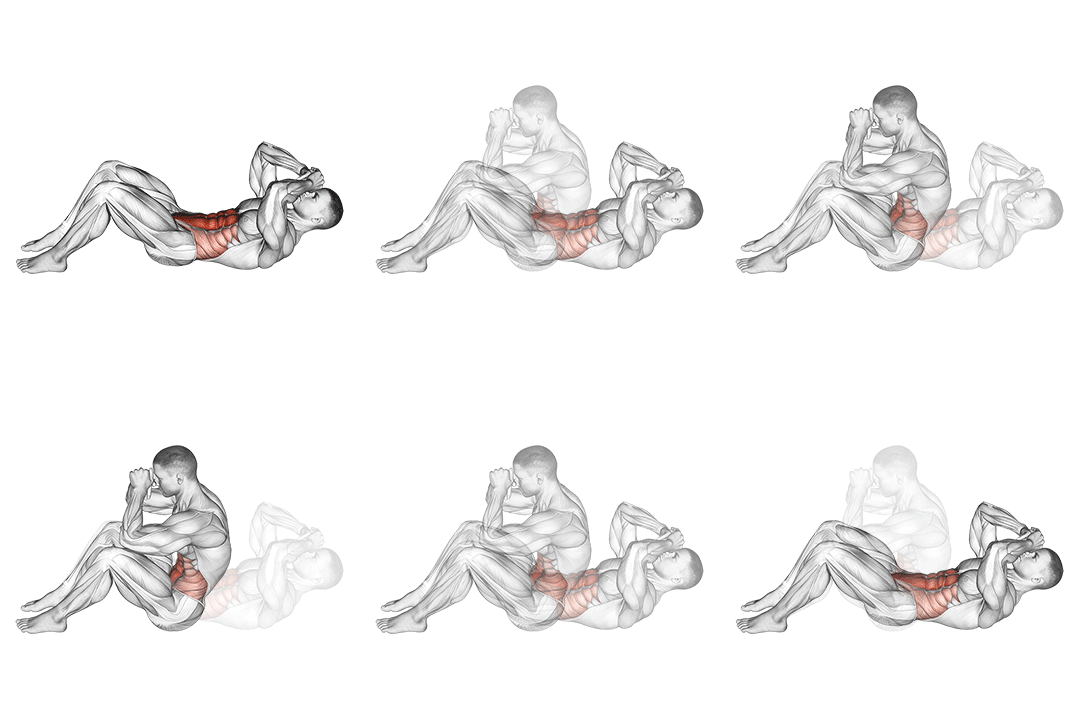
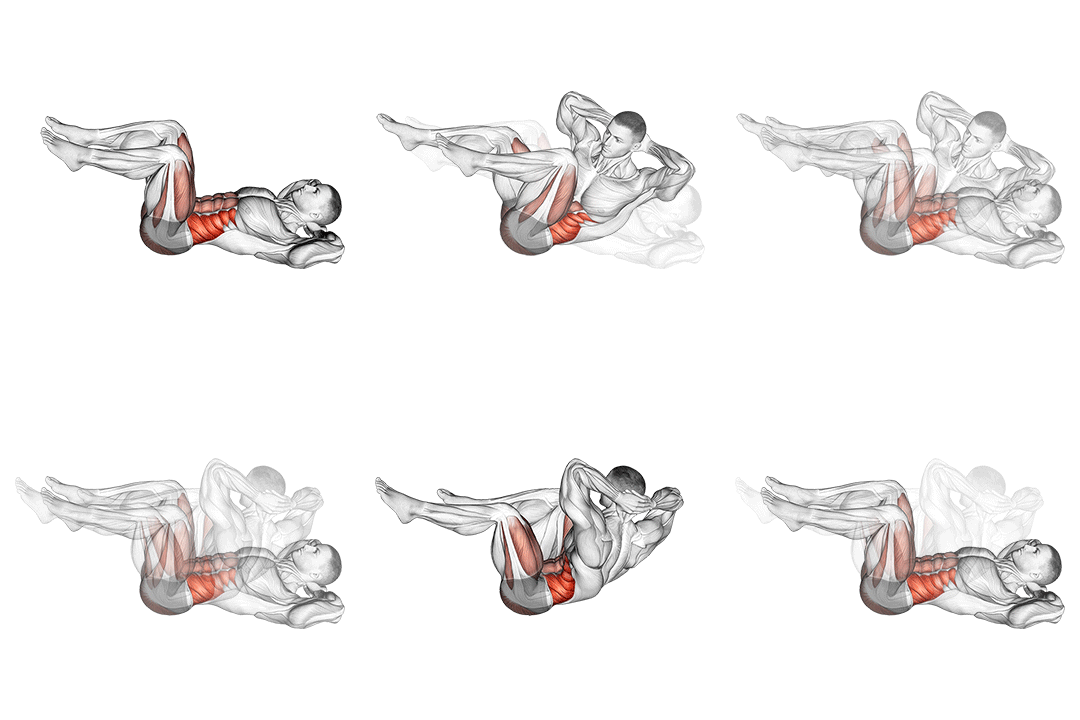
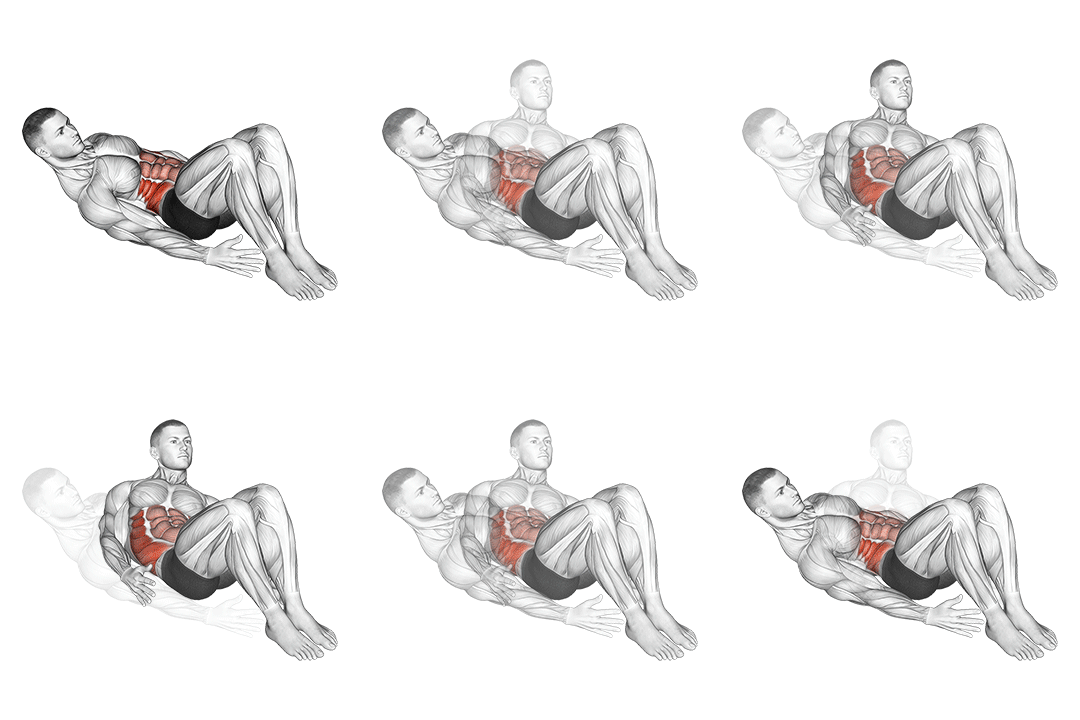
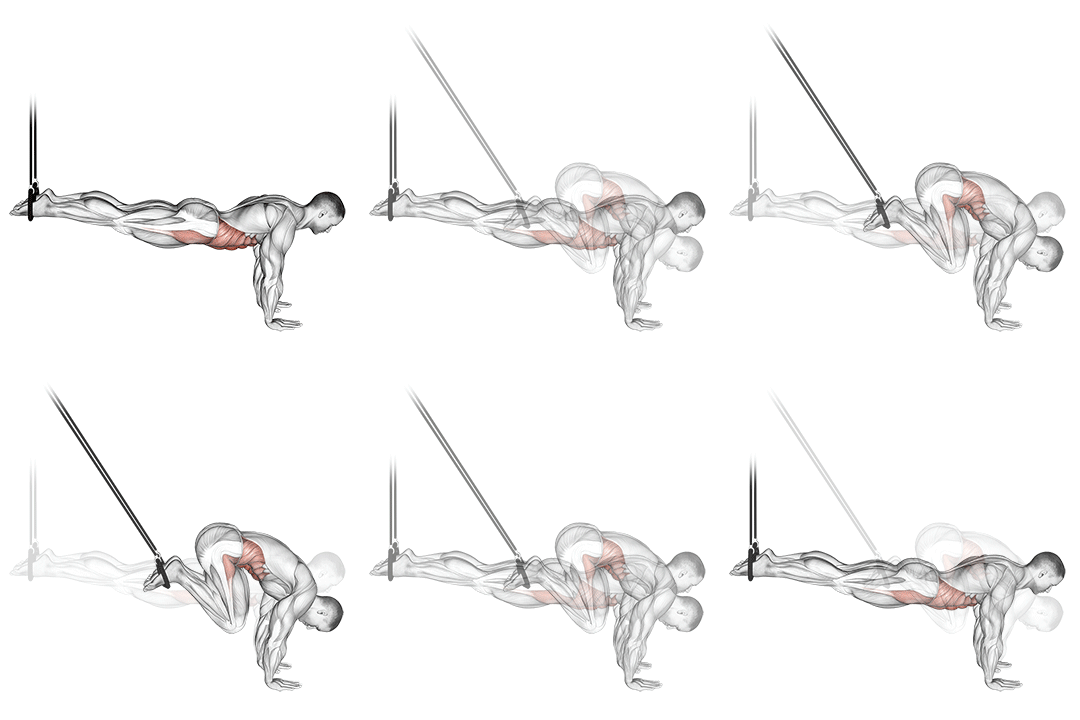
The suspended reverse crunch is performed using suspension straps (TRX or similar) with the feet in the straps. From a face-up position with the body forming a horizontal plank suspended by the feet, you contract the lower abs to bring the knees toward the chest, then return under control. The suspended position adds significant instability to the standard reverse crunch, dramatically increasing the demand on the lower abs and core stabilizers. This is one of the more demanding lower-ab exercises available with suspension trainer access. The instability of the foot straps means the lower abs and hip flexors have to work harder to control the body's position throughout each rep. Most trainees who can do 15+ standard reverse crunches can manage only 6-10 suspended reverse crunches in their first attempts. It's particularly useful for athletes who want lower-ab work that simultaneously trains anti-rotation and overall trunk stability. The combined demands make it efficient for time-constrained training. The trade-off is the equipment requirement — without suspension straps, you can't replicate the exercise.
Why train the Suspended Reverse Crunch?
- Adds significant instability demand to the standard reverse crunch.
- Trains the lower abs and core stabilizers simultaneously.
- Carries over to athletic movements requiring trunk stability under dynamic conditions.
- Reveals stability asymmetries between sides.
- Useful for trainees with TRX or suspension trainer access.
- Provides clear progression beyond standard reverse crunches.
How to do the Suspended Reverse Crunch: step by step
- 1Hang from a pull-up bar with your arms fully extended and your palms facing away from you.
- 2Engage your core and lift your knees up towards your chest, curling your pelvis towards your ribcage.
- 3Pause for a moment at the top, then slowly lower your knees back down to the starting position.
- 4Repeat for the desired number of repetitions.
Muscles worked
Primary
abs
Secondary
hip flexors
Common mistakes to avoid
Letting the body rotate or sway
The instability of the straps means the body wants to rotate or swing. Brace the abs hard throughout to keep the body straight and stable.
Using momentum to swing the knees up
Hip flexor momentum bypasses the lower abs. Move slowly: 1-2 seconds up, brief pause at the top, 2-3 seconds down.
Setting the strap too high or too low
The straps should hold the feet at roughly the height of a standard low-bar setup — usually about 6-12 inches off the floor. Too high makes the exercise easier; too low risks foot contact with the floor.
Letting the lower back arch off the support surface
Press the lower back into the floor or bench underneath you throughout the rep. Arching loses core engagement.
Choosing this before mastering standard reverse crunches
Build to 3 sets of 15 strict reverse crunches before adding the suspension instability.
Easier and harder variations
Easier
Standard reverse crunches on the floor. Or perform with the straps attached at a higher position to reduce instability.
Harder
Slow the tempo significantly. Add a hold at the top (3-5 seconds with maximum lower-ab squeeze). Or progress to suspended pike-ups (legs straight, body folding).
Alternative exercises
Reverse crunch
Standard floor version. Easier baseline without the suspension instability.
Hanging knee raise
Different position (vertical hang) with similar lower-ab focus.
Suspended pike-up
Same suspended position with legs straight. Significantly more demanding.
How to program the Suspended Reverse Crunch into your training
Suspended reverse crunches work as accessory or primary lower-ab work for trainees with suspension trainer access. Sets and reps: 3 sets of 8-12 reps with 60-90 seconds rest. Total weekly volume of 30-60 reps drives most adaptations. In a complete core circuit: 3 sets of 10 suspended reverse crunches, 30-second front plank, 12 crunches, 30-second side plank per side. Done 2-3 times per week. Do not pair with heavy hanging or suspended exercises in the same session — the cumulative core and shoulder load is excessive.
Recovery and frequency
Suspended reverse crunches in moderate volume have moderate recovery cost. The combined ab and stability demand creates focused fatigue in early weeks.
Frequently asked questions
How many sets and reps should I do?
3 sets of 8-12 reps with 60-90 seconds rest.
How often should I train this exercise?
2-3 times per week with 48 hours between sessions.
Suspended vs standard reverse crunch: which is better?
Standard is more accessible and builds basic lower-ab strength. Suspended adds stability demand. Use both — standard for primary work, suspended for stability development.
Do I need TRX for this exercise?
TRX, rings, or any suspension trainer rated for body weight works. Don't improvise with non-rated straps.
Will suspended reverse crunches give me a six-pack?
They build the lower abs, but visible abs come from low body fat. Diet drives visibility; training drives the muscle.
Why does my back hurt during this exercise?
Almost certainly the lower back arching off the support surface as the body moves. Press the back into the floor and reduce range if needed.
Useful tools for this exercise
Build a workout with the Suspended Reverse Crunch
Puna gives you guided bodyweight workouts you can do anywhere — no equipment, no gym, just structured progressions that build real strength.