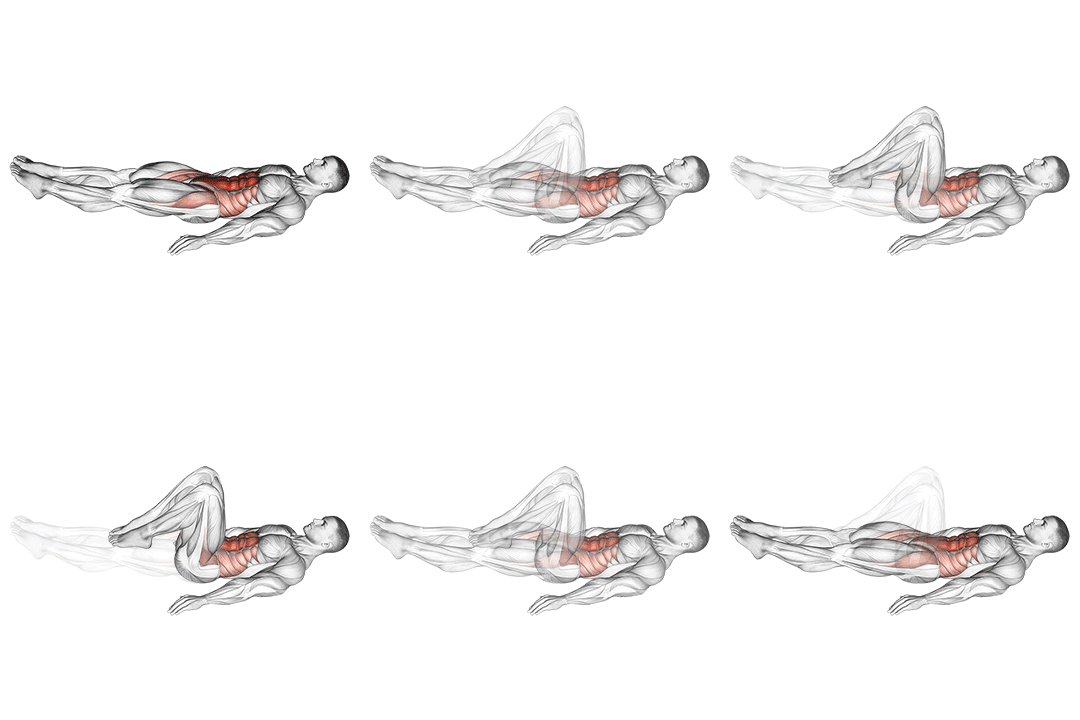
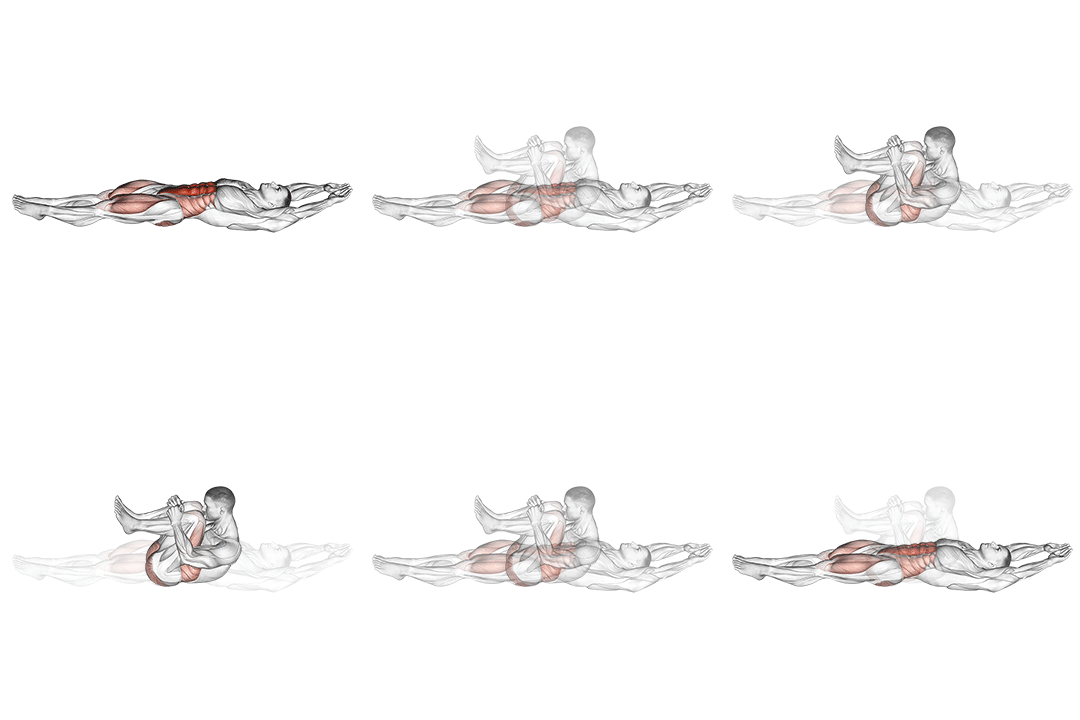
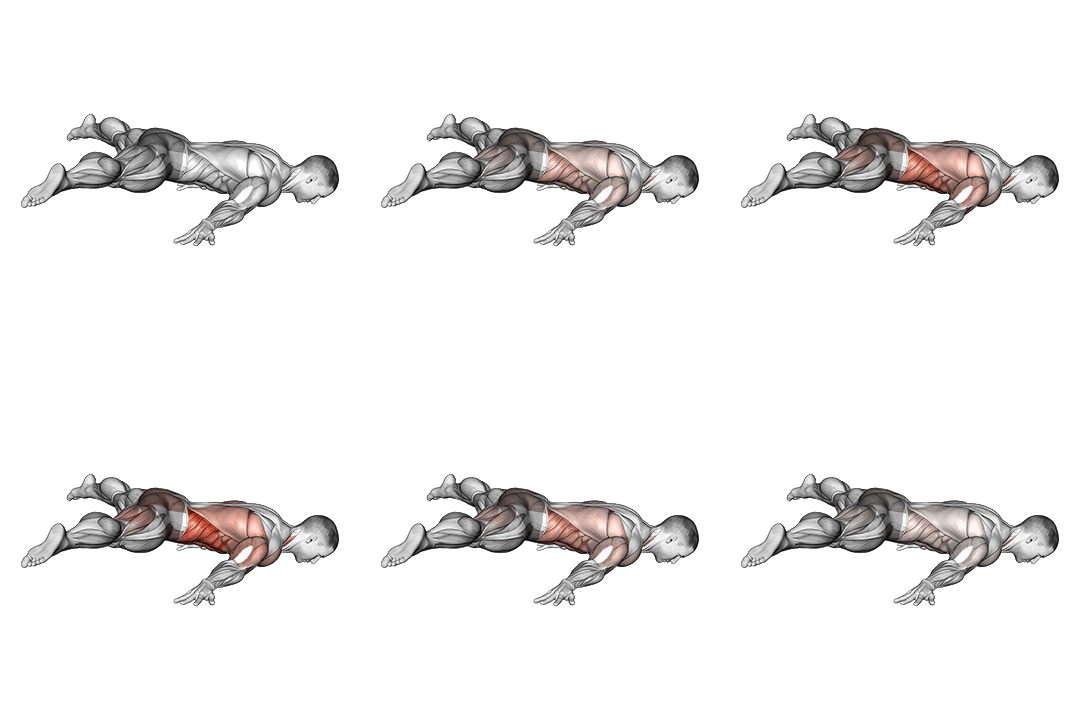
Straddle Maltese
advanced strength exercise · body weight · targets abs
- Body part
- waist
- Primary target
- abs
- Equipment
- body weight
- Difficulty
- advanced
The straddle maltese is one of the most extreme gymnastic strength skills — a static hold where the body is parallel to the ground supported only on the hands, with arms extended straight out to the sides at shoulder level (rather than directly under the shoulders as in planches). The straddle position with legs spread reduces the lever arm slightly, making this the entry-level maltese variation. The maltese is significantly harder than the planche due to the arms-extended-to-sides position. The shoulder demand is extreme — the muscles must hold the body suspended while the arms work in a horizontal position rather than the planche's vertical support. Reaching even a brief straddle maltese (2-3 seconds) typically requires 5+ years of dedicated gymnastic strength training. Where this earns its place is in elite gymnast or specialist calisthenics goals only. For 99% of trainees, this skill is unreachable and unnecessary. For elite specialists, it represents one of the ultimate static strength achievements.
Why train the Straddle Maltese?
- Represents one of the elite peaks of bodyweight strength.
- Develops extraordinary shoulder and chest strength.
- Demonstrates exceptional gymnastic capability.
- Carries over to other elite static holds.
- Provides multi-year progression goal for specialists.
- Builds shoulder integrity through extreme positional loading.
How to do the Straddle Maltese: step by step
- 1Start by hanging from a pair of rings with your arms fully extended and your body in a straight line.
- 2Spread your legs wide apart, forming a straddle position.
- 3Engage your core and slowly lower your body until your arms are parallel to the ground.
- 4Hold this position for a few seconds, then push yourself back up to the starting position.
- 5Repeat for the desired number of repetitions.
Muscles worked
Primary
abs
Secondary
shoulders, chest
Common mistakes to avoid
Attempting without years of prerequisites
Build through full planche, then attempt maltese progressions.
Skipping wrist preparation
Wrist preparation is essential and must be daily.
Programming too aggressively
1 session per week or less. Recovery demands extreme.
Attempting without spotter
Initial attempts should have appropriate safety setup.
Bouncing into position
Controlled entry only.
Easier and harder variations
Easier
Full planche. Even reaching full planche before maltese is the appropriate progression.
Harder
Full maltese (legs together). The endpoint of this skill family.
Alternative exercises
Full planche
Required prerequisite for maltese work.
Iron cross (rings)
Elite ring static hold with similar shoulder demand.
Front lever
Pulling-side equivalent of similar difficulty.
How to program the Straddle Maltese into your training
Maltese training belongs only in elite gymnastic specialist programs. Prerequisites: Solid full planche, exceptional shoulder health, 5+ years dedicated training. Sets and reps: 3 sets of 1-3 second holds with 5+ minutes rest. Frequency: 1 time per week or less. For virtually all trainees: this skill is inappropriate.
Recovery and frequency
Extreme recovery cost. 96+ hours between sessions.
Frequently asked questions
How long to learn?
5+ years from elite prerequisites; many never achieve it.
How often?
1 time per week or less.
Realistic for me?
Almost certainly no. Elite gymnastic specialist territory.
Maltese vs planche?
Maltese has arms extended to sides (much harder). Planche has arms supporting vertically.
Should I pursue this?
Only if you have years of gymnastic foundation and specific interest in the skill.
Why so extreme?
The extended-arm position produces unprecedented shoulder loading.
Useful tools for this exercise
Build a workout with the Straddle Maltese
Puna gives you guided bodyweight workouts you can do anywhere — no equipment, no gym, just structured progressions that build real strength.