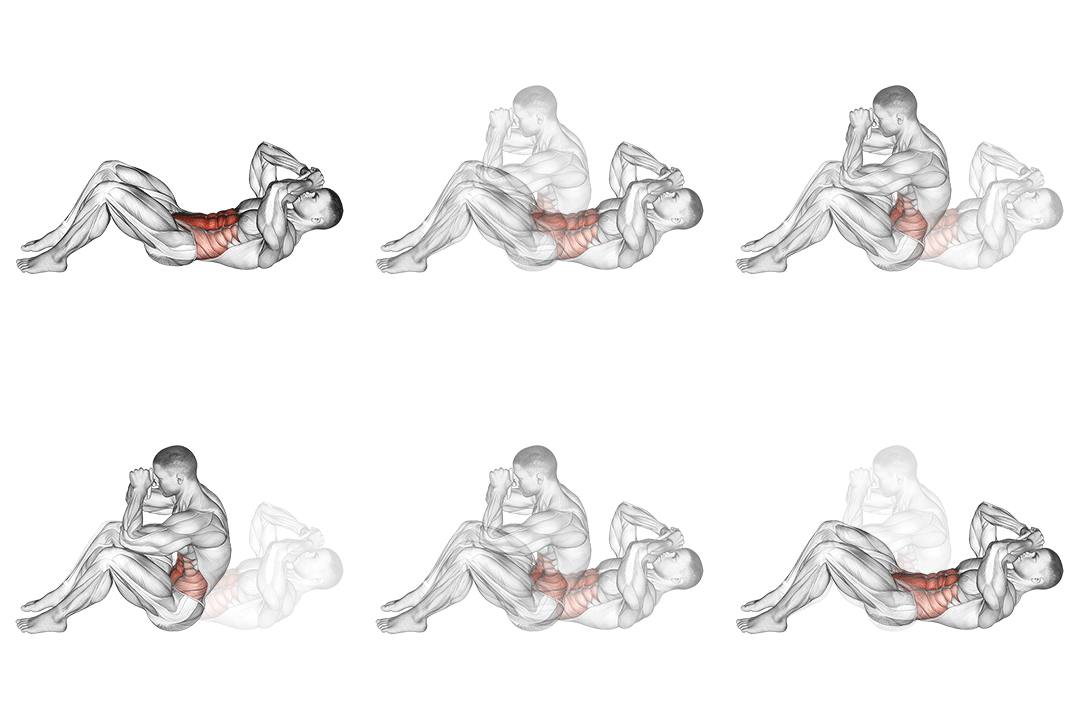
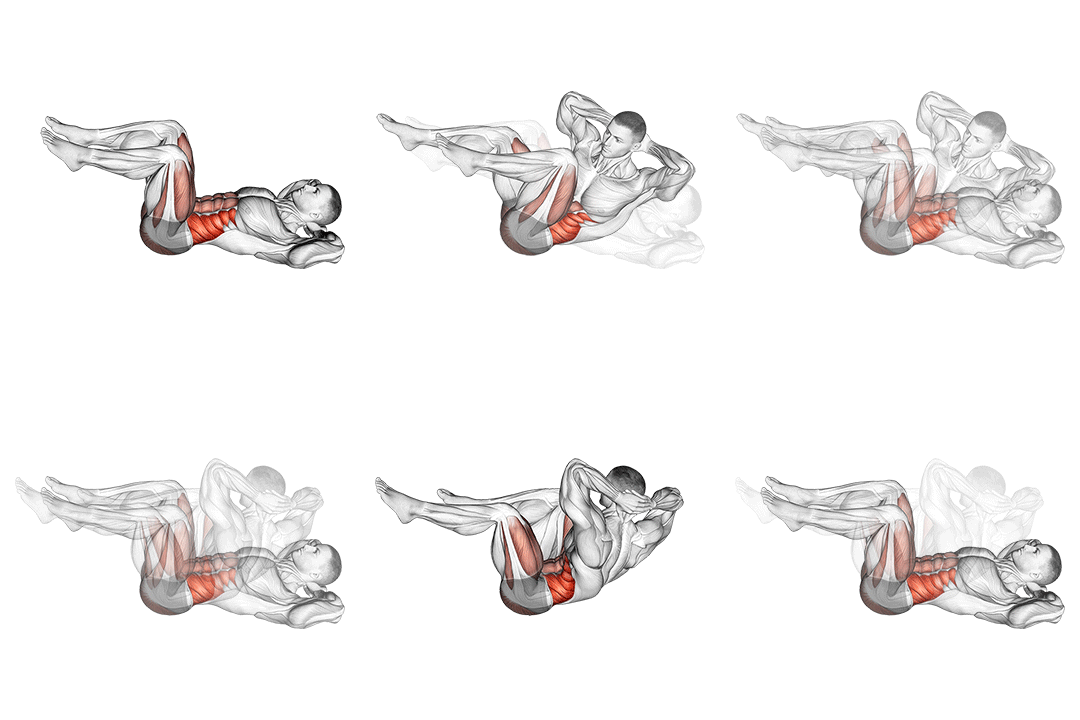
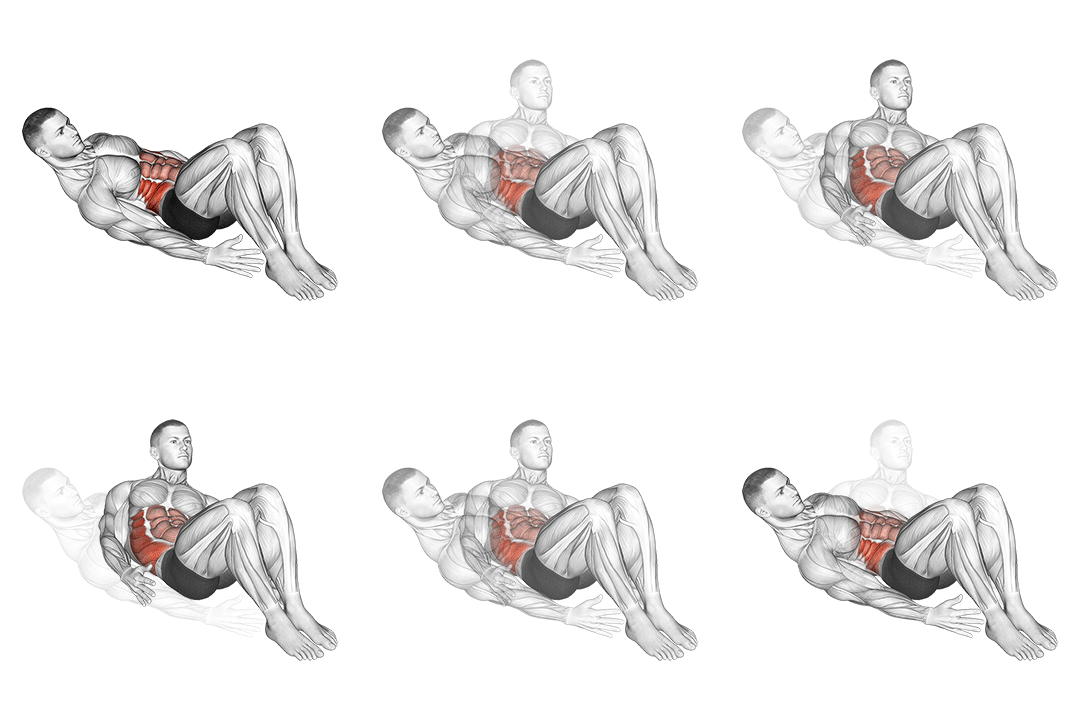
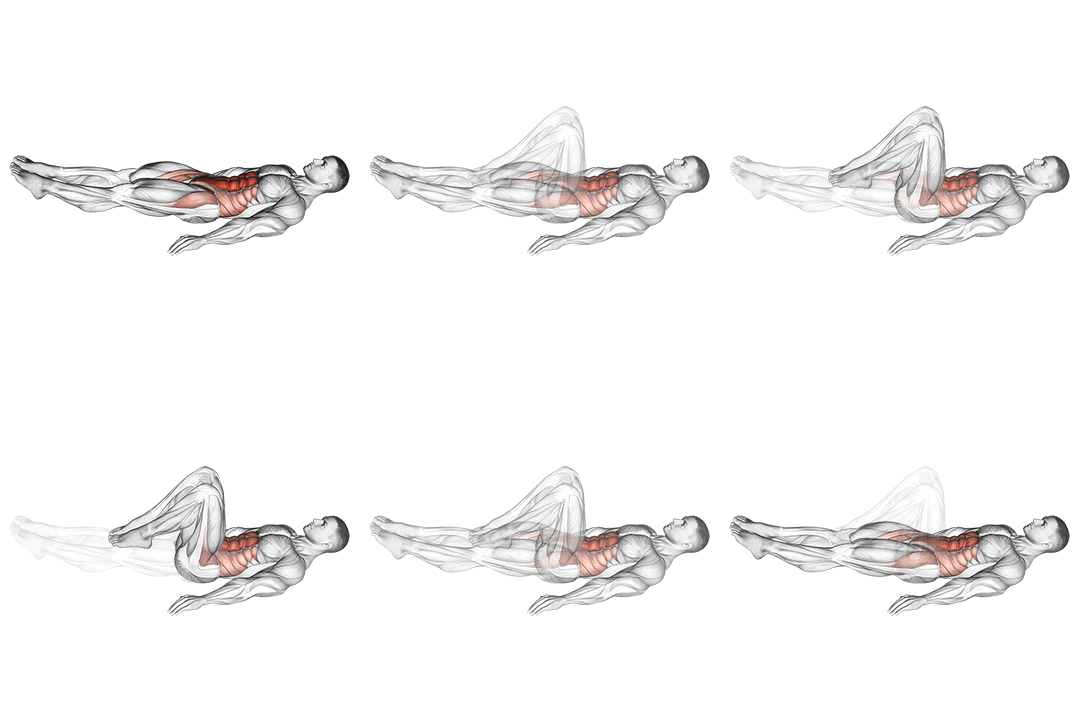
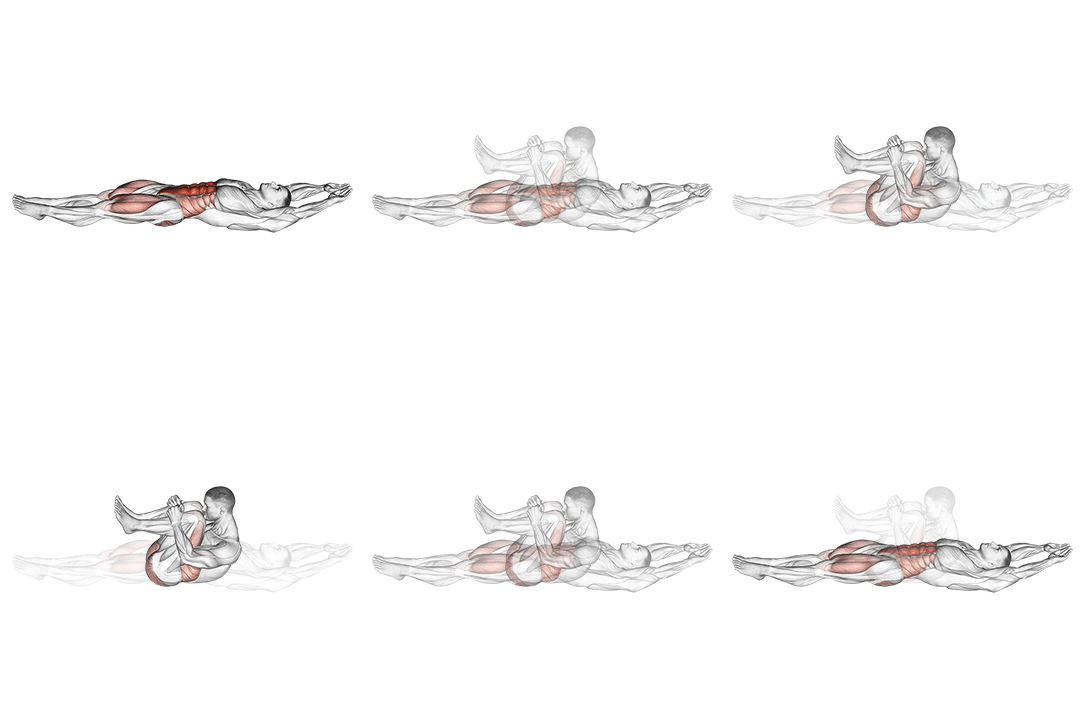
Sit-up V. 2
beginner strength exercise · body weight · targets abs
- Body part
- waist
- Primary target
- abs
- Equipment
- body weight
- Difficulty
- beginner
The basic sit-up is the most-prescribed ab exercise outside of crunches. From a face-up position with knees bent and feet flat on the floor, you contract the abs and hip flexors to bring the upper body all the way upright until the chest approaches the knees, then lower under control. Unlike a crunch (which only lifts the shoulder blades), the sit-up brings the entire torso vertical, demanding both ab and hip flexor work through a much longer range of motion. Its reputation has swung over the decades. Military and police academies still test sit-ups as a fitness benchmark; modern strength coaches increasingly prefer planks and dead bugs. The truth is in the middle: sit-ups are a useful but limited exercise. They train the rectus abdominis through full range, but the heavy hip flexor recruitment can mask weak abs and stress the lower back if performed poorly. Used thoughtfully — controlled tempo, no neck strain, programmed alongside anti-extension and anti-rotation work — sit-ups still earn a place in many ab programs. They're best for testing endurance (how many in 2 minutes), for athletes whose sport requires strong trunk flexion, and as part of structured military or fitness test preparation. For general core training, planks usually offer better risk/reward.
Why train the Sit-up V. 2?
- Trains the rectus abdominis through full range, longer than crunches alone.
- Easy to learn and scale, accessible to most fitness levels.
- Standard fitness test for military, police, and athletic programs.
- Pairs well with planks for complete core training.
- Can be programmed for endurance (max reps in 2 minutes) for clear progression tracking.
- Requires no equipment and minimal space.
How to do the Sit-up V. 2: step by step
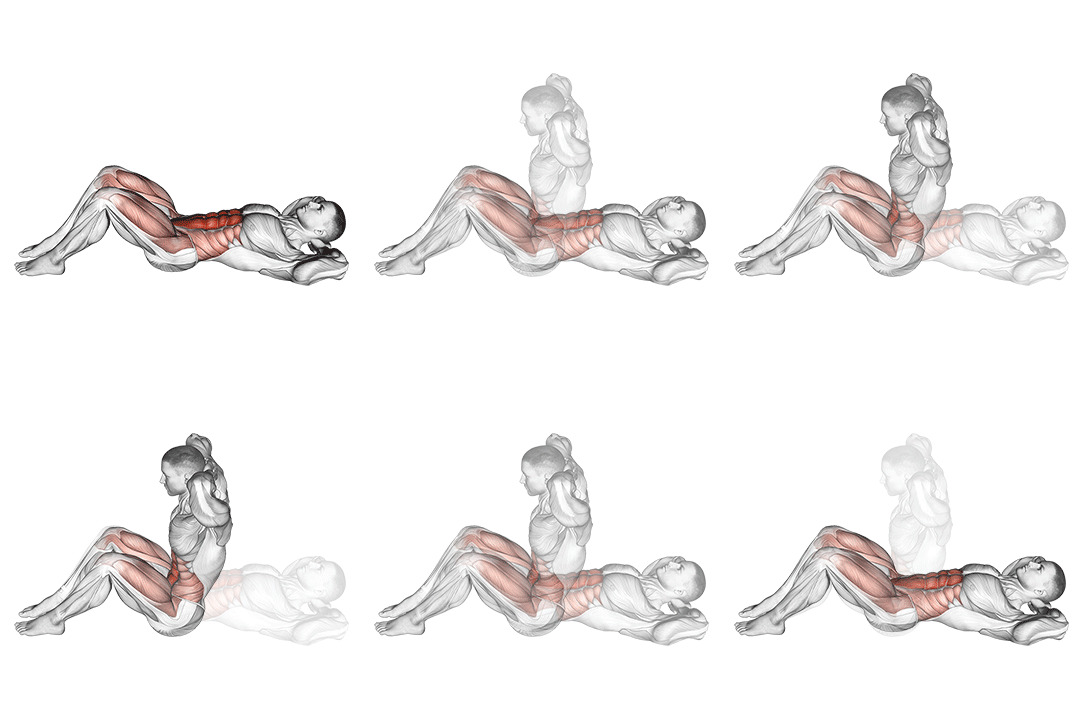
- 1Lie flat on your back with your knees bent and feet flat on the ground.
- 2Place your hands behind your head with your elbows pointing outwards.
- 3Engaging your abs, slowly lift your upper body off the ground, curling forward until your torso is at a 45-degree angle.
- 4Pause for a moment at the top, then slowly lower your upper body back down to the starting position.
- 5Repeat for the desired number of repetitions.
Muscles worked
Primary
abs
Secondary
hip flexors
Common mistakes to avoid
Pulling on the neck with the hands
If your hands are behind your head, they're a guide — not a tool. Pulling the head forward strains the cervical spine and removes the abs from the work. Imagine an apple under your chin; keep that space throughout every rep.
Anchoring the feet under heavy furniture
Anchored feet make the hip flexors do more work, which can stress the lower back. Keep the feet flat on the floor unanchored. If you can't sit up without anchoring, your hip flexors are dominating — regress to crunches until the abs can do their share.
Going too fast for control
Whipping through reps uses momentum and bypasses the abs. Move slowly: 1-2 seconds up, brief pause at the top, 2-3 seconds down. The negative phase is where the abs do most of their hardest work.
Letting the lower back arch on the descent
Some people let the lower back lift off the floor as they lower back down. Press the lower back into the floor throughout the descent — never let it arch away. If you can't maintain back contact, reduce range.
Doing them on a hard floor without padding
The lower back rolls along the floor during sit-ups. Without a mat or padded surface, the spine bones bruise and discomfort distracts from form. Use a yoga mat or folded towel.
Easier and harder variations
Easier
Reduce range — perform half sit-ups (only halfway up) or 3/4 sit-ups (75% of the way up). Or perform with arms crossed at the chest instead of behind the head, which removes the lever arm.
Harder
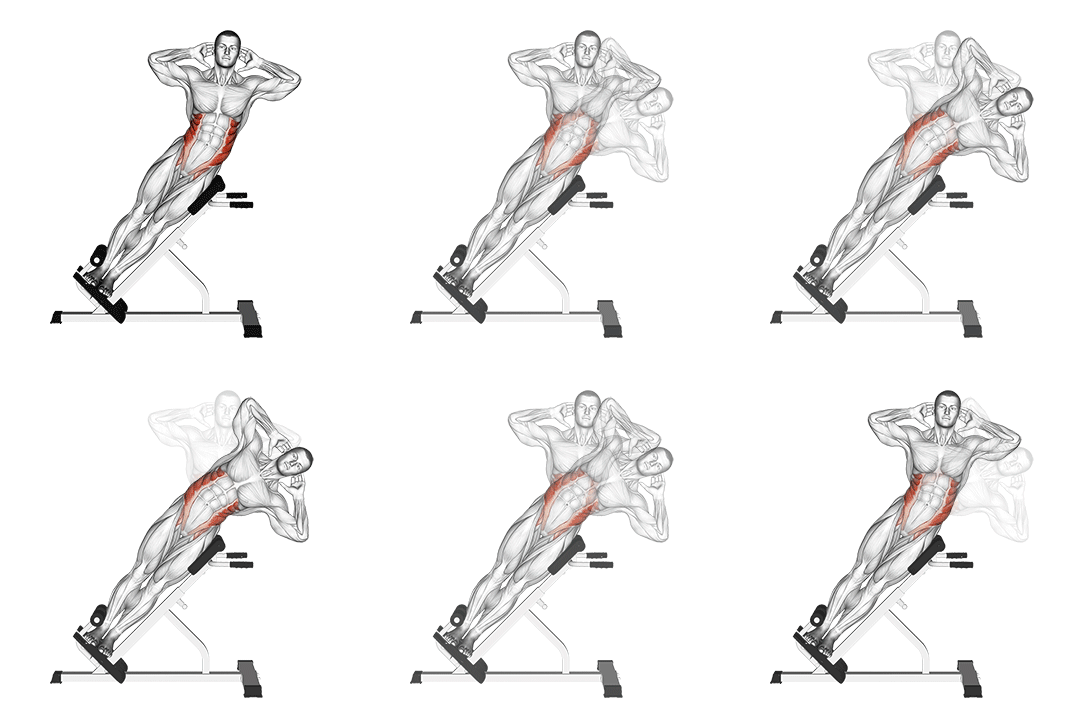
Hold a weight plate at the chest or behind the head. Decline sit-ups (head lower than feet on a sit-up bench). Or progress to weighted full sit-ups for the bigger movement.
Alternative exercises
Crunch
Smaller range version of the same flexion. Less hip flexor involvement, more isolated upper-ab focus.
3/4 sit-up
Stops at 75% of the way up. Bridges the gap between crunches and full sit-ups.
Janda sit-up
Sit-up with hamstrings activated to deactivate hip flexors. Better choice for trainees who want pure ab focus.
How to program the Sit-up V. 2 into your training
Sit-ups work as accessory or finisher core work, not as the main core exercise of a session. Pair with planks (anti-extension), bird dogs (anti-rotation), and reverse crunches (lower abs) for complete core development. Sets and reps: 3 sets of 15-25 reps with 30-60 seconds rest. Total weekly volume of 75-150 reps drives most adaptations. In a complete core circuit: 3 sets of 20 sit-ups, 3 sets of 30-second front planks, 3 sets of 12 reverse crunches. Done 2-3 times per week. For military or fitness test preparation: train the specific test format (max reps in 2 minutes) once per week, plus 2 additional sit-up sessions of more general volume work. For people building visible abs: total core volume across a week should sit in the 200-500 rep range across various exercises. Diet drives the visibility; training maintains and slightly grows the muscle. Daily sit-ups in moderate volume (50-100 reps) are fine and can be done as a morning routine.
Recovery and frequency
Sit-ups at moderate volume have low recovery cost — daily training is fine for most people. Higher volumes can leave the upper abs and hip flexors sore in the first 1-2 weeks of training, but the soreness fades quickly. Neck soreness usually means the neck flexors are doing too much. Reduce range, place hands at the chest, focus on initiating the lift from the abs. Lower back discomfort points to form errors (anchored feet, excessive range, hip flexor dominance).
Frequently asked questions
How many sets and reps of sit-ups should I do?
3 sets of 15-25 reps with 30-60 seconds rest. Total weekly volume of 75-150 reps drives most adaptations. Beyond that, you're mostly training endurance with diminishing returns.
How often should I train the sit-up?
2-3 times per week is plenty when combined with other core work. Daily sit-ups at moderate volume are also fine — the abs recover quickly.
Sit-ups vs crunches: which is better?
Different tools. Crunches train the upper abs with minimal hip flexor involvement. Sit-ups bring you fully upright with more hip flexor work. For pure ab development, crunches are usually better; for full-range training and military test prep, sit-ups have their place.
Will sit-ups give me a six-pack?
Sit-ups build the abs, but visible abs come from low body fat. You can do 100 sit-ups daily and never see your abs if your body fat is too high. Diet drives visibility; training drives the size.
Are sit-ups bad for my back?
Done with proper form, no — they're a useful ab exercise. Done with anchored feet, excessive range, or pre-existing disc issues, they can stress the lumbar spine. The 3/4 variation is generally safer than full sit-ups for many trainees.
How many sit-ups should I do to lose belly fat?
None — sit-ups don't burn belly fat. Spot reduction isn't possible. Focus on diet, regular cardio or strength training, and adequate sleep. Sit-ups train the muscle underneath, but the fat layer must be addressed through diet.
Useful tools for this exercise
Build a workout with the Sit-up V. 2
Puna gives you guided bodyweight workouts you can do anywhere — no equipment, no gym, just structured progressions that build real strength.