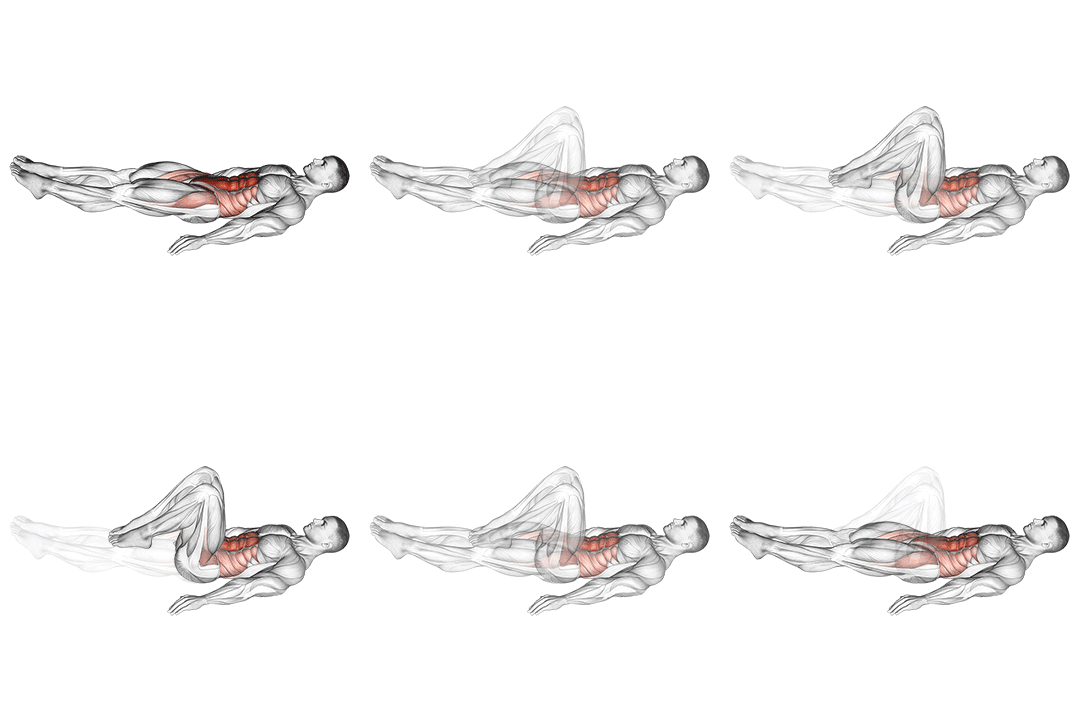
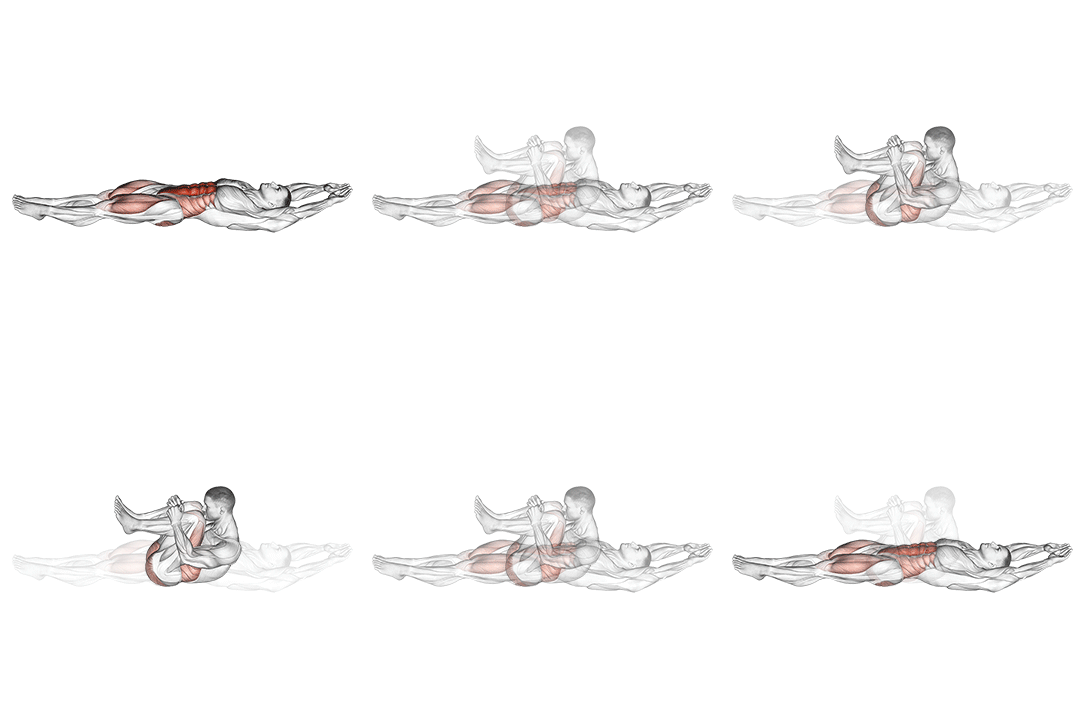
Shoulder Tap
intermediate strength exercise · body weight · targets abs
- Body part
- waist
- Primary target
- abs
- Equipment
- body weight
- Difficulty
- intermediate
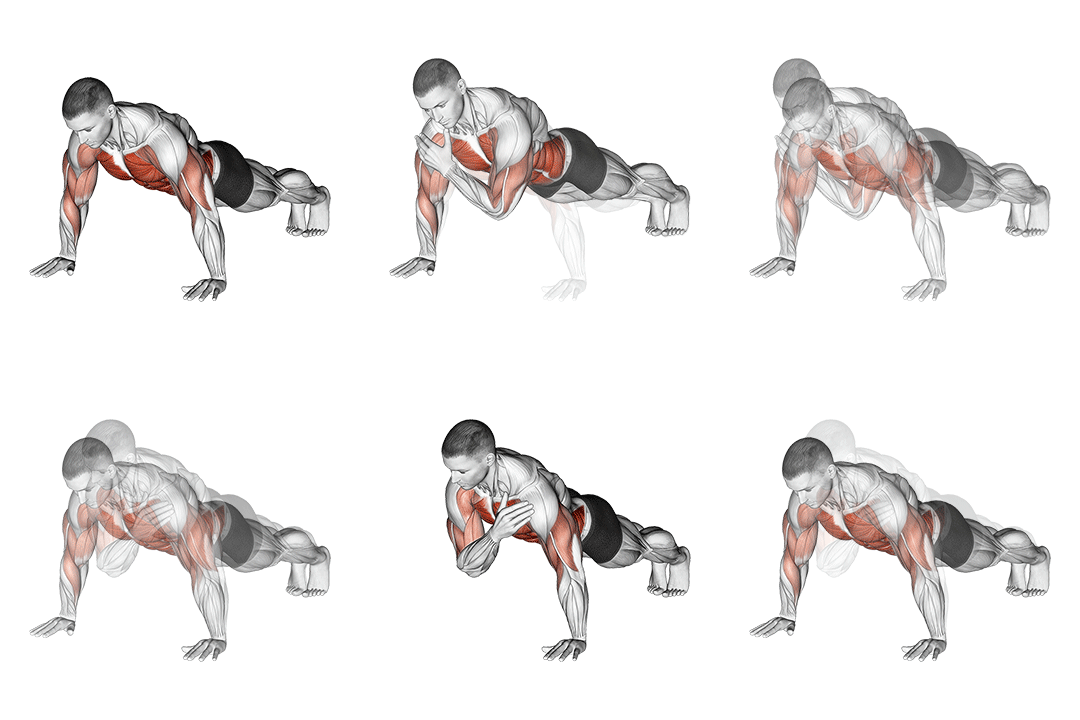
The shoulder tap is a plank-position exercise where you hold a high plank (push-up position with arms straight) and alternately tap each opposite shoulder while maintaining body alignment. The single-arm support during each tap produces severe core demand to prevent body rotation, training anti-rotation core stability that compound exercises don't develop. This is one of the most effective anti-rotation core exercises available without equipment. The shoulder tap forces the obliques and transverse abdominis to work isometrically to prevent the hips from rotating during the single-arm support. For trainees seeking comprehensive core stability work, shoulder taps complement front planks effectively. Where this earns its place is as anti-rotation core training in any program. Combined with planks (anti-extension) and rotational exercises like Russian twists, shoulder taps complete the core training spectrum. The exercise is gentle enough for daily practice and accessible to most fitness levels.
Why train the Shoulder Tap?
- Builds anti-rotation core stability through single-arm plank challenge.
- Engages obliques and transverse abdominis isometrically.
- Trains the integrated upper-body and core control.
- Useful as core finisher or warm-up activation.
- Costs nothing and requires no equipment.
- Pairs naturally with front planks for compound core training.
How to do the Shoulder Tap: step by step
- 1Start in a high plank position with your hands directly under your shoulders and your body in a straight line.
- 2Engage your core and lift your right hand off the ground, reaching across to tap your left shoulder.
- 3Place your right hand back on the ground and repeat with your left hand tapping your right shoulder.
- 4Continue alternating shoulder taps while keeping your hips and torso stable.
- 5Repeat for the desired number of repetitions.
Muscles worked
Primary
abs
Secondary
shoulders, triceps
Common mistakes to avoid
Letting hips rotate
The hips should stay square throughout. Rotation defeats the anti-rotation training.
Sagging through hips
Maintain plank line. Sagging breaks the position.
Rushing through reps
Slow controlled tempo (1 second per tap) produces engagement.
Wide stance dependency
Build to feet-together stance for maximum core demand. Wide stance is the easier version.
Skipping side alternation
Always alternate equally between sides.
Easier and harder variations
Easier
Wider stance for stability. Or kneeling shoulder tap.
Harder
Feet together (maximum demand). Or add ankle weights. Or progress to one-arm plank holds.
Alternative exercises
Front plank
Anti-extension foundation. Pair with shoulder taps for complete core stability.
Side plank
Anti-lateral-flexion. Different stability axis.
Bird dog
Quadruped anti-rotation work.
How to program the Shoulder Tap into your training
Sets and reps: 3 sets of 20-30 alternating taps with 30-60 seconds rest. Frequency: 3-4 times per week. In core sessions: as accessory after main exercises.
Recovery and frequency
Minimal recovery cost. Daily training tolerable.
Frequently asked questions
How many reps?
20-30 alternating taps per set.
How often?
3-4 times per week.
Will this build core stability?
Yes — anti-rotation training carries over to athletic performance and daily movement.
Wide vs narrow stance?
Wide is easier; narrow demands more core engagement. Progress over weeks.
Shoulder tap vs plank?
Plank is anti-extension; shoulder tap is anti-rotation. Different stability demands.
Is this safe for shoulders?
Yes for healthy shoulders. The transient single-arm support builds shoulder stability.
Useful tools for this exercise
Build a workout with the Shoulder Tap
Puna gives you guided bodyweight workouts you can do anywhere — no equipment, no gym, just structured progressions that build real strength.