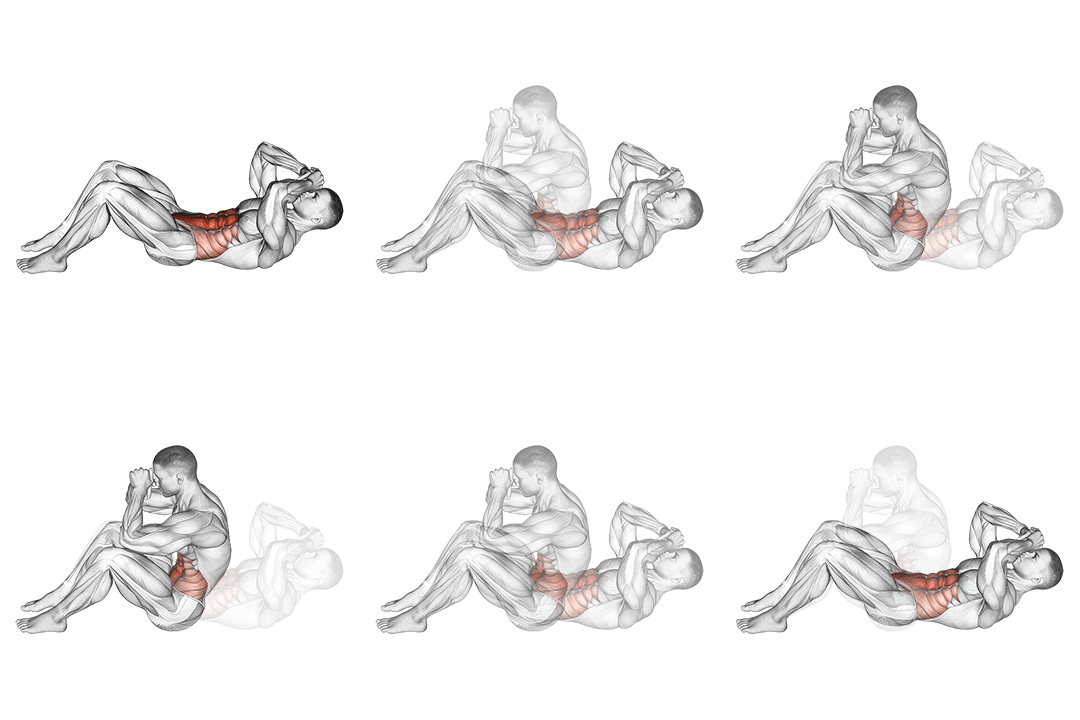
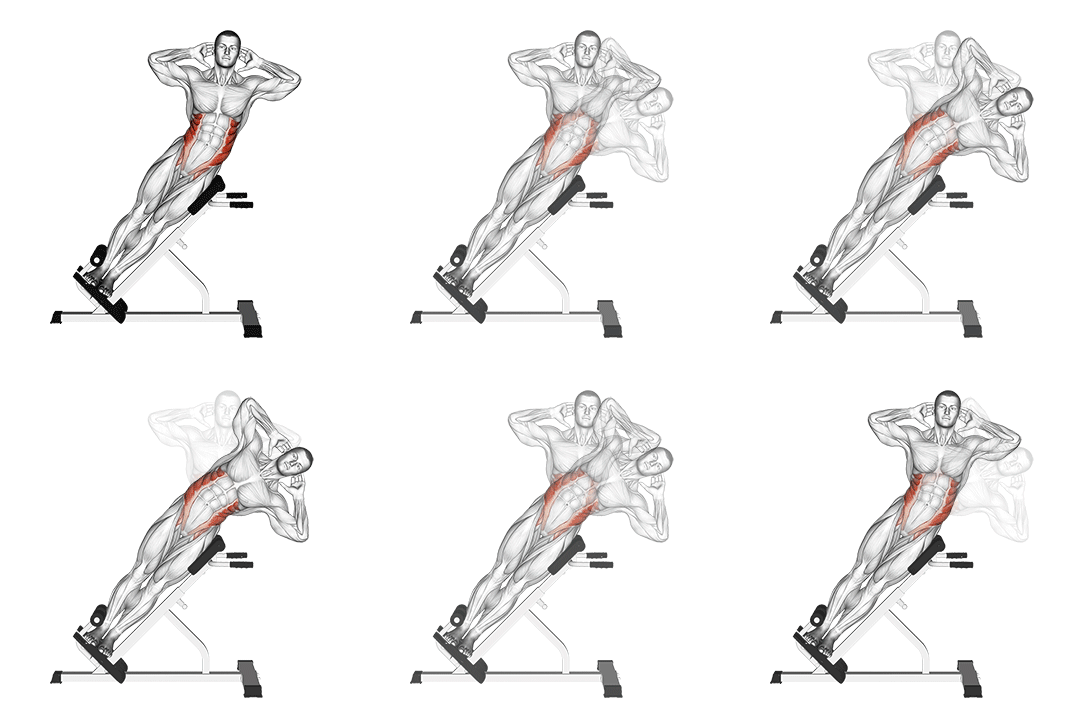
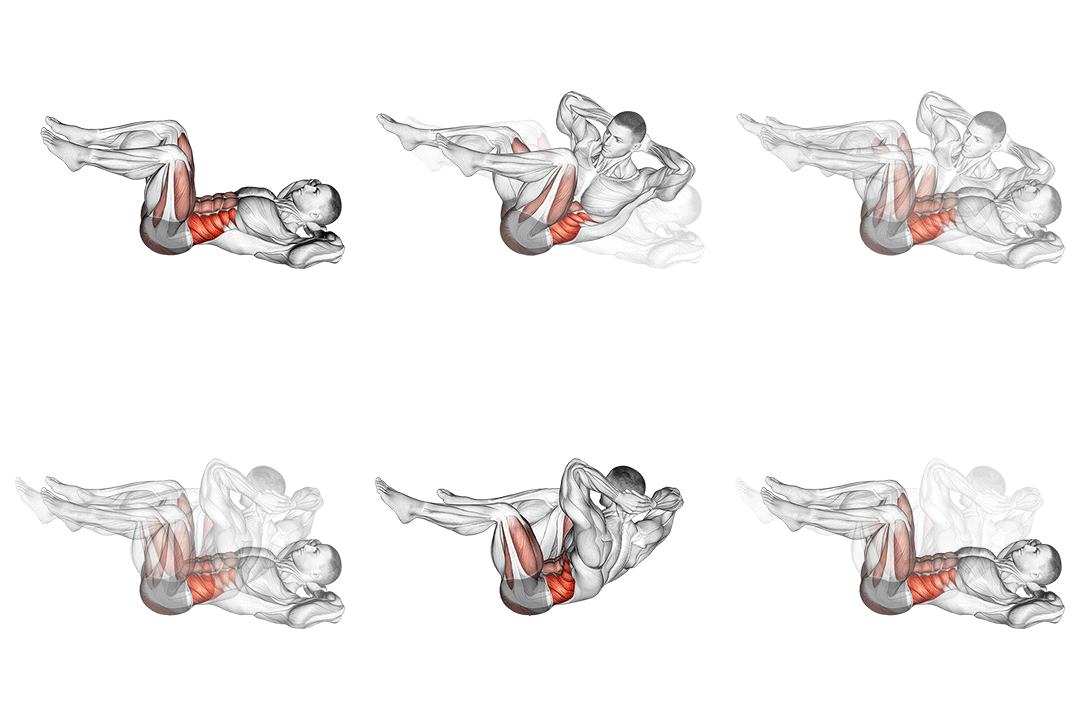
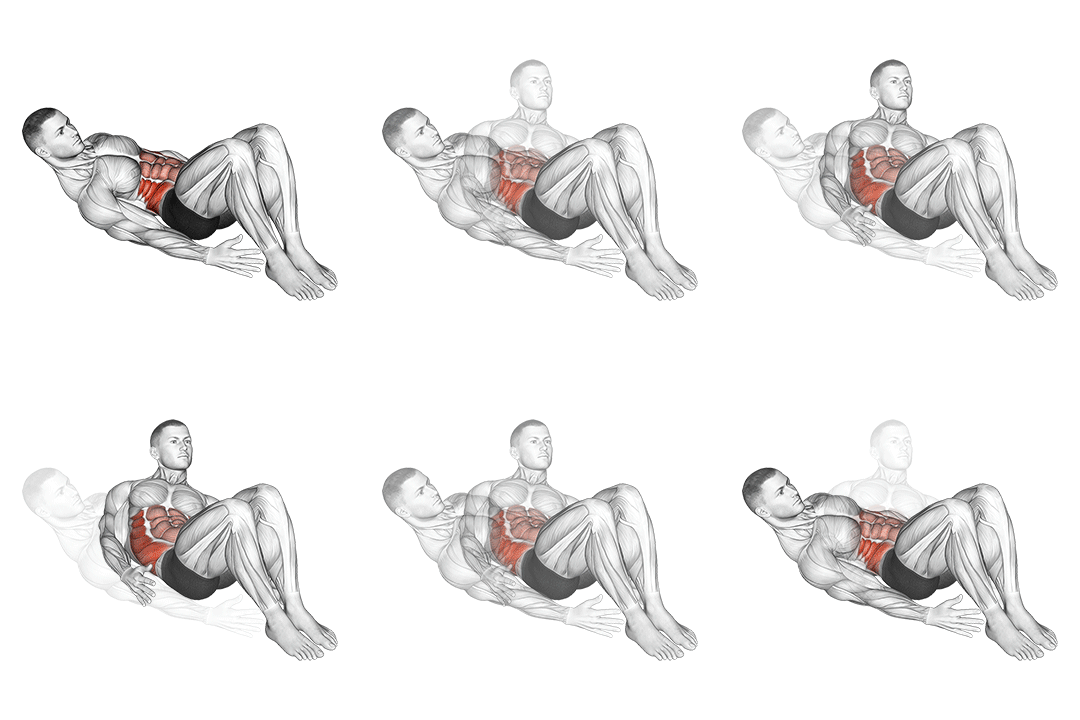
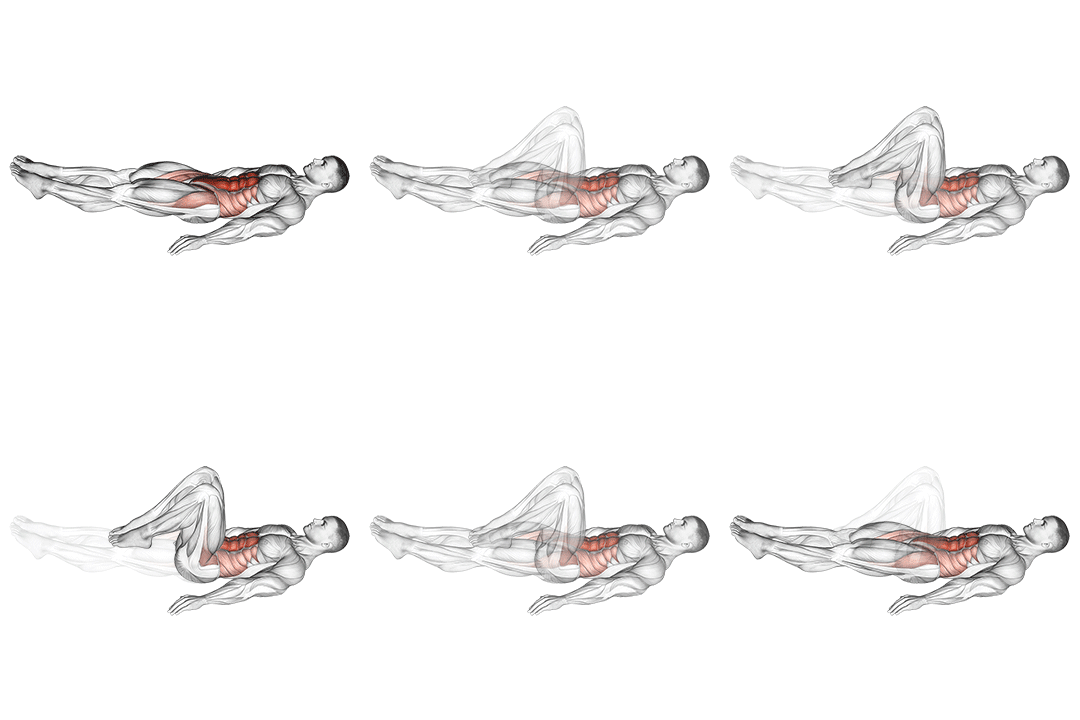
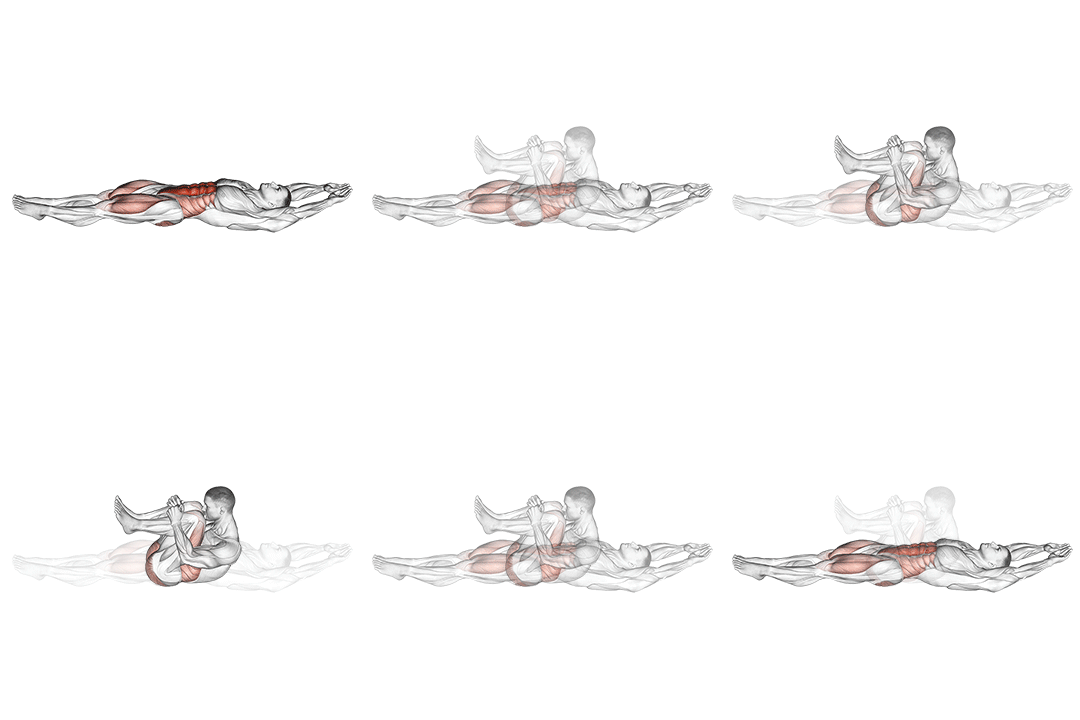
Seated Leg Raise
beginner strength exercise · body weight · targets abs
- Body part
- waist
- Primary target
- abs
- Equipment
- body weight
- Difficulty
- beginner
The seated leg raise is one of the most accessible lower-ab exercises — performed seated on the floor or a chair with hands behind for support, you lift the legs (typically straight or with a slight bend at the knees) toward the chest and lower under control. The seated position keeps the upper body stable while the legs do the work, isolating the lower abdominals and hip flexors. It's especially useful for people who find floor-based ab exercises uncomfortable. The supported seated position takes pressure off the lower back while still providing focused lower-ab work — a useful alternative for people with back sensitivity or those who simply find floor exercises awkward. It's also a smart choice for offices: a few sets done at a desk during work breaks can build the lower abs without requiring floor space or workout clothes. The trade-off is the limited range compared to lying leg raises or hanging leg raises. The lower abs and hip flexors get worked, but the load is moderate and the variation can plateau as a strength builder relatively quickly. Programmed in moderate volume (3 sets of 12-20) twice per week, however, it serves as a useful complement to other ab work or a primary lower-ab exercise for beginners.
Why train the Seated Leg Raise?
- Targets the lower abs directly with minimal lower-back stress.
- Accessible from a seated position — works at a desk or chair without floor space.
- Easier on the back than lying or hanging leg raises.
- Requires no equipment.
- Useful for beginners building toward harder lower-ab exercises.
- Pairs well with crunches and dead bugs for complete ab training.
How to do the Seated Leg Raise: step by step
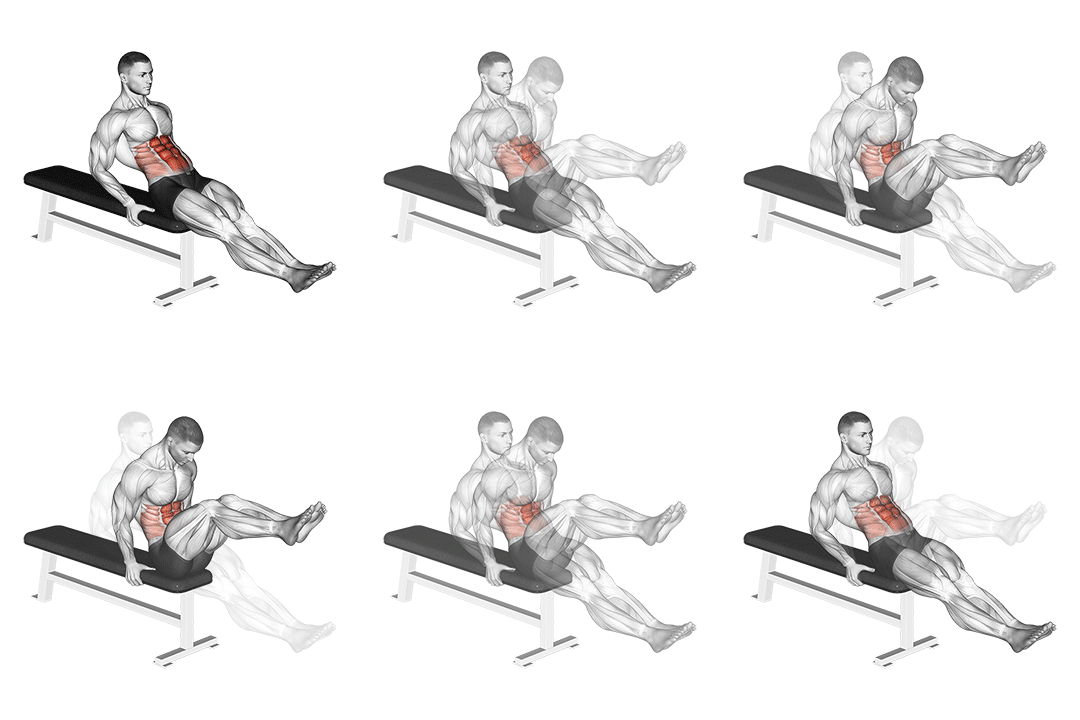
- 1Sit on a flat bench with your back straight and your feet flat on the ground.
- 2Place your hands on the sides of the bench for support.
- 3Keeping your legs straight, slowly raise them up in front of you until they are parallel to the ground.
- 4Pause for a moment at the top, then slowly lower your legs back down to the starting position.
- 5Repeat for the desired number of repetitions.
Muscles worked
Primary
abs
Secondary
hip flexors
Common mistakes to avoid
Using momentum to swing the legs up
Whipping the legs uses hip flexor momentum and skips the lower-ab work. Move slowly: 1-2 seconds up, brief pause at the top, 2-3 seconds down. The lower abs should feel like they're doing the work.
Letting the back round forward
Some people slump forward as the legs lift. Keep the chest tall and the back relatively upright throughout the movement — slumping shifts work away from the abs.
Lifting the legs too high
Lifting the legs all the way up to the chest involves a lot of hip flexor work and reduces the lower-ab focus. Lift only as high as needed to feel the lower abs contracting — usually 30-60 degrees of leg lift is enough.
Letting the feet touch the floor between reps
When the feet rest on the floor, the tension drops and the next rep starts cold. Hover the feet an inch above the floor between reps to maintain constant tension.
Doing them too fast for high reps
Speed kills the focus. Better to do 12 strict slow reps than 25 fast sloppy ones. The lower abs respond to time-under-tension more than to high rep counts.
Easier and harder variations
Easier
Bend the knees more (closer to a tucked position) to reduce the lever arm. Or perform with feet on the floor and just curl the pelvis posteriorly (no leg lift), focusing entirely on the lower-ab squeeze.
Harder
Straighten the legs fully throughout the rep. Add ankle weights for resistance. Or progress to lying leg raises or hanging leg raises for greater range and load.
Alternative exercises
Lying leg raise
Same lower-ab focus performed lying flat. More demanding due to the longer range of motion and gravity loading.
Hanging knee raise
Performed hanging from a bar. Significantly harder due to body weight and grip demand. The next major progression after seated leg raises.
Reverse crunch
Lie on back, lift hips and bring knees toward chest. Different angle but same lower-ab focus.
How to program the Seated Leg Raise into your training
Seated leg raises work as accessory or daily-practice ab work, not as the primary exercise of a focused core session. Pair with crunches, planks, and other core exercises for complete development. Sets and reps: 3 sets of 12-20 reps with 30-60 seconds rest. Total weekly volume of 75-150 reps drives most adaptations. In a complete core circuit: 3 rounds of 15 seated leg raises, 30-second front plank, 12 crunches, 30-second side plank per side. Done 2-3 times per week. At a desk during work breaks: 1-2 sets of 10-15 reps, 2-3 times per day. The accumulated volume across the day is enough to build basic lower-ab endurance. For beginners building toward hanging leg raises: 3 sessions per week of seated leg raises (3 sets of 15-20 reps), then progress to lying leg raises after 4-6 weeks, then to hanging knee raises. Daily seated leg raises in moderate volume (30-50 reps) are fine and useful as a maintenance exercise.
Recovery and frequency
Seated leg raises have low recovery cost — daily training is fine for most people. The lower abs and hip flexors may stay sore in the first 1-2 weeks, but the soreness fades quickly. Hip flexor tightness is the most common feedback. Daily hip flexor stretches (couch stretch, kneeling lunge stretch) prevent the cumulative tightness this exercise can create. Lower back fatigue is uncommon but signals form errors — usually the back rounding forward, which loads the lumbar spine.
Frequently asked questions
How many sets and reps of seated leg raises should I do?
3 sets of 12-20 reps with 30-60 seconds rest. Total weekly volume of 75-150 reps drives most adaptations.
How often should I train the seated leg raise?
2-3 times per week as part of a structured program; daily at moderate volume is fine, especially as a maintenance exercise.
Are seated leg raises effective for the lower abs?
For beginners and as a maintenance exercise, yes. For trained athletes seeking ongoing strength gains, the load is too low — progress to lying leg raises or hanging leg raises.
Will seated leg raises give me visible lower abs?
They build the muscle, but visible abs come from low body fat. Diet drives the visibility; exercise builds the muscle that becomes visible when fat is low.
Can I do seated leg raises at my desk?
Yes — that's actually one of the best uses. A few sets during work breaks add useful core volume without requiring floor space or workout clothes.
Why do I feel seated leg raises in my hip flexors instead of my abs?
Almost certainly because you're using the hip flexors to swing the legs up instead of the lower abs to curl the pelvis. Initiate the movement by tilting the pelvis slightly posteriorly (squeezing the lower abs) before the legs move.
Useful tools for this exercise
Build a workout with the Seated Leg Raise
Puna gives you guided bodyweight workouts you can do anywhere — no equipment, no gym, just structured progressions that build real strength.