Russian Twist
intermediate strength exercise · body weight · targets abs
- Body part
- waist
- Primary target
- abs
- Equipment
- body weight
- Difficulty
- intermediate
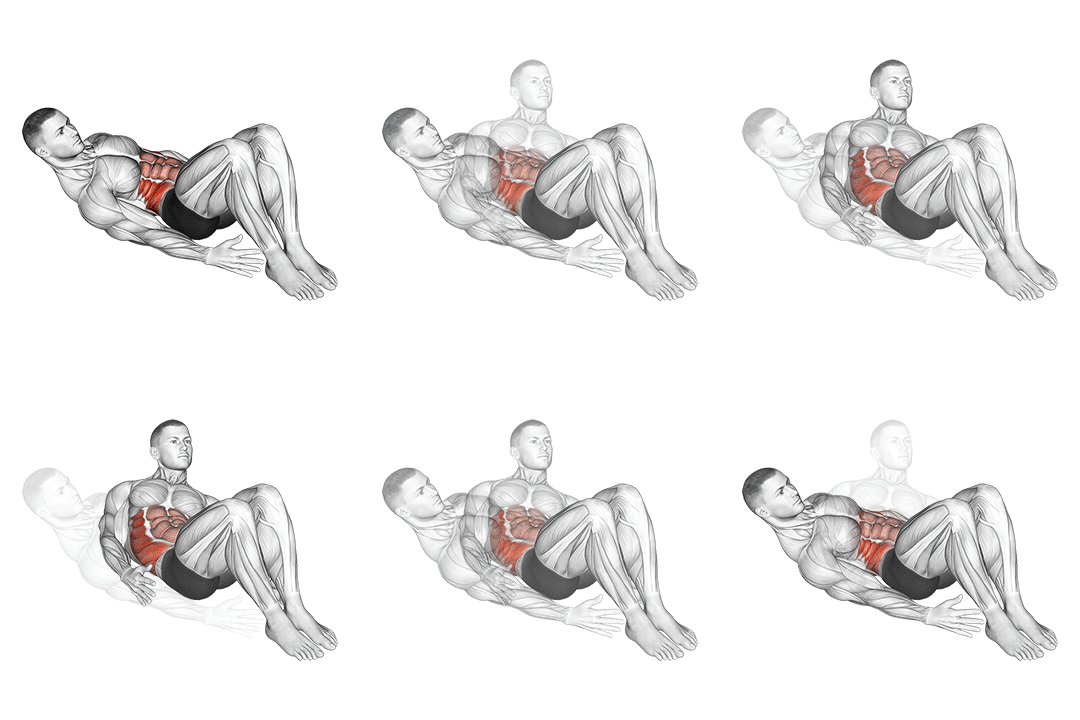
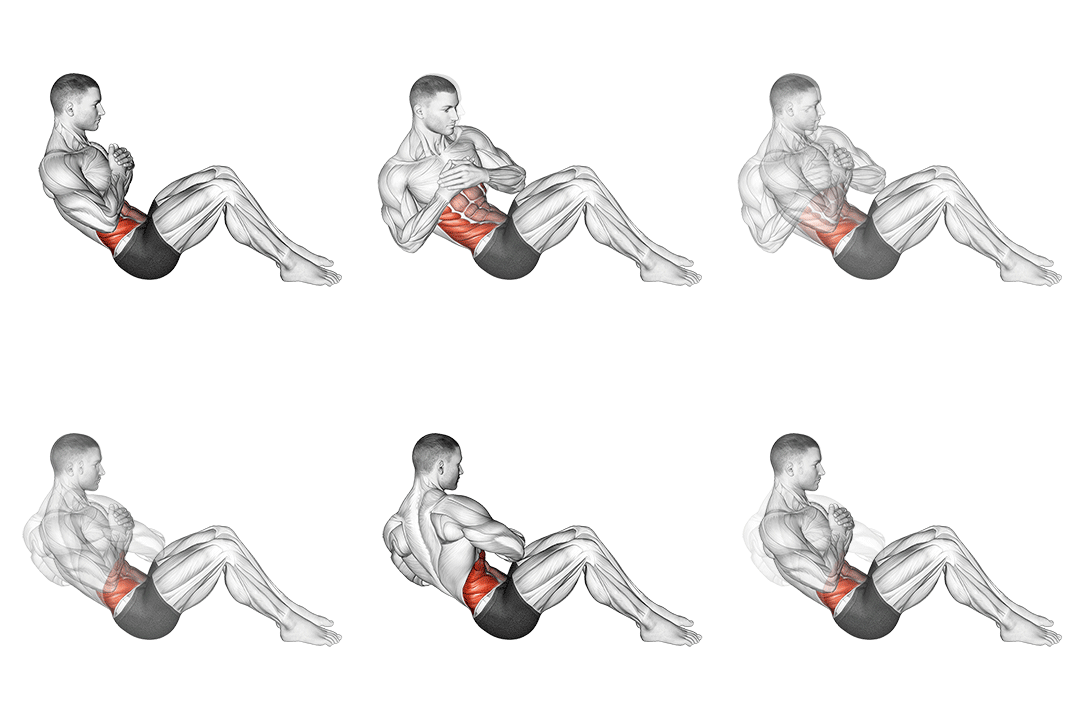
The Russian twist is a rotational core exercise performed seated with the torso leaned back at roughly 45 degrees, knees bent, feet hovering or planted. You twist the trunk side to side, touching the floor (or a weight) on each side, training the obliques to rotate the spine under load. It's one of the most popular oblique exercises in any program — and one of the most commonly butchered. Done right, the Russian twist trains exactly what it should: the internal and external obliques, which create rotational power and resist unwanted rotation. Done wrong, it becomes a momentum drill where the arms swing and the spine doesn't actually move much, training nothing useful while putting unnecessary stress on the lower back. The difference between right and wrong is subtle: keeping the chest tall (not hunched), rotating from the trunk (not the arms), maintaining the lean (not collapsing back), and moving with control rather than swinging. Once you've got the form, the Russian twist becomes a high-leverage oblique builder. Most trainees see noticeable improvements in trunk rotation strength and visible oblique definition within 6-8 weeks of consistent training.
Why train the Russian Twist?
- Trains the obliques in their rotational function — the most direct oblique exercise available without equipment.
- Builds the rotational strength needed for most sports (golf, tennis, baseball, throwing motions).
- Develops trunk endurance through the seated lean position, which holds the deep core under tension.
- Scales easily with added weight — start bodyweight, progress to a plate, dumbbell, or kettlebell.
- Requires almost no space and can be done in 5-10 minutes alongside other core work.
- Combined with anti-rotation exercises (Pallof press), gives you complete rotational core training.
How to do the Russian Twist: step by step
- 1Sit on the ground with your knees bent and feet flat on the floor.
- 2Lean back slightly while keeping your back straight and your core engaged.
- 3Hold your hands together in front of your chest or hold a weight if desired.
- 4Lift your feet off the ground, balancing on your sit bones.
- 5Twist your torso to the right, bringing your hands or weight towards the right side of your body.
- 6Pause for a moment, then twist your torso to the left, bringing your hands or weight towards the left side of your body.
- 7Continue alternating sides for the desired number of repetitions.
Muscles worked
Primary
abs
Secondary
obliques
Common mistakes to avoid
Rotating only the arms, not the trunk
If your shoulders move side to side but your hips and chest stay facing forward, you're swinging the arms — not training the obliques. Rotate from the trunk so the entire torso turns, with the arms following along passively.
Letting the chest collapse forward
Hunching forward removes the lean that makes the exercise effective. Keep the chest tall and the spine long throughout the rep — imagine a string pulling the top of your head back at 45 degrees.
Moving too fast for control
Whipping side to side uses momentum and reduces oblique work. Take 1-2 seconds per rotation, with a brief pause when the weight (or hand) touches the ground. Slow control beats fast volume.
Using a weight that's too heavy too soon
Adding 25 lb on the first session usually means the lower back takes the load instead of the obliques. Start with bodyweight or a 5 lb plate, build to 15-25 lb over weeks, not days.
Letting the lower back round
If the lower back collapses into a C-shape, the spine takes load it shouldn't. Keep the back long and slightly arched throughout the rep. If you can't, reduce the lean angle (sit more upright) until you can hold neutral spine.
Easier and harder variations
Easier
Keep the feet planted on the floor (instead of lifted). Sit more upright (less lean) to reduce the core demand. Use no weight — just touch the floor with your hands on each rotation.
Harder
Lift the feet off the floor for added core demand. Add weight (5-25 lb plate, dumbbell, or kettlebell) held at the chest. Or progress to medicine ball Russian twists with a partner throw at the end of each rotation.
Alternative exercises
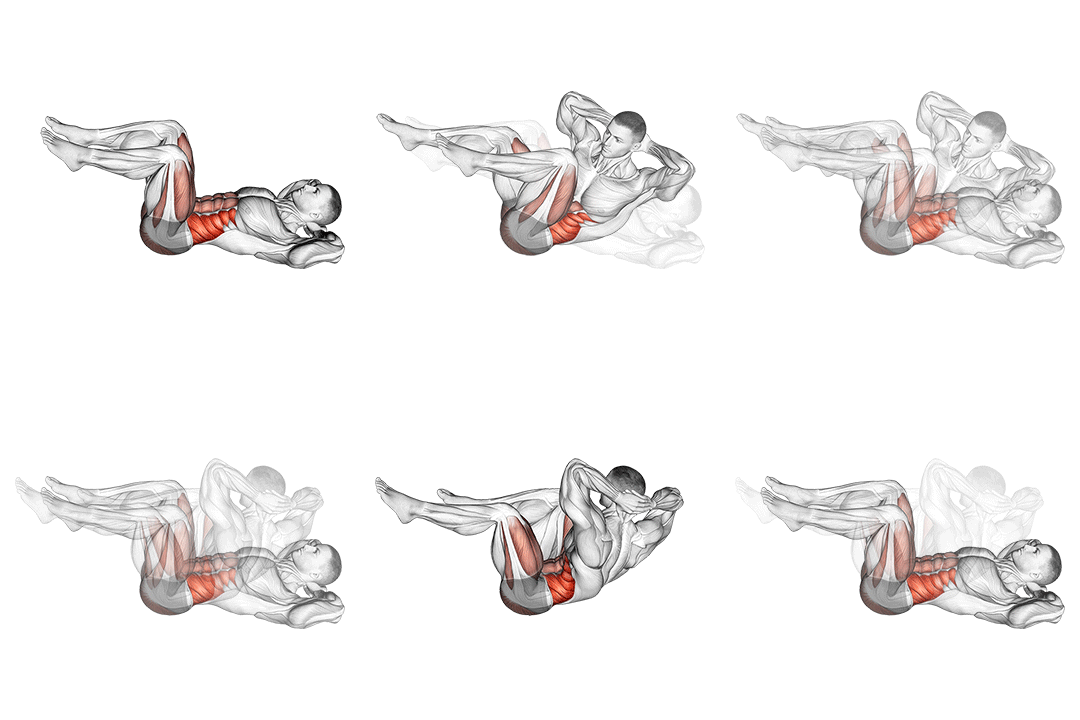
Bicycle crunch
Combines rotation with crunch, hitting the obliques in a different pattern. Useful for variety in oblique training.
Side plank with rotation
Static side plank with a thread-the-needle rotation. Trains both isometric stability and rotation in the same movement.
Cable woodchop
Standing rotational exercise using a cable or band. Carries over more directly to sport-specific rotational power than seated Russian twists.
How to program the Russian Twist into your training
Russian twists work best as an accessory or finisher in a core training session, not as the primary movement. Pair them with anti-extension work (planks, dead bugs) and lower ab work (reverse crunches, leg raises) for complete core development. Sets and reps: 3 sets of 15-25 total rotations (counting both sides) with 30-60 seconds rest. Total weekly volume of 60-150 rotations drives most adaptations. In a complete core circuit: 3 rounds of 10 dead bugs per side, 30-second front plank, 20 Russian twists (10 per side), 12 reverse crunches. Done 2-3 times per week. For athletes building rotational power: pair Russian twists with medicine ball throws against a wall — train both the controlled and explosive ends of the rotational strength curve. Sets and reps for the explosive work: 3-4 sets of 6-8 throws per side with 60-90 seconds rest. With added weight, treat Russian twists more like strength training: 3-4 sets of 8-15 reps per side with full rest. Going beyond 15 reps with significant weight usually means form decays. Avoid programming heavy Russian twists on the same day as heavy deadlifts or squats — the cumulative spinal load is excessive.
Recovery and frequency
Russian twists at moderate volume have low recovery cost — 48 hours between dedicated sessions is plenty. Higher volumes (200+ rotations per session with weight) can leave the obliques sore for 2-3 days, especially in the first few weeks of training. Lower back fatigue is the main signal to watch. If the lower back feels sore the day after Russian twists (rather than just the obliques), form is the likely culprit — usually a rounded back or excessive lean. Reduce weight and revisit form. Standard recovery practices (sleep, hydration, walking) cover the rest.
Frequently asked questions
How many sets and reps of Russian twists should I do?
3 sets of 15-25 total rotations (counting both sides) with 30-60 seconds rest. With added weight: 3-4 sets of 8-15 reps per side.
How often should I train the Russian twist?
2-3 times per week as part of a structured core program. The obliques recover within 48 hours, but pair with non-rotational core work to avoid overuse.
Will Russian twists give me a small waist?
Russian twists build the obliques, but visible muscle requires low body fat. They don't 'spot reduce' fat from the waist. Diet drives visibility; Russian twists train the muscle that becomes visible when fat is low.
Are Russian twists bad for my back?
Done with proper form, no — they're a useful oblique exercise. Done with rounded back, excessive weight, or poor control, they can stress the lumbar spine. Form matters more than weight.
Should I count one rotation as both sides or each side separately?
Both conventions exist. Track consistently with whatever convention you choose so you can measure progress over time. Counting each side separately gives clearer progression tracking.
Russian twists vs bicycle crunches: which is better?
Different tools. Russian twists train pure rotation in a seated position. Bicycle crunches combine rotation with flexion in a supine position. For complete oblique development, both have value; for limited time, Russian twists usually scale to higher loads more easily.
Useful tools for this exercise
Build a workout with the Russian Twist
Puna gives you guided bodyweight workouts you can do anywhere — no equipment, no gym, just structured progressions that build real strength.