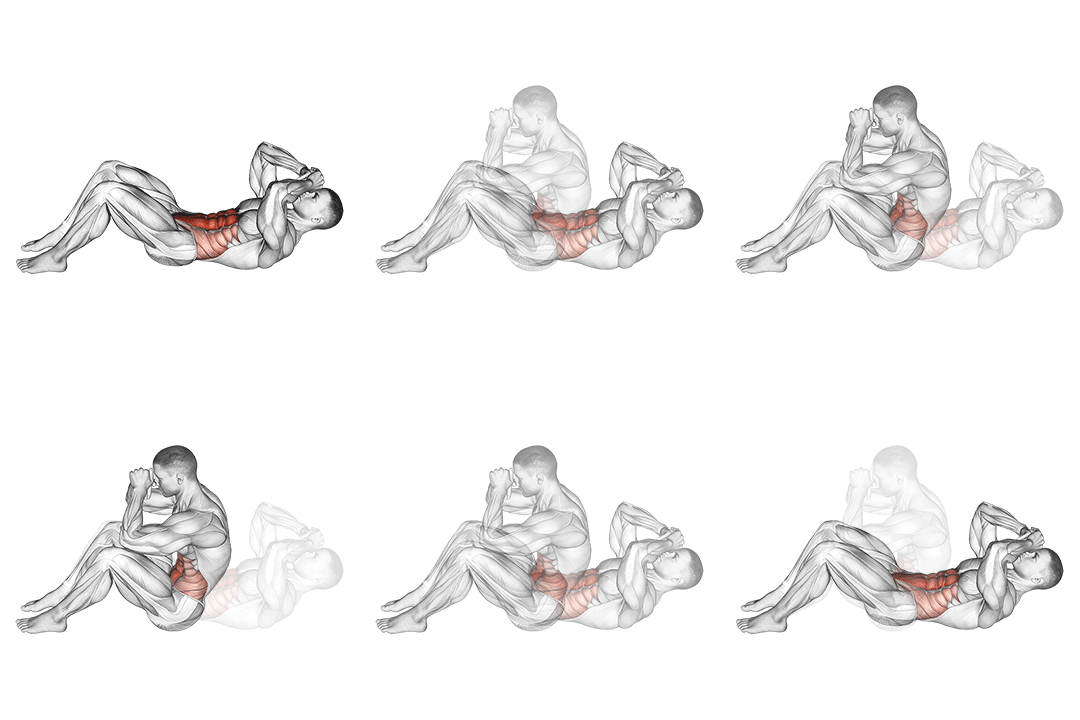
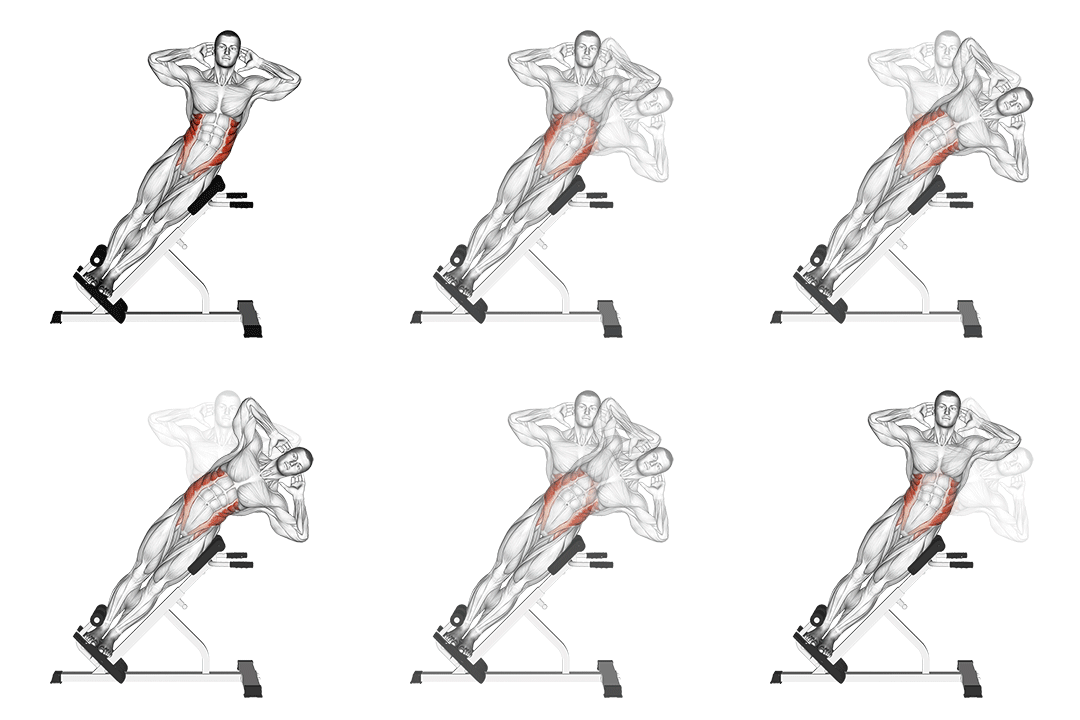
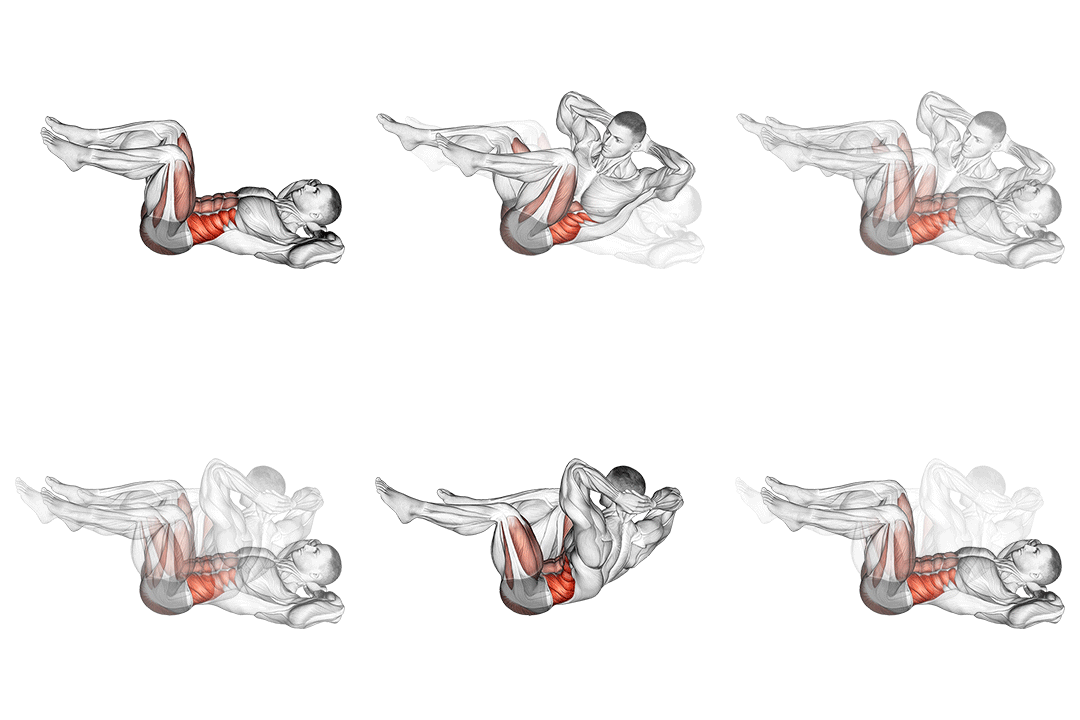
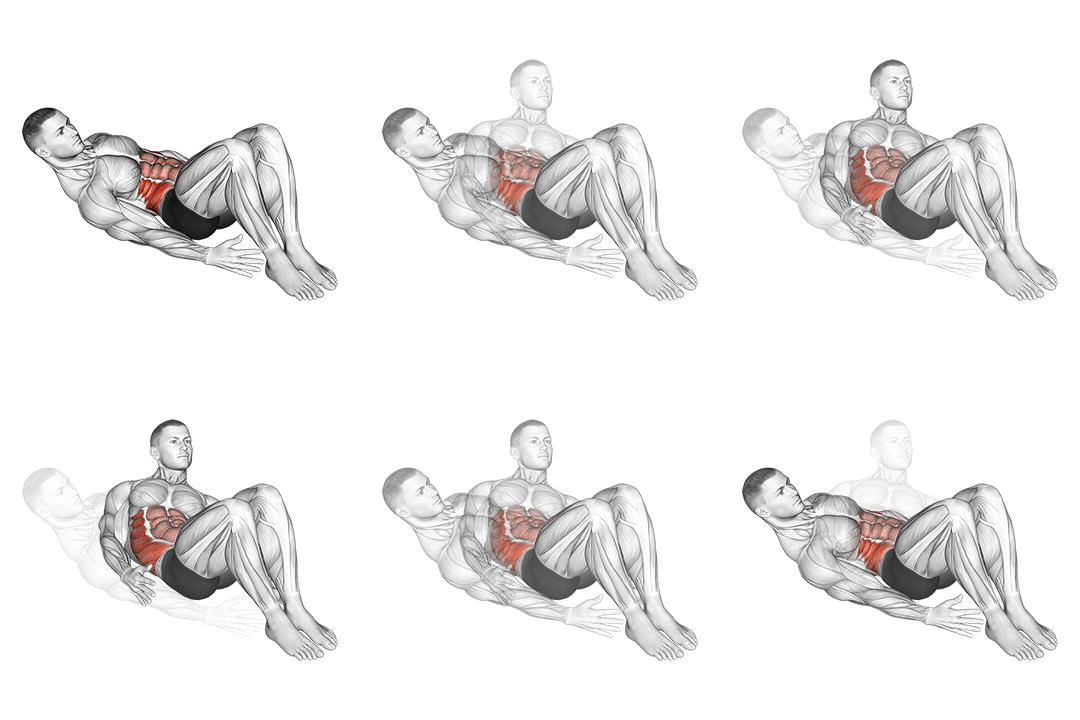
Reverse Plank With Leg Lift
advanced strength exercise · body weight · targets abs
- Body part
- waist
- Primary target
- abs
- Equipment
- body weight
- Difficulty
- advanced
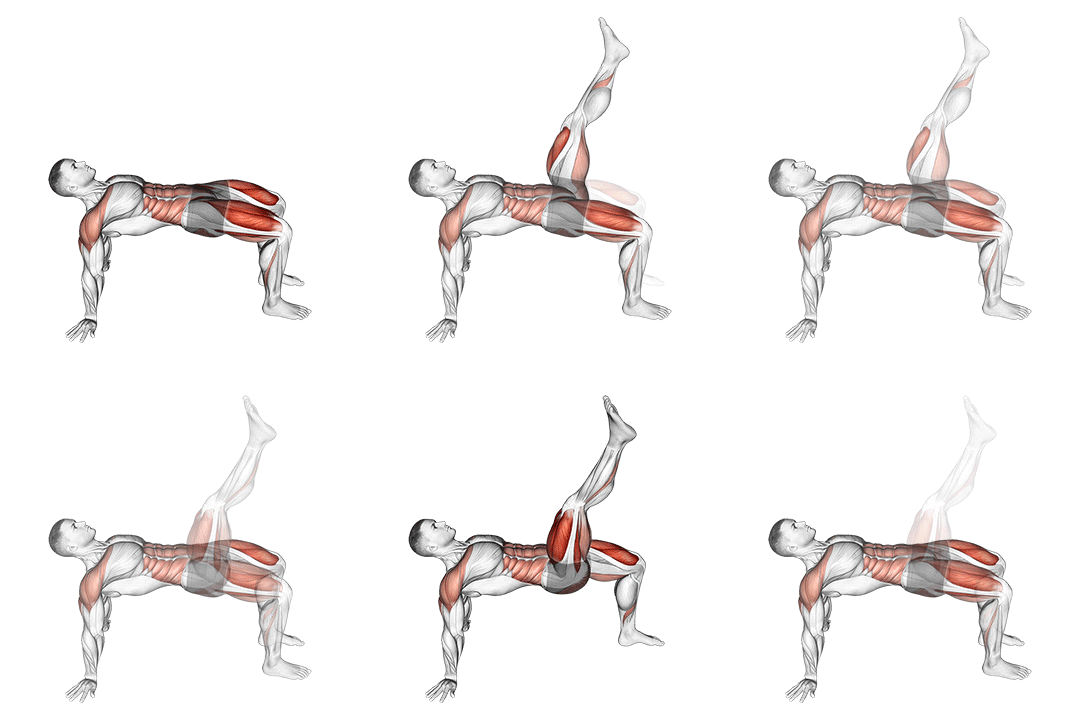
The reverse plank with leg lift is an advanced posterior-chain and core exercise — performed face-up with hands on the floor behind the body and the body lifted into a straight line from heels to head, you alternately lift one leg toward the ceiling and lower it back down. The combination loads the glutes, hamstrings, lower back, and core through the reverse plank position while training the hip flexors and stabilizers through the leg lifts. It's classified as advanced because the reverse plank position alone is demanding for most trainees. Adding the leg lift on top adds anti-rotation core work and unilateral hip strength. Most trainees who can hold a 60-second reverse plank can manage only 5-8 leg lifts per side in their first attempts. This exercise fills a useful gap in posterior-chain programming. Most posterior-chain exercises (deadlifts, glute bridges, hip thrusts) load the glutes and hamstrings but don't train the core stabilization needed to keep the body in a straight line under unilateral demand. The reverse plank with leg lift addresses both, making it efficient for time-constrained training.
Why train the Reverse Plank With Leg Lift?
- Combines posterior-chain strength with core stabilization in one exercise.
- Trains the glutes, hamstrings, and lower back through the reverse plank hold.
- Builds unilateral hip strength through the leg lifts.
- Reveals stability asymmetries between sides.
- Useful for athletes and dancers requiring posterior-chain control.
- Requires no equipment.
How to do the Reverse Plank With Leg Lift: step by step
- 1Sit on the ground with your legs extended in front of you and your hands resting on the ground behind you, fingers pointing towards your feet.
- 2Press through your hands and lift your hips off the ground, coming into a reverse plank position.
- 3Engage your core and lift one leg off the ground, extending it straight up towards the ceiling.
- 4Hold for a moment, then lower your leg back down.
- 5Repeat with the other leg.
- 6Continue alternating legs for the desired number of repetitions.
Muscles worked
Primary
abs
Secondary
glutes, hamstrings, shoulders
Common mistakes to avoid
Letting the hips drop during the reverse plank
The hips should be lifted high enough to form a straight line from heels to head. If the hips sag, the glutes have stopped engaging. Squeeze the glutes hard to maintain the position.
Letting the hips rotate during the leg lift
When one leg lifts, the body wants to rotate. Keep both hip points facing the ceiling throughout the leg lift.
Lifting the leg too high
Trying to lift the leg straight up usually means the lower back arches and the glutes stop doing their job. Lift the leg only to roughly hip height or just above — high enough to feel the glute on the supporting leg engage.
Letting the supporting shoulders shrug
Pack the shoulders down (drive them away from the ears) and maintain that position throughout — this protects the rotator cuff.
Choosing this before mastering reverse planks
Build to a 60-second strict reverse plank before adding the leg lift component.
Easier and harder variations
Easier
Reverse plank hold without the leg lift. Or perform from a bent-knee reverse plank position to reduce load.
Harder
Add a hold at the top of each leg lift (3-5 seconds). Slow the tempo. Or progress to single-leg reverse planks (one foot on the floor for entire reps).
Alternative exercises
Reverse plank
Static reverse plank without the leg lift. Easier baseline.
Glute bridge march
Similar pattern in standard supine position. Easier alternative.
Bird dog
Quadrupedal position with similar anti-rotation training.
How to program the Reverse Plank With Leg Lift into your training
Reverse plank with leg lift works as accessory posterior-chain and core work. Sets and reps: 3 sets of 6-10 reps per side with 60-90 seconds rest. In a complete core and posterior chain session: 4 sets of 8 deadlifts (main strength), 3 sets of 8 reverse planks with leg lift per side (combined work), 3 sets of 12 glute bridges (glute focus), 3 sets of 30-second front planks (anti-extension). Done 2 times per week.
Recovery and frequency
Reverse plank with leg lift loads the glutes, hamstrings, lower back, and shoulders. 48-72 hours between sessions is the right cadence.
Frequently asked questions
How many sets and reps should I do?
3 sets of 6-10 reps per side with 60-90 seconds rest.
How often should I train this exercise?
2 times per week with 48-72 hours between sessions.
Reverse plank with leg lift vs glute bridge march: which is better?
Different positions. Reverse plank loads the body in a more demanding overall position. Glute bridge march is easier. Use whichever matches your current strength level.
Should I count one rep as both sides or each side separately?
Each side separately.
Why does my lower back hurt during this exercise?
Almost certainly the lower back arching as the leg lifts. Keep the leg lift small and engage the abs to prevent overarching.
Are reverse planks safe?
For most healthy trainees with proper form, yes. The position requires significant shoulder mobility and posterior-chain strength. Build the prerequisite reverse plank hold before adding the leg lift.
Useful tools for this exercise
Build a workout with the Reverse Plank With Leg Lift
Puna gives you guided bodyweight workouts you can do anywhere — no equipment, no gym, just structured progressions that build real strength.