Reverse Crunch
beginner strength exercise · body weight · targets abs
- Body part
- waist
- Primary target
- abs
- Equipment
- body weight
- Difficulty
- beginner
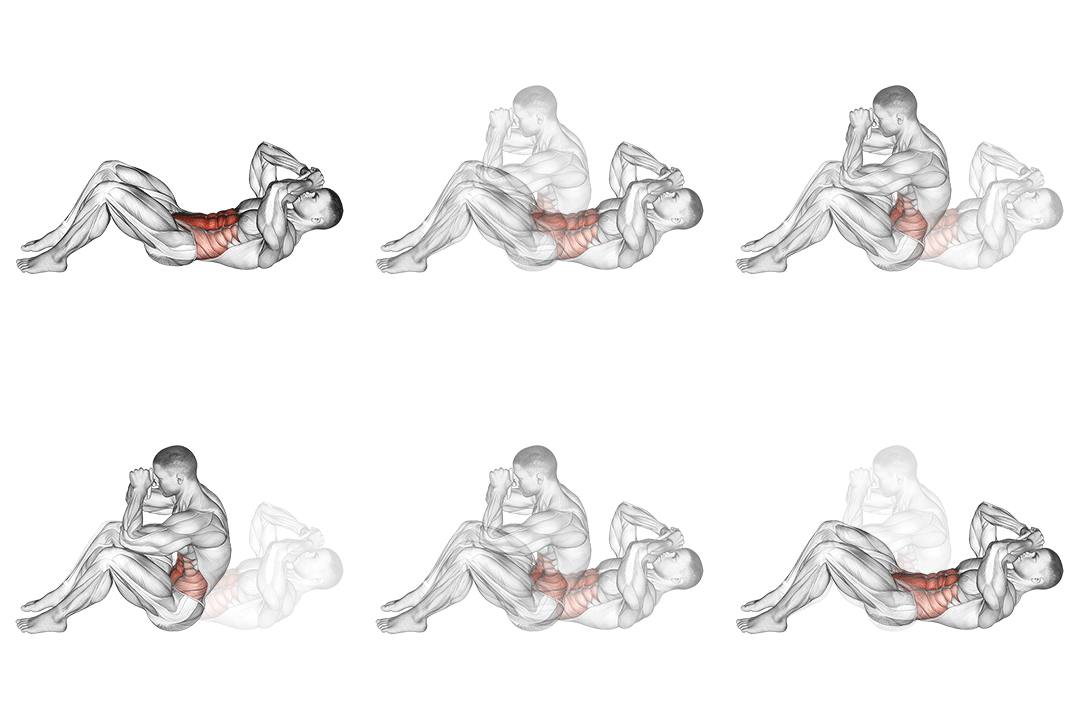
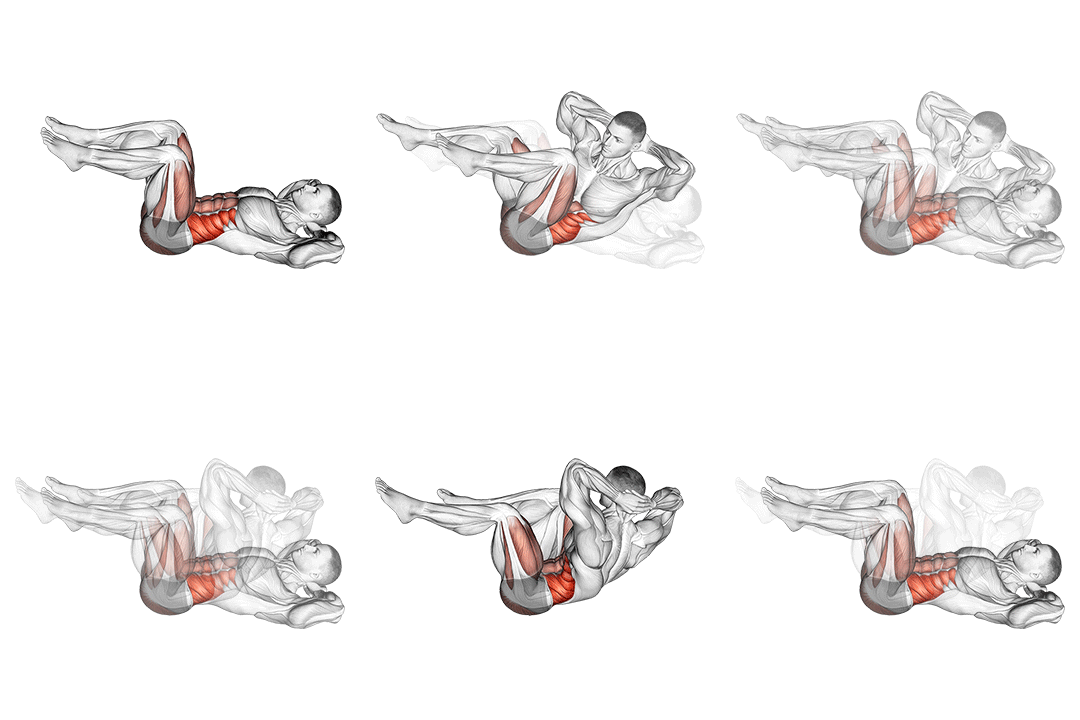
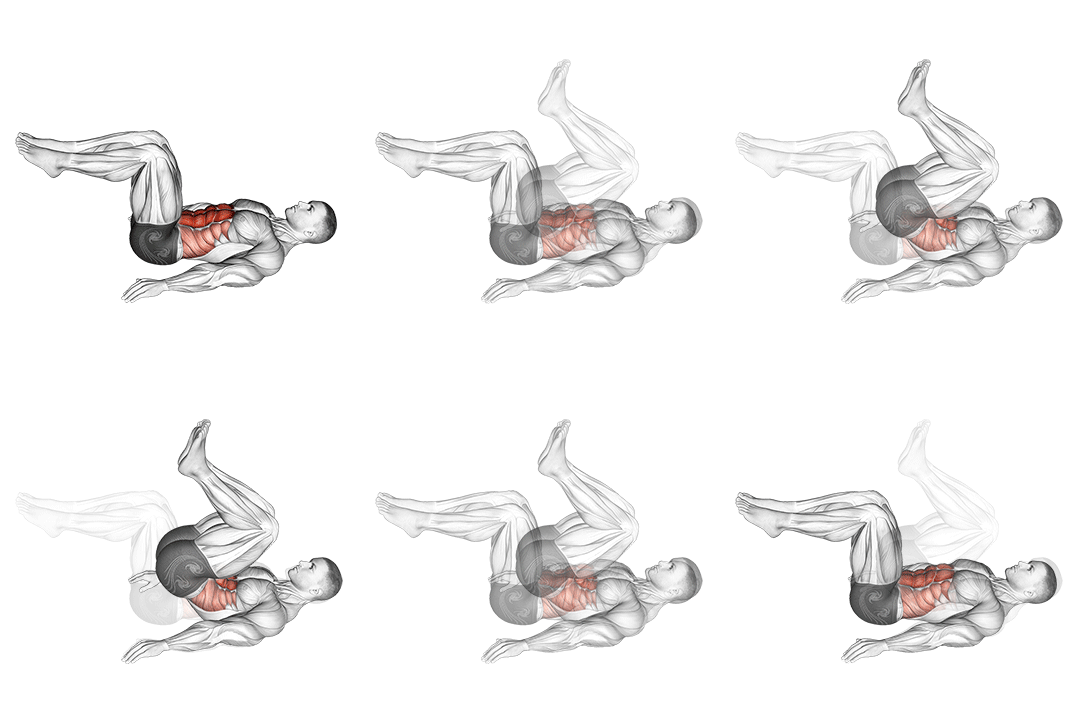
The reverse crunch flips the standard crunch on its head: instead of lifting the upper body toward stationary legs, you lift the legs and hips toward a stationary upper body. From a face-up position with knees bent, you contract the lower abs to roll the hips off the floor and bring the knees toward the chest, then lower under control. This variation matters because the lower portion of the rectus abdominis doesn't get trained well by standard crunches. Crunches load the upper abs more heavily; reverse crunches shift the emphasis lower, making them an essential complement to crunches in any complete ab program. Trainees who only do crunches often develop a noticeably 'top-heavy' ab look, with the upper abs visible but the lower section weak — the reverse crunch closes that gap. The exercise also has lower neck-strain risk than crunches, since the head stays on the floor throughout. That makes it a good alternative for people who get neck soreness from crunches but still want focused ab work. Programmed alongside crunches in a 1:1 ratio (e.g., 3 sets of each), reverse crunches give you balanced rectus abdominis training without specialized equipment.
Why train the Reverse Crunch?
- Targets the lower portion of the rectus abdominis more directly than standard crunches.
- Avoids the neck strain that crunches can cause, since the head stays on the floor.
- Pairs perfectly with crunches for complete rectus abdominis development.
- Requires zero equipment and minimal space — works anywhere.
- Scales easily: bent knees first, straight legs for harder, hanging variations for advanced.
- Effective at low rep counts when done strict — quality of contraction matters more than volume.
How to do the Reverse Crunch: step by step
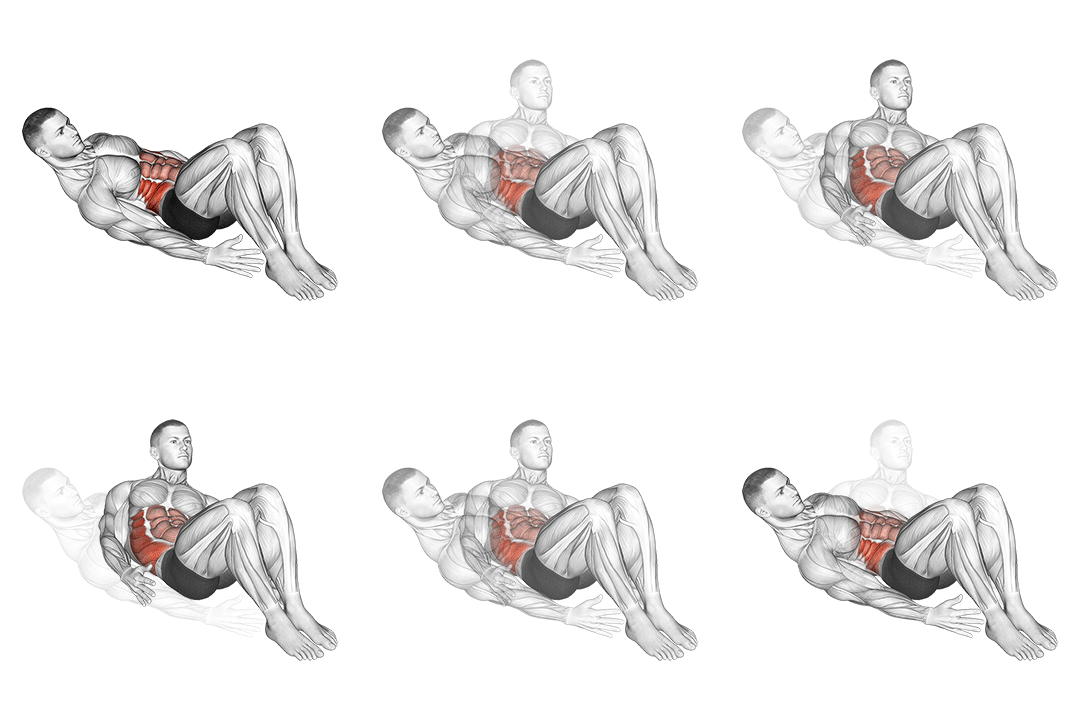
- 1Lie flat on your back with your arms extended along your sides.
- 2Bend your knees and lift your feet off the ground, bringing your thighs perpendicular to the floor.
- 3Contract your abs and curl your hips off the floor, bringing your knees towards your chest.
- 4Pause for a moment at the top, then slowly lower your hips back down to the starting position.
- 5Repeat for the desired number of repetitions.
Muscles worked
Primary
abs
Secondary
hip flexors
Common mistakes to avoid
Using momentum to swing the legs up
Whipping the legs toward the chest uses hip flexor momentum and skips the lower-ab work. Move slowly: 1-2 seconds up, pause at the top, 2-3 seconds down. The lower abs should feel like they're doing the work, not the hip flexors.
Letting the hips bounce off the floor
Some people use the floor as a springboard, bouncing into each rep. Lower the hips with control until they just touch the floor (or stop an inch above), then start the next rep deliberately.
Pulling with the hip flexors instead of the abs
If you feel the front of the hips burning more than the lower abs, the hip flexors are doing the work. Initiate the movement by tilting the pelvis posteriorly (squeezing the lower abs) before the legs move. The leg lift should follow the pelvic tilt, not lead it.
Letting the lower back arch off the floor
The lower back should stay pressed into the floor throughout the rep. If a hand could slide between your back and the floor, you've lost core engagement and risk lower back strain. Brace harder before each rep.
Holding the breath through the rep
Bracing tightly often means stopping breathing. Exhale as the hips lift toward the chest, inhale as they lower. Continuous breathing supports better core engagement.
Easier and harder variations
Easier
Reduce the range — instead of bringing the knees fully to the chest, only lift them halfway. Or place the feet flat on the floor and just curl the pelvis (no leg lift), focusing entirely on the lower-ab squeeze.
Harder
Straighten the legs (so they're lifted vertically and lowered to the floor). Hold a weight between the knees for added resistance. Or progress to hanging knee raises or hanging leg raises from a pull-up bar.
Alternative exercises
Hanging knee raise
Same lower-ab focus performed hanging from a bar. Higher difficulty due to the gravity loading and grip demand.
Lying leg raise
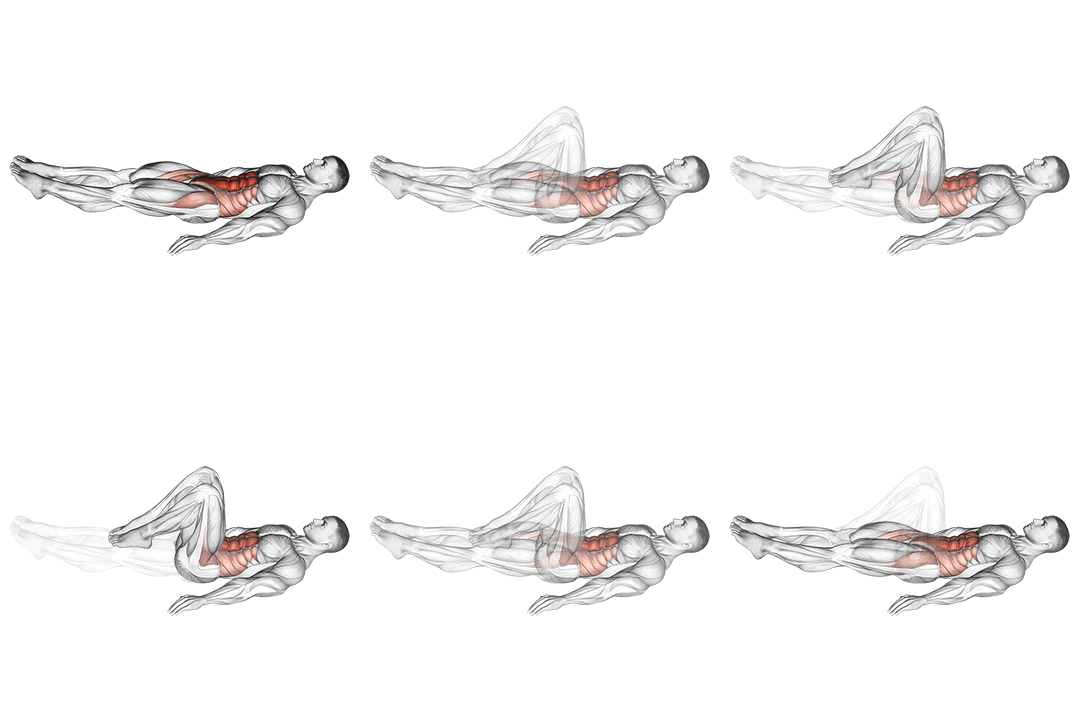
Legs straight throughout, lowered slowly to just above the floor. More demanding than reverse crunches with bent knees.
Dead bug
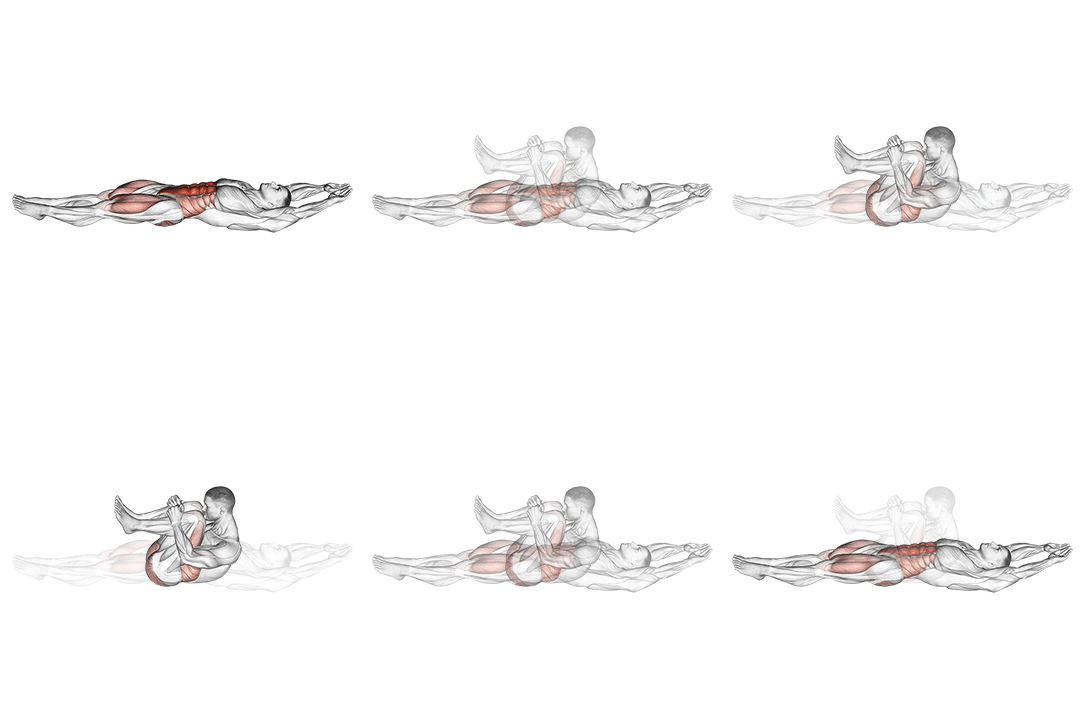
Different position, similar lower-ab and stabilization work. Useful complement to reverse crunches in the same session.
How to program the Reverse Crunch into your training
Reverse crunches work best paired with regular crunches in core training sessions. The two exercises target different portions of the rectus abdominis and complement each other directly. Sets and reps: 3 sets of 12-20 reps with 30-60 seconds rest. Total weekly volume of 60-150 reps drives most adaptations. In a complete core circuit: 3 rounds of 15 reverse crunches, 15 standard crunches, 30-second front plank, 10 dead bugs per side. Done 2-3 times per week, this covers the rectus abdominis thoroughly plus stabilization work. As a finisher: 2-3 sets of 15 reverse crunches at the end of an upper-body session. Adds useful lower-ab volume without significantly extending the workout. For visible lower abs (recognizing diet drives visibility), program reverse crunches twice per week minimum alongside other core work. Combined weekly volume of 200+ rectus abdominis reps helps maintain muscle thickness once body fat is low enough for visibility. Daily reverse crunches at moderate volume (30-50 reps) are fine and useful as part of a morning core routine.
Recovery and frequency
Reverse crunches at moderate volume have low recovery cost — daily training is fine for most people. Higher volumes can leave the lower abs and hip flexors sore in the first 1-2 weeks of training, but the soreness fades quickly. Hip flexor tightness is the most common feedback after sessions. If the front of the hips feels excessively tight, reduce the range of the leg lift and add hip flexor stretches between sessions. Lower back discomfort during the exercise points to form errors — usually the back arching off the floor — and should be addressed before continuing.
Frequently asked questions
How many sets and reps of reverse crunches should I do?
3 sets of 12-20 reps with 30-60 seconds rest. Total weekly volume of 60-150 reps drives most adaptations.
How often should I train the reverse crunch?
2-3 times per week as part of a structured core program. Daily at moderate volume is also fine — the abs recover quickly.
Reverse crunches vs regular crunches: which is better?
Different tools. Regular crunches train the upper portion of the rectus abdominis. Reverse crunches train the lower portion. For complete ab development, do both — they complement each other directly.
Will reverse crunches give me a flat stomach?
They build the lower abs, but visible abs come from low body fat. Reverse crunches train the muscle; diet creates the visibility. Doing 100 reverse crunches a day won't flatten your stomach if your body fat is too high.
Why do I feel reverse crunches in my hip flexors instead of my abs?
Almost certainly because you're using the hip flexors to swing the legs up instead of the lower abs to curl the pelvis. Initiate the movement by tilting the pelvis posteriorly (squeezing the lower abs) before the legs move.
Are reverse crunches safe with lower back pain?
Often safer than regular crunches because the head stays on the floor and the spinal flexion is reduced. Confirm with a healthcare provider if you have known back issues, and start with reduced range until you have full pain-free control.
Useful tools for this exercise
Build a workout with the Reverse Crunch
Puna gives you guided bodyweight workouts you can do anywhere — no equipment, no gym, just structured progressions that build real strength.