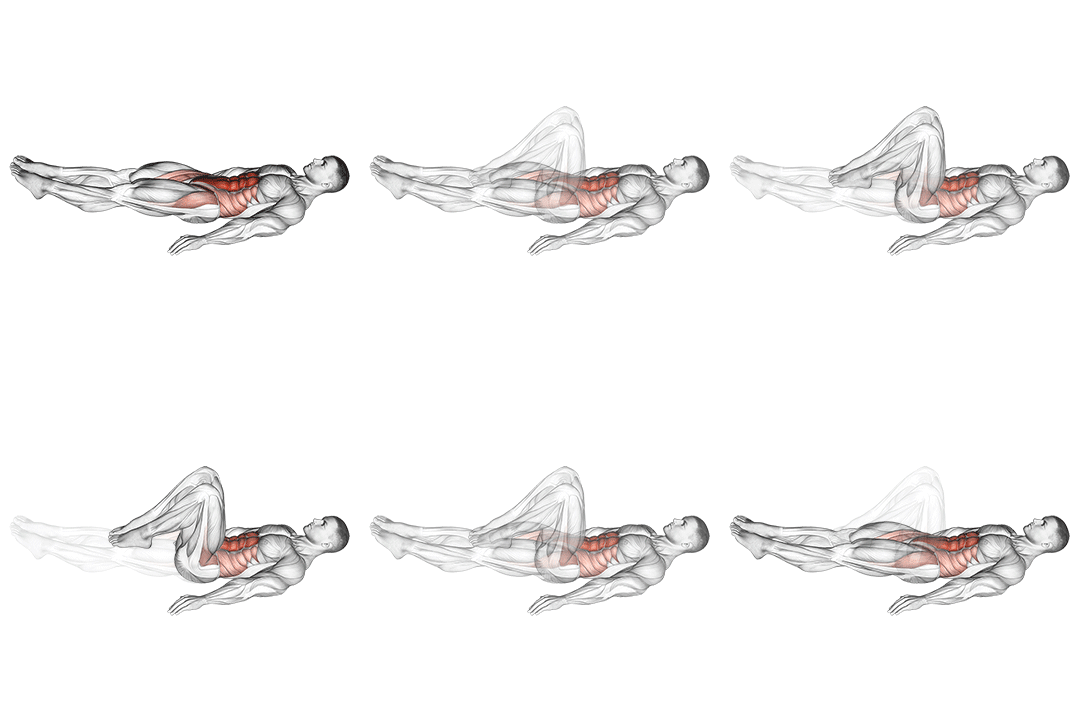
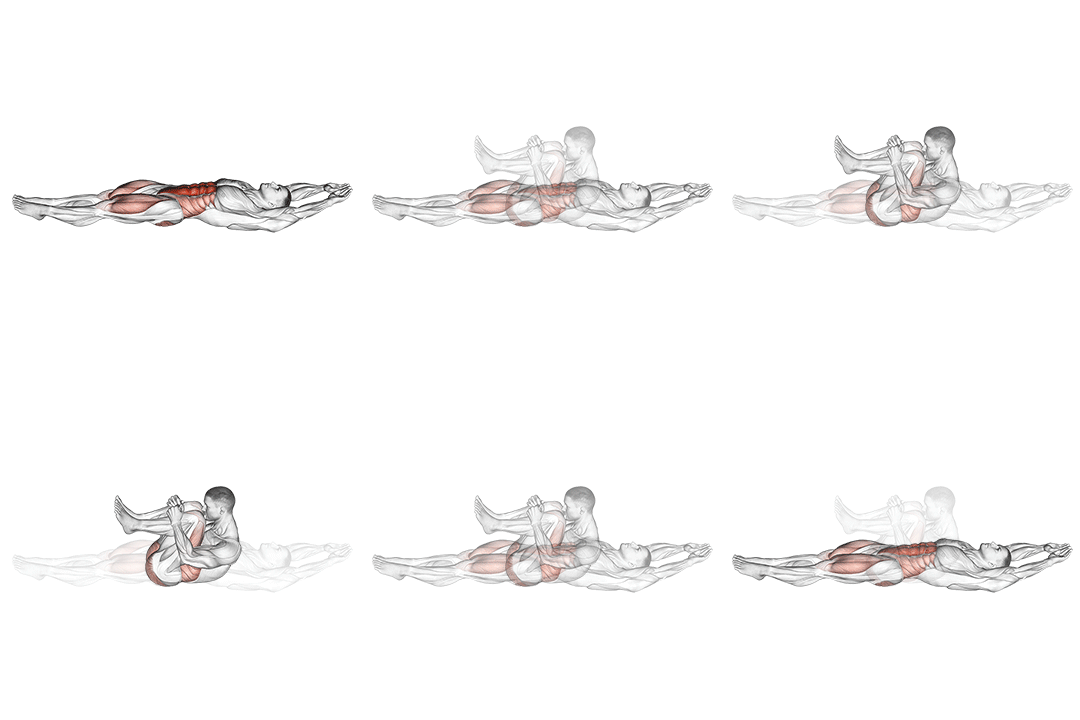
Quarter Sit-up
beginner strength exercise · body weight · targets abs
- Body part
- waist
- Primary target
- abs
- Equipment
- body weight
- Difficulty
- beginner
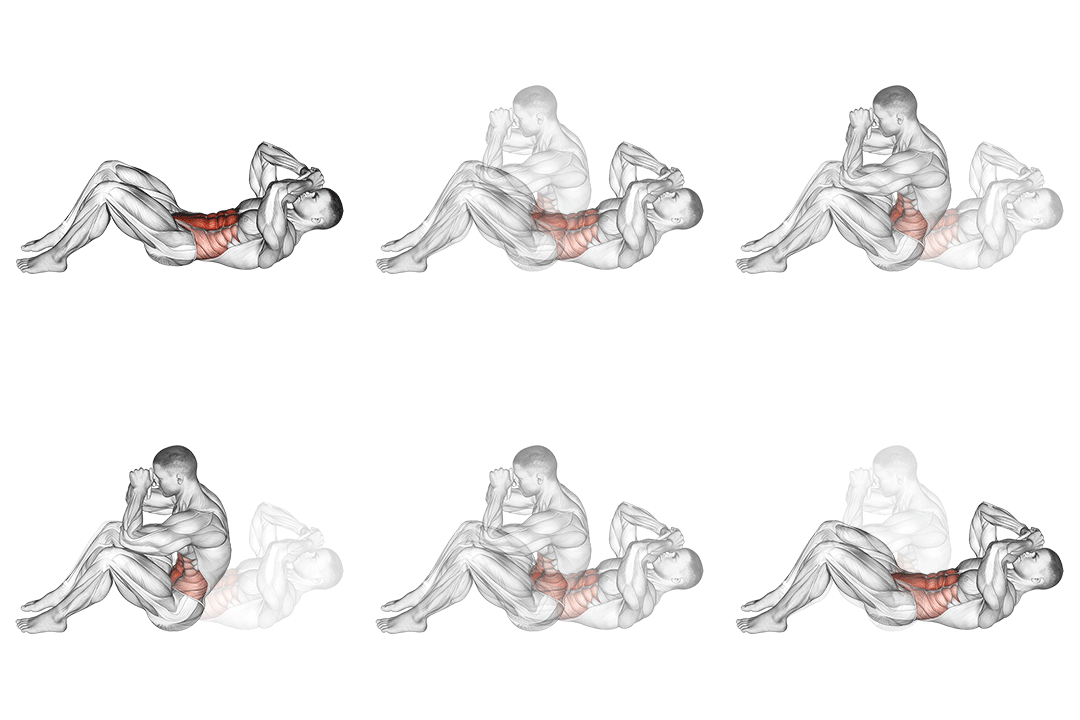
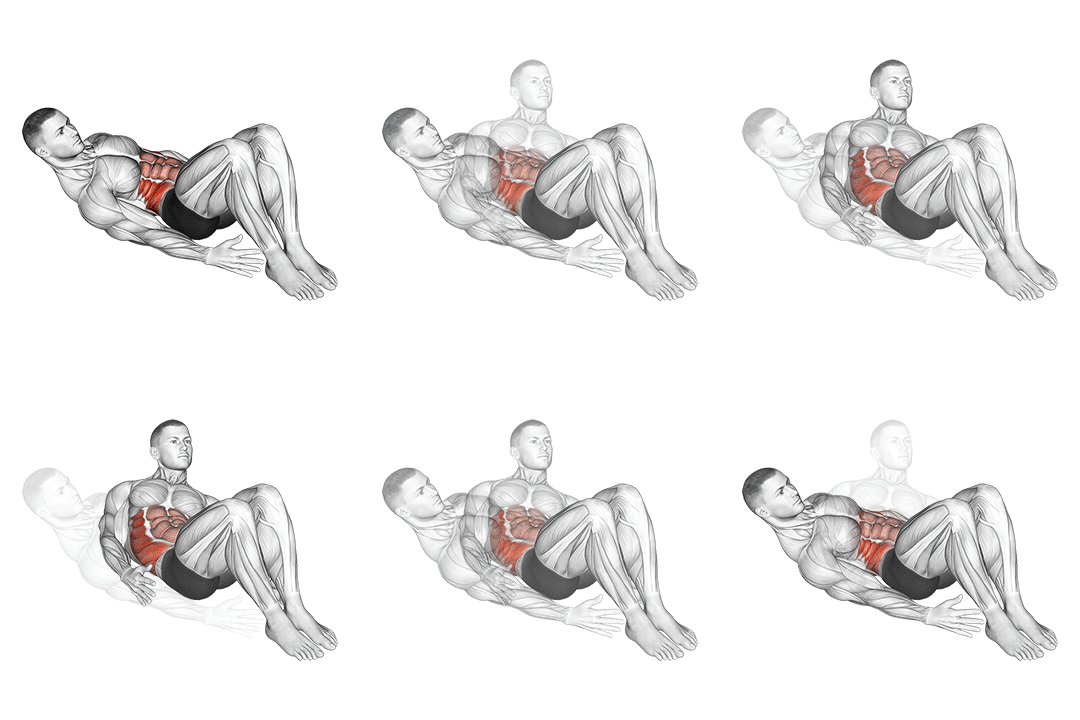
The quarter sit-up is the most accessible sit-up variation — performed lying face-up with knees bent, you crunch the upper body up only about 25% of the way to a full sit-up position (roughly the shoulder blades clearing the floor). It's essentially a slightly larger version of a basic crunch, with the partial range making it appropriate for absolute beginners or trainees rehabbing core injuries. It fills a useful niche between basic crunches and half/full sit-ups. Beginners who can't yet do clean half sit-ups can usually manage quarter sit-ups, which gives them a way to train the rectus abdominis at appropriate difficulty. Once 3 sets of 20 quarter sit-ups feel easy, they can progress to half sit-ups and eventually full sit-ups. It's also useful as a high-rep finisher for endurance work. The reduced range allows for higher rep counts than full sit-ups, making it efficient for rep-volume training. For military and police fitness test preparation, however, the full sit-up is what's tested — quarter sit-ups don't directly substitute.
Why train the Quarter Sit-up?
- Most accessible sit-up variation — appropriate for absolute beginners.
- Reduces hip flexor and lower-back demand compared to full sit-ups.
- Allows higher rep counts for endurance work.
- Useful in rehabilitation contexts under medical guidance.
- Pairs well with planks and reverse crunches for complete core training.
- Requires no equipment.
How to do the Quarter Sit-up: step by step
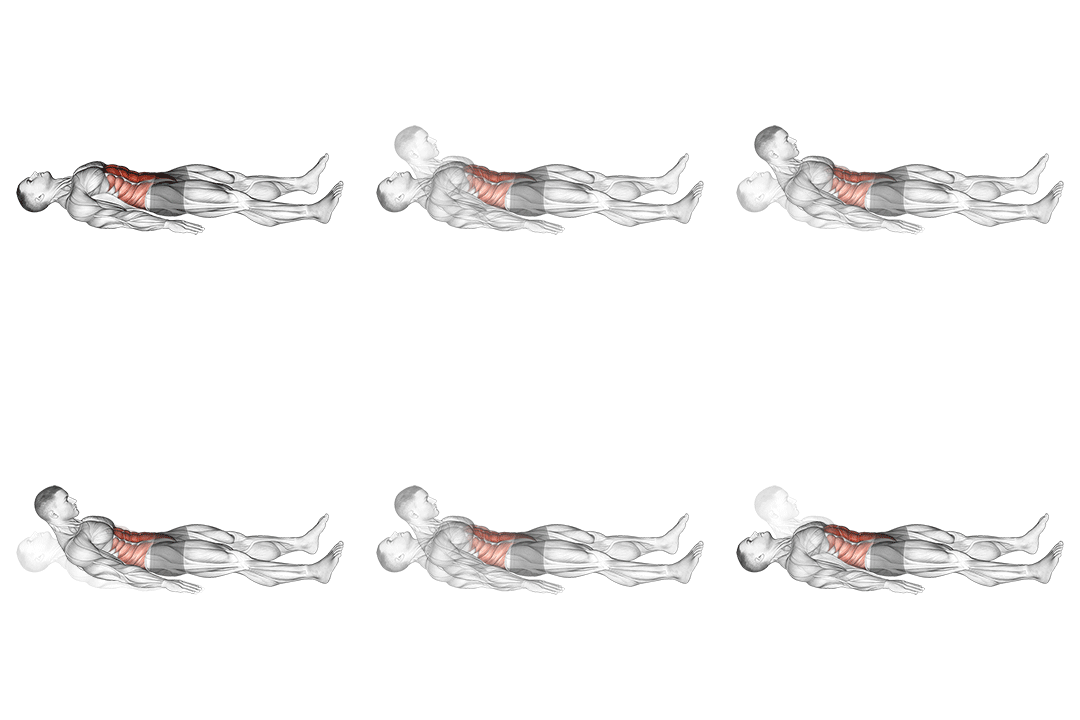
- 1Lie flat on your back with your knees bent and feet flat on the ground.
- 2Place your hands behind your head with your elbows pointing outwards.
- 3Engaging your abs, slowly lift your upper body off the ground, curling forward until your torso is at a 45-degree angle.
- 4Pause for a moment at the top, then slowly lower your upper body back down to the starting position.
- 5Repeat for the desired number of repetitions.
Muscles worked
Primary
abs
Secondary
hip flexors
Common mistakes to avoid
Pulling on the neck with the hands
Hands behind the head are a guide, not a tool. Pulling the head forward strains the cervical spine.
Going too fast for control
Speed kills ab work. Take 1-2 seconds up, brief pause at the top, 1-2 seconds down.
Trying to come too high
Quarter sit-ups stop at about 25% of full range. If you're coming higher, you're doing a half or full sit-up — fine, but it's a different exercise.
Cranking the chin to the chest
Tucking the chin into the chest hyperflexes the cervical spine. Keep the neck in line with the spine.
Doing them on a hard floor without padding
The lower back rolls along the floor. Use a yoga mat or folded towel.
Easier and harder variations
Easier
Standard crunches (smaller range, easier). Or perform with arms at the chest instead of behind the head.
Harder
Half sit-ups (50% of full range). Full sit-ups. Or hold a weight at the chest.
Alternative exercises
Standard crunch
Even smaller range. Easier and lower lower-back demand.
Half sit-up
Larger range than quarter sit-ups. Natural progression.
Full sit-up
All the way upright. The standard fitness-test sit-up.
How to program the Quarter Sit-up into your training
Quarter sit-ups work as accessory or finisher core work, especially for beginners or rehabilitation contexts. Sets and reps: 3 sets of 15-25 reps with 30-60 seconds rest. In a complete core circuit: 3 sets of 20 quarter sit-ups, 3 sets of 30-second front planks, 3 sets of 12 reverse crunches. Done 2-3 times per week. For beginners building toward full sit-ups: 3 sessions per week of quarter sit-ups, progress to half then full versions over weeks.
Recovery and frequency
Quarter sit-ups have very low recovery cost — daily training is fine.
Frequently asked questions
How many sets and reps should I do?
3 sets of 15-25 reps with 30-60 seconds rest.
How often should I train quarter sit-ups?
2-3 times per week; daily at moderate volume is fine.
Quarter sit-up vs crunch: what's the difference?
Quarter sit-ups are slightly larger range than crunches. Crunches lift only the shoulder blades; quarter sit-ups lift slightly more of the upper torso.
Will quarter sit-ups give me a six-pack?
They build the muscle, but visible abs come from low body fat.
When should I progress from quarter to half sit-ups?
When 3 sets of 20-25 quarter sit-ups feel easy and you can maintain strict form.
Are quarter sit-ups good for rehabilitation?
Often yes — the reduced range and low load make them appropriate for trainees rehabbing core or back injuries under medical guidance.
Useful tools for this exercise
Build a workout with the Quarter Sit-up
Puna gives you guided bodyweight workouts you can do anywhere — no equipment, no gym, just structured progressions that build real strength.