Posterior Step To Overhead Reach
beginner mobility exercise · body weight · targets abs
- Body part
- waist
- Primary target
- abs
- Equipment
- body weight
- Difficulty
- beginner
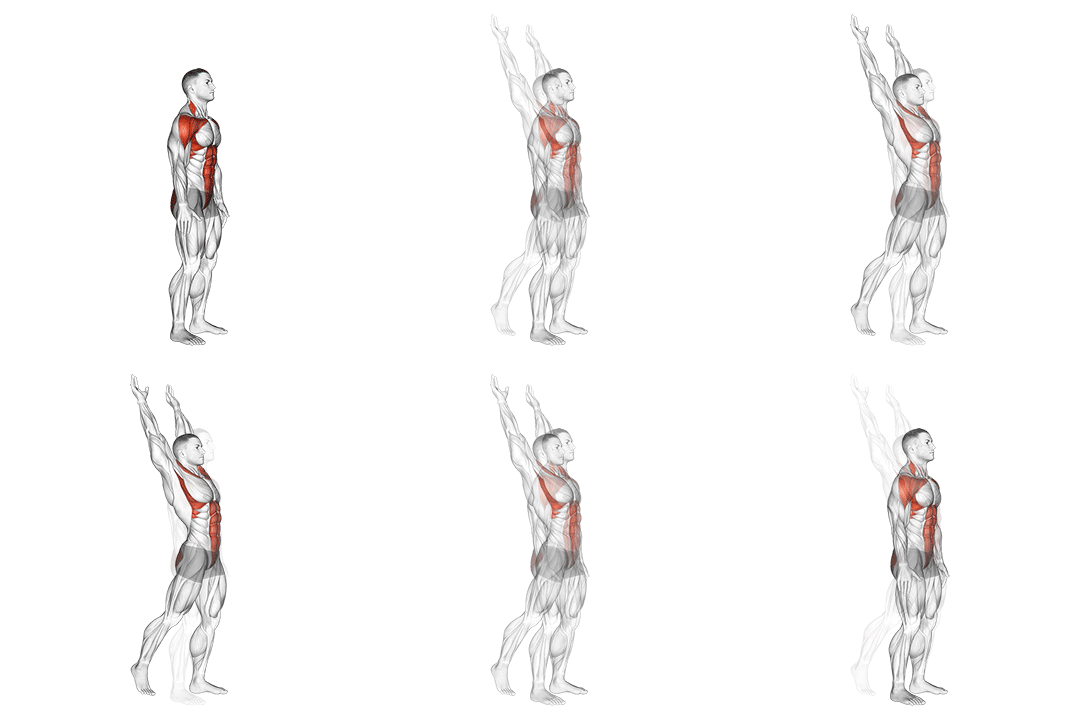
The posterior step to overhead reach is a dynamic mobility drill that combines a step backward with reaching the arms overhead. The motion warms up the hip flexors of the back leg through extension while the overhead reach lengthens the lats, shoulders, and chest. It's a comprehensive mobility flow that addresses several connected tightness patterns in one drill. This exercise targets the chronically tight areas of modern adults — hip flexors from sitting, chest and shoulders from forward-leaning posture, lats from pulling work. By combining all into one fluid motion, the drill provides time-efficient comprehensive warm-up. Where this earns its place is as warm-up activation before lower-body or full-body sessions. Combined with related dynamic mobility drills (world's greatest stretch, runner's stretch), the posterior step to overhead reach contributes to comprehensive movement preparation.
Why train the Posterior Step To Overhead Reach?
- Combines hip flexor mobility with overhead reach in one drill.
- Time-efficient warm-up for full-body sessions.
- Addresses chronic tightness patterns simultaneously.
- Improves overhead reach for pressing and athletic movement.
- Engages core through the dynamic stepping motion.
- Suitable for all fitness levels.
How to do the Posterior Step To Overhead Reach: step by step
- 1Stand with your feet hip-width apart and your arms by your sides.
- 2Take a step back with your right foot, landing on the ball of your foot.
- 3Bend your left knee and lower your body into a lunge position.
- 4As you lower into the lunge, simultaneously reach your arms overhead.
- 5Pause for a moment at the bottom of the lunge, then return to the starting position by pushing through your left heel and bringing your right foot forward.
- 6Repeat the movement on the other side, stepping back with your left foot and bending your right knee.
- 7Continue alternating sides for the desired number of repetitions.
Muscles worked
Primary
abs
Secondary
glutes, hamstrings, quadriceps, shoulders
Common mistakes to avoid
Insufficient back leg extension
Step back far enough to feel the hip flexor stretch. Short steps reduce the mobility benefit.
Overhead reach without thoracic extension
The reach should engage the upper back. Pure shoulder flexion misses the thoracic component.
Bouncing through reps
Smooth controlled motion produces benefit.
Holding the breath
Breathe rhythmically — exhale on the reach.
Skipping side alternation
Always do both sides equally.
Easier and harder variations
Easier
Reduce step depth or overhead reach distance. Or perform standing without stepping back.
Harder
Add a held position at full extension (3-5 seconds). Or progress to integrated yoga flows.
Alternative exercises
World's greatest stretch
More comprehensive mobility flow with similar benefits.
Couch stretch
Static hip flexor focus.
Lunge with rotation
Adds thoracic rotation to the basic lunge pattern.
How to program the Posterior Step To Overhead Reach into your training
Daily warm-up: 1 set of 8-10 reps per side before training. For general fitness: 1-2 times daily as part of mobility practice.
Recovery and frequency
Zero recovery cost. Daily practice safe.
Frequently asked questions
How many reps?
8-10 per side as warm-up.
How often?
Daily.
Will this help my squats?
Hip flexor mobility supports better squat depth. Combined with calf and ankle mobility, daily practice helps.
Static or dynamic?
Dynamic — flowing motion is the point.
Can I do this anywhere?
Yes — needs only floor space.
Why combine hip flexor and overhead reach?
Both tighten with sitting and forward-facing activities. Combined drill is time-efficient.
Useful tools for this exercise
Build a workout with the Posterior Step To Overhead Reach
Puna gives you guided bodyweight workouts you can do anywhere — no equipment, no gym, just structured progressions that build real strength.