Pelvic Tilt
beginner rehabilitation exercise · body weight · targets abs
- Body part
- waist
- Primary target
- abs
- Equipment
- body weight
- Difficulty
- beginner
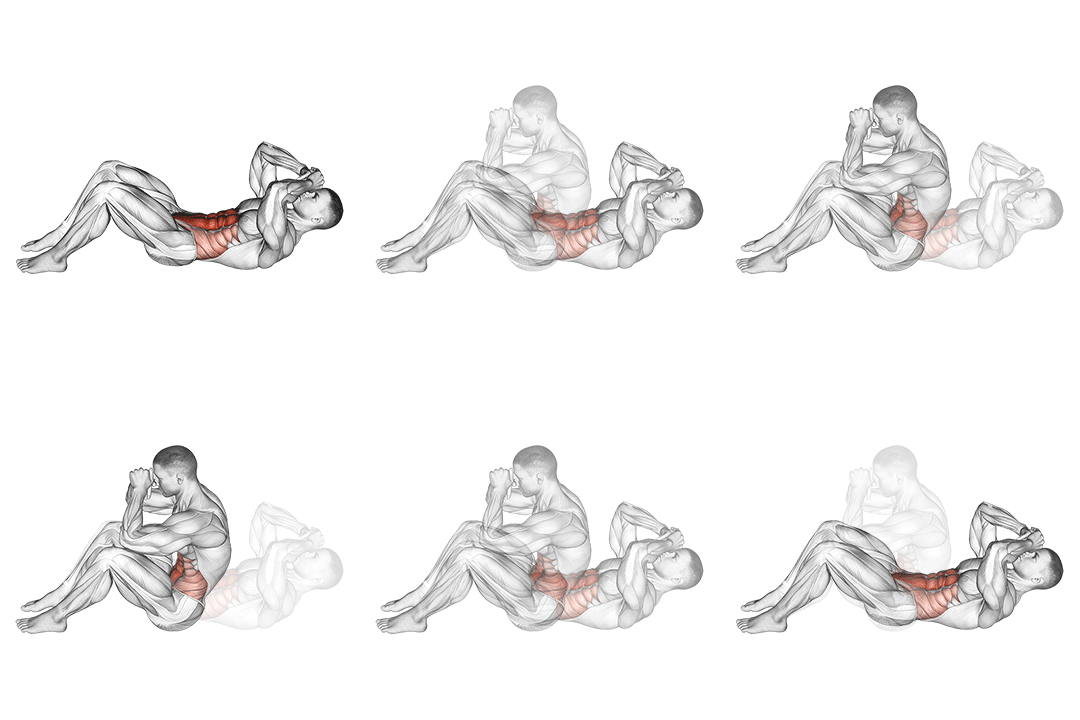
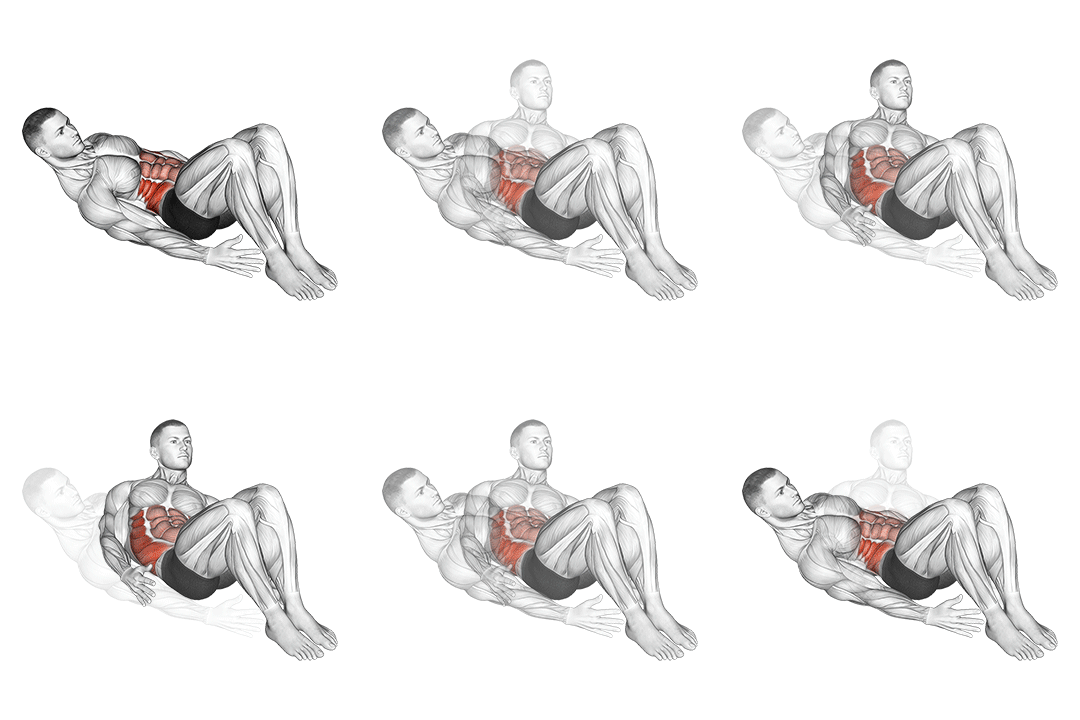
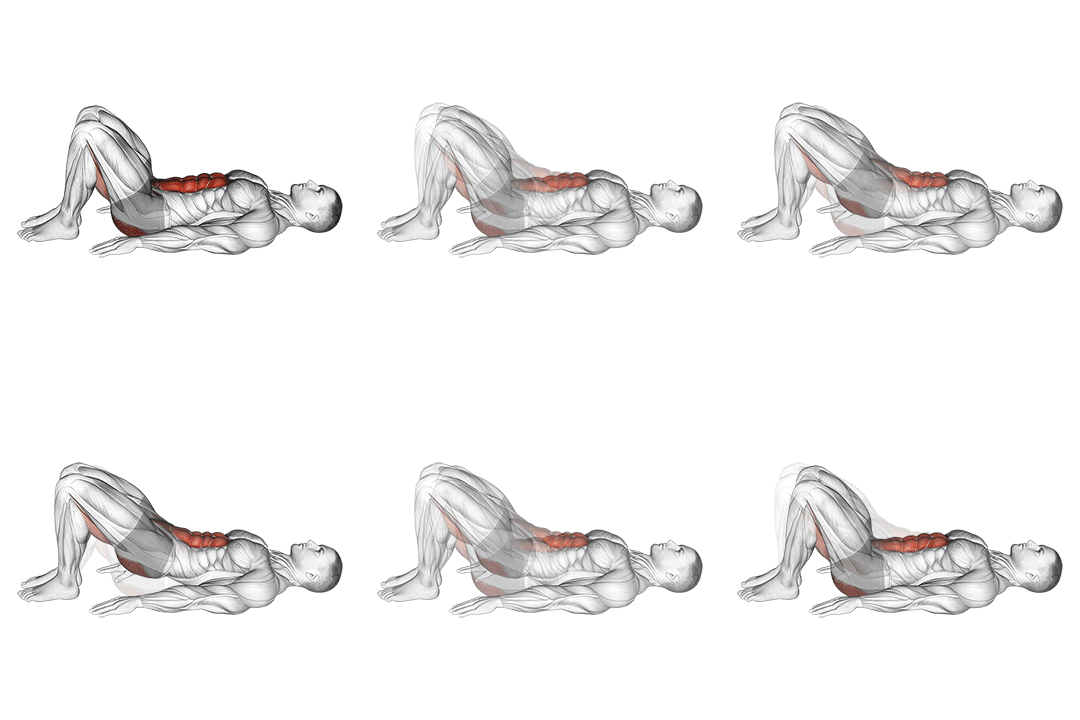
The pelvic tilt is a foundational core awareness drill performed lying on the back with knees bent, then deliberately tucking the pelvis under (posterior tilt) and arching it slightly (anterior tilt) in alternation. The exercise teaches conscious control of pelvic position — a fundamental movement pattern that supports proper bracing during squats, deadlifts, and daily life. This is one of the most undervalued core drills in any program. The exercise builds the mind-muscle connection between intention and pelvic position that drives proper bracing in compound exercises. For trainees who don't yet feel their abs engage during squats or deadlifts, pelvic tilt practice often unlocks the connection that compound training can't teach directly. Where this earns its place is as foundational core awareness work, particularly in rehabilitation contexts and for beginners learning proper bracing. Combined with breathing drills and hollow body holds, pelvic tilts establish the core connection that supports all other training.
Why train the Pelvic Tilt?
- Teaches conscious pelvic control essential for proper bracing.
- Addresses anterior pelvic tilt patterns common in modern adults.
- Useful in lower-back rehabilitation programs.
- Builds the foundation for hollow body holds and other core work.
- Suitable for all fitness levels including those returning from injury.
- Pairs naturally with breathing drills for compound core awareness.
How to do the Pelvic Tilt: step by step
- 1Lie flat on your back with your knees bent and feet flat on the ground.
- 2Place your hands by your sides.
- 3Engage your abs and tilt your pelvis upward, pressing your lower back into the ground.
- 4Hold this position for a few seconds, focusing on contracting your abs.
- 5Release the tilt and return to the starting position.
- 6Repeat for the desired number of repetitions.
Muscles worked
Primary
abs
Secondary
lower back
Common mistakes to avoid
Not actually engaging the abs
The motion should come from ab contraction. Pure pelvic motion without abdominal engagement misses the training point.
Holding the breath
Breathe through the motion. The diaphragm and pelvic floor coordinate naturally with proper breathing.
Going through the motion mindlessly
The drill is about awareness. Mindless reps produce no learning.
Skipping daily practice
The connection builds with repeated practice. Daily exposure produces faster results.
Treating as strength work
The drill is awareness-focused. For strength, do other ab exercises.
Easier and harder variations
Easier
Practice just the posterior tilt without the anterior component. Or perform with feet flat for stability.
Harder
Add to plank position (anti-extension training). Or progress to dead bugs and bird dogs that integrate the awareness.
Alternative exercises
Dead bug
Integrates pelvic tilt into dynamic core work.
Bird dog
Quadruped version applying the same awareness.
Hollow body hold
Static core stability building on pelvic awareness.
How to program the Pelvic Tilt into your training
Daily routine: 1-2 sets of 10-15 reps, focused on awareness rather than fatigue. For rehabilitation: 2-3 sessions per day during return from injury. For beginners learning bracing: daily practice for 2-4 weeks before progressing to integrated exercises.
Recovery and frequency
Zero recovery cost. Daily practice safe and recommended.
Frequently asked questions
How many reps?
10-15 deliberate reps per set, 1-2 sets per session.
How often?
Daily, especially during early learning phase.
Will this build abs?
Foundationally. Pelvic tilts establish the connection; other exercises drive the strength.
Why is this important?
Conscious pelvic control supports proper bracing during heavy lifts and daily movement.
Pelvic tilt vs core strength work?
Tilt builds awareness; strength work builds power. Both essential.
Can I do this with back pain?
Often yes — frequently part of back rehabilitation. Consult physiotherapist for current issues.
Useful tools for this exercise
Build a workout with the Pelvic Tilt
Puna gives you guided bodyweight workouts you can do anywhere — no equipment, no gym, just structured progressions that build real strength.