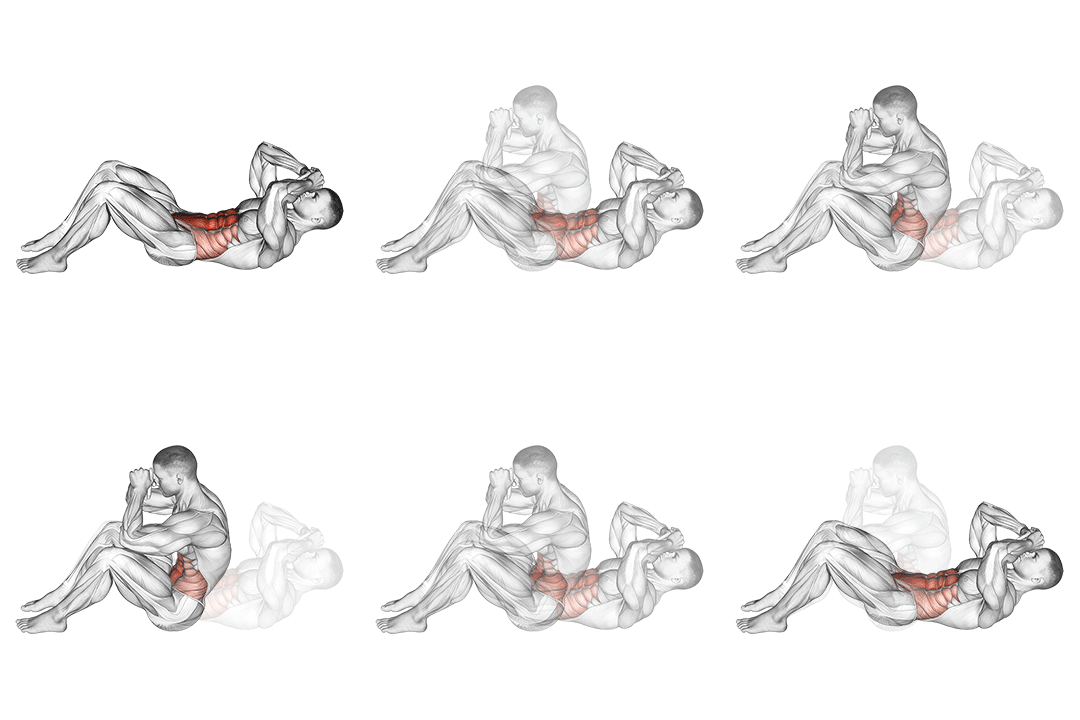
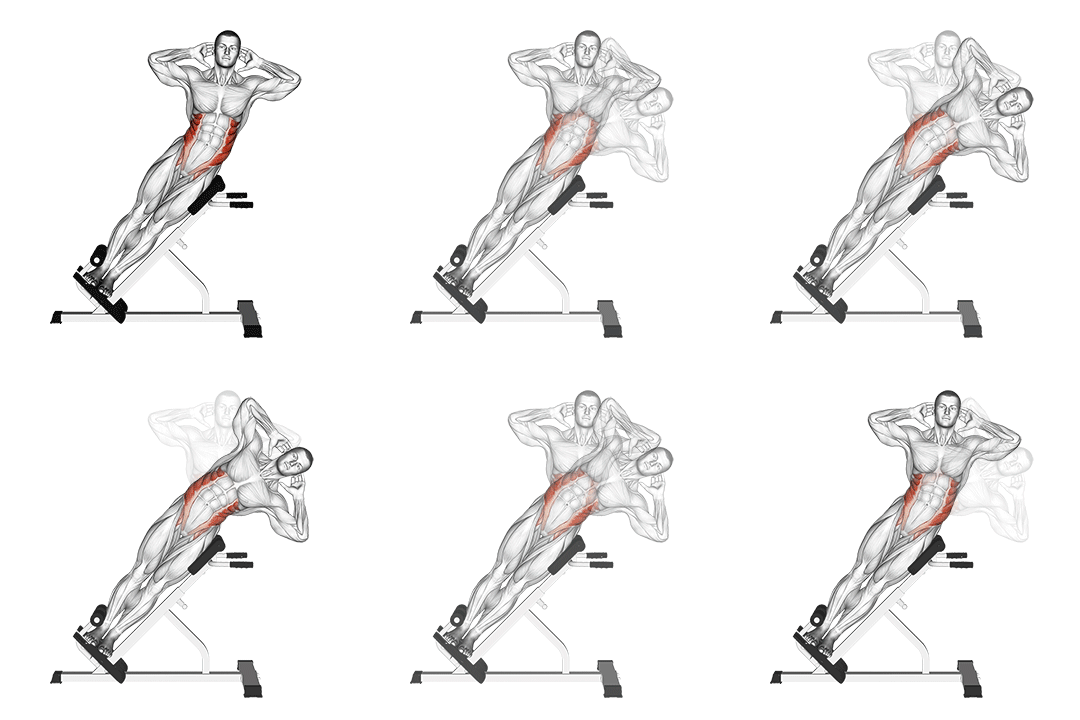
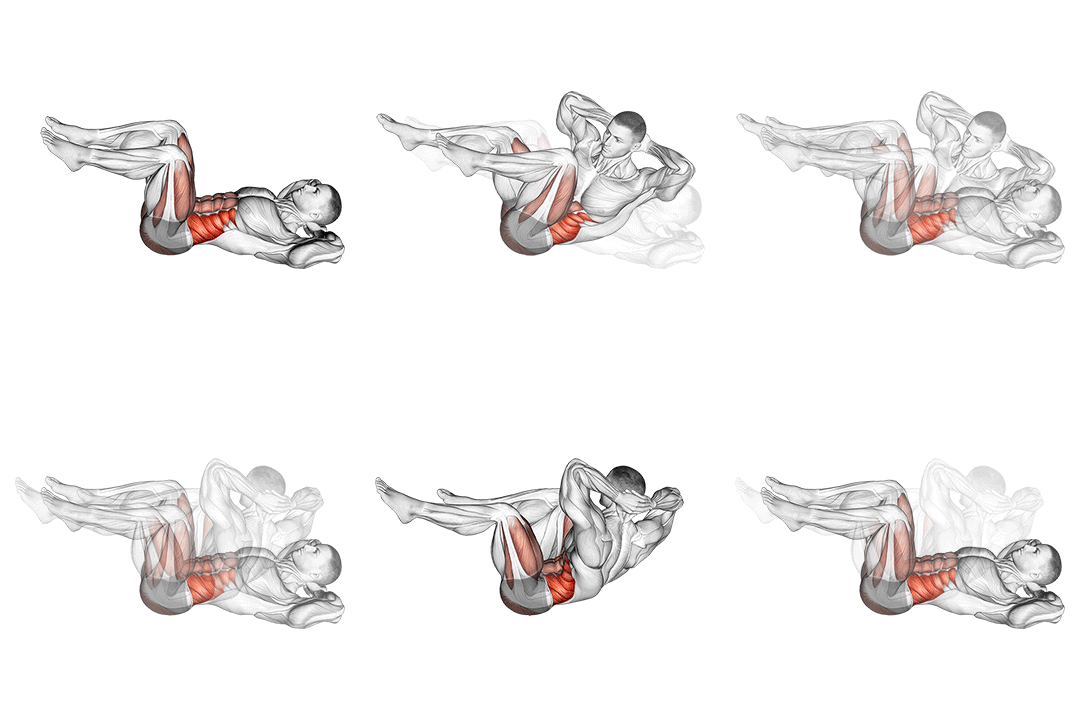
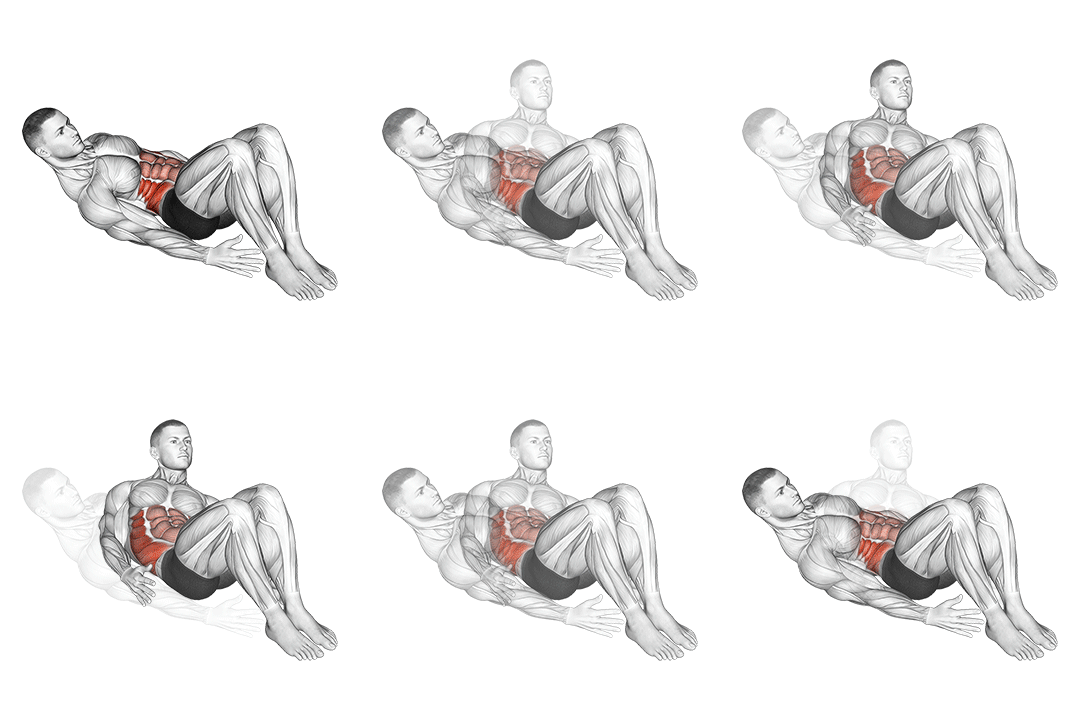
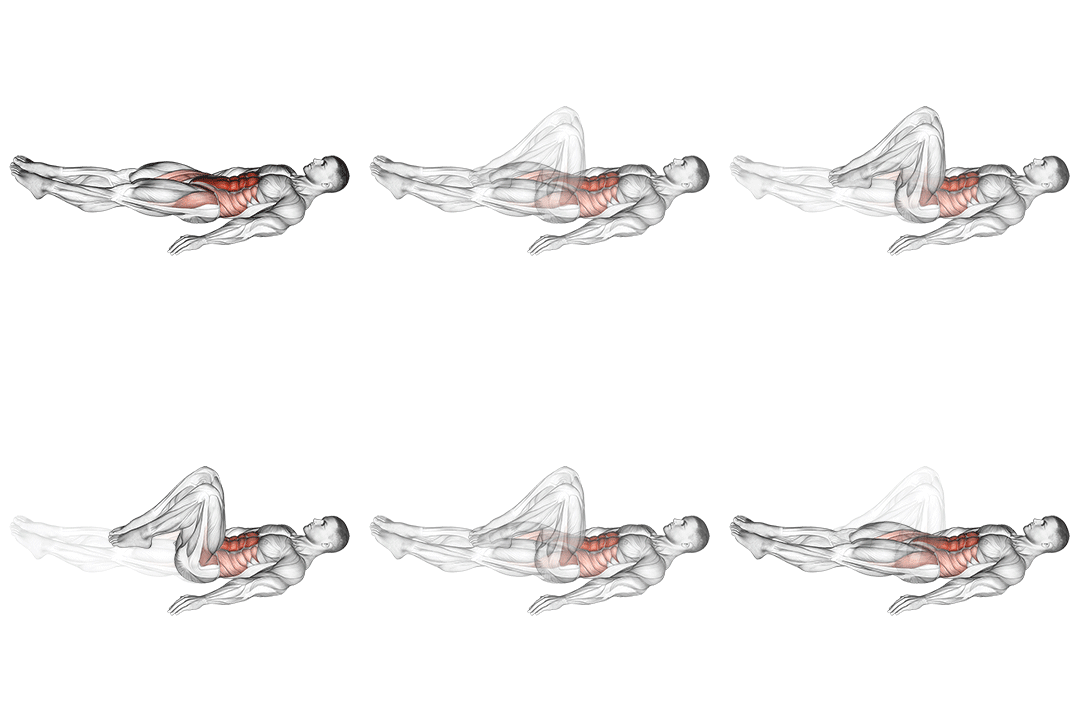
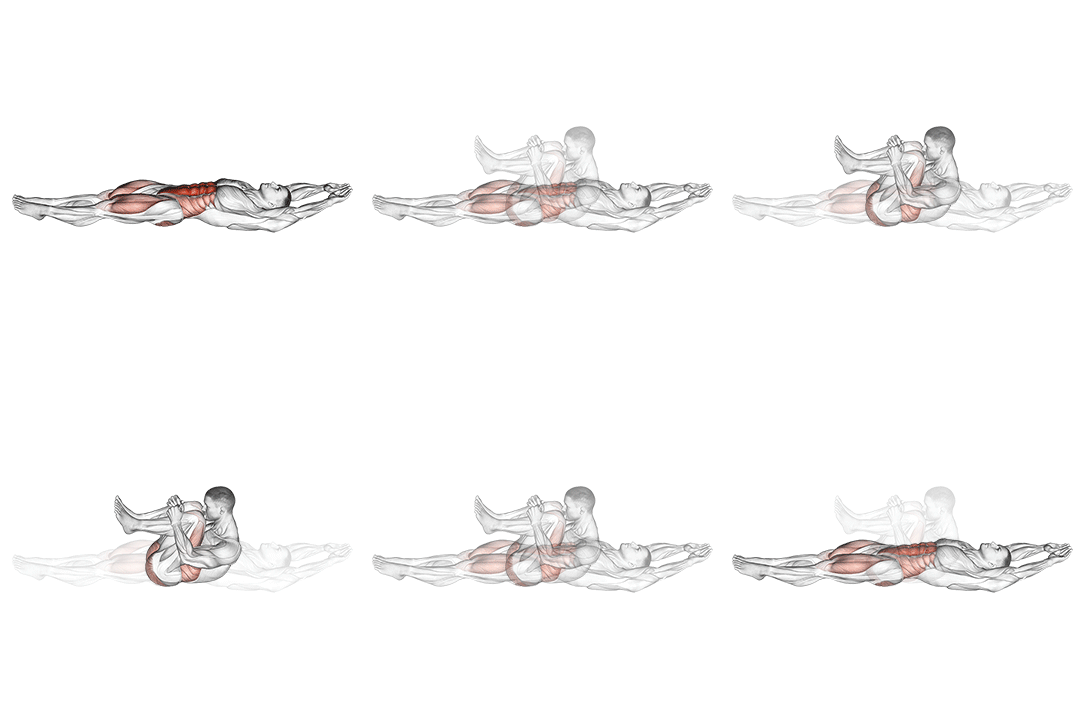
Oblique Crunch V. 2
beginner strength exercise · body weight · targets abs
- Body part
- waist
- Primary target
- abs
- Equipment
- body weight
- Difficulty
- beginner
The oblique crunch (variation 2) is a slight modification of the standard oblique floor crunch — typically with adjusted hand position, leg position, or twist angle. Like the standard version, it's performed lying face-up with knees dropped to one side, contracting the obliques to crunch the upper body laterally. The variation provides useful programming variety without changing the fundamental training stimulus. The value of having multiple oblique crunch variations is that trainees can rotate between them to keep training fresh while building the same oblique strength. Different hand positions (behind head, at chest, extended) and leg angles produce subtle differences in difficulty that allow for progressive overload without weights. Like all oblique crunch variations, the value depends on body fat for visibility. The obliques can be well-trained and strong without being visible if there's a layer of fat over them. Programmed for strength and shape rather than visibility, oblique crunches are a useful complement to direct ab work and core stability work.
Why train the Oblique Crunch V. 2?
- Targets the obliques in a focused way with minimal equipment.
- Pre-stretched starting position increases contraction effectiveness.
- Easy to learn and scale, accessible to most fitness levels.
- Provides programming variety alongside other oblique exercises.
- Reveals oblique asymmetries between sides.
- Requires no equipment.
How to do the Oblique Crunch V. 2: step by step
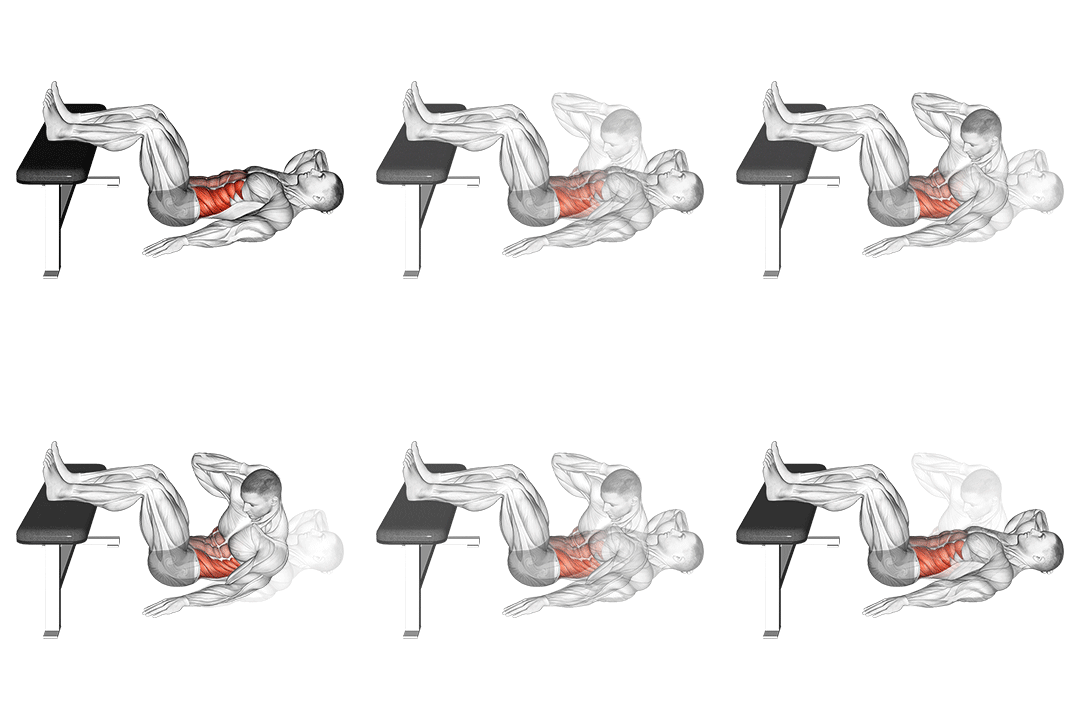
- 1Lie on your back with your knees bent and feet flat on the ground.
- 2Place your hands behind your head or cross them over your chest.
- 3Engage your abs and lift your shoulder blades off the ground, rotating your torso to one side.
- 4Pause for a moment, then lower your shoulder blades back down to the starting position.
- 5Repeat on the other side.
- 6Continue alternating sides for the desired number of repetitions.
Muscles worked
Primary
abs
Secondary
obliques
Common mistakes to avoid
Pulling on the neck with the hands
If your hands are behind your head, they're a guide — not a tool. Pulling the head forward strains the cervical spine.
Lifting too high to chase a 'big' rep
The shoulder blades only need to come a few inches off the floor. Trying to come fully upright shifts work to the hip flexors.
Rushing through reps
Speed kills oblique work. Take 1-2 seconds up, brief pause at the top with the obliques squeezed, 1-2 seconds down.
Doing all reps on one side before switching
Better to do 10 reps per side, alternating between sets, to prevent fatigue imbalance.
Using momentum from the legs
Keep the legs steady — only the upper body moves during the crunch. Leg movement uses momentum and skips oblique work.
Easier and harder variations
Easier
Reduce range — only lift the shoulders 1-2 inches off the floor. Or perform with arms crossed at the chest.
Harder
Hold a weight at the chest or behind the head. Slow the tempo. Or progress to side plank with hip dip.
Alternative exercises
Bicycle crunch
Combines crunch with leg cycling, hitting both upper abs and obliques.
Side plank
Static oblique exercise that loads them isometrically.
Russian twist
Rotational oblique exercise loaded as the prime mover.
How to program the Oblique Crunch V. 2 into your training
Oblique crunches work as accessory work in core training sessions. Sets and reps: 3 sets of 12-20 reps per side with 30-60 seconds rest. In a complete core circuit: 3 rounds of 15 oblique crunches per side, 15 standard crunches, 30-second front plank, 30-second side plank per side. Done 2-3 times per week. Daily at moderate volume is fine.
Recovery and frequency
Oblique crunches at moderate volume have low recovery cost — daily training is fine.
Frequently asked questions
How many sets and reps should I do?
3 sets of 12-20 reps per side with 30-60 seconds rest.
How often should I train this exercise?
2-3 times per week as part of a structured program; daily at moderate volume is fine.
Will oblique crunches give me a small waist?
They build the obliques, but visible muscle requires low body fat. The muscle growth from training is moderate and unlikely to noticeably change waist appearance.
Should I count one rep as both sides or each side separately?
Each side separately.
Why is one side stronger than the other?
Almost everyone has core asymmetry. The asymmetry typically narrows within 6-12 weeks of equal-rep practice.
Oblique crunch v.2 vs standard oblique crunch: what's the difference?
The variations differ slightly in hand position or leg angle. Use both interchangeably as accessory oblique work — the differences are too subtle to drive distinct adaptations.
Useful tools for this exercise
Build a workout with the Oblique Crunch V. 2
Puna gives you guided bodyweight workouts you can do anywhere — no equipment, no gym, just structured progressions that build real strength.