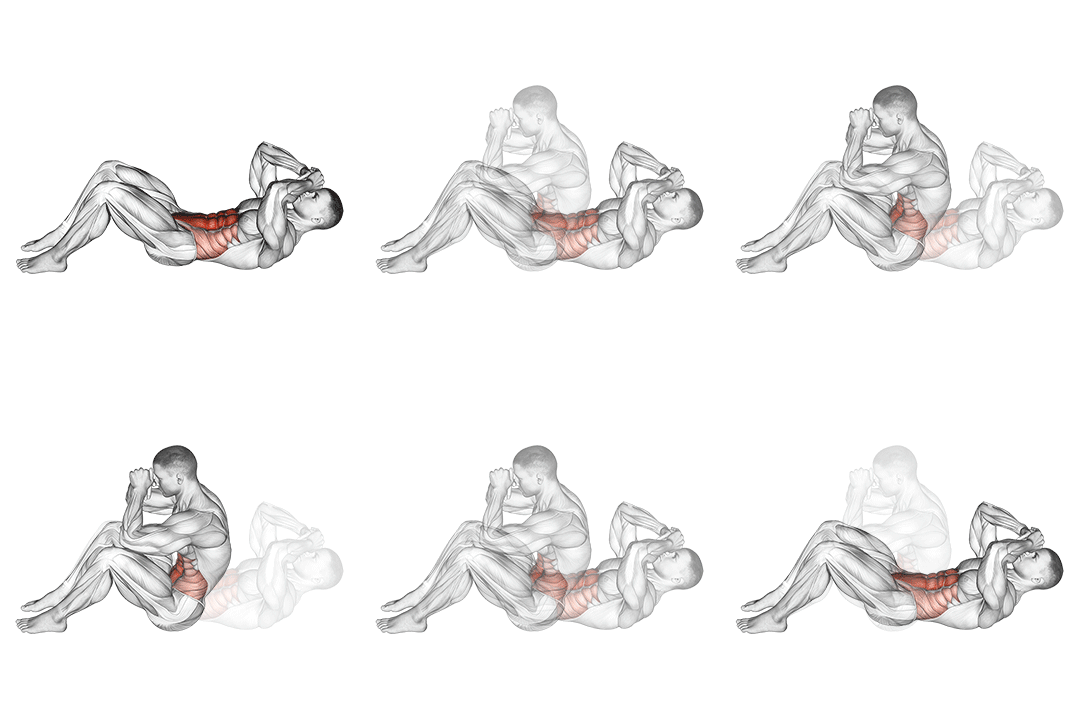
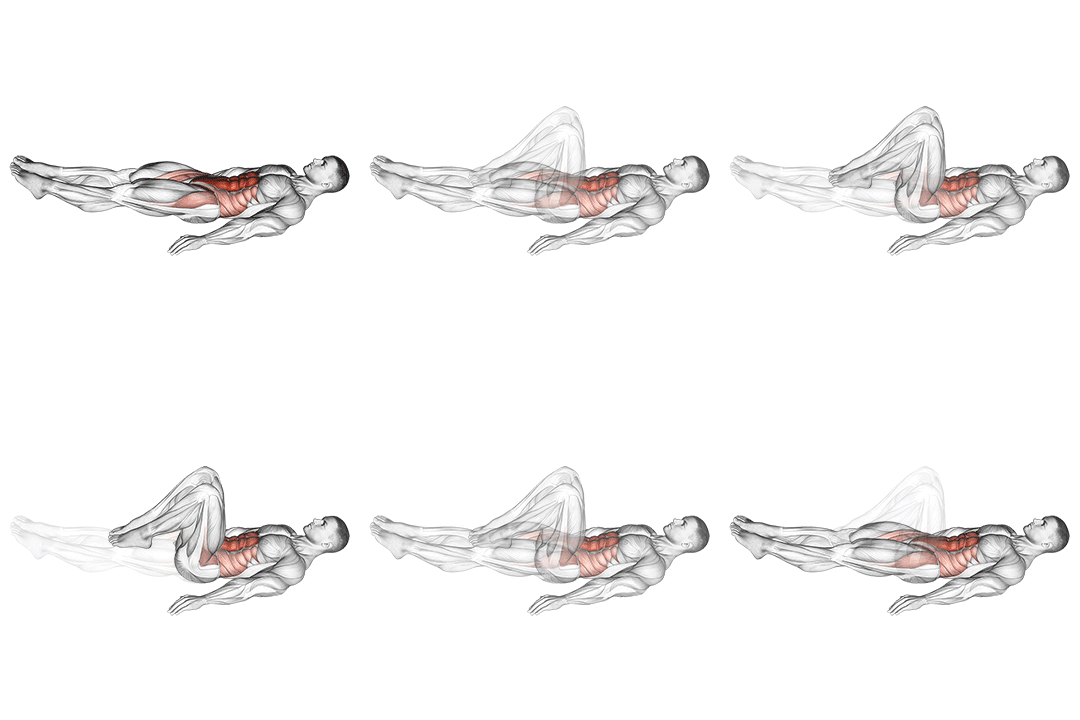
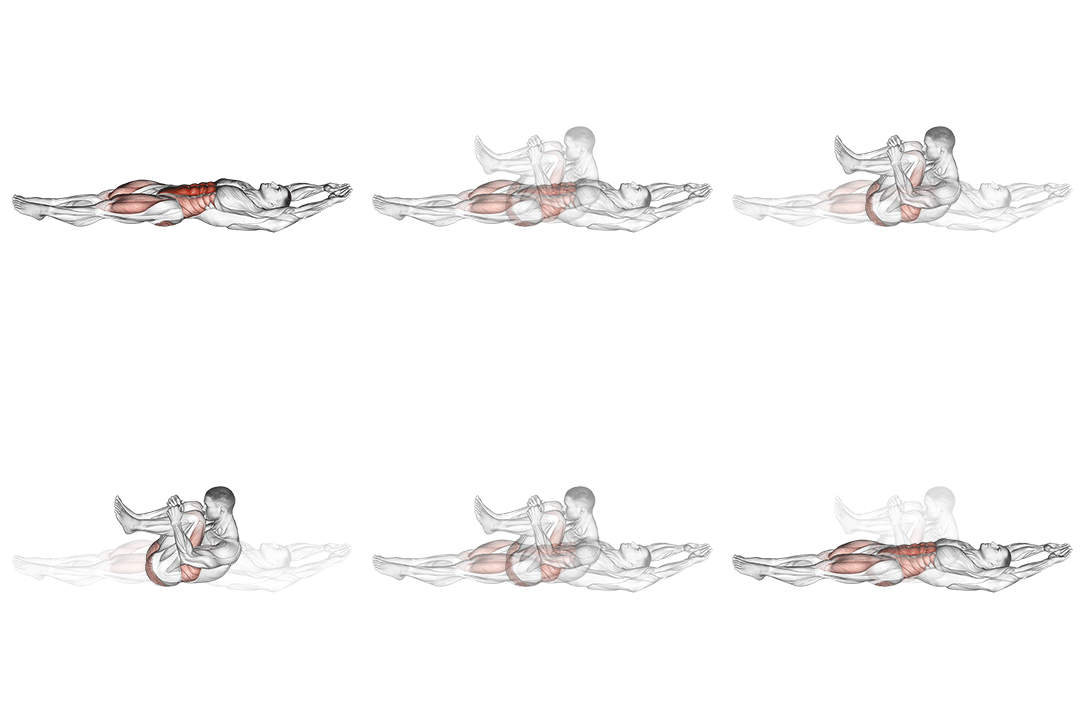
Negative Crunch
beginner strength exercise · body weight · targets abs
- Body part
- waist
- Primary target
- abs
- Equipment
- body weight
- Difficulty
- beginner
The negative crunch is a tempo-focused variation of the standard crunch where the focus is on the lowering (eccentric) phase of each rep. Instead of treating the down phase as recovery, you slow the descent dramatically — typically 4-6 seconds — to maintain tension on the abs throughout the entire range. The result is an ab exercise that loads the muscles for significantly longer than standard crunches, driving more time-under-tension per rep. The value comes from the muscle science behind eccentric loading. The negative phase of any exercise can typically handle more load than the concentric phase, and slow eccentrics drive more muscle damage and growth signaling per rep than fast tempos. For trainees who want to maximize the ab development from limited rep counts, negative crunches are more effective than standard crunches at the same volume. The trade-off is the time per rep. Where you might do 25 standard crunches in a minute, the same minute might only allow 8-10 negative crunches. The total volume stays similar, but the lower rep count fits better in time-constrained training. Programmed twice per week alongside other ab work, negative crunches add useful intensity that pure rep-counting misses.
Why train the Negative Crunch?
- Maximizes time-under-tension per rep, driving more muscle adaptation.
- Trains the eccentric phase deliberately, where most muscle damage occurs.
- Effective at lower rep counts, fitting in time-constrained training.
- Easy on the lower back compared to high-rep crunches.
- Requires no equipment.
- Useful complement to standard ab exercises for variety.
How to do the Negative Crunch: step by step
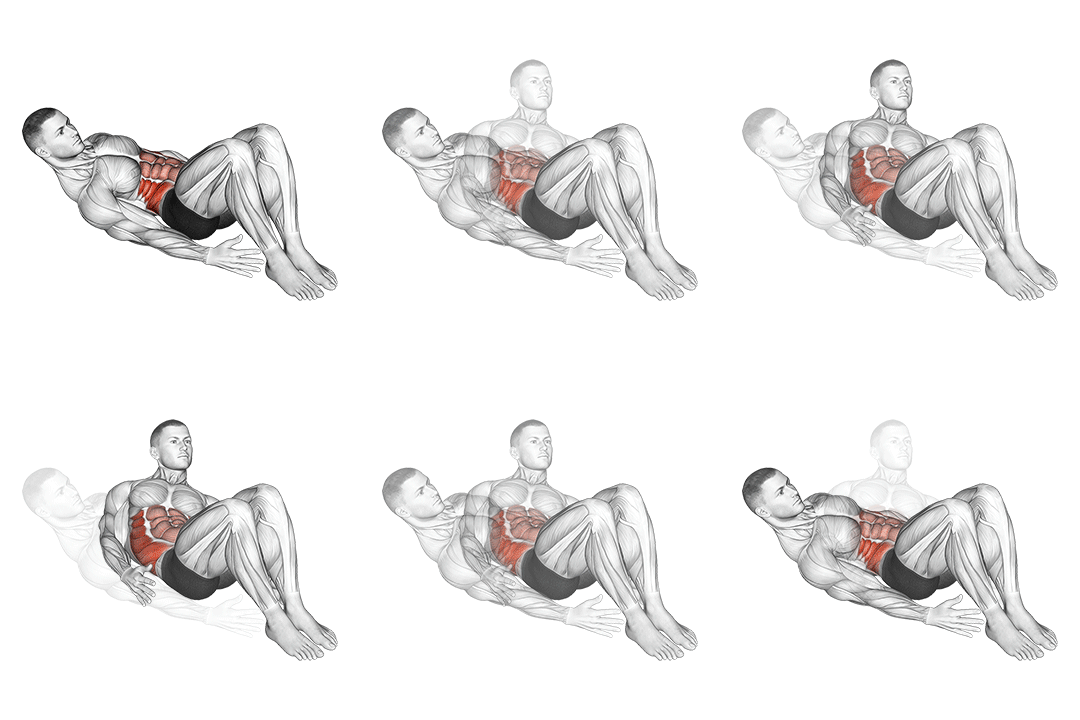
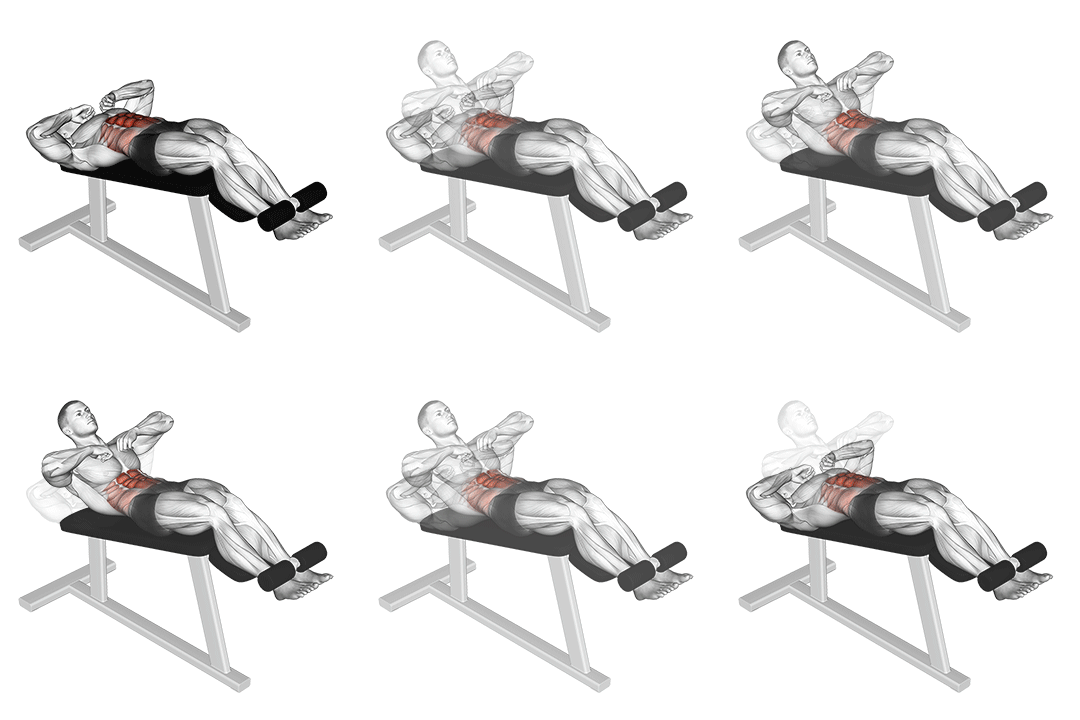
- 1Lie flat on your back with your knees bent and feet flat on the ground.
- 2Place your hands behind your head with your elbows pointing outwards.
- 3Engaging your abs, slowly lift your upper body off the ground, curling forward until your torso is at a 45-degree angle.
- 4Pause for a moment at the top, then slowly lower your upper body back down to the starting position.
- 5Repeat for the desired number of repetitions.
Muscles worked
Primary
abs
Secondary
hip flexors
Common mistakes to avoid
Rushing the eccentric phase
The whole point is the slow descent. If you're lowering in 1 second, you're doing standard crunches. Take 4-6 seconds on each lowering phase to actually train the eccentric.
Pulling on the neck with the hands
Hands behind the head are a guide, not a tool.
Letting the upper back touch the floor between reps
Hover the shoulder blades just above the floor at the bottom — never let them rest fully. This maintains tension throughout the set.
Doing too many reps for the slow tempo
Negative crunches at 4-6 seconds per rep should be done in lower volume — 6-12 reps per set. Trying to do 25 reps with strict slow tempo usually means form breakdown.
Not pausing at the top of each rep
Pause briefly at the top with the abs squeezed before starting the slow descent. The momentary peak contraction precedes the eccentric work.
Easier and harder variations
Easier
Reduce the eccentric tempo (3-4 seconds instead of 4-6). Or do standard crunches at normal tempo.
Harder
Increase the eccentric tempo (6-8 seconds). Hold a weight at the chest. Or progress to negative reverse crunches or negative leg raises.
Alternative exercises
Standard crunch
Same exercise at normal tempo. Higher rep counts possible.
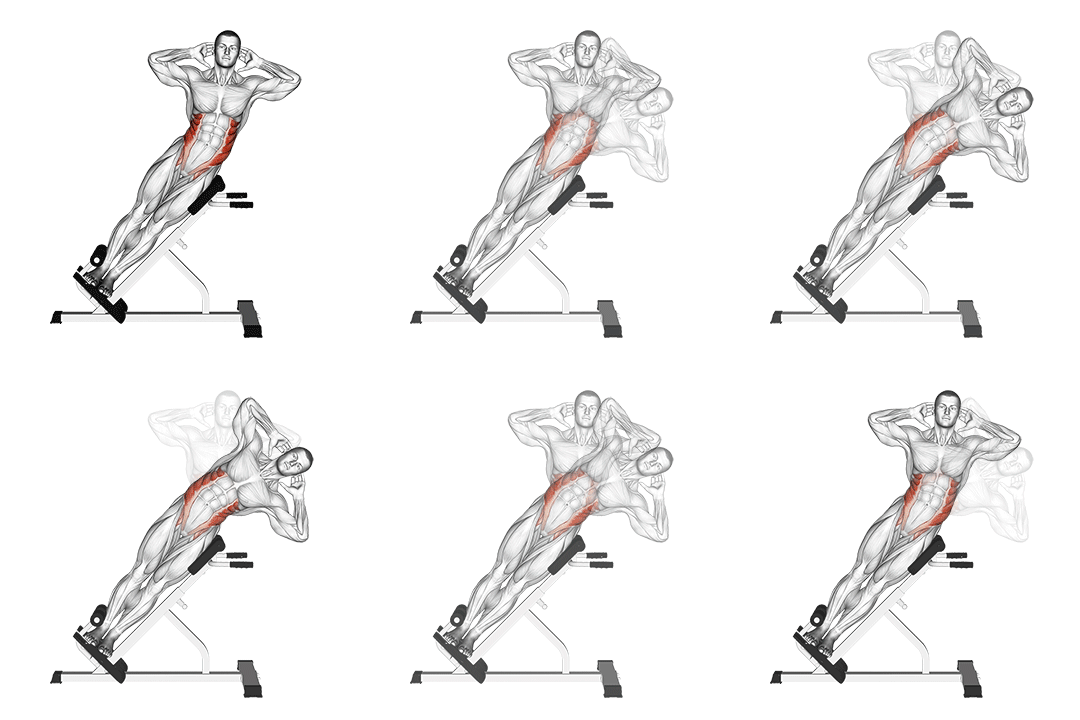
Decline crunch
Different way to add load — uses bench angle instead of slow tempo.
Cable crunch with slow eccentric
Cable machine version that allows progressive loading combined with slow eccentric tempo.
How to program the Negative Crunch into your training
Negative crunches work as accessory or finisher core work, especially for trainees seeking ab development without increasing volume. Sets and reps: 3 sets of 6-12 reps with 30-60 seconds rest. In a complete core circuit: 3 sets of 8-10 negative crunches, 3 sets of 30-second front planks, 3 sets of 12 reverse crunches. Done 2-3 times per week. Daily moderate volume is fine.
Recovery and frequency
Negative crunches at moderate volume have low to moderate recovery cost. The slow eccentric loading creates more focused soreness in the abs than standard crunches in the first 1-2 weeks.
Frequently asked questions
How many sets and reps should I do?
3 sets of 6-12 reps with 30-60 seconds rest.
How often should I train negative crunches?
2-3 times per week as part of a structured program; daily at moderate volume is fine.
Negative crunch vs standard crunch: which is better?
Different tools. Standard crunches allow higher rep counts. Negative crunches drive more muscle adaptation per rep through slow eccentrics. Use both for variety.
Will negative crunches give me visible abs?
They build the muscle, but visible abs come from low body fat.
How slow should the eccentric phase be?
4-6 seconds is the sweet spot. Faster reduces the eccentric benefit; slower becomes inefficient (the time investment exceeds the additional adaptation).
Can I add weight to negative crunches?
Yes — hold a weight at the chest or behind the head. Adds significant load while preserving the slow-tempo benefit. Build to comfortable bodyweight first before adding load.
Useful tools for this exercise
Build a workout with the Negative Crunch
Puna gives you guided bodyweight workouts you can do anywhere — no equipment, no gym, just structured progressions that build real strength.